
Places to visit
Things to do in Osmangazi
60 destinations, each with a description, how long it takes and where it sits on the map.
In short
toroti’s catalogue holds 60 described destinations within Osmangazi, Bursa. The themes that come up most: Faith heritage, History, Local culture, Museum, Culture, Nature.
Aladdin Paşa Cami
According to sources describing the early Ottoman period, it was commissioned in 1326 by Alaaddin Bey, one of Osman Gazi’s sons and Orhan Bey’s brother. It is known as the first mosque built in Bursa. In the repair carried out in 1861-62 of the mosque, which was heavily damaged in the 1855 earthquake, some parts were altered, its portico was rebuilt, and a triangular pediment, unsuitable for a Turkish minaret, was made on its facade.
20 minutes
Koza Han
It was commissioned in 1492 by II. Beyazıt in order to provide income for his mosque and madrasa in İstanbul. It was established on a wide area between Orhan camii and Ulu cami. Koza Hanı, known by names such as Han-ı Cedid-i Evvel, Simkeş, Beylik, Kervansaray’ı, Cedid-i Amire, is now, as in the past, Bursa’s center of silk and trade.
30 minutes
I. Murad Hüdavendigar Türbesi
The tomb, located to the northwest of Hüdavendigar mosque, was commissioned by I. Murat’s son Yıldırım Beyazıd. The tomb, which was completely destroyed in the 1854 earthquake, was rebuilt differently from its original form. It took its present form during the reign of II.Abdülhamit. In the center of the octagonal dome, within brass railings, is the sarcophagus of I. Murad.
20 minutes
Karabaş-i Veli Tekkesi
It was commissioned by Yakup Çelebi in the 16th century. The tekke and semahane are located within a large garden. It was restored between 2002-2005 to be used as a cultural center. Karabaş-i Tekkesi serves as a place where the Mevlevi culture, identified with the culture it represents, is fully experienced.
20 minutes
Mayor Sinagogu
It was built by Sephardic Jews who took refuge in the Ottoman Empire from Spain’s Island of Majorca in the 15th century. The synagogue was given the name Mayor in memory of the island they left behind. Mayor Synagogue, which remained open for worship until 1975, was restored in 2004 and began serving as a cultural center.
30 minutes
I. Murad Hüdavendigar Camii
It is known that the mosque, built on a hill overlooking the plain in the Çekirge district, was constructed in 1365-66. On the upper floor of the two-storey building, there is a madrasa with 18 rooms. The fact that the mosque and the madrasa were built together gives the mosque a monumental character.
20 minutes
Veled-i Vezir (Üç Kurnalı) Cami
It is said to have been built by a vizier of Sultan II.Bayezıd. For this reason, it came to be known by this name. For a period, its ownership passed into the hands of private individuals and it was used as a commercial establishment. During this period, the structure underwent some changes.
20 minutes
Abdal Mehmed Cami
The mosque was commissioned by Başçı İbrahim in the name of Abdal Mehmed, one of the well-known Sufis of the reign of Murad II. The rectangular-plan mosque has two oval domes above it.
20 minutes
Bursa Surlari
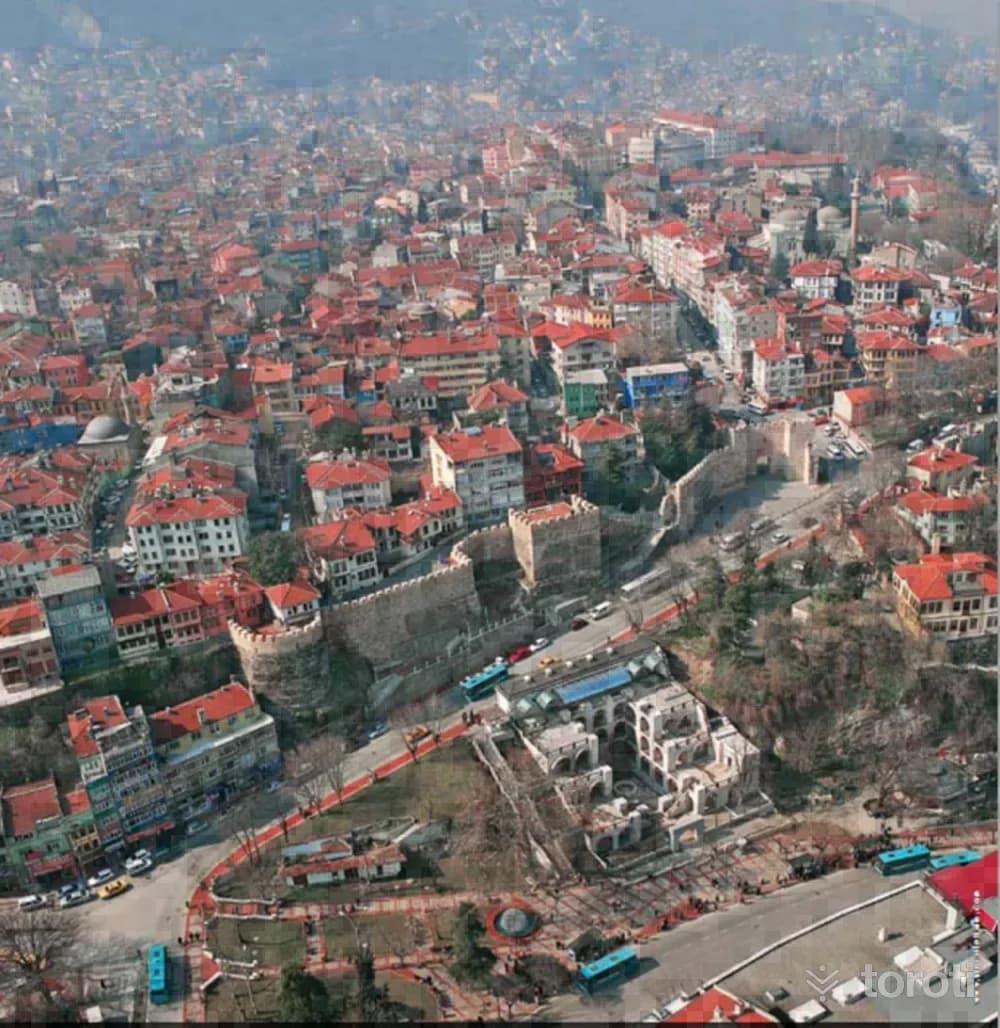
The Bursa Walls were built on natural rocks by the Bithynians, the first founders of Bursa. During the Ottoman Period, especially after Timur's attacks and following the siege by Karamanoğlu Mehmet Bey, they were repaired and strengthened by Hacı İvaz Paşa. The total length of the walls is 3.38 kilometers.
45 minutes
Hanlar Bölgesi
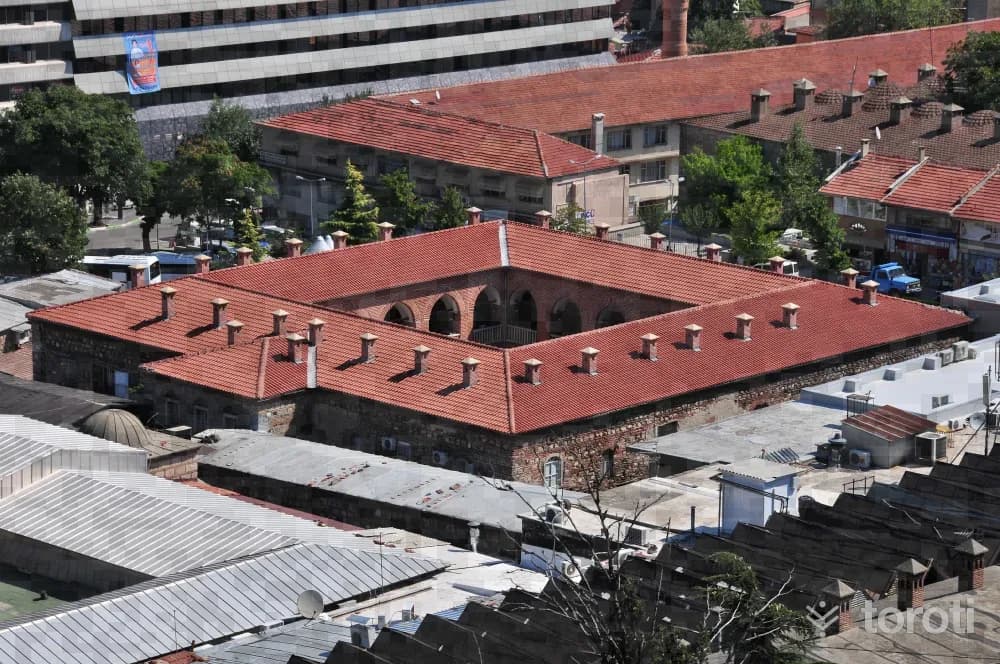
As is known, the buildings constructed on the trade routes of Anatolia for merchants engaged in trade to stay overnight and rest were called hans, and the larger ones were called caravanserais. For Bursa, which has been an important trade city throughout history, hans and bedestens represent the pulse of the economy. In Bursa, the first capital of the Ottoman Empire, the trade district that began to form in the 14th century completed its development in the 16th century with the formation of hans, bedestens and bazaars.
45 minutes
Başçi İbrahim Paşa Cami
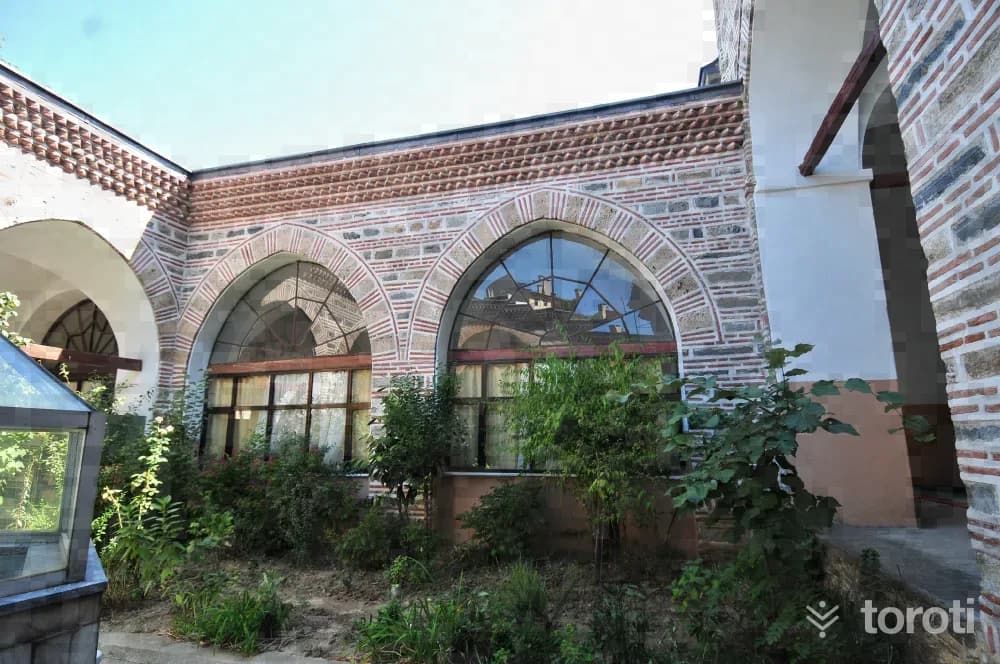
The mosque, located in the Maskem district on Başçı İbrahim Street, is a work from the Fatih period. It was commissioned by Başçı İbrahim, and the original of its endowment deed is in the archive of Topkapı Palace. The mosque fell into ruin over time and was repaired after the 1854 earthquake and in 1891. The building, which was used as a warehouse for a time, was opened for worship in 1960 as a result of a joint restoration by the General Directorate of Foundations and the Bursa Society of Lovers of Antiquities.
45 minutes
Ahmet Vefik Paşa Devlet Tiyatrosu
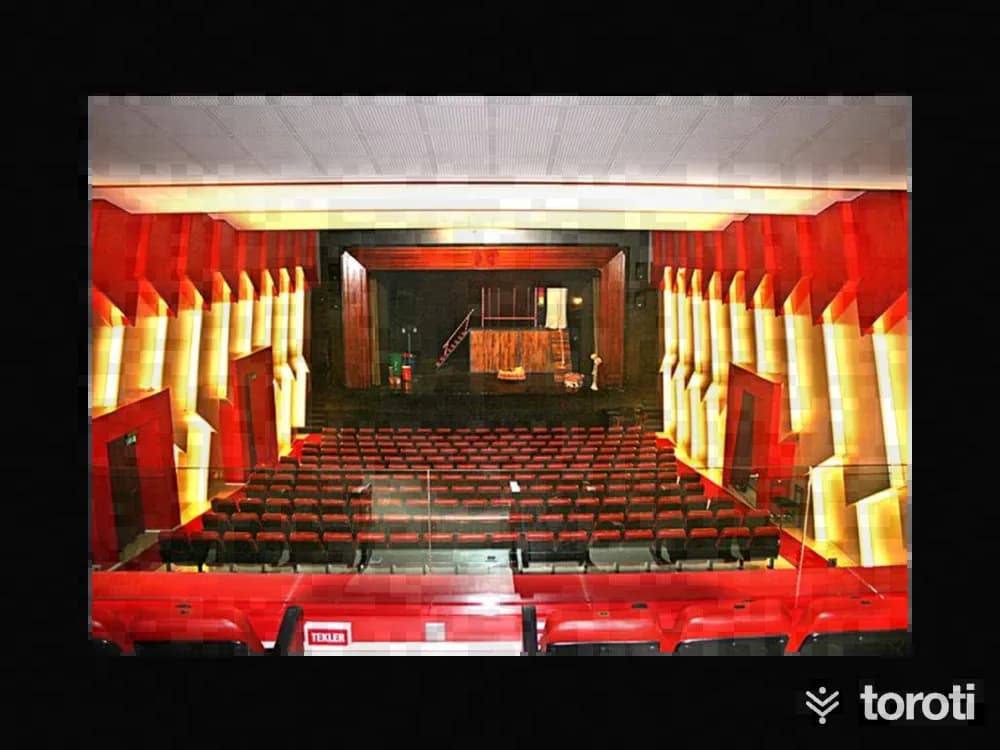
The building, which was built as a Community Center in 1938 and is today Ahmet Vefik Paşa State Theatre, hosted theatrical performances. After the Community Centers were closed in 1952, the State Theatre was used as a cinema for a while, and in 1957, during the term of the governor of the period, İhsan Sabri Çağlayangil, this two-storey venue was reopened as Ahmet Vefik Paşa State Theatre with permanent arrangements made by vacating the cinemas on the lower and upper floors (Marmara and Tan cinemas).
45 minutes
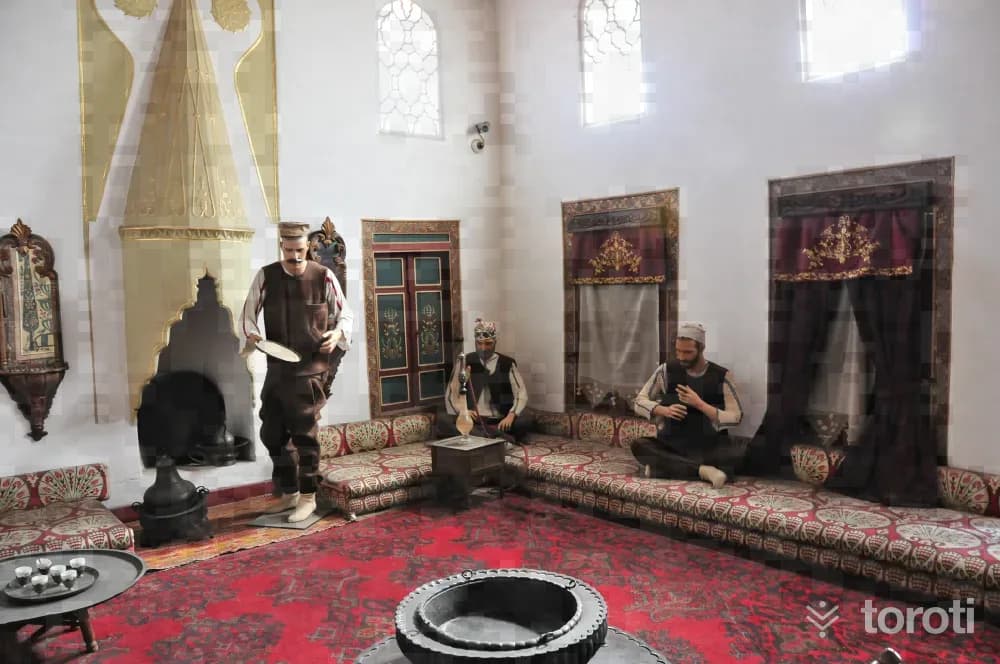
Osmanli Evi Müzesi
It is thought that on the site of the wooden house located opposite the II. Murad Külliyesi in the Muradiye Quarter, there had previously been a pavilion of Sultan II. Murad. Therefore, this house is also known as the house where Fatih Sultan Mehmet, who conquered Istanbul, was born. The two-storey house, which is used as a museum today, bears 17th-century characteristics in terms of its plan and decorations and is one of the oldest houses still standing in Bursa.
45 minutes
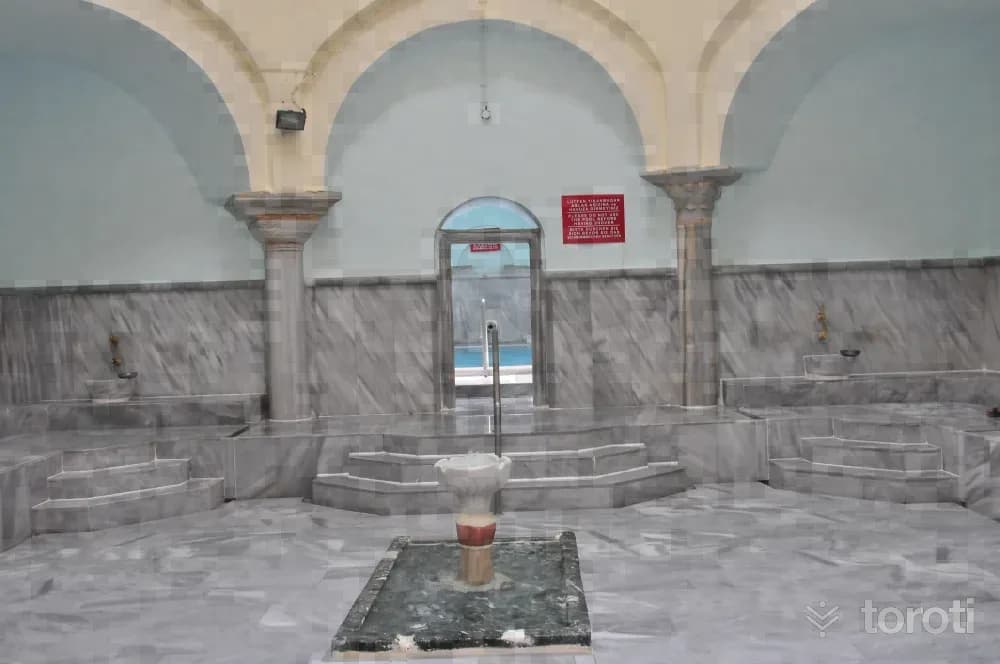
Bursa Eski Kaplıca
Various sources state that there used to be remains of a Byzantine bath at the site where Eski Kaplıca, one of Bursa’s largest thermal baths, was built (also known as Armutlu Hamamı). The building, commissioned by I. Murat as a double bath in 1394, had a cooling section added by II. Bayezıt in 1511. The walls of the building were built with stone and brick.
45 minutes
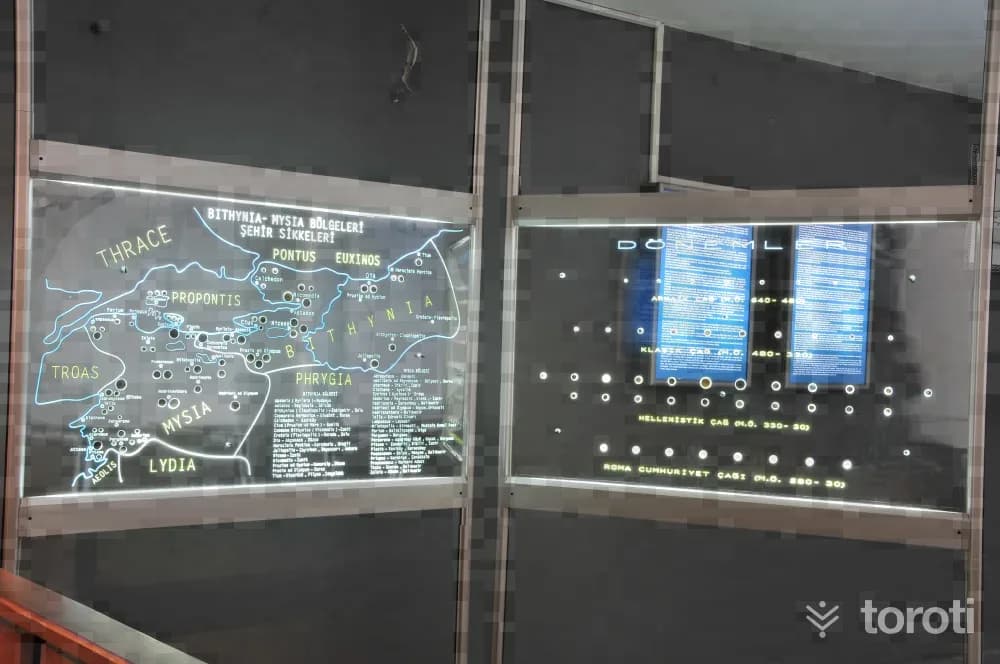
Bursa Arkeoloji Müzesi
For the purpose of establishing a museum in Bursa, artifacts were first collected in Bursa Erkek Lisesi from 1904 to 1972. In 1972, they were moved to the newly built building within Reşat Oyal Kültür Parkı. In the museum, where artifacts found in the Bithynia and Mysia regions are exhibited, there are works dating from the 3rd millennium B.C. to the end of the Byzantine Period. There are 25 thousand artifacts in the museum, about 2 thousand of which are on display.
45 minutes
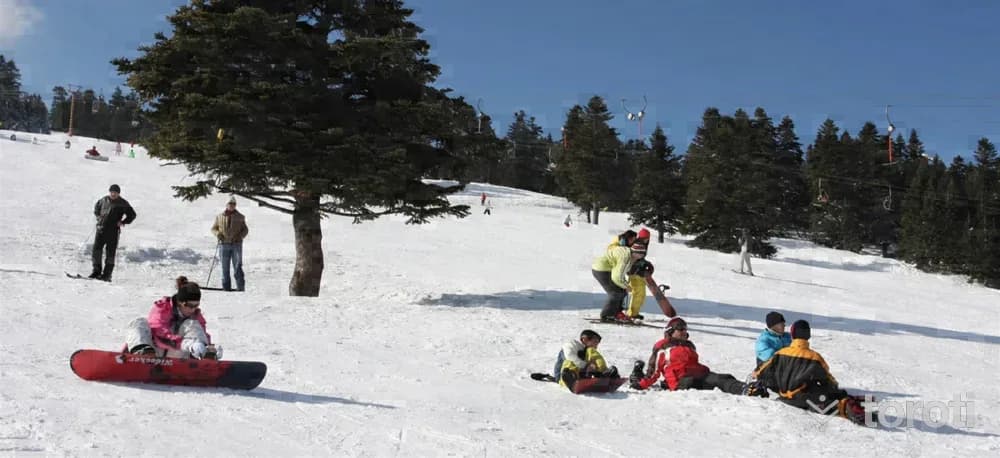
Uludağ Kayak Merkezi
Uludağ Ski Center is a major winter tourism destination located within the borders of Bursa. It offers modern accommodation and facilities, along with skiing activities, equipment rental, and private lessons.
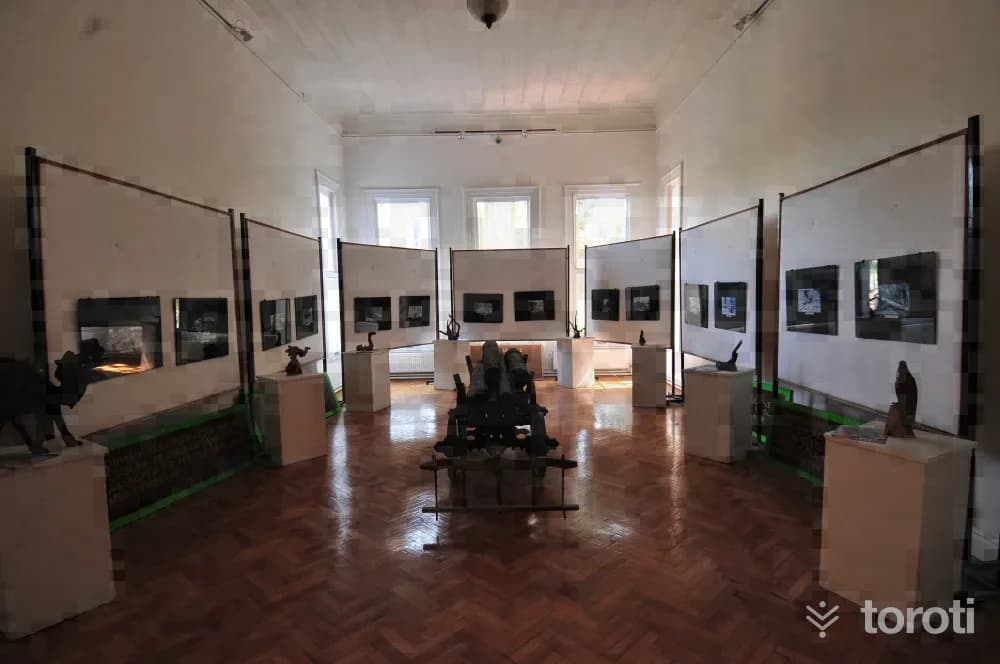
Bursa Ormancilik Müzesi
The museum, which is Turkey’s first and only Forestry museum, is located on Çekirge Caddesi in the mansion known as Saatçi Köşkü. Architecturally, the mansion is one of the finest examples of 19th century civil architecture. Its garden, with its fountain, gazebo and various trees, is of beauty worth seeing. Saatçi Köşkü was used as a residence for many years, became Bursa Forestry School in 1939-1949, and was also used as the Regional Forestry Directorate until 1983.
45 minutes
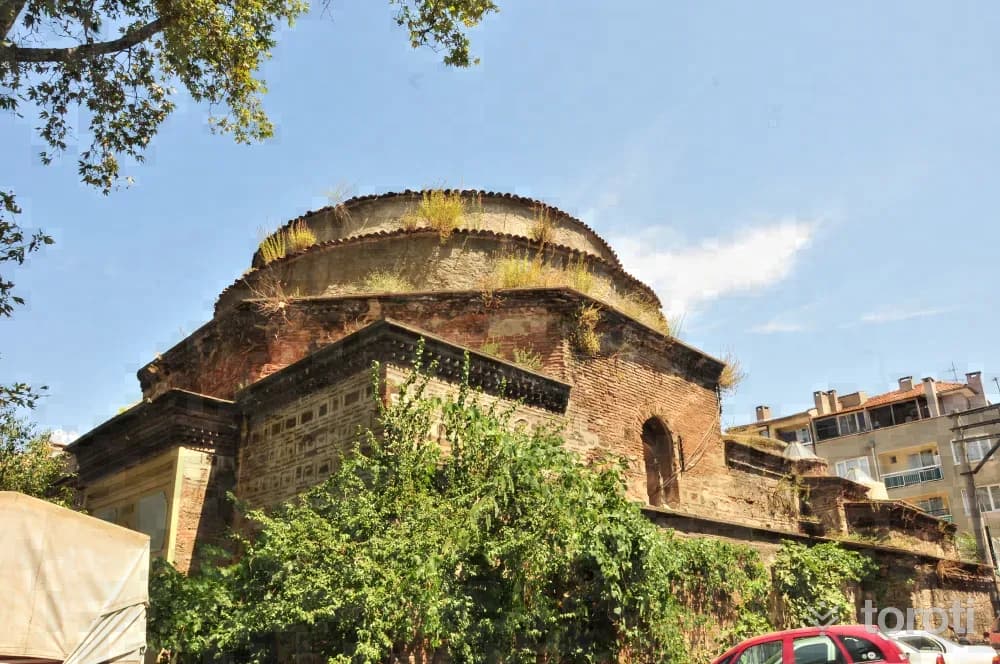
Mahkeme Hamamı / İbrahim Paşa Hamamı
In the 1421 endowment deed of the bath, it is stated that it was commissioned by İbrahim Paşa, the son of Çandarlı İbrahim Paşa. İbrahim Paşa endowed this bath and seven villages for his imaret in İznik. It belongs to the double bath class. In addition to domed spaces, a nested iwan arrangement was applied. There is no warm section, and one passes directly to the hot section. The structure was built of cut stone, with three rows of brick in between. The walls end with three rows of sawtooth brickwork.
45 minutes
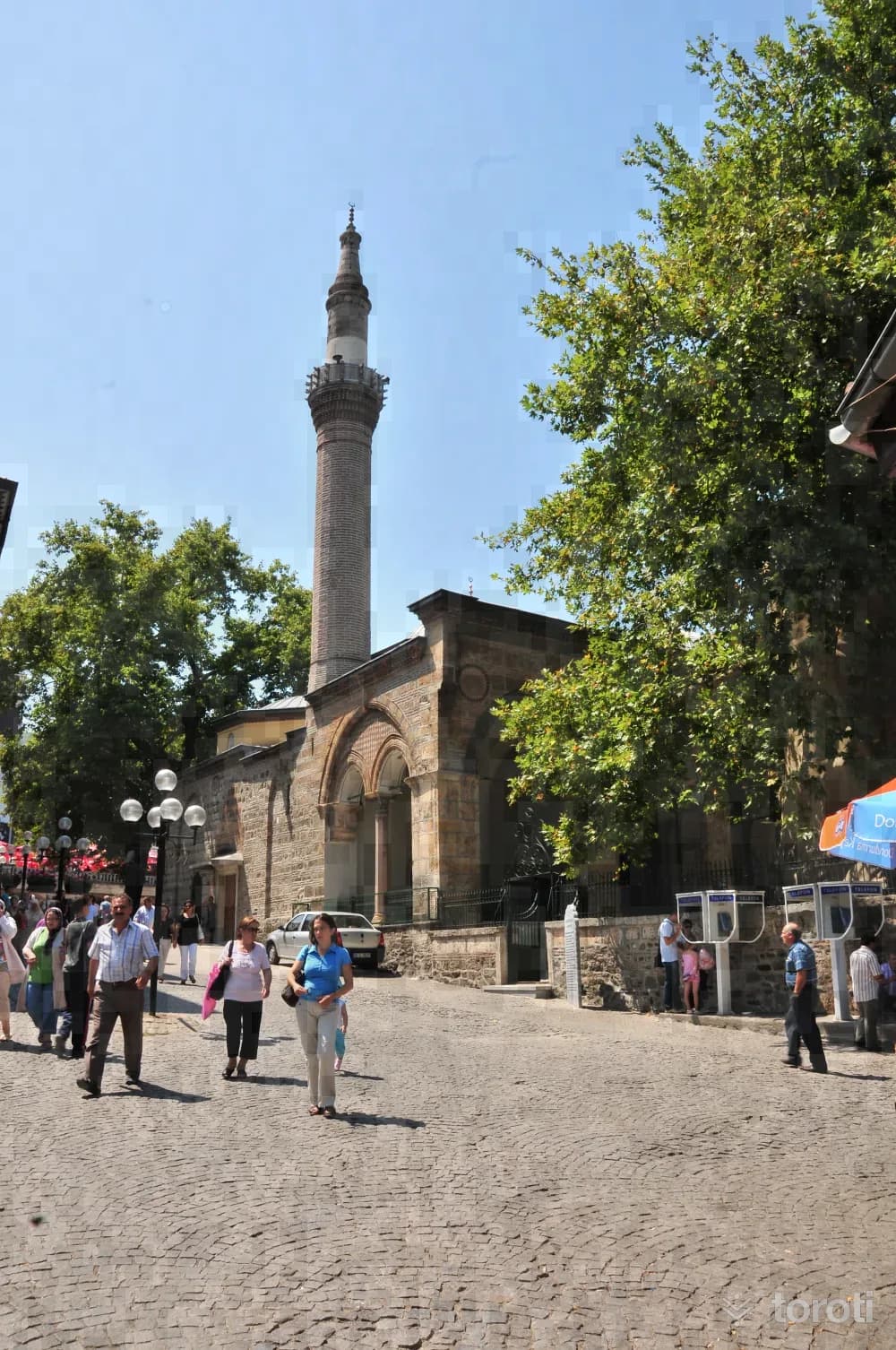
Orhan Gazi Cami
When Orhan Gazi took Bursa in 1326, the city consisted only of the settlement within the Fortress. A model of urbanization later adopted by subsequent Ottoman sultans was first implemented by Sultan Orhan in 1339, and outside the city walls, on the brushwood and marshy ground of the wide Gökdere bed stretching at that time from Çakır hamam to Set başı, he had a külliye built consisting of a mosque, madrasa, imaret, bath and inn (bedesten).
45 minutes
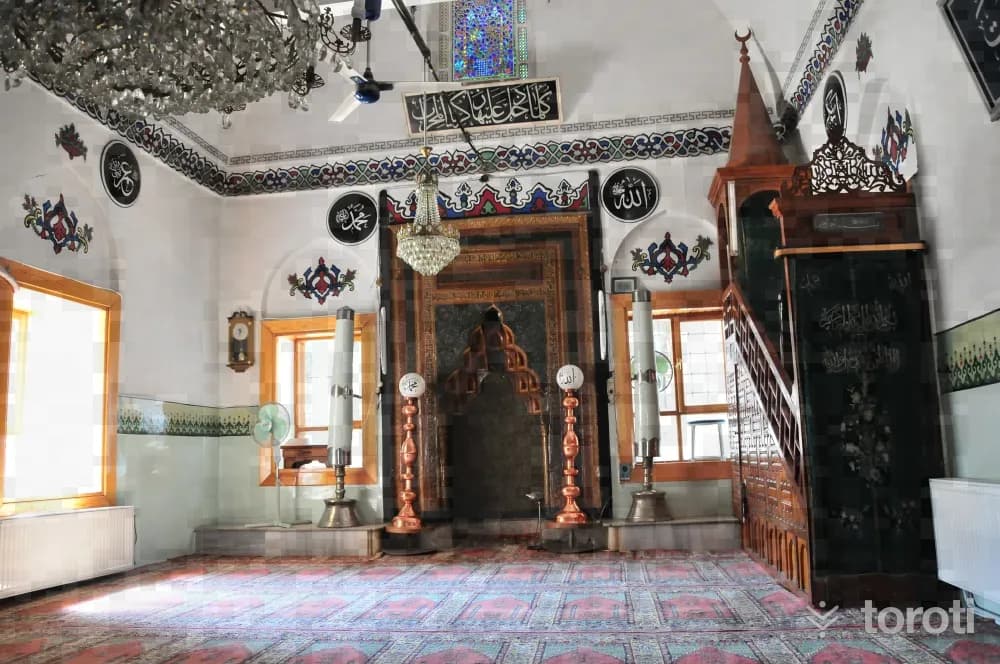
Demirtaş Cami / Temurtaş Cami
Some sources state that the mosque was commissioned by Ali Bey, the son of Timurtaş Pasha, in 792 H. (1389-1390), while others write that it was commissioned by Kara Timurtaş Pasha, the Emir of Yıldırım Bayezıd. Demirtaş Cami, which belongs to the group of winged or (inverted T) plan mosques that began with Orhan Cami in Bursa and underwent change in Hüdavendigar Camisi, was expanded with a central dome in the middle, east-west iwans on the sides covered with vaults, and a section on the south side also covered with a vault.
45 minutes
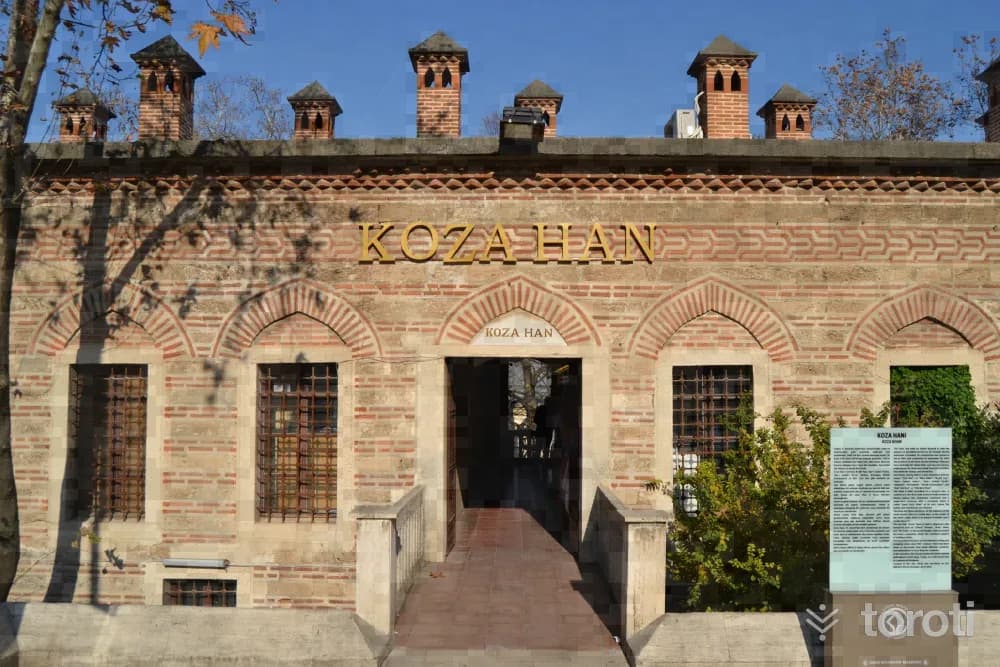
Kozahan
It was built in 1492 by II. Bayezıt in order to provide income for his mosque and madrasa in Istanbul. It was established on a wide area between Orhan camii and Ulu camii. The inn, built mostly of cut stone with brick also used in places, is two-storeyed and the front of its rooms has arcades. The arcade section consists of 40 concrete domes. There are a total of 95 rooms, 50 on the upper floor and 45 on the lower floor.
45 minutes
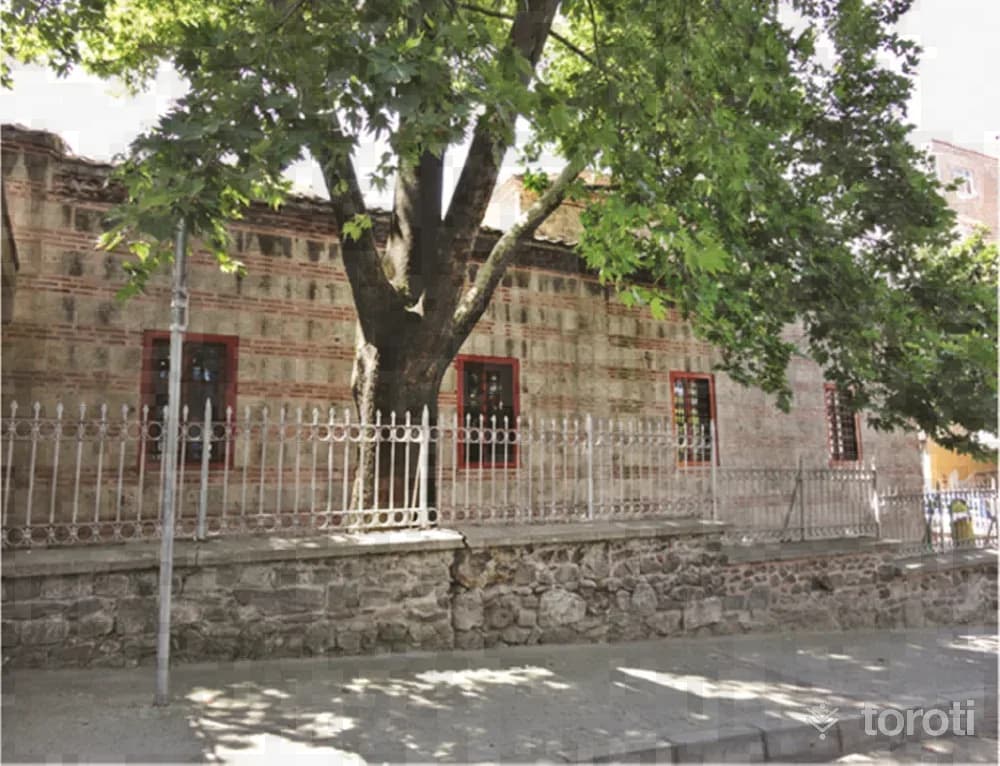
Lala Şahin Paşa Çocuk Kütüphanesi
The madrasa, located on Kavaklı Caddesi inside the Kale, was built in 1339 with war booty by Rumeli Beylerbeyi Lala Şahin Paşa, the commander of Orhan Gazi and Murad Hüdavendigar. The madrasa, in which Kefeki stone and brick materials were used together, has a composition consisting of a vault-covered iwan on the north-south axis and, on both sides of the square space covered with a dome in front of it, eight symmetrically arranged vault-covered cells.
45 minutes
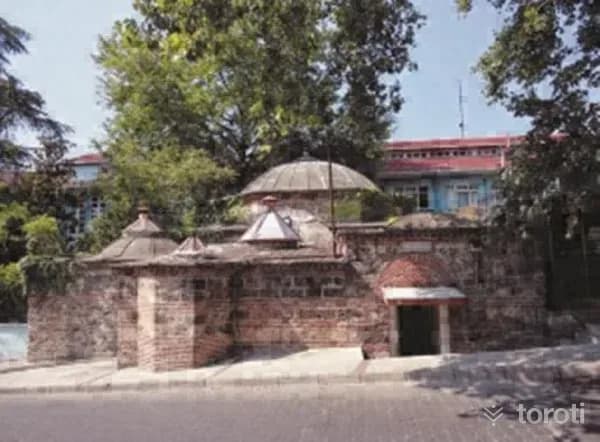
Çekirge Adak Hamamı - Kadın Hamamı
Located on I. Murad Caddesi in the Çekirge district, in front of the Military Hospital and below road level, the bath is also known as Çekirge Sultan Adak Hamamı - Kadın Hamamı. It was built in the XIVth century (1365-1370). The bath, known by women as healing and sacred, was built for bathing free of charge. Entry to the structure is provided after descending a few steps from the road. A sea wave motif has been worked in brick above the entrance door. Through a long corridor, one passes into the cooling section.
45 minutes
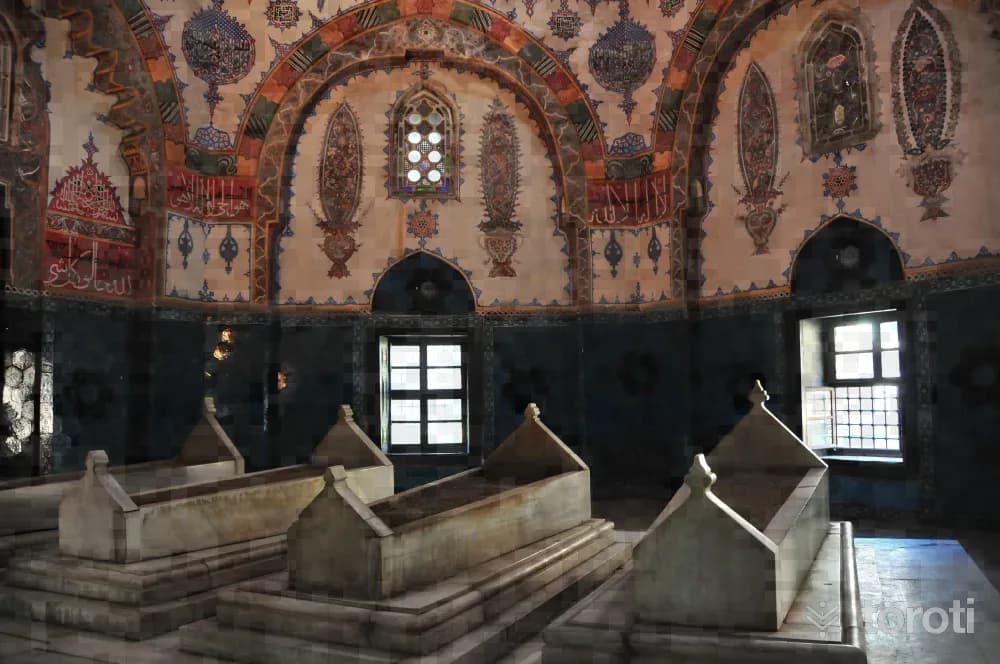
Şehzade Sultan Mustafa Ve Sultan Cem Türbesi
One of the eleven tombs in the garden of the tomb in Muradiye, Bursa, where Murat II is buried, belongs to Fatih’s sons. Mustafa and Cem, who until now were thought to be in separate tombs, are buried together. When Fatih’s eldest son, Şehzade Mustafa, died in 1474 near Bor District of Niğde while returning from the conquest of the fortresses around Konya, he was brought to Bursa and buried first in his uncle Alaattin Bey's tomb, then in his own tomb built in 1479.
45 minutes
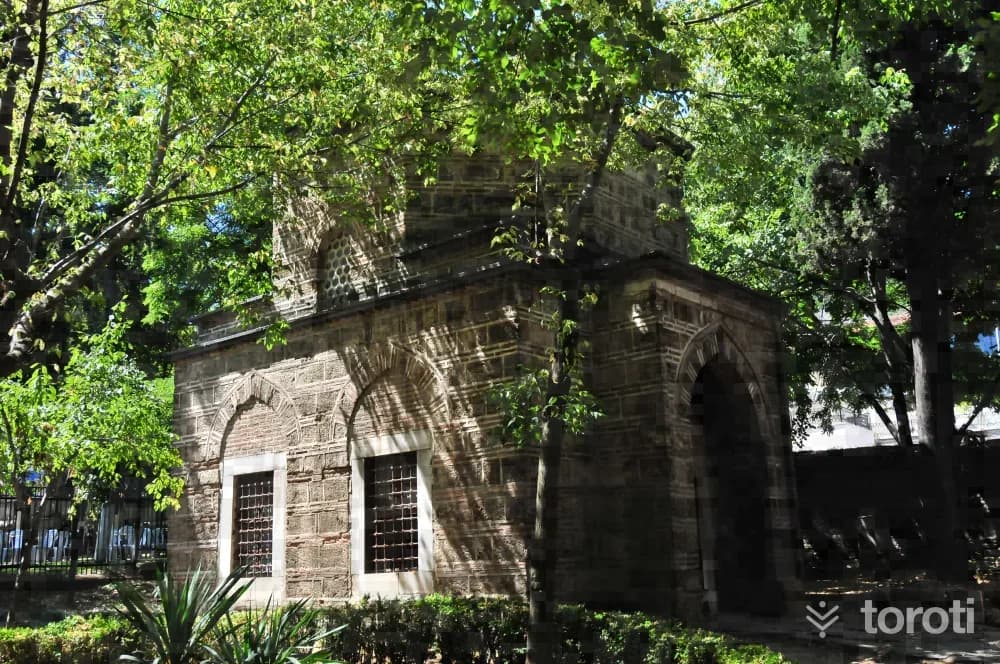
Gülşah Hatun Türbesi
The tomb, located within the Muradiye block, was commissioned in the XVth century. The tomb belongs to Gülşah Hatun, one of the wives of Fatih Sultan Mehmet and the mother of Şehzade Mustafa. In the tomb, which has an entrance in the form of a small iwan, the main space has a square plan. The dome rests on a band with lozenge motifs on the inside and on an octagonal drum on the outside. The wall thicknesses vary between 0.82x0.85 meters.
45 minutes
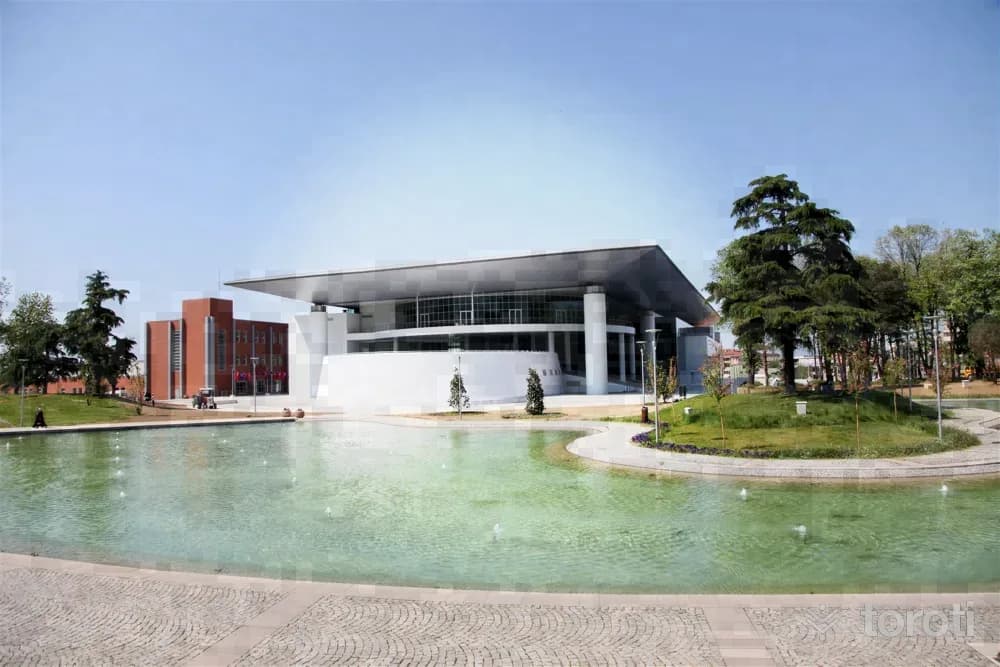
Merinos Kültür Parkı Ve Merinos Atatürk Kongre Ve Kültür Merkezi
Merinos Park is Bursa’s oxygen reservoir. It is Bursa’s largest urban park after Kültürpark. In the 252 thousand 500 square meters of green area, there is an artificial pond and ornamental pools in an area containing 2 thousand 500 trees and 11 thousand 600 plants of 81 different species. In addition to the green area, it is also a center of attraction with its activity areas. There is also an indoor parking lot for 1000 vehicles within Merinos.
45 minutes
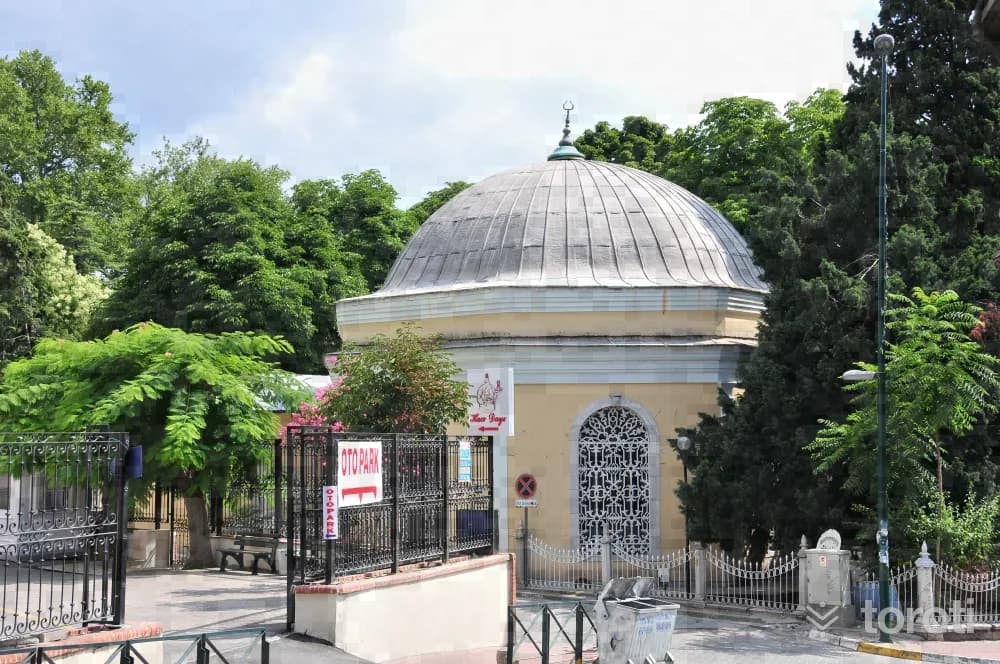
Osman Gazi Türbesi
Osman Gazi, the founder of the Ottoman State, lived between 1258-1324. During the siege of Bursa, in accordance with his will, Osmangazi was buried after the conquest of Bursa in the tomb built on the chapel of the Byzantine Monastery named Sainte Elie, known as “Gümüşlü Kümbet”. The tomb, which was completely destroyed by fire in 1801 and by the 1855 earthquake, was restored to its present form in 1863 by Sultan Abdülaziz, remaining faithful to its original structure.
45 minutes
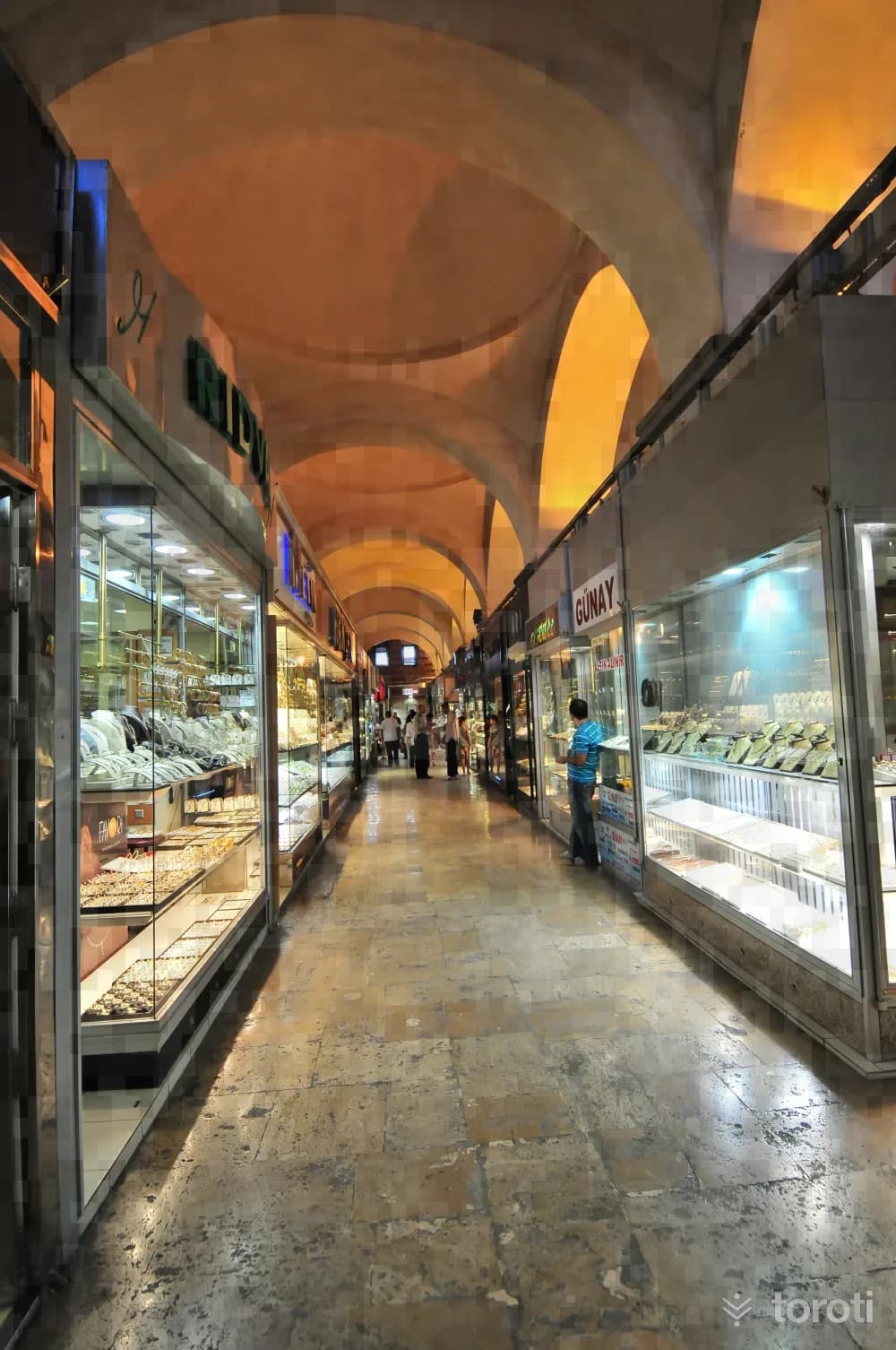
Yıldirim Bayezid Bedesteni
Built by Yıldırım Bayezid at the end of the 14th century, it is the first bedesten built during the Ottoman Empire. The duty of safely storing money and valuable goods, which banks undertake today, was fulfilled by bedestens in that period. Forming the core of banking and stock exchange, this structure was used as a place where the country's most valuable goods were bought and sold and valuable items were stored.
45 minutes
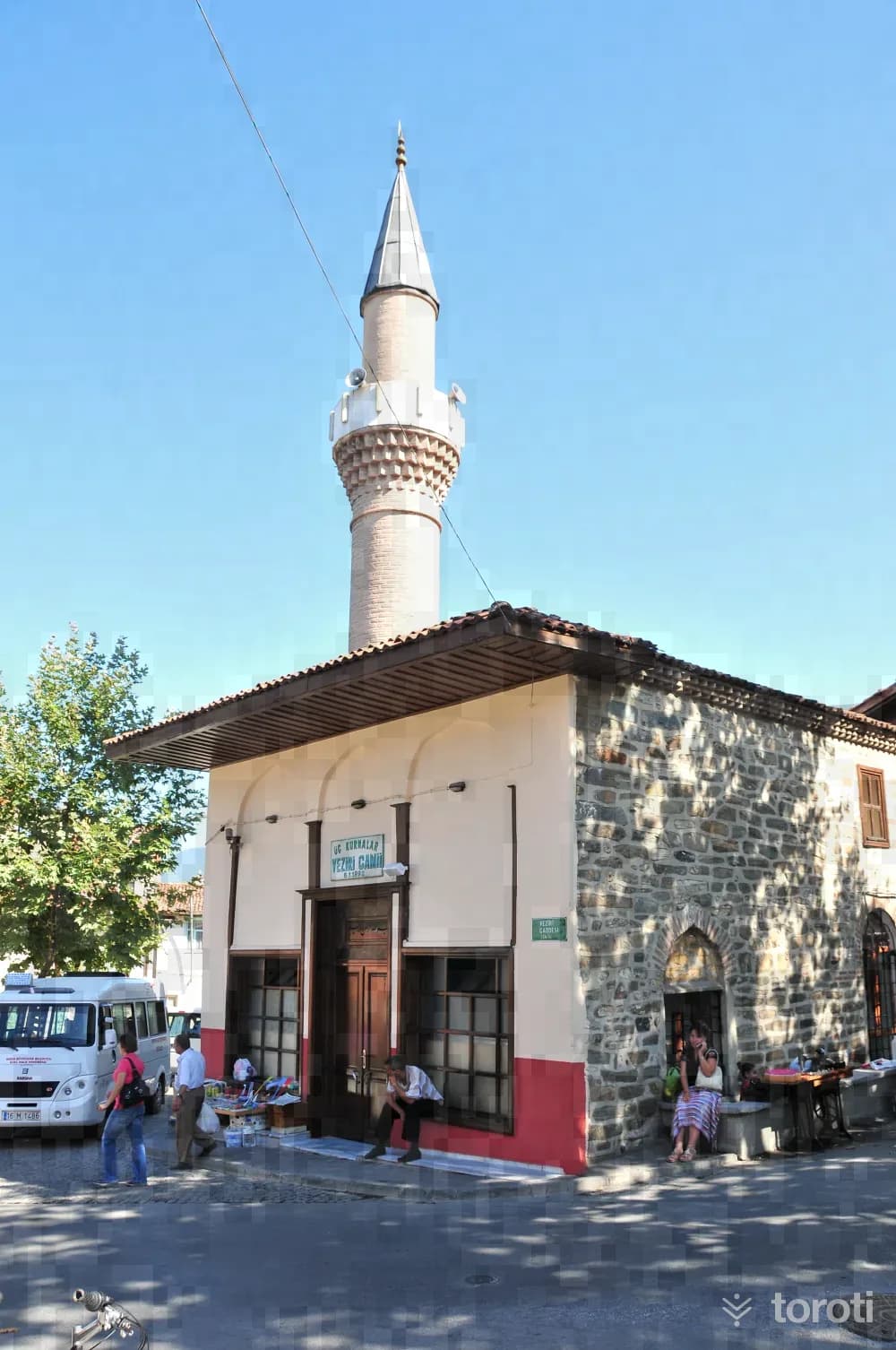
ÜÇ Kurnalar Veziri Cami
It is said to have been built by a vizier of Sultan Bayezid II. For this reason, it has been known by this name. At the entrance of the mosque, which has interior dimensions of 6.10x7.40 meters, there is a last congregation area attached to the main space, 3.70 meters deep. It is covered with a roof. The main walls were built with three rows of brick and one row of cut stone. For a period, its ownership passed into the hands of private individuals and it was used as a commercial establishment. During this period, the structure underwent some changes.
45 minutes
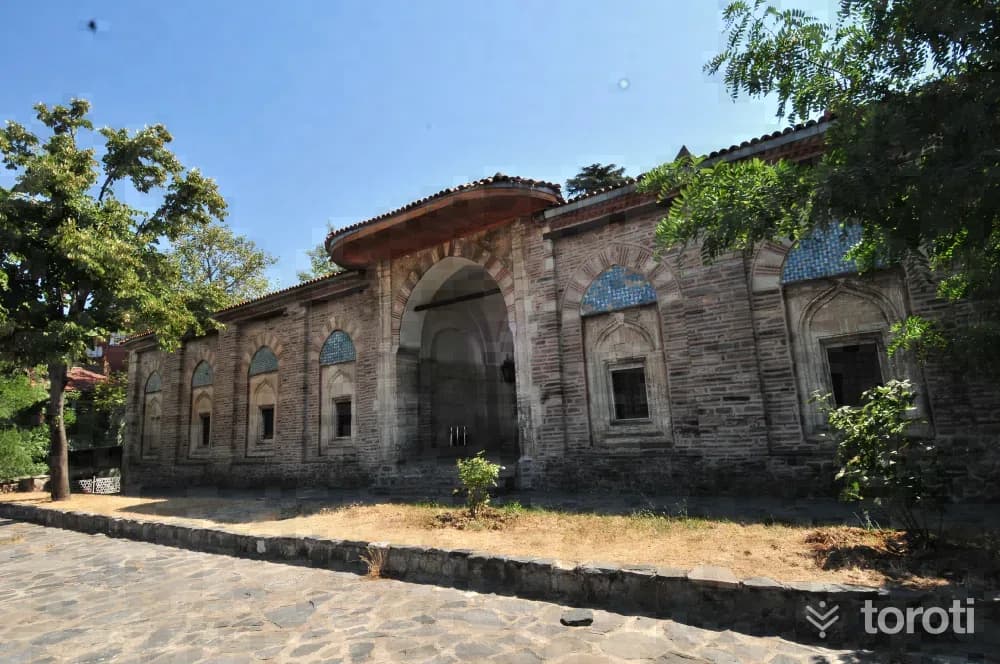
Türk-İslam Eserleri Müzesi (yeşil Medrese)
Yeşil Medrese, located in the city center of Bursa, is also known as Sultaniye Medresesi. The madrasa, which educated many famous scholars, was built together with Yeşil Külliyesi by Mimar Hacı İvaz Paşa between 1414-1424. In terms of plan, it appears as a continuation of the open-courtyard madrasas of the Anatolian Seljuks. There are 13 madrasa rooms with spaces consisting of an entrance iwan, two side iwans, and the main iwan.
45 minutes
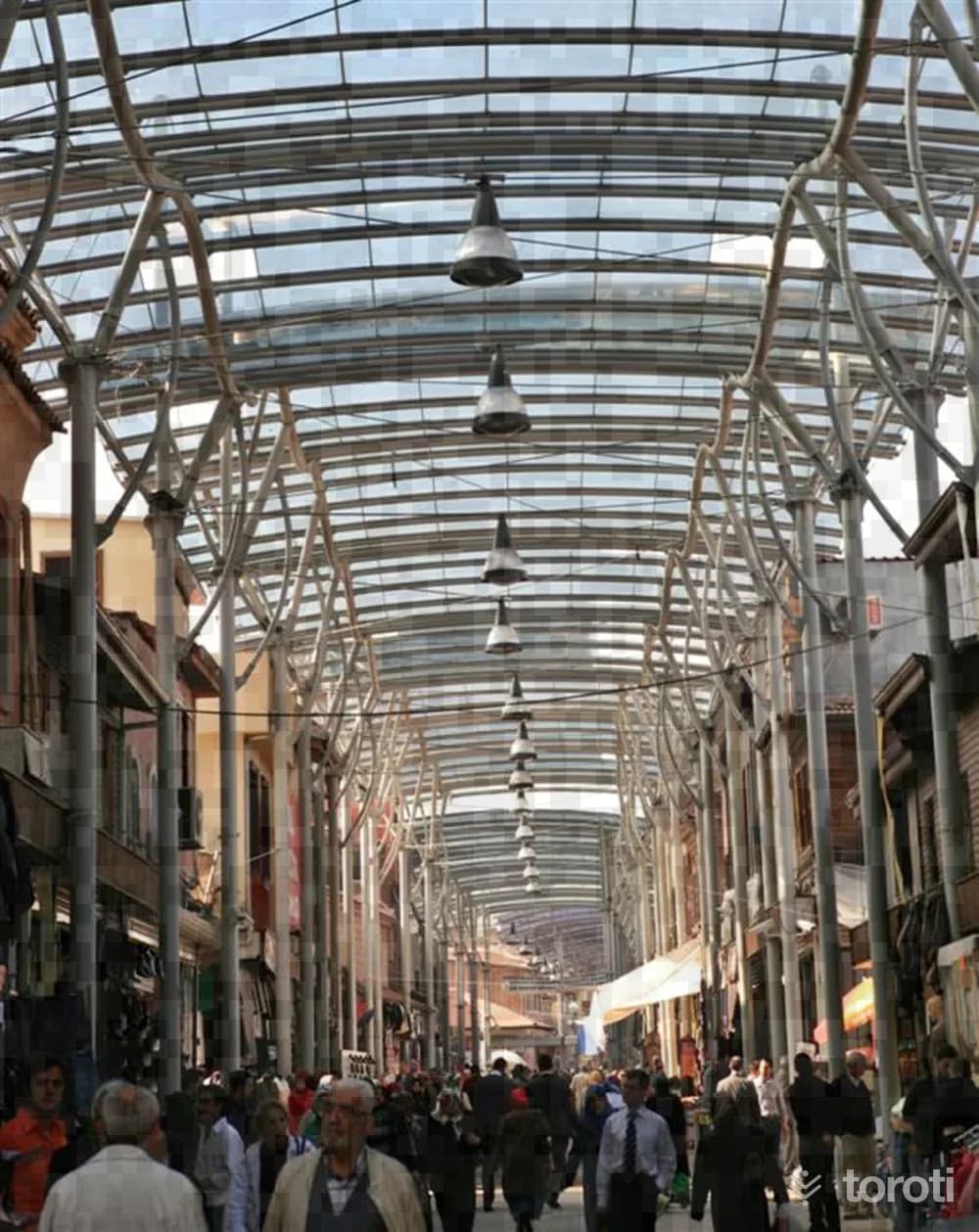
Uzun Çarşı
It is understood that Kapalı Çarşı was called Uzun Çarşı in the first half of the 15th century. Over time, small shops backed against the hans were established to the north and south of the Uzun Çarşı axis. It is known that clothiers, confectioners, shoemakers and knifemakers were located in this bazaar, respectively. The sale of real estate by auction was carried out in this bazaar, which was also called Sûk-i Sultani.
45 minutes
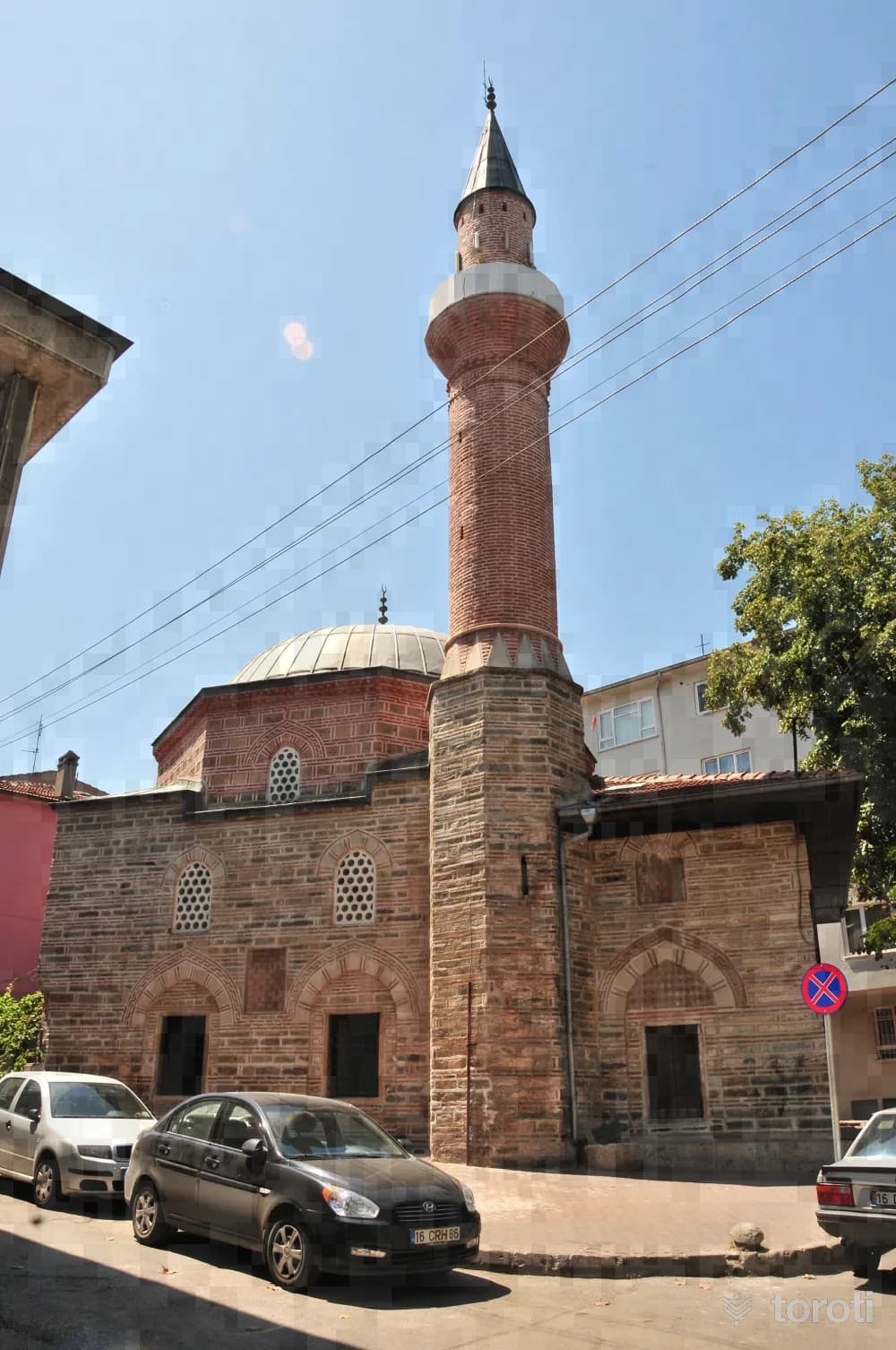
Hoca Muslihiddin Cami / Minare Camii
It is estimated that it was commissioned by Hoca Muslihiddin in 1493, during the time of Çelebi Sultan Mehmet. The mosque has interior dimensions of 7.67 x 8.10 meters, and there is a last congregation area five meters deep. The pointed arch of the window on the east side was built with a sequence of two bricks and one stone, and framed with a bird’s beak and zencirek motif in brick. A lozenge motif was worked into the window pediments with stone and brick.
45 minutes
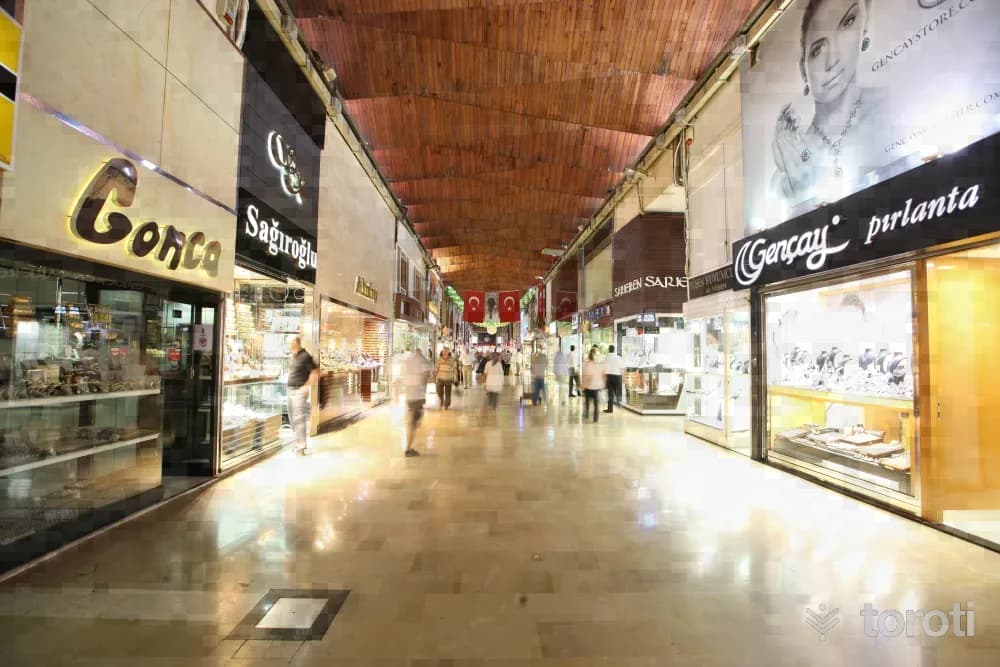
Kapali Çarşı
During the time of Orhangazi, the spaces between the hans began to be covered with roofs and covered bazaars were created, and the first form of Kapalı Çarşı was formed in this way. In later years, the old coppersmiths' bazaars of Sahaflar, Akatarlar, İvaz Paşa, Gelincik, Sipahiler, Karacabey (Yorgancılar, Sandıkçılar) were added, and thus Kapalı Çarşı was formed.
45 minutes
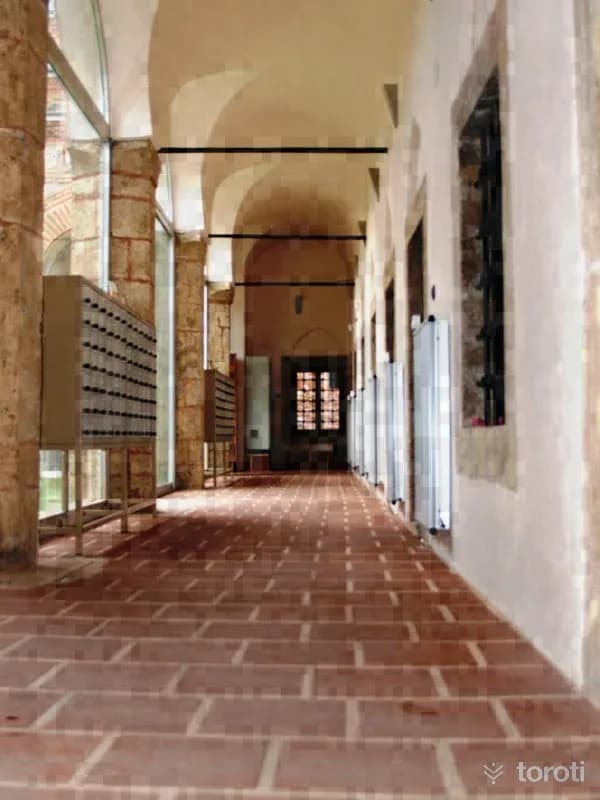
İne Bey Medresesi
It was commissioned by Subaşı İne Bey, one of the beys of the Yıldırım Bayezid Period. In 1678, it was repaired by Grand Vizier Hüseyin Paşa and a new waqf was established. Built with a mixture of rubble stone and brick, the madrasa consists of nine rooms, a classroom, a library on the upper floor, and a toilet. The madrasa is reached by a few steps, and the entrance is provided through a round stone-arched door within a pointed-arched niche.
45 minutes
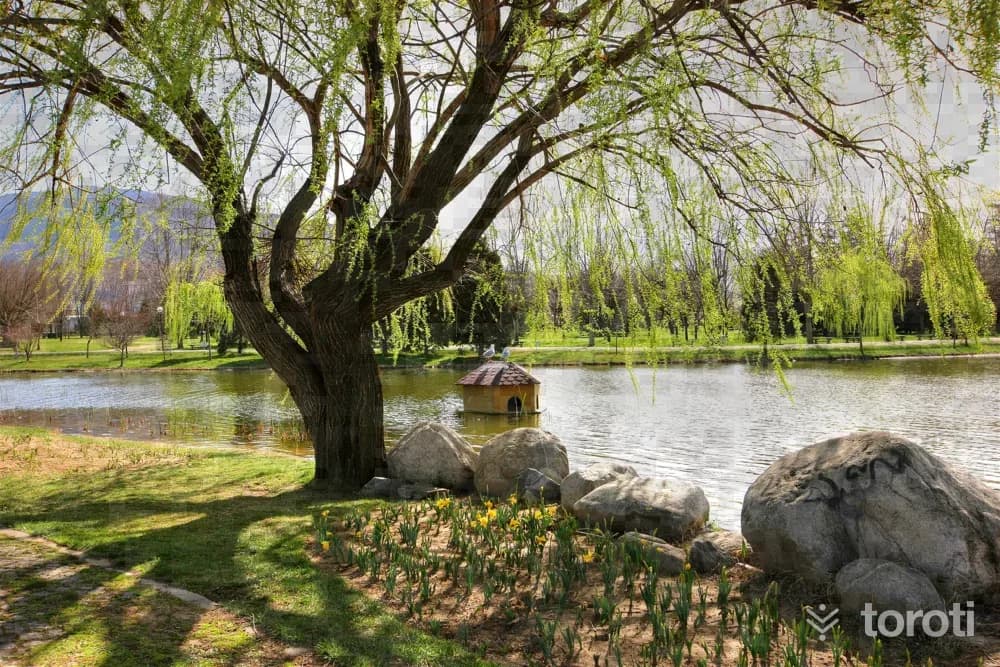
Soğanli Botanik Parkı
The Botanical Park covers an area of 400 dönüms. Open to botanical research and scientific studies, the Botanical Park has been a first-degree protected area since its establishment in 1998. In the park, which includes sections such as the Japanese Garden, French Garden, English Garden, rose garden, rock garden, fragrant plants garden, and shaped plants garden, there are 150 species of trees, 27 varieties of roses, 76 species of shrubs, and 20 species of groundcover plants.
45 minutes
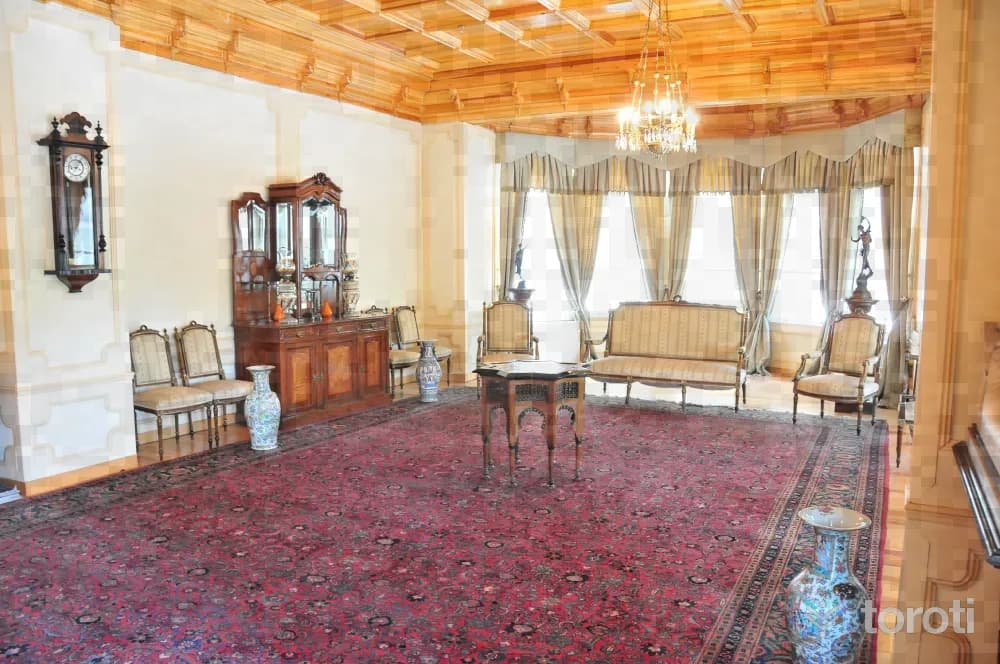
Bursa Atatürk Evi Müzesi
Atatürk House Museum is a mansion built in the late 19th century and was purchased by Bursa Municipality and presented to Atatürk during his second visit to Bursa on 20-24 January 1923. This mansion, which was donated by Atatürk to Bursa Municipality in 1938 and transferred to the Ministry of Culture in 1968, was converted into a museum and opened to visitors on 29 October 1973, in the 50th year of the Republic.
45 minutes
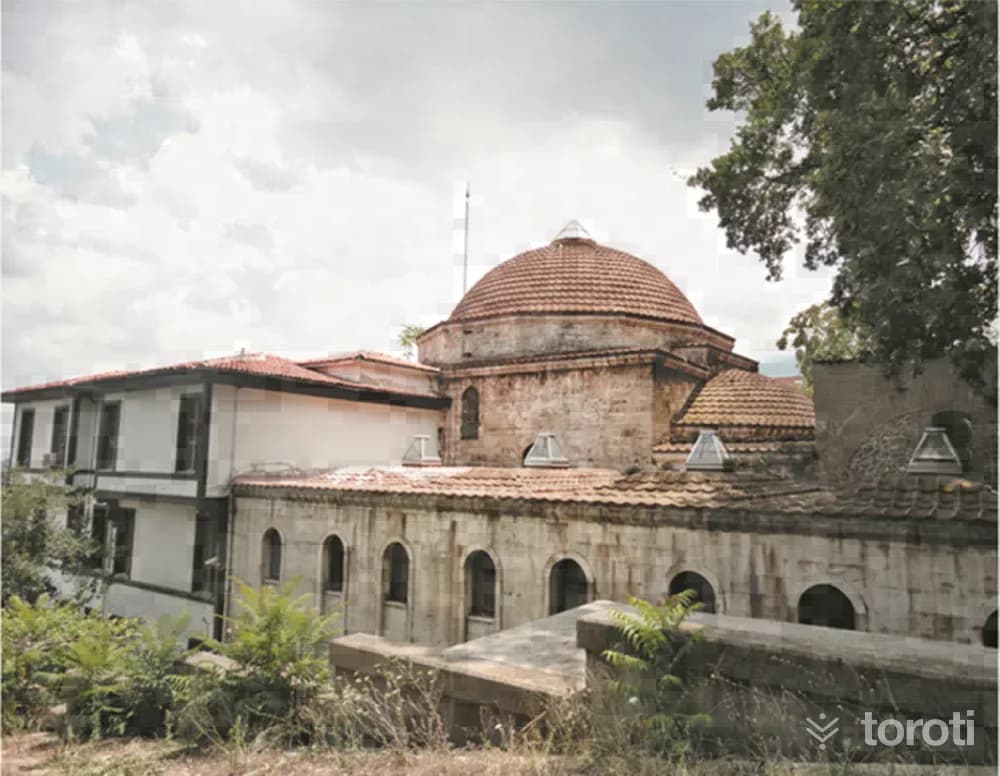
Kükürtlü Kaplıcaları
These hot springs, connected to Bademli Bahçe Spring, are located behind Kükürtlü Garden between central Bursa and Çekirge. It has seven springs. These sulphurous and radioactive waters have the same characteristics as Vakıfbahçe Spring for bathing and drinking. In addition, its sulphurous waters are good for vascular diseases and chronic inflammatory diseases. The men's section of the hot spring was built by Sultan I. Murad Hüdavendigâr, and the women's section was built by Sultan II. Bayezid.
45 minutes
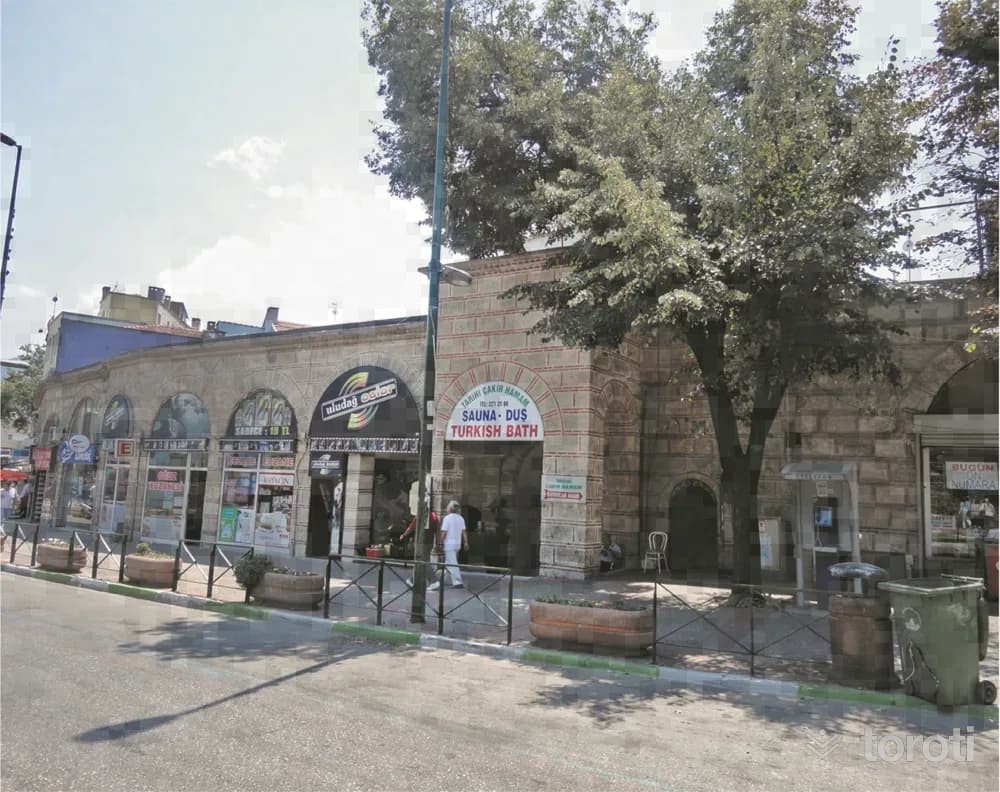
Çakır Hamam / Çakırağa Hamamı
The bath was commissioned by Çakır Ağa, who served as the Bursa and Istanbul Subaşı, Sekban Başı, and Çakırcı Başı during the reign of Sultan Murad II. The bath belongs to the double bath class, and the hot sections of the women’s and men’s parts were enlarged. There are two halet at the far end. The changing areas also consist of a square space. It is covered with a dome, and the dome drum has been raised with a second additional drum.
45 minutes
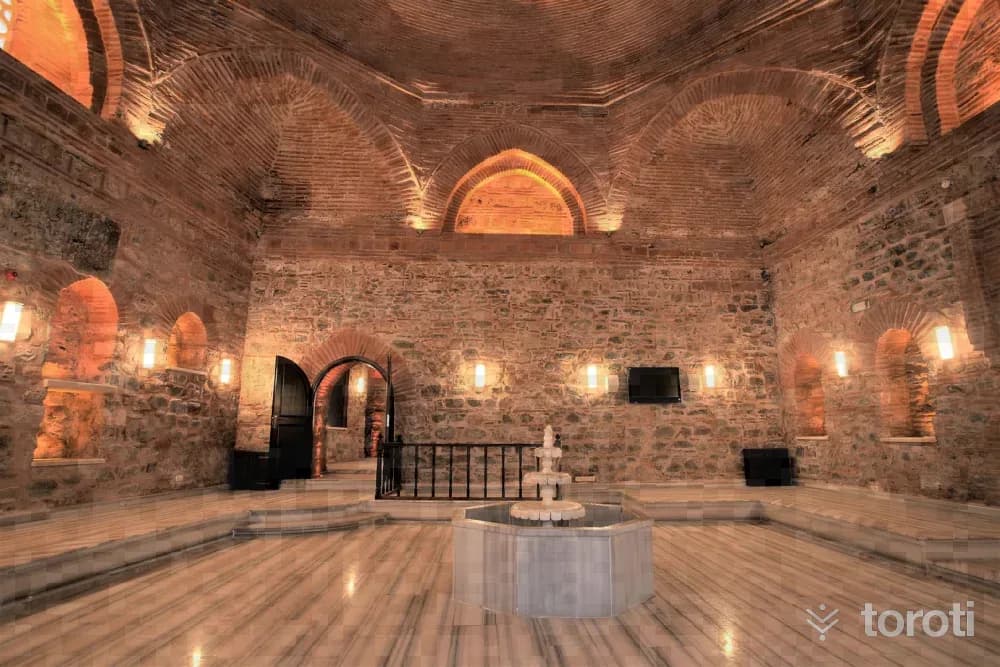
Ördekli Hamamı Kültür Merkezi
The bath is suitable for the typology of a "double bath". It is also known as the old "Yeni Hamam". Its construction began during the reign of Yıldırım Bayezid, but it remained unfinished due to the occupation of Bursa by Timur’s army. The bath was completed during the reign of Çelebi Mehmed. In 1485, Çandarlı İbrahim Paşa had a fountain built into the wall of the bath. The building, which had been in a ruined condition for a long time, was restored between 2006-2008 by being given the function of a cultural center.
45 minutes
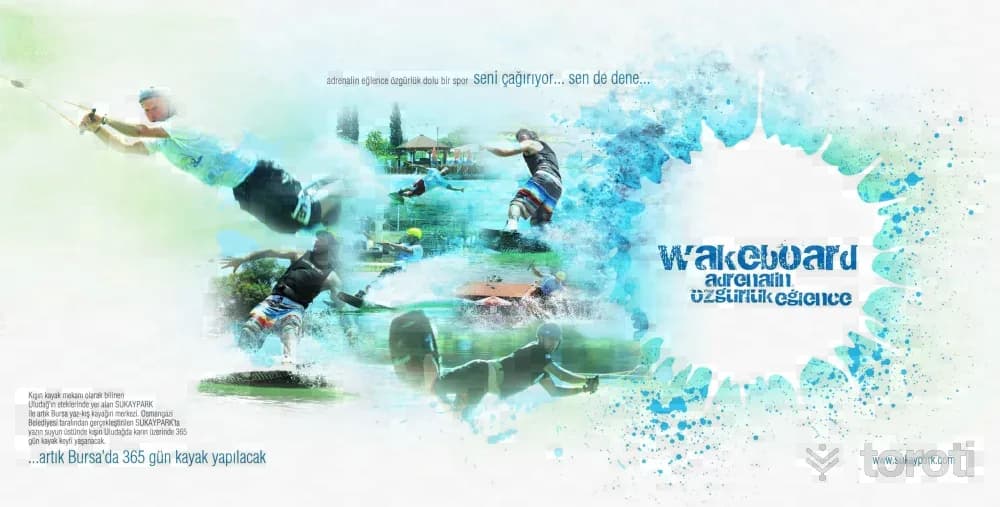
Sukaypark
Riding lessons are given to all horse lovers of Bursa with club horses under the supervision of trainers. Sukaypark, Turkey’s first cable water ski facility built by Bursa Osmangazi Municipality, hosted the 2012 Cable Wakeboard (water skiing) Turkey Championship.
45 minutes
Bali Bey Han
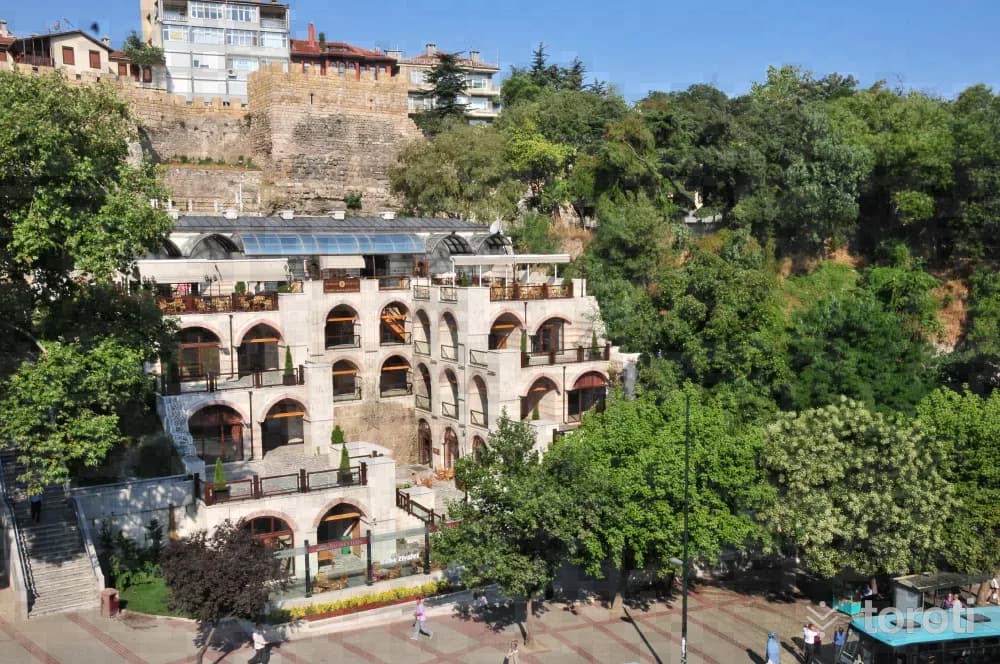
Built by Bali Bey, the son of Hamza Bey, the Sanjak Bey of Niğbolu, during the reign of Fatih Sultan Mehmet in the late 15th century, the inn has the distinction of being the first three-storey inn of the Ottoman Empire. Built on an area opposite the bazaar in order to serve caravans coming from outside the city for commercial activity in the Kapalı Çarşı, the inn contains 64 rooms.
45 minutes
Koza Hanı
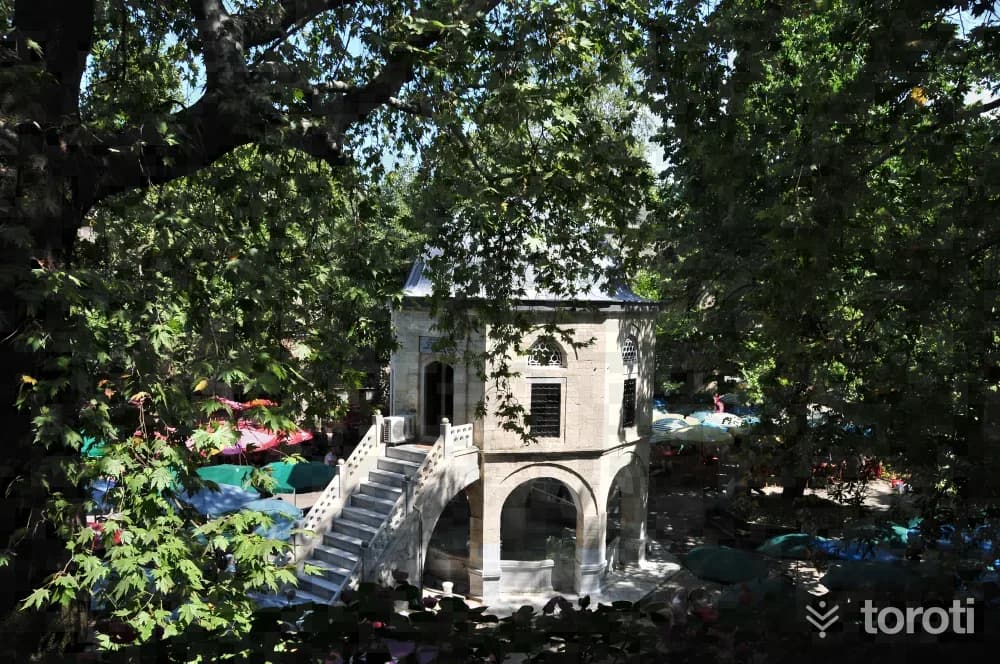
This han, located between Ulu Camii and Orhan Camii, was commissioned by Bayezit II in 1490 in order to generate income for charitable buildings in Istanbul. It is Bursa's most beautiful han and the one most intensively used today. This han, whose walls were built of brick and stone, is a two-storey structure arranged around a rectangular courtyard. On the east side of this han, there is a second courtyard section containing stables and storage rooms.
45 minutes
Uludağ (kiş Turizmi)
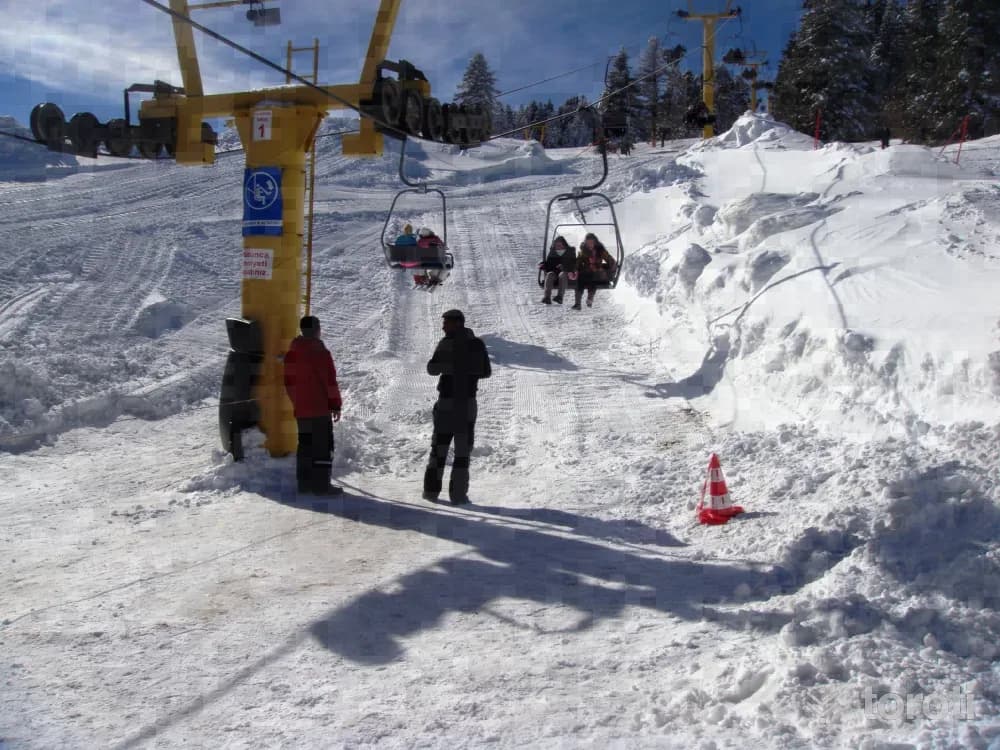
Uludağ, located south of Bursa, is one of the most popular centers for winter sports. It also offers opportunities for camping and trekking during the summer months.
Süleyman Çelebi Anıt Mezarı
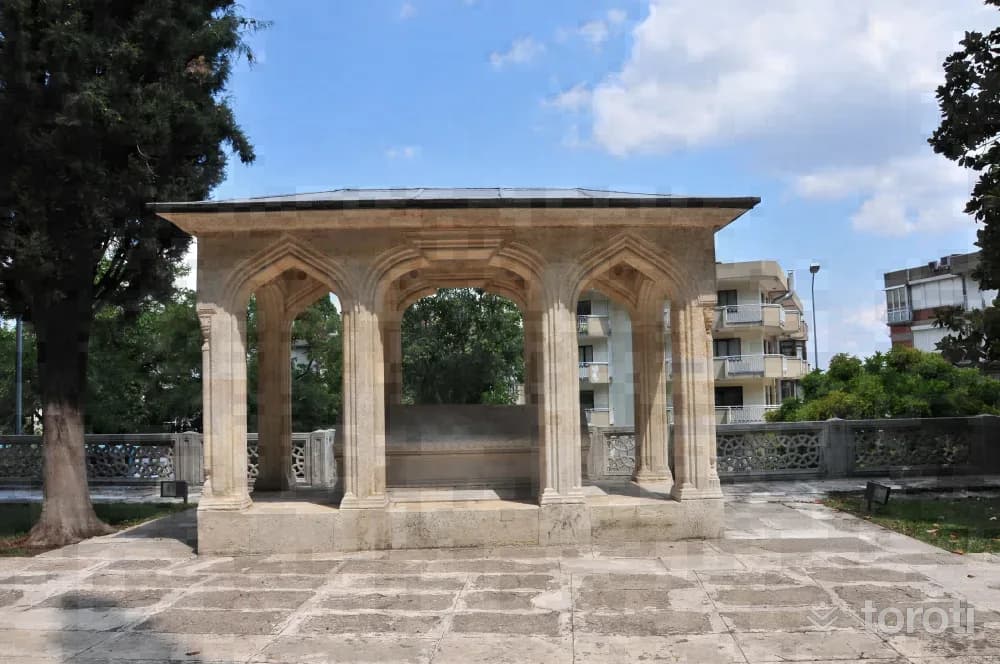
The monumental tomb of Süleyman Çelebi, who wrote the Mevlüd, is on Çekirge Caddesi. Süleyman Çelebi, who was from Bursa, was the son of Vezir Ahmet Paşa. He wrote the Mevlüd in Bursa in 1409. The grave of Süleyman Çelebi, who served as the imam of Ulucami during the time of Yıldırım Bayezid, was previously in this place known as Yoğurtlu Baba Cemetery. Between 1945-1952, a monumental tomb was built on the same site with the participation of governor Haşim İşcan and philanthropists from Bursa.
45 minutes
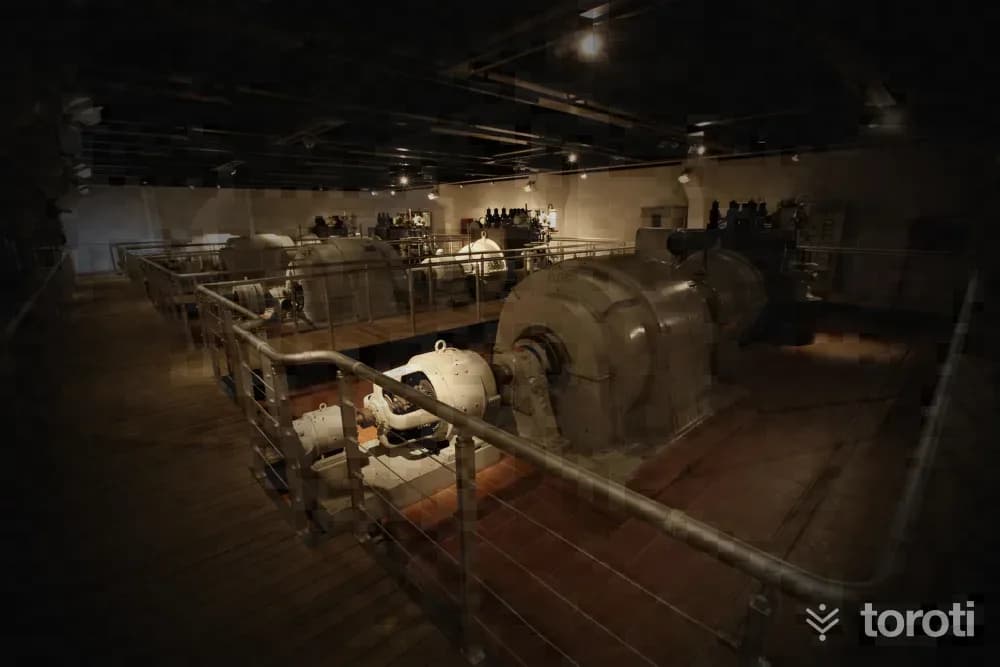
Bursa Merinos Enerji Müzesi
The Merinos Facilities, a yarn and fabric factory inaugurated by Mustafa Kemal Atatürk, became one of the biggest investments not only of Bursa but also of Turkey.
45 minutes
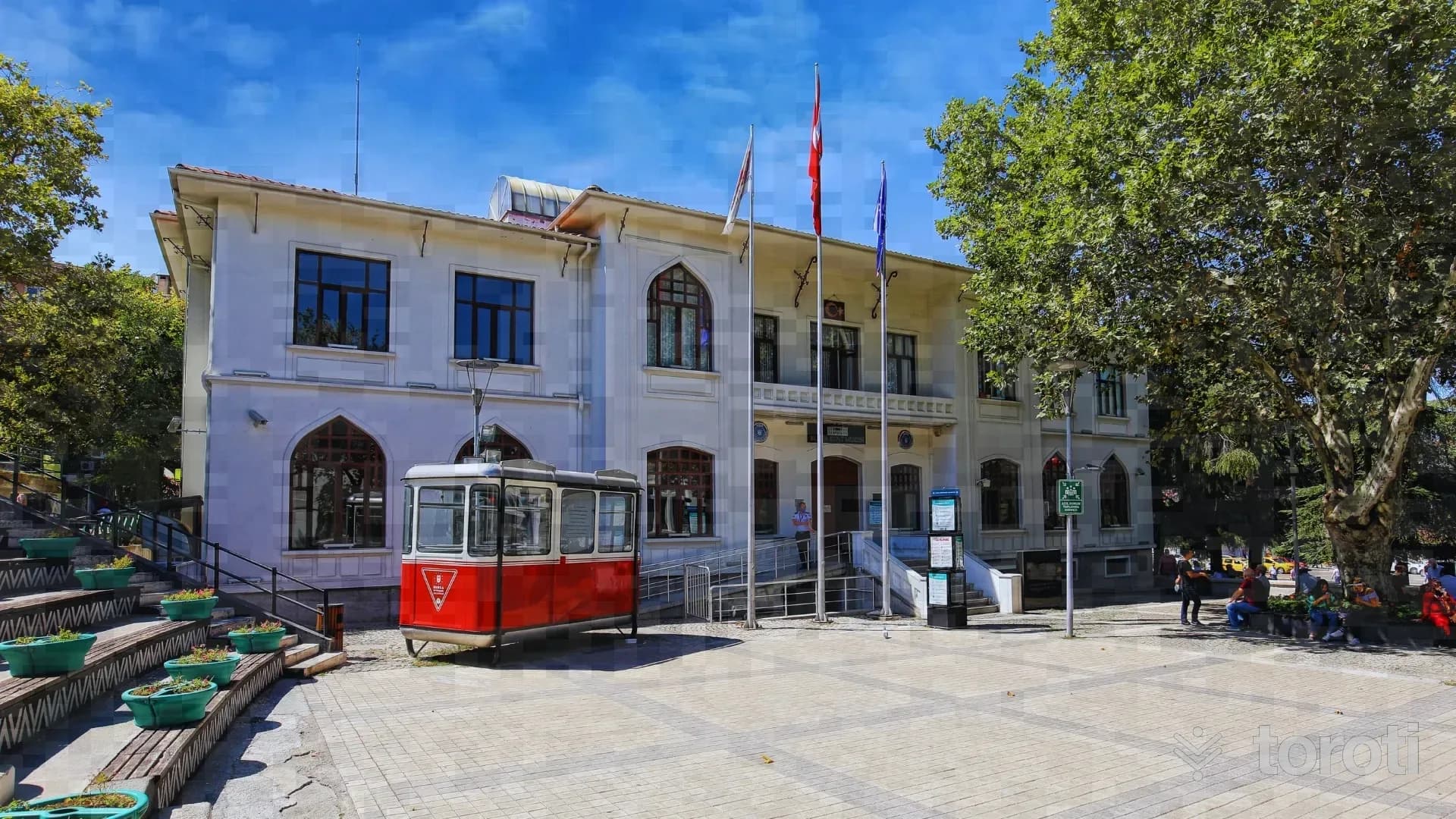
Bursa Kent Müzesi
Bursa City Museum is Turkey's first city museum.
60 minutes
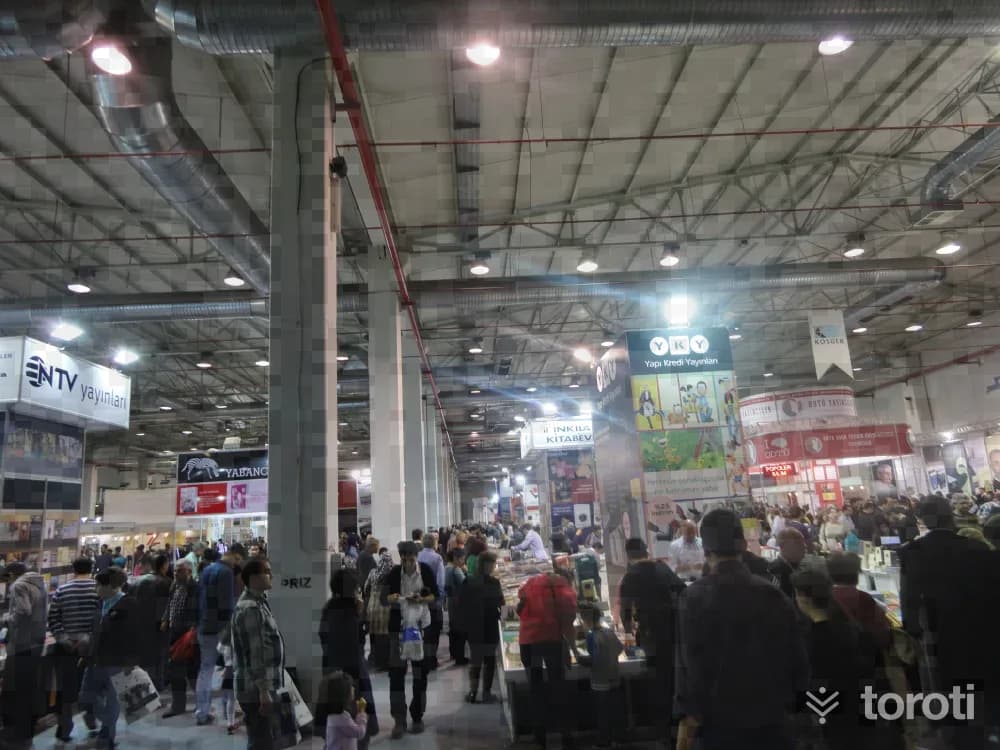
Tüyap Bursa Uluslararası Fuar Ve Kongre Merkezi
Operated by TÜYAP Bursa Fuarcılık A.Ş., this center is the largest fair and congress center in South Marmara. In a total area of 119.000 m2, it offers internationally qualified facilities with 15.000 m2 of indoor and 20.000 m2 of outdoor exhibition space.
45 minutes
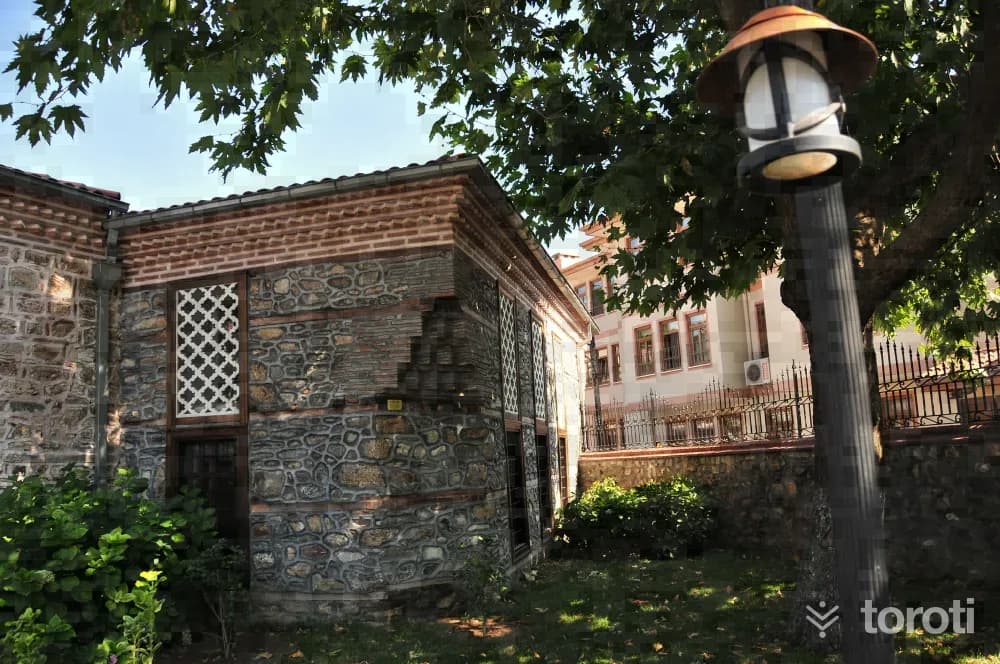
Haraççioğlu Medresesi
It is a structure in Kavaklı Neighborhood, one of the oldest settlements of Bursa, which was originally a dervish lodge and later converted into a madrasa. The madrasa consists of a 110 square meter building and a 115 square meter garden. It is stated that after Orhan Library, the largest library in Bursa, Haraççıoğlu Madrasa had the richest library. At present, a significant portion of the books is in the Bursa İnebey Manuscript Works Library Directorate.
45 minutes
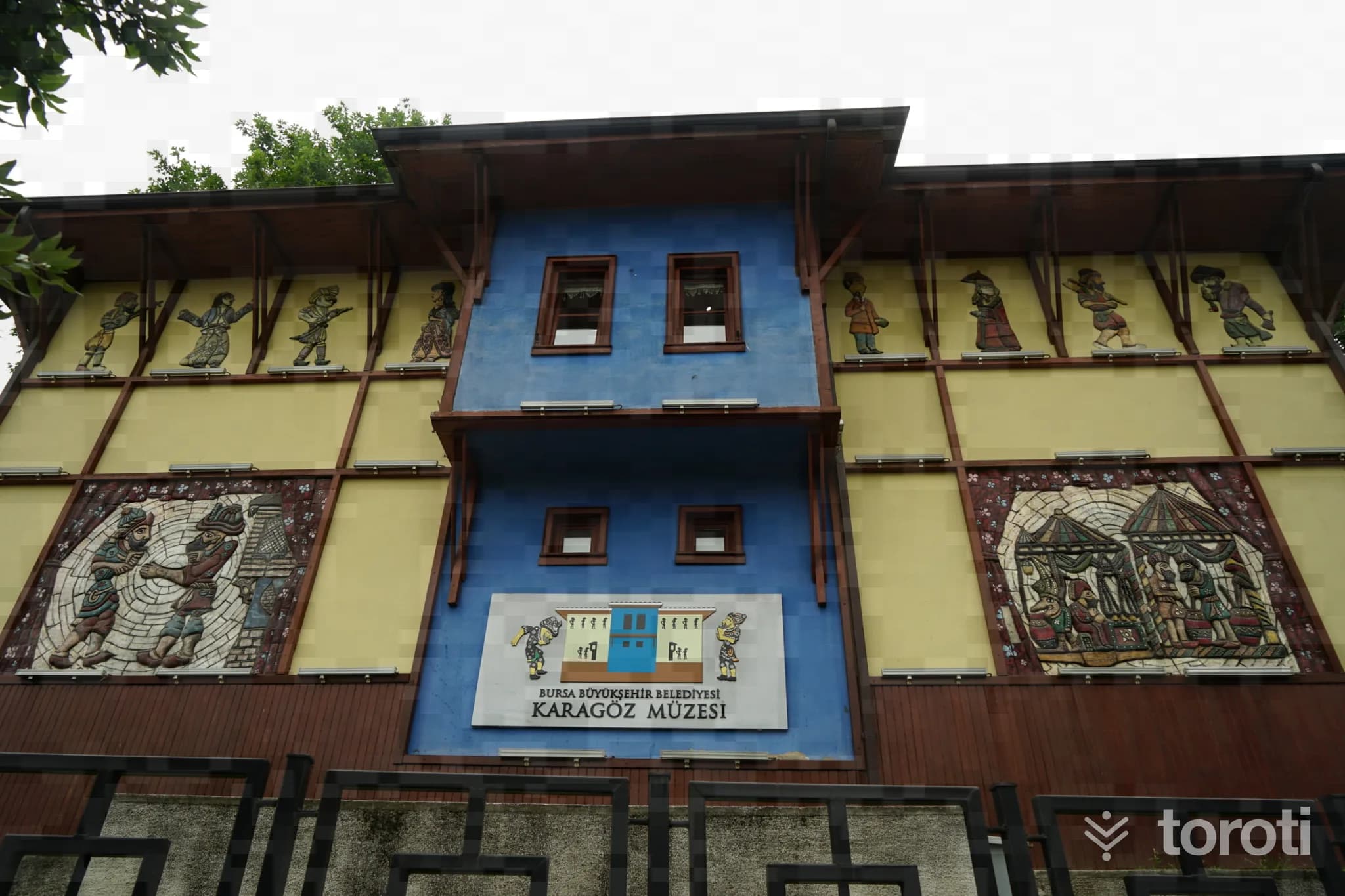
Karagöz Evi Müzesi
Şeyh Küşteri, accepted as the pioneer of shadow play, and the memories of Karagöz and Hacivat have been symbolized in Bursa. The grave, thought to be located in Yoğurtlu Baba Dergahı on Çekirge Caddesi, Bursa’s oldest cemetery, was turned into a monumental tomb in 1950. Relief sculptures of Karagöz and Hacivat made of tiles were commissioned on a symbolic screen on a wide concrete platform.
30 minutes
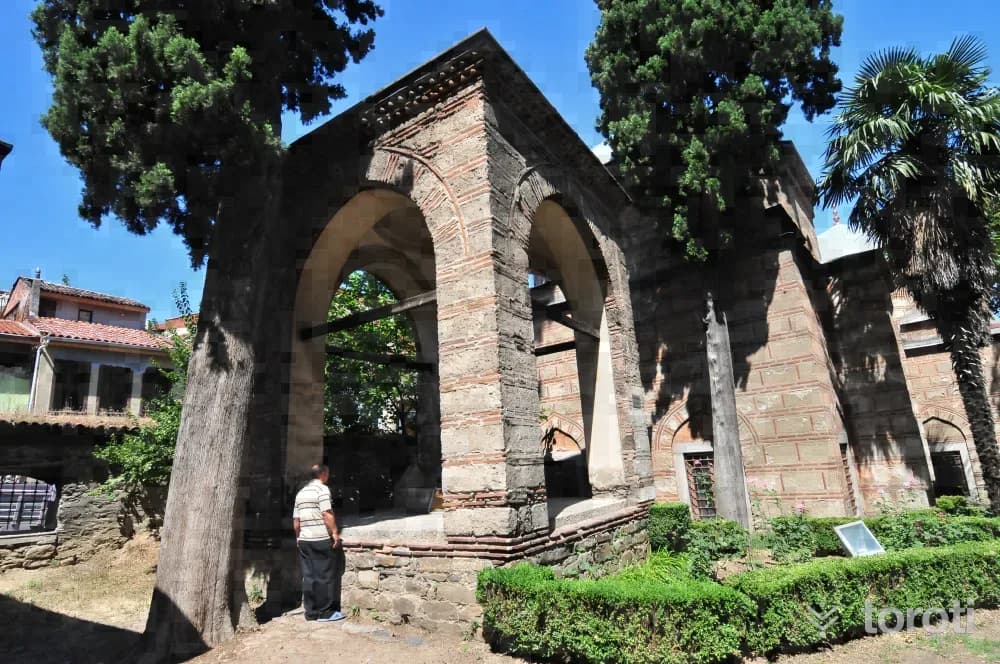
Ebe Hatun Türbesi / Gülbahar Hatun Türbesi
There is no inscription in the tomb located in the Muradiye Cami graveyard, belonging to the wet nurse of Fatih Sultan Mehmet. The structure is an open-sided tomb with a very regular square plan, measuring 4.46x4.46 meters externally, with a dome resting on pointed arches connecting piers built of stone and brick. Wooden tie beams are located just below the springing level of the arches. The exterior of the dome, which has a two-tier sawtooth cornice, is covered with lead.
45 minutes
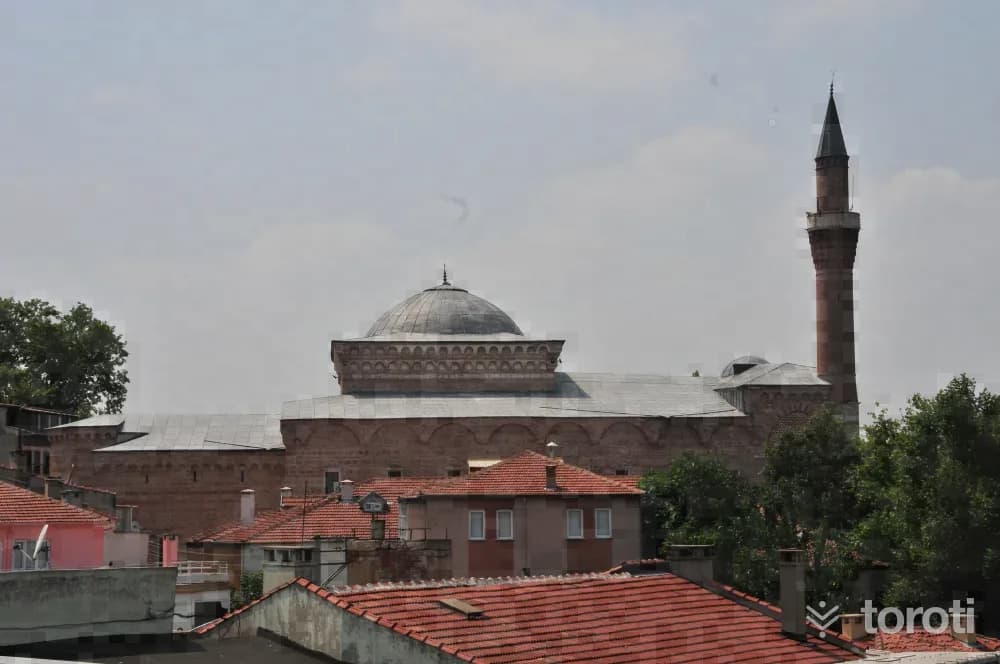
Hüdavendigar Külliyesi / I. Murad Külliyesi
The Sultan Murad I Complex, known as Hüdavendigar Külliyesi, was commissioned by Murad I Hüdavendigar, the first martyred sultan of the Ottoman State, in 1363-1366. It is located on the hill overlooking the Bursa Plain, on the western side of the city, in the area between I. Murad and Hamam Streets. The neighborhood where the complex is located is one of the oldest neighborhoods of Bursa. The complex consists of a mosque, madrasa, imaret, fountain, bath and tomb.
45 minutes
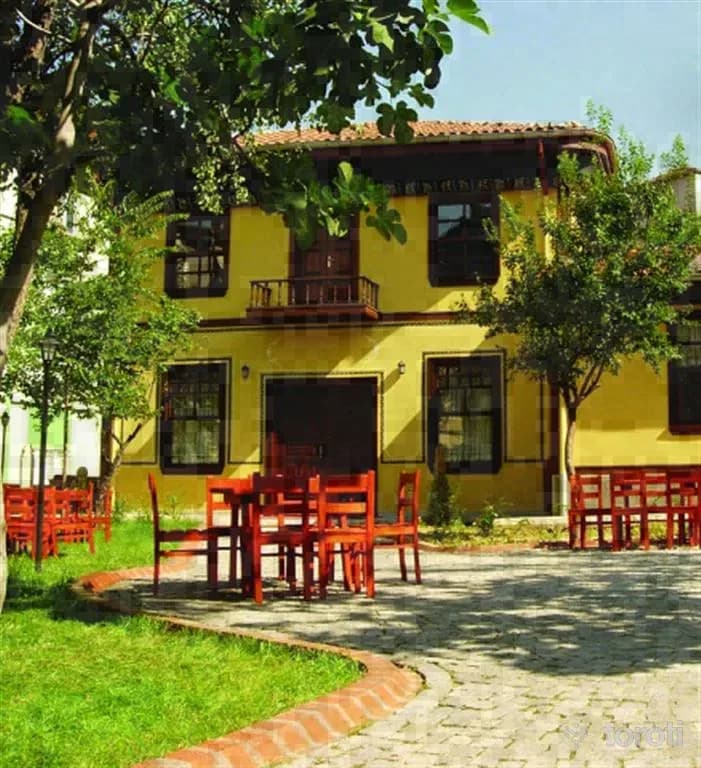
Karabaş-i Veli Kültür Merkezi
It was commissioned by Yakup Çelebi in the 16th century. The dervish lodge and semahane are located within a large garden. Between 2002-2005, it was restored to be used as a cultural center. Karabaş-i Tekkesi serves as a place where the Mevlevi culture, identified with the culture it represents, is fully experienced. The lodge was built on a rectangular area using the same construction technique as the semahane.
45 minutes
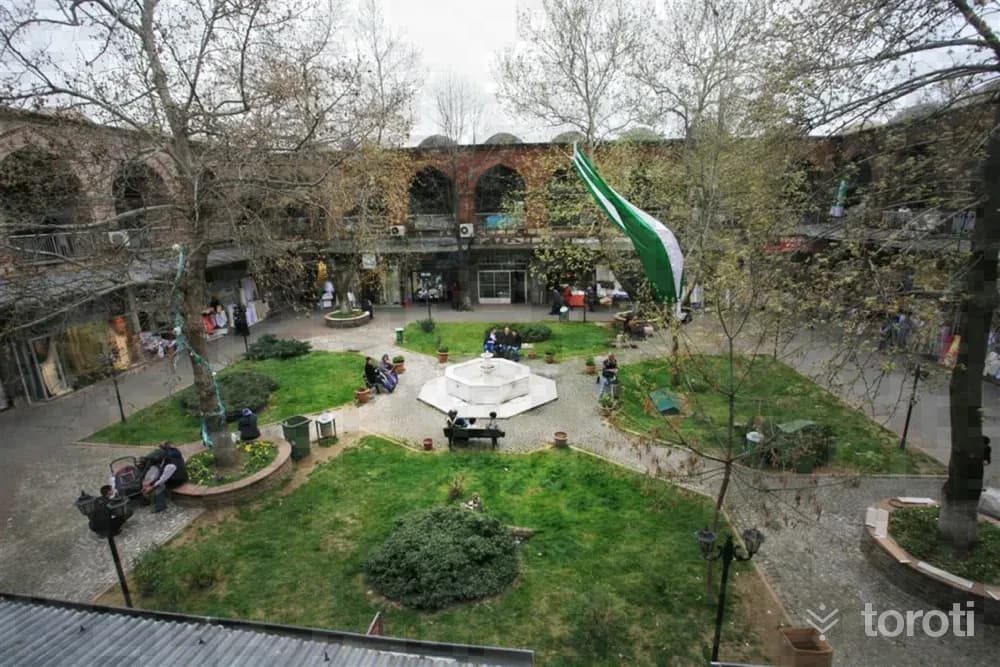
İpek Han
It is to the west of İvaz Paşa Çarşısı and to the south of Pirinç Han. It was commissioned by Çelebi Mehmet to Architect Hacı İvaz Paşa for the purpose of bringing income to the Yeşil Külliyesi. The inn, known by names such as Sultan Hanı, İpek Hanı, and Faytoncular Hanı, was rebuilt with cut stone and brick after the 1958 fire. The entrance of the inn is not original, as it was rebuilt. Interesting brick decorations can be seen on its facades.
45 minutes
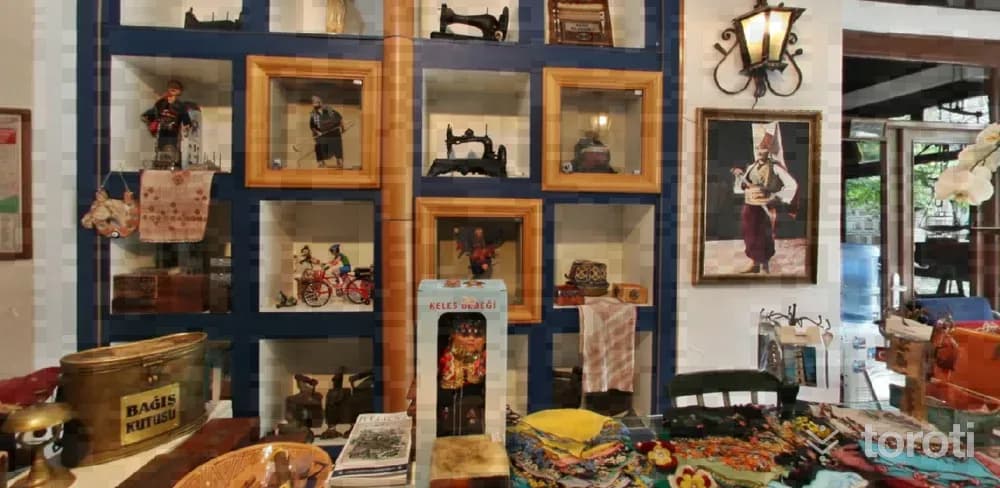
Uluumay Osmanli Halk Kiyafetleri Ve Takilari Müzesi
It is a private museum located within Şair Ahmed Paşa Medresesi and has been in service since 18 September 2004. The museum exhibits 18 different collections gathered over 45 years by Esat Uluumay, one of the founding members of the Anadolu Foklor Vakfı.
45 minutes
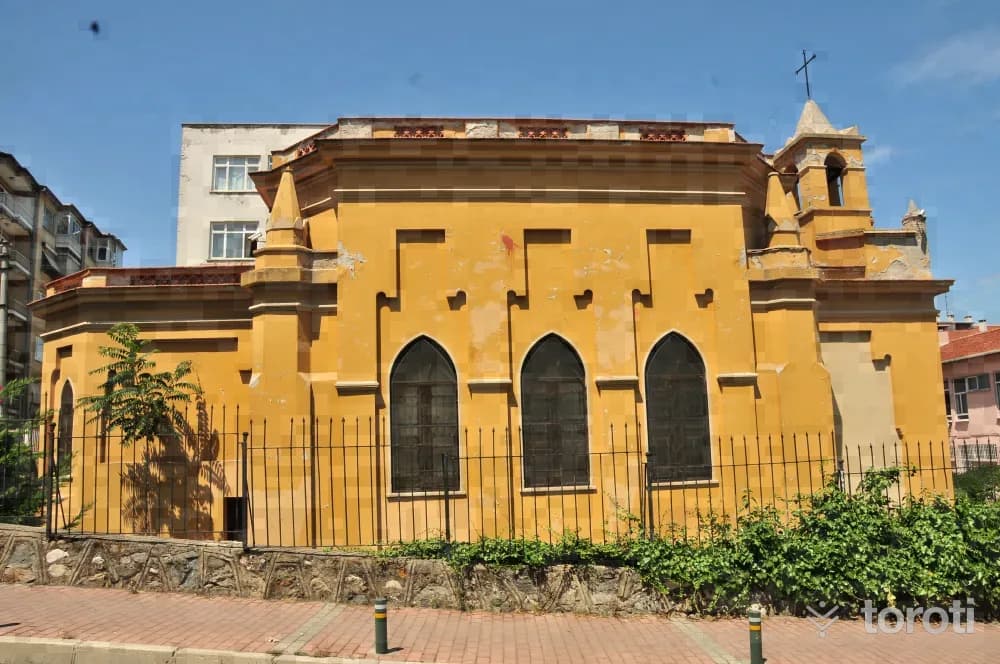
Fransiz Kilisesi
The church, located in Hocaalizade Semti and built by the French in the 19th century, originally bears the name Santa Maria Church. The building, which does not resemble other churches in terms of structure, also housed a dispensary, an orphanage, and a place for patient care. The church, in Baroque style, has a wooden roof structure and a tiled covering.
45 minutes
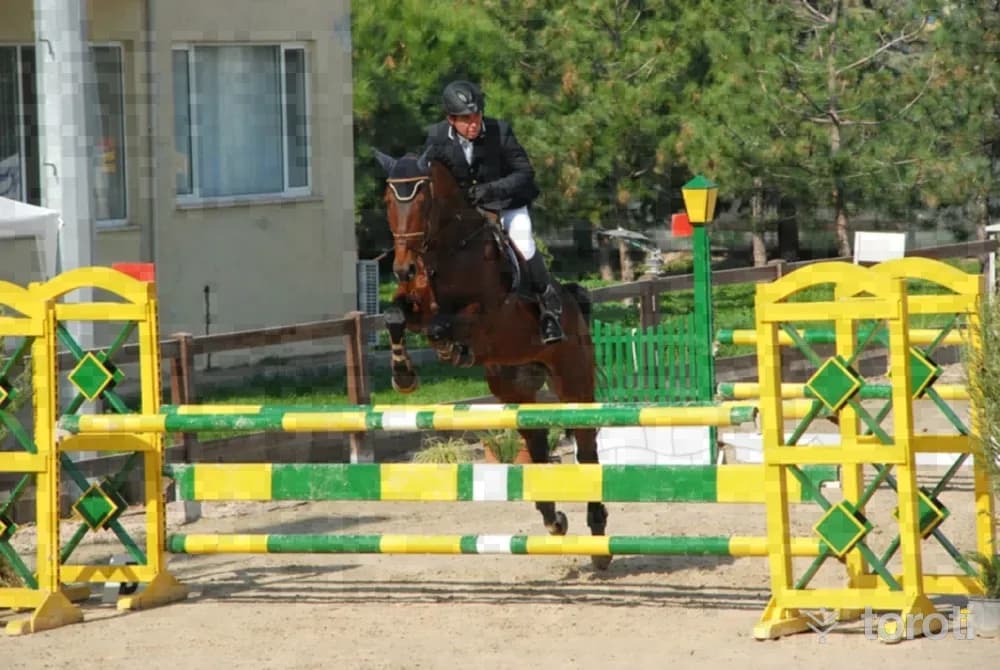
Bursa Atli Spor Kulübü
Bursa Atlı Spor Kulübü, with the aim of popularizing equestrianism among all segments of our society and providing professional support to our athletes engaged in equestrianism, has organized the traditional Uludağ Cup every year since 1976 1994, the Prime Ministry Cup as of 2007 and 2008, the Presidency and TBMM Cups in 2009, and the Turkish Championship and Grand Prix Show Jumping Competitions on 15-17 October 2010.
45 minutes
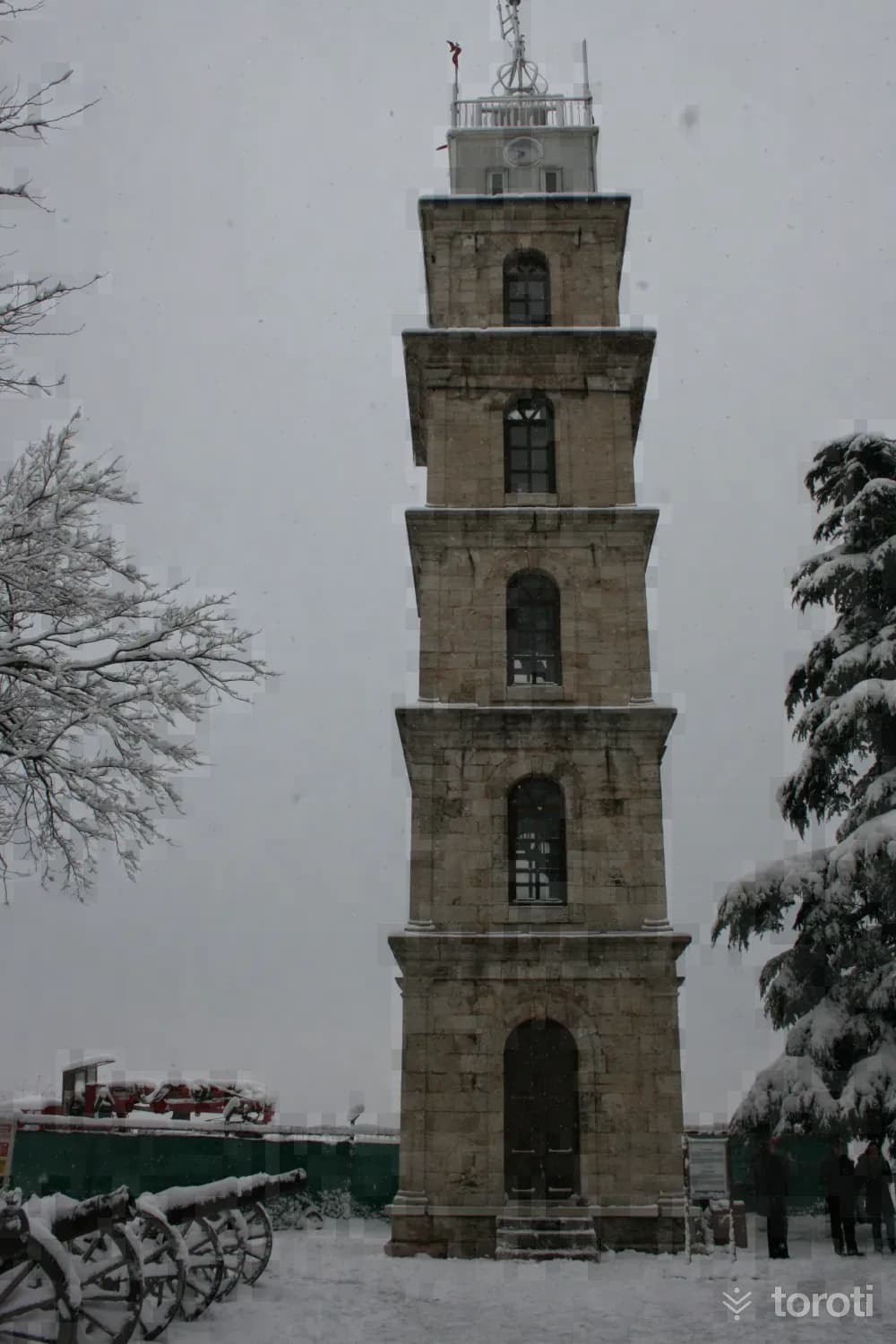
Tophane Saat Kulesi
The clock tower located in Tophane Park was built in 1905. Since the panoramic view of Bursa can be seen from its location, it was also used as a fire tower for a while. The tower, which has an entrance on its southern side, is reached by an 89-step wooden staircase. On the four facades of the upper floor of the tower, there are round clocks with a diameter of 90 centimeters. The tower, whose clocks do not work, is 33 meters high and has 6 floors.
45 minutes
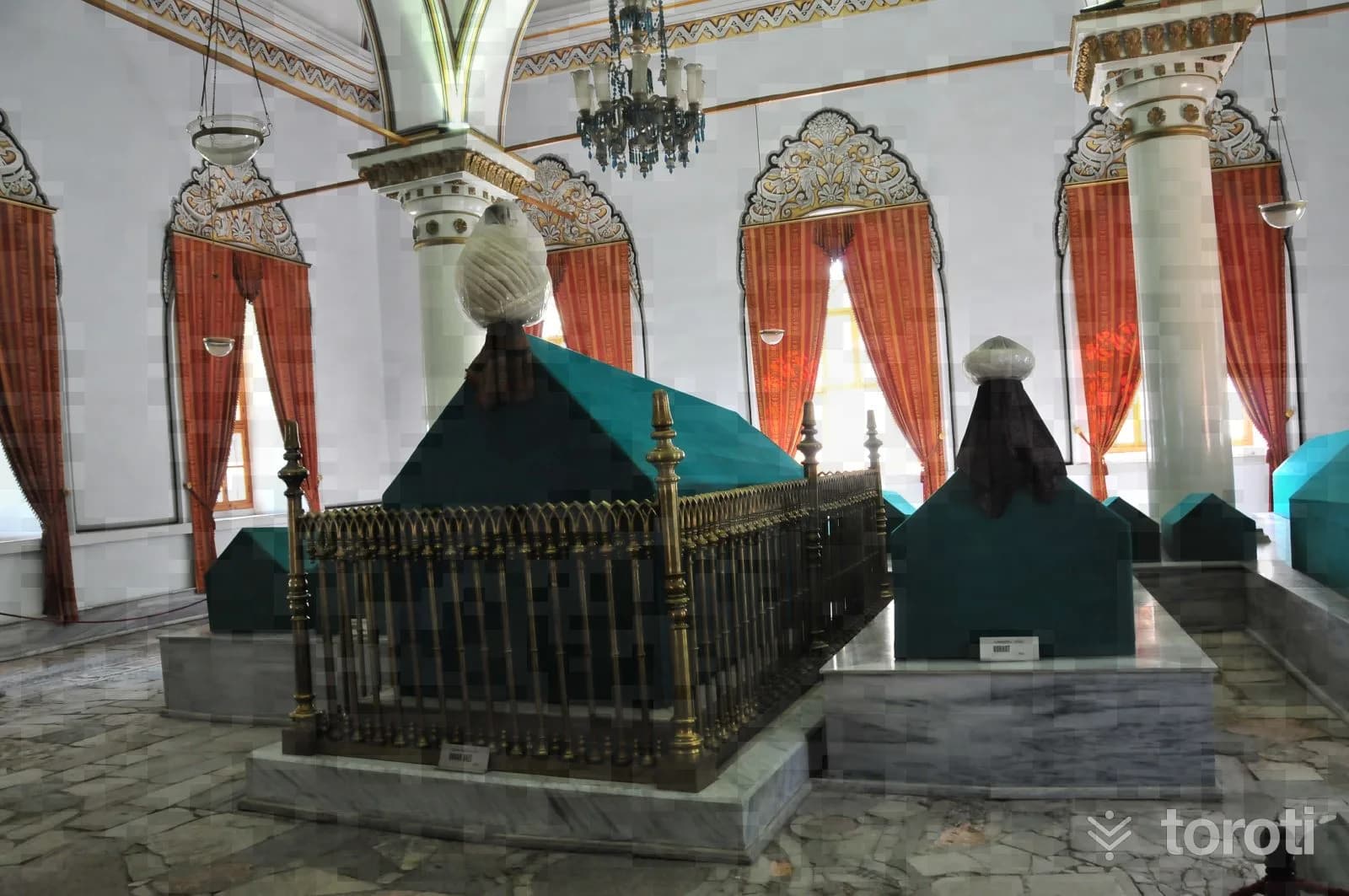
Orhangazi Türbesi
Sultan Orhan, the son of Osmangazi and the second sultan of the Ottoman state, lived between 1281-1362. During his lifetime, he took Bursa and its surroundings from the Byzantines, established the state institutions, and minted the first Ottoman coin. Orhangazi Tomb was built in Tophane Park in the Hisar district on part of the Sainte Elie monastery, which had been used as the city's metropolitan monastery before the conquest of Bursa.
20 minutes
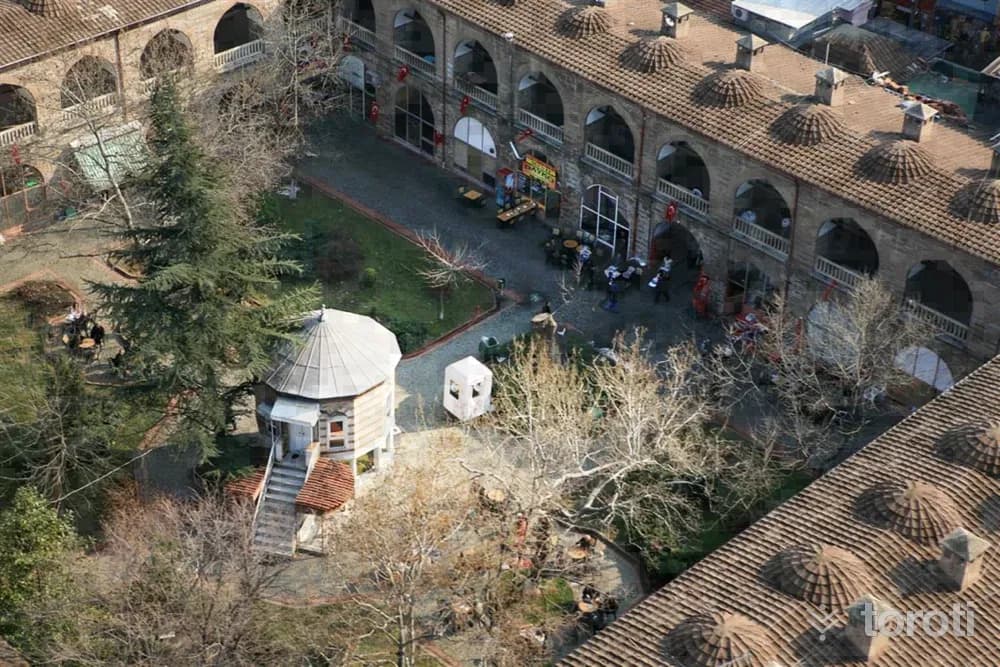
Fidan Han / Mahmut Paşa Hanı
The han, commissioned by Fatih Sultan Mehmet's Grand Vizier Mahmut Paşa, is also known as Mahmut Paşa or Fidan Han. In the courtyard of the two-storey han, with arcades in front of its rooms, there is a 12-sided mescit on top of a 12-sided şadırvan. Located in the open bazaar in the center of Bursa, the Han has been restored in recent years and opened for service with the shops it houses. The courtyard of the Han is used as a tea garden.
45 minutes
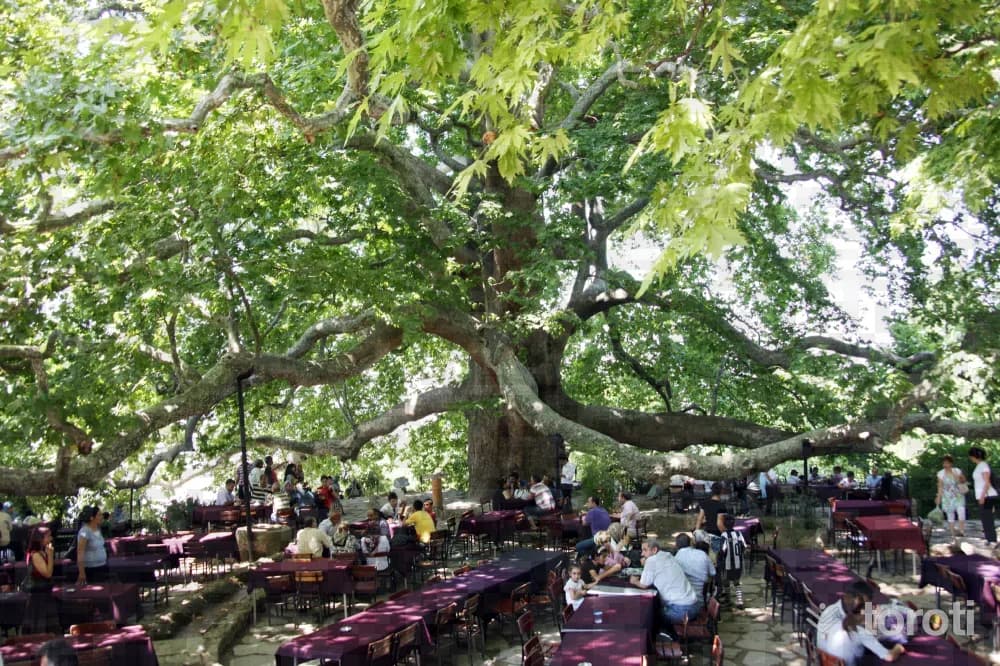
İnkaya Çinari
It takes its name from İnkaya Village, one of the first villages of the Ottoman State. The 600-year-old historic plane tree is world-famous for its magnificent appearance. This monumental tree, with a diameter of 3 and a height of 35 m., has 13 main branches. The plane tree, whose branches reach a thickness of 3-4 meters, is one of the oldest trees in Turkey with its circumference of 9,2 meters. İnkaya Çınarı is an important symbol that local and foreign tourists passing through Bursa never fail to visit.
45 minutes