Places to visit
Things to do in Edirne merkez
55 destinations, each with a description, how long it takes and where it sits on the map.
In short
toroti’s catalogue holds 55 described destinations within Edirne merkez, Edirne. The themes that come up most: History, Faith heritage, Museum, Culture, Local culture, Mosque.
Edirne Sarayı (Saray-ı Cedid)
The Palace, whose construction was begun by Sultan Murad II on an area of 3 million square meters to the west of the Tunca, was completed after Murad II's death in 1451 by his son Fatih Sultan Mehmed, who had it built by Architect Şahabeddin, and it served as a typical Ottoman palace for 425 years. Of Edirne Palace, only the ruins of a few units in the palace have survived to the present day, and restoration work is ongoing.
45 minutes
Şükrü Paşa Anıtı
The monument and museum are a complex built in memory of the Balkan War of 26 March 1913 and its martyrs. The grave of Şükrü Paşa, who defended Edirne in hardship during the war, was brought to Kıyık Tabya, one of the defense positions of Edirne, and a monument was commissioned in memory of this. Along with the monument, a museum was created in the tabya here, describing the Balkan Wars and consisting of items from that period in the possession of the people of Edirne.
20 minutes
Sittişah Sultan Camii
It was commissioned in 1482 by Sitti Hatun, the wife of Fatih Sultan Mehmet and the daughter of Dulkadiroğlu Süleyman Bey. As understood from historical sources, she had the mosque built in a part of her palace, which remained standing until 1743. The mosque is also known among the public as Sitti Şah Sultan Camii, Sitti Sultan Camii and Hatuniye camii.
20 minutes
Gazi Mihal Camii
It is located to the southwest at the end of Talat Paşa Caddesi extending to the west of Edirne, on the opposite side of the Mihal bey bridge. On a rectangular stone slab above the monumental portal on the north facade, there is the building's construction inscription dated 1421. The work was built entirely of cut stone. Marble claddings are also rarely encountered on the walls.
20 minutes
Sarayiçi Balkan Şehitliği
It was built in order to keep alive the sublime memories of our more than 300 thousand martyred soldiers and civilians who gave their lives for the defense of the sacred homeland in the 1912-1913 Balkan War, and our 20 thousand martyrs who were left to die of starvation in Edirne Sarayiçi in 1913.
30 minutes
Büyük Sinagog
When the 13 Synagogues of the Jews who came from Spain and Portugal and settled in Edirne by the decree of ll. Bayezıd in 1492 were destroyed in the 1903 fire, the Büyük Sinagog, considered sacred by the Jews, was built in 1906 by imperial decree.
30 minutes
Bayezid Köprüsü
Near Bayezid Külliyesi. It was built over the Tunca River. It is thought to have been commissioned by ll. Bayezid to Mimar Hayrettin in 1488. It is 78m. wide and has 5 pointed arches. It is a sturdy bridge built of cut stone.
20 minutes
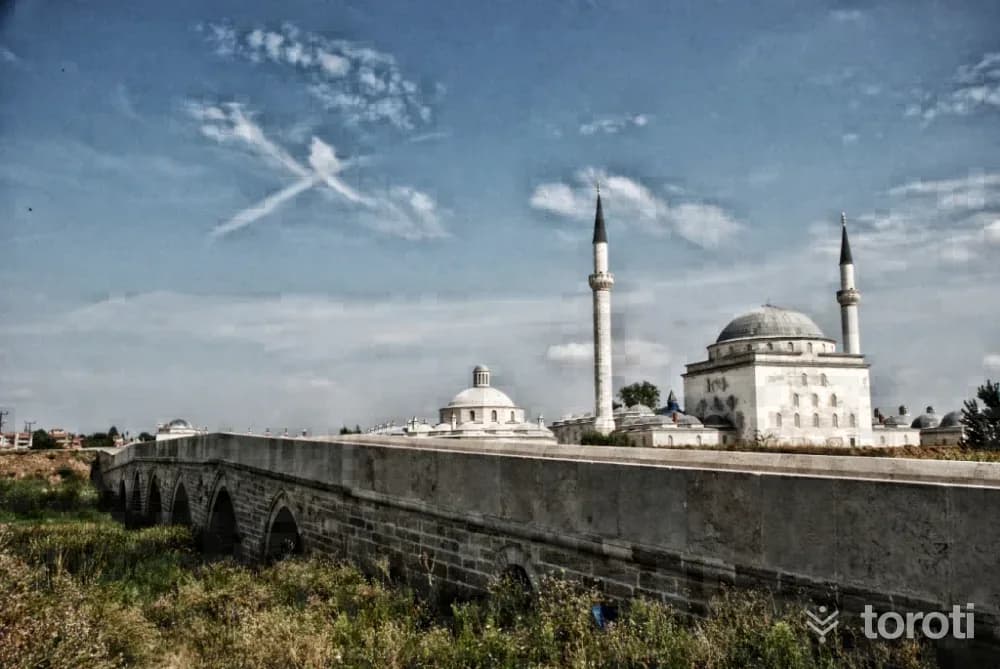
İkinci Bayezid Külliyesi Sağlik Müzesi
The İkinci Bayezid Külliyesi Health Museum, located on the bank of the Tunca River, is one of Edirne’s most important works. The mosque; with its medical madrasa, imaret, darüşşifa, bath, kitchen, food stores and other sections, spreads over a wide area. The architect of the külliye, commissioned by II. Bayezid in 1484-1488, is Hayreddin. The külliye, which has a very impressive appearance, is covered with nearly a hundred domes of various sizes.
45 minutes
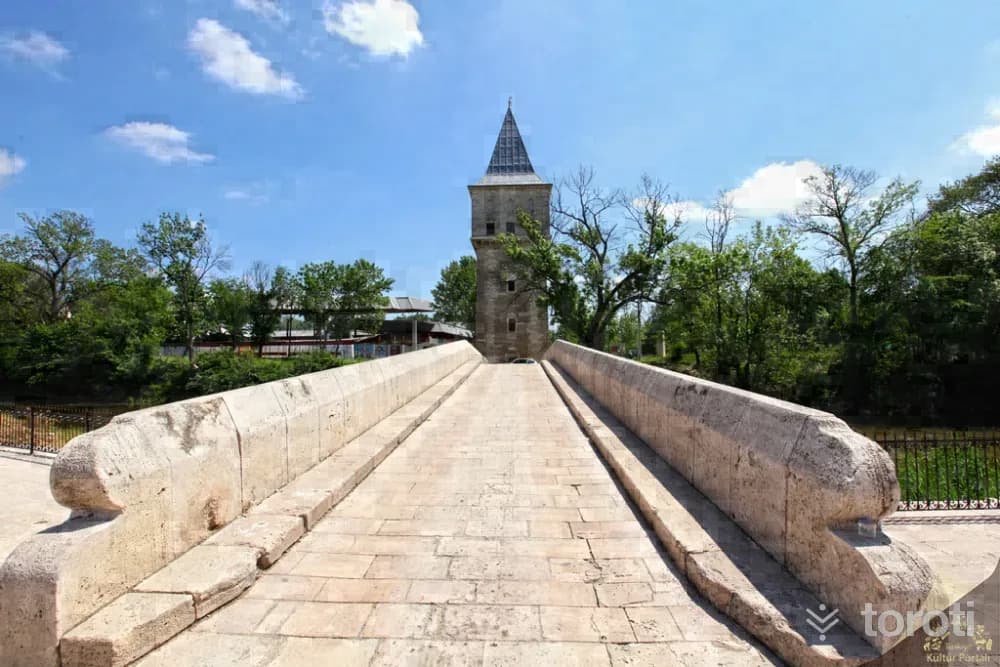
Edirne Sarayı
The construction of the palace, which was built on an area of 300-355.000 square meters on the bank of the Tunca River in the north of the city, was begun in 1450 during the reign of 2. Murat. The palace construction, which had stopped for a while upon the ruler's death, was completed by Fatih Sultan Mehmet in 1475. During the reigns of Kanuni Sultan Süleyman, 1. Ahmet, Avcı Mehmet, 2. Ahmet, and 3. Ahmet, the palace was constantly repaired and new structures were added. After 3. Ahmet went to Istanbul in 1718, in 1768 3.
45 minutes
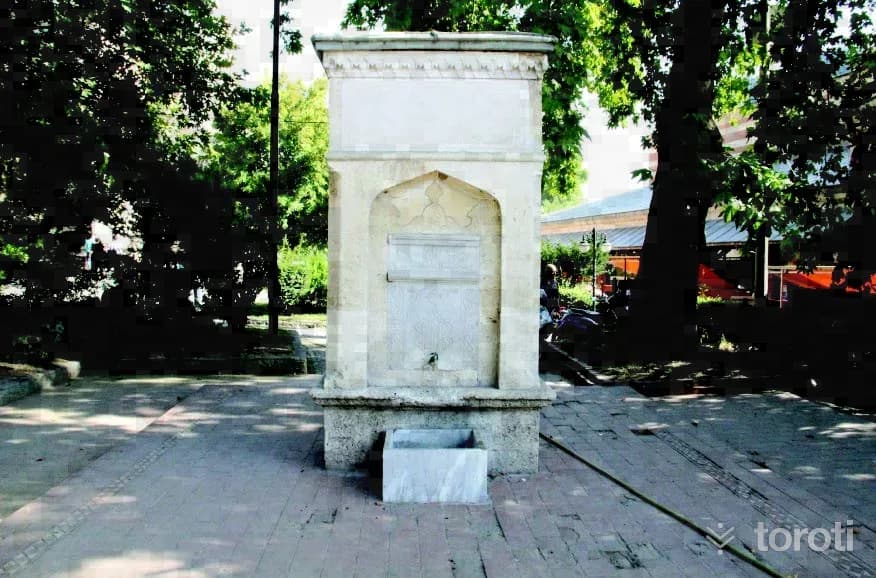
Askeri Hastane Çeşmesi
The historic fountain, located within the area now known as Kadınlar Parkı, stands on a horizontal rectangular plan. Its height is 2.86 meters, its width is 1.29 meters, and its depth is 0.88 meters. The fountain, which is owned by Edirne Municipality, is currently in working condition.
45 minutes
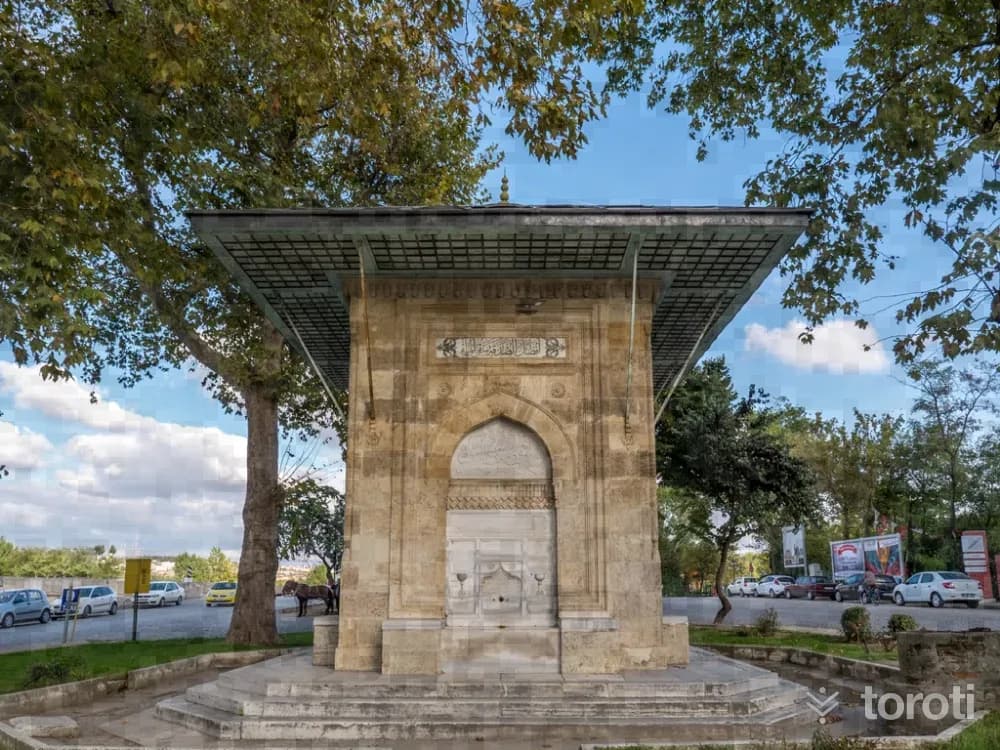
Hacı Adil Bey Çeşmesi
Built in 1904 by Hacı Adil Bey, one of the governors of Edirne, in memory of his son who died at a young age, and today the best-preserved fountain in the city center, the structure is placed on a plinth reached by 3 steps. The structure, which stands on a square mass, is 5.20 meters high and 4.75 meters wide. All facades of the fountain are identical in terms of facade composition.
45 minutes
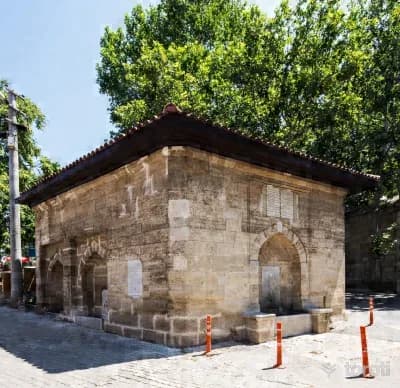
Merzifonlu Kara Mustafa Paşa Çeşmesi
Merzifonlu Kara Mustafa Paşa Fountain, the largest of the fountains built in Edirne, was constructed in an east-west direction on a sloping street running north-south. The historic fountain, which has the distinction of being the largest fountain in Edirne, one of the most important centers of the Ottoman Period, was commissioned by Merzifonlu Kara Mustafa Paşa in H.1077/ M.1667, as can also be understood from its inscription.
45 minutes
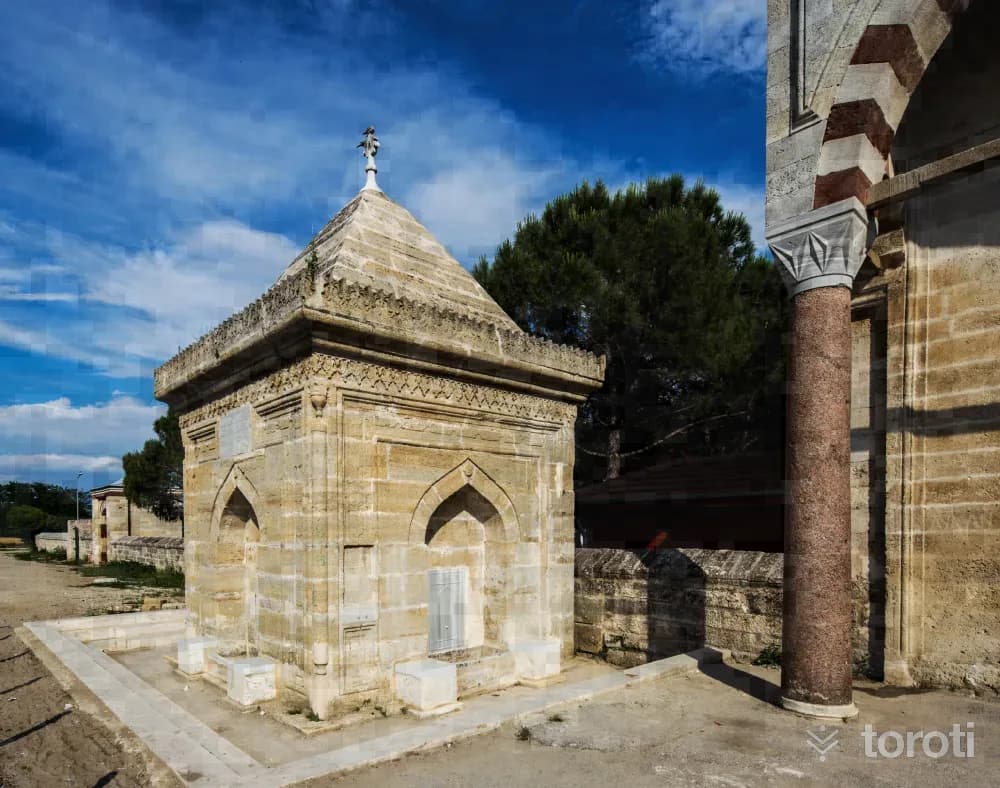
Sinan Ağa Çeşmesi
This fountain is a “three-faced” square fountain built on the basis of a quadrangular plan. Its face on the mosque side is blind. It is a square fountain built of cut stone, with three facades, a reservoir, and a pyramidal stone roof. According to Dr. Rıfat Osman, as with all the fountains in Yeniimaret and the water of the külliye, the water of this fountain also comes from the spring in the vineyards of Aynalı Tabya.
45 minutes
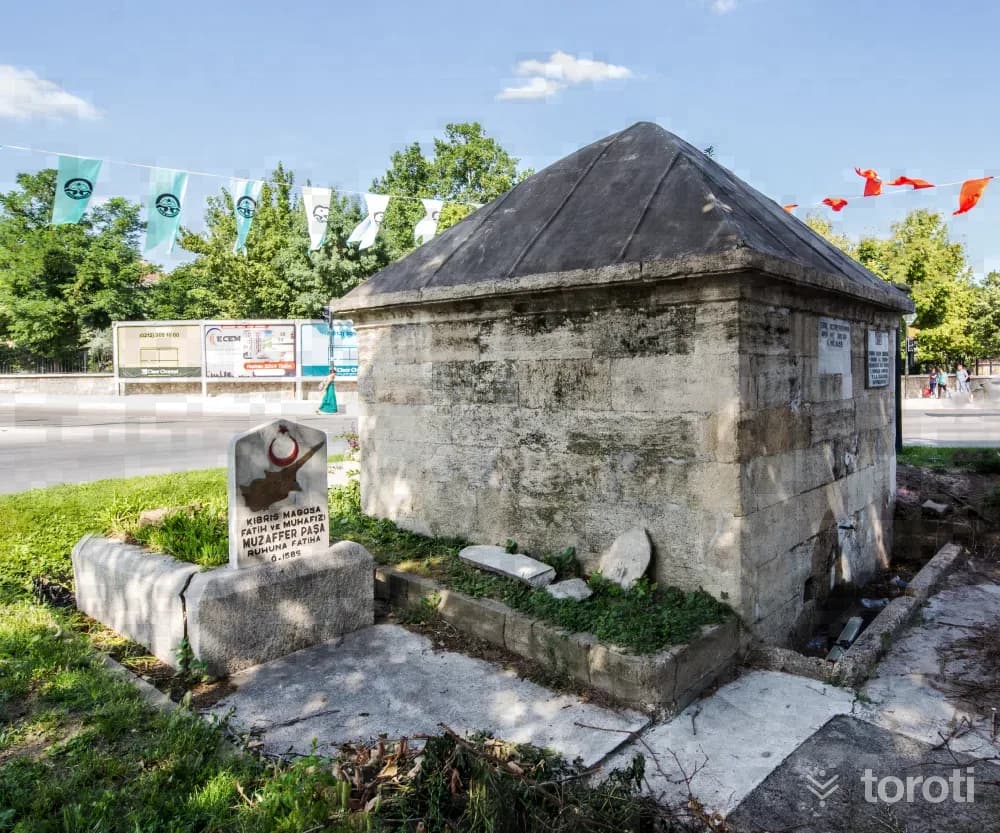
Nazir Çeşme
It is a square fountain built of cut stone material, with a single façade, a reservoir, and a pyramidal stone roof over the reservoir. The fountain, which has a square-shaped mass, is 3.71 meters high and 3.70 meters wide. In the structure, which is a very plain square fountain without a niche, the façades other than the front façade were kept plain. There are no decorative elements on the fountain. There is some information about the fountain in written sources. The most explanatory information on this subject is given by A.
45 minutes
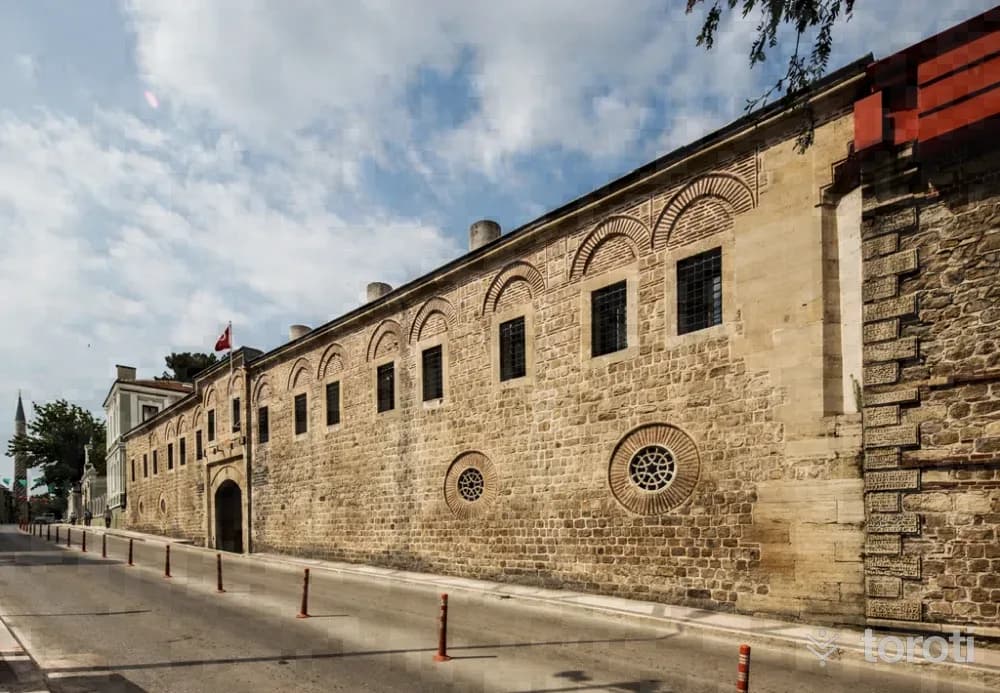
Deveci Hanı / Eski Hapishane
The building is two storeys and is among the early examples of Ottoman hans. Cut stone and brick were used in the building. There are 31 rooms on the upper floor. Based on its architectural features, it is estimated that it was built in the first half of the 15th century. During the time of Governor Rüstem Paşa (1846), the building was repaired and converted into a prison, and it was used as a prison until 1949.
45 minutes
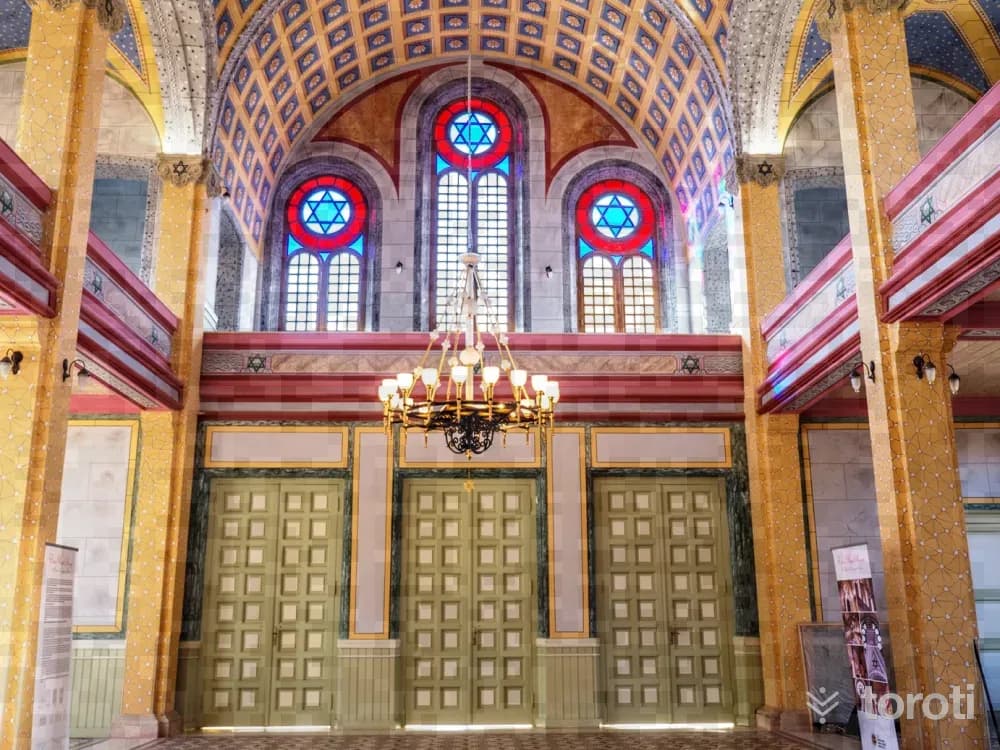
Edirne Büyük Sinagogu
The Great Synagogue, whose construction was permitted by the decree of 6 January 1906 in the neighborhood where the Mayor Synagogue and the Apulya Synagogue were located, in place of the 14 synagogues that were completely destroyed in the great fire that broke out in Edirne in August 1905, was built by the French architect France Depre and opened for worship in 1907 under the name Kal Kados ha Godal.
45 minutes
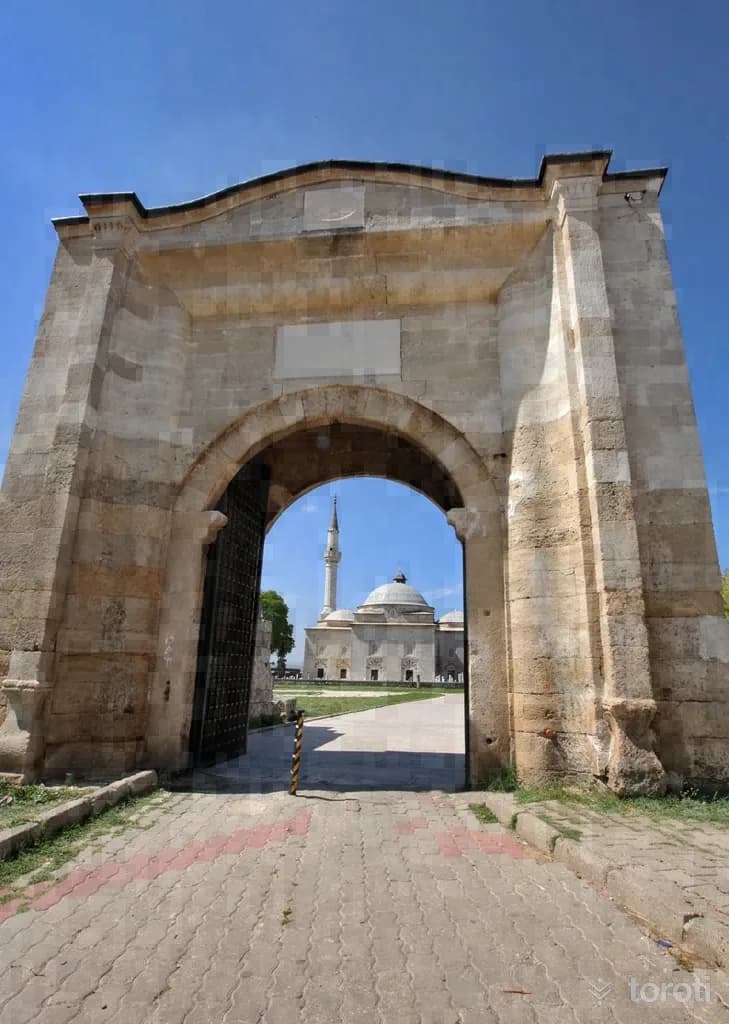
Muradiye Camii Ve Mevlevihanesi
Küçükpazar semtinde Sarayiçi'ne egemen bir tepeye II. Murat tarafından yaptırılmıştır. Yazıtında tarih yoktur. Vakfiyesine ve kaynaklara dayanılarak 1426 yılına tarihlenir. Mimarı bilinmemektedir. Yan mekanlı (zaviyeli) camilerin en güzel örneklerindendir. Ana mekan, arka iki kubbeli mekan ve son cemaat yeri, avlusunda da şadırvan vardır. Cami dış görünüşünün yalınlığına karşın İç süslemesi yönünden XV. yüzyıl Osmanlı Sanatı'nın en önemli yapıtlarındandır.
45 minutes
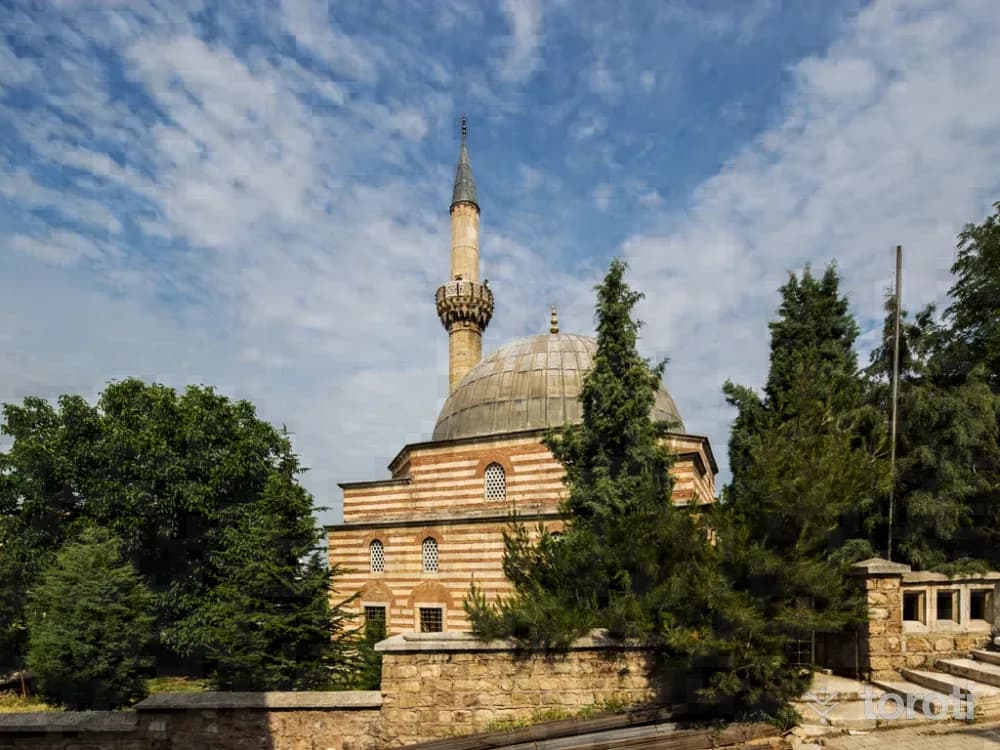
Defterdar Camii
The mosque was commissioned from Mimar Sinan by Mustafa Paşa, who was Defterdar during the reign of Selim II. It is on Talat Paşa Caddesi, to the northwest of Sitti Sultan Camii. The structure stands within a rather large courtyard. In sources, it is also referred to as Defterdar Camii, Defterdar Mustafa Çelebi Camii, and Defterdar Kara Mustafa Paşa Camii. Evliya Çelebi states that the dome of the harim (mosque) is magnificent, and that its minaret was built in proportion to this dome.
45 minutes
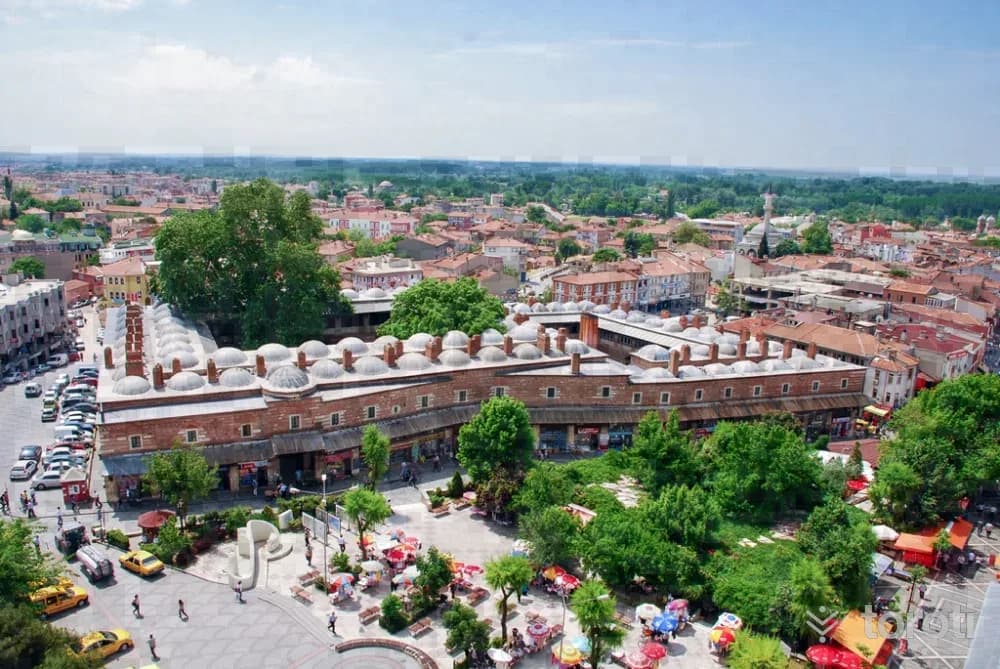
Rüstempaşa Kervansarayı
It was commissioned by Rüstem Paşa, the Grand Vizier of Kanuni Sultan Süleyman, and built by Mimar Sinan. It is one of the interesting examples of classical Ottoman architecture and one of the magnificent structures of the Kanuni period. It has the plan of an inn with a courtyard. Two-storey rooms are arranged around the rectangular courtyard. The sides of the storeys facing the courtyard are porticoed. Behind the porticoes are rooms with fireplaces and niches. On the long sides, there are staircases rising opposite each other.
45 minutes
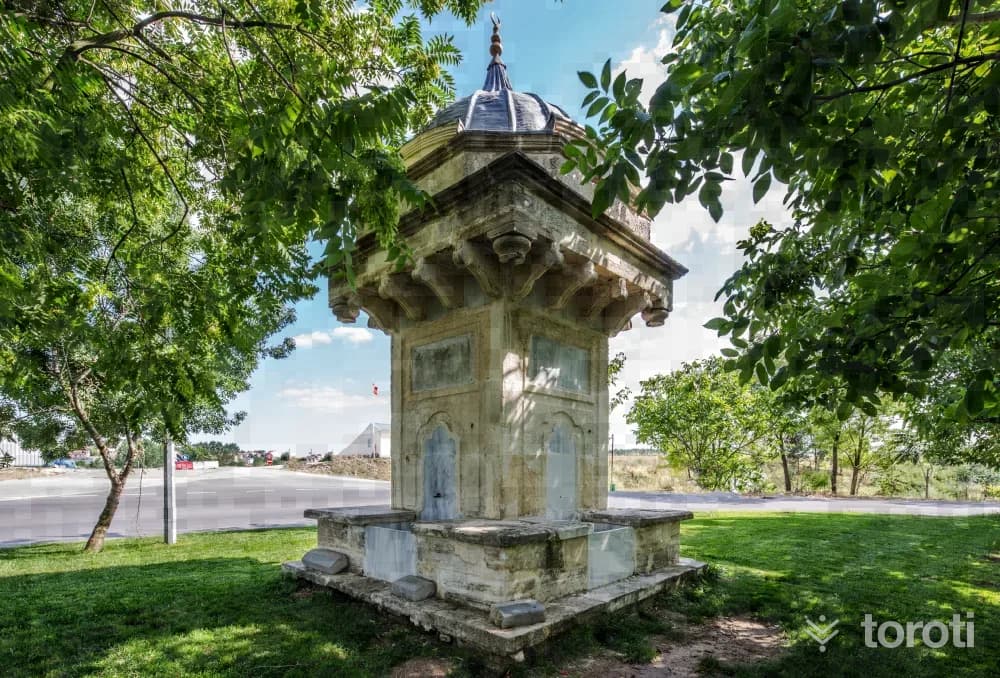
Dertli Mustafa Efendi Çeşmesi
In former years, Saraçhane Police Station was located at the southern end of Saraçhane Bridge (in the area called Tunca Barracks or Sirkmeydanı), and this fountain was next to the police station. Dertli Mustafa is not the person who had the fountain built, but the person who had it repaired. Although the date of its construction is unknown, its repair dates to 1906. Sources also relate that Dertli Mustafa attached great importance in Edirne to charitable works of the fountain type.
45 minutes
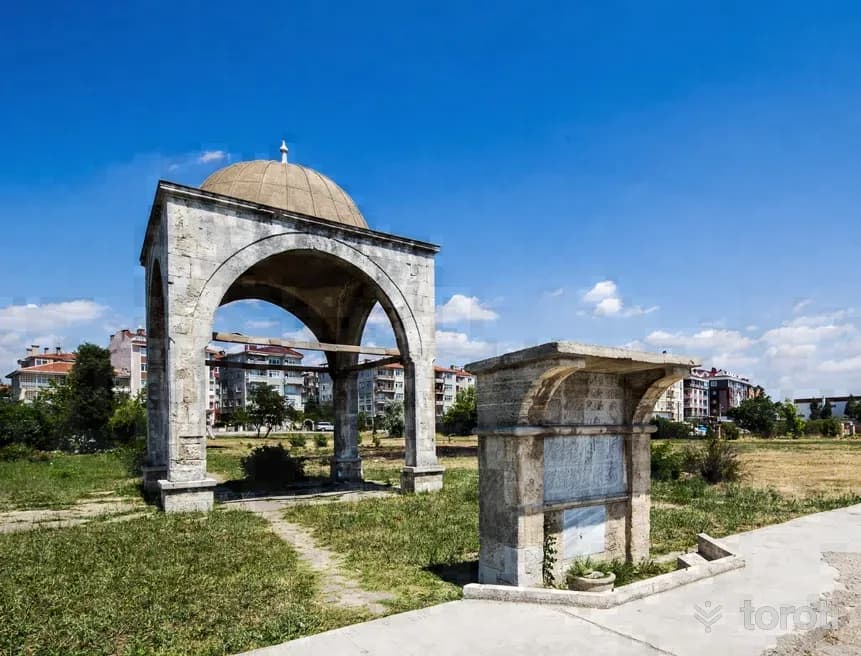
Hacilar Ezanı Çeşmesi
It is a single-façade wall fountain without a reservoir, built of cut tuff stone material. Hacılar Ezanı Çeşmesi, which differs among the fountains of Edirne both in its architectural structure and its size, stands on a horizontally rectangular plan. There are construction and repair inscriptions on the fountain façade. According to the construction inscription located on the upper part of the façade, the structure was commissioned by Ahmet Ağa in A.D.1798.
45 minutes
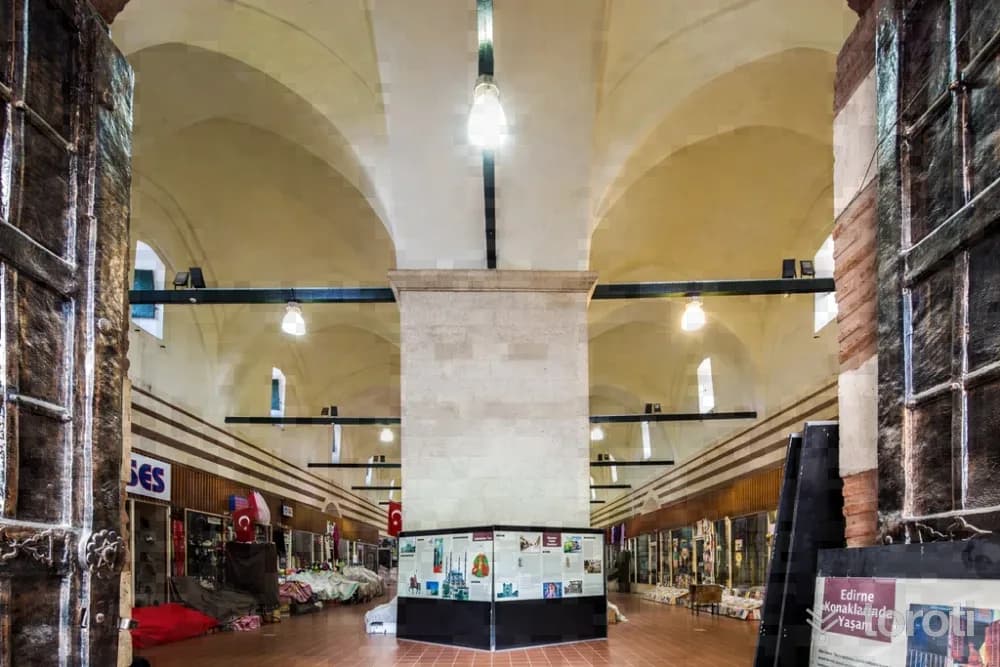
Edirne Bedesteni
It was built in 1417-1418 by Çelebi Sultan Mehmet as a waqf for Eski Cami. It is a 14-domed structure with decorated walls clad in two-colored cut stone. The domes are covered with lead. The structure, measuring 40.54-74.94 meters, has doors on all four sides. Under each dome there is a pointed-arched window. Inside, there are 14 cells on each of the long sides covered with vaults, and 4 cells on each of the short sides.
45 minutes
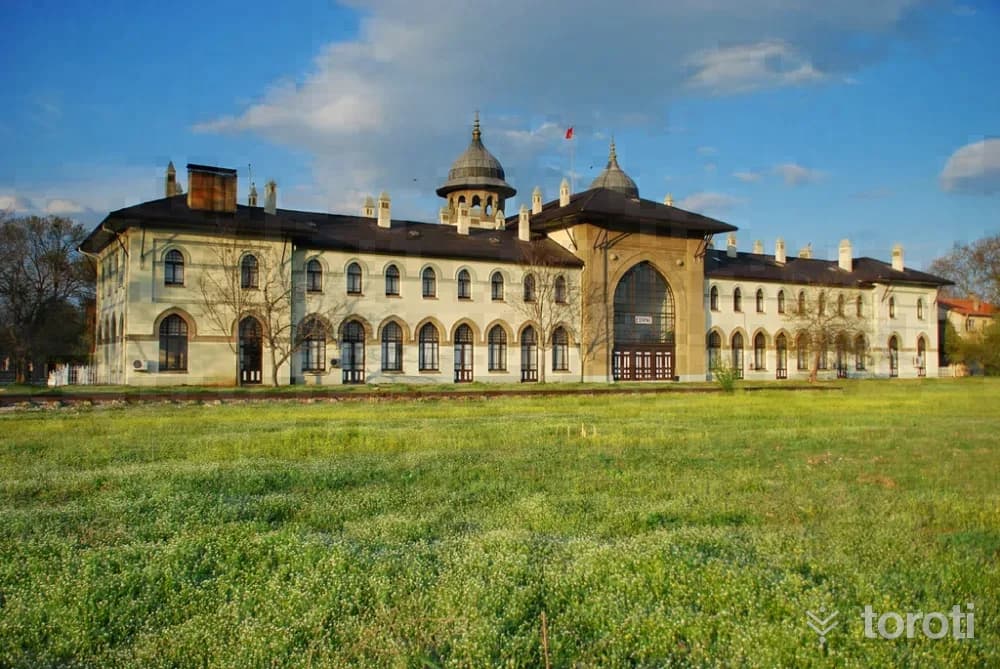
Karaağaç Tren Gari
Karaağaç Station is a station building located in the town of Karaağaç in Edirne and was commissioned during the reign of Abdülhamid II. The building, which was constructed as Edirne Railway Station, is today used as the Faculty of Fine Arts of Trakya University. Edirne Railway Station is one of the station buildings built taking Sirkeci Station in Istanbul as an example. It was built in neoclassical style by Architect Kemalettin Bey on behalf of the Şark Railways Company.
45 minutes
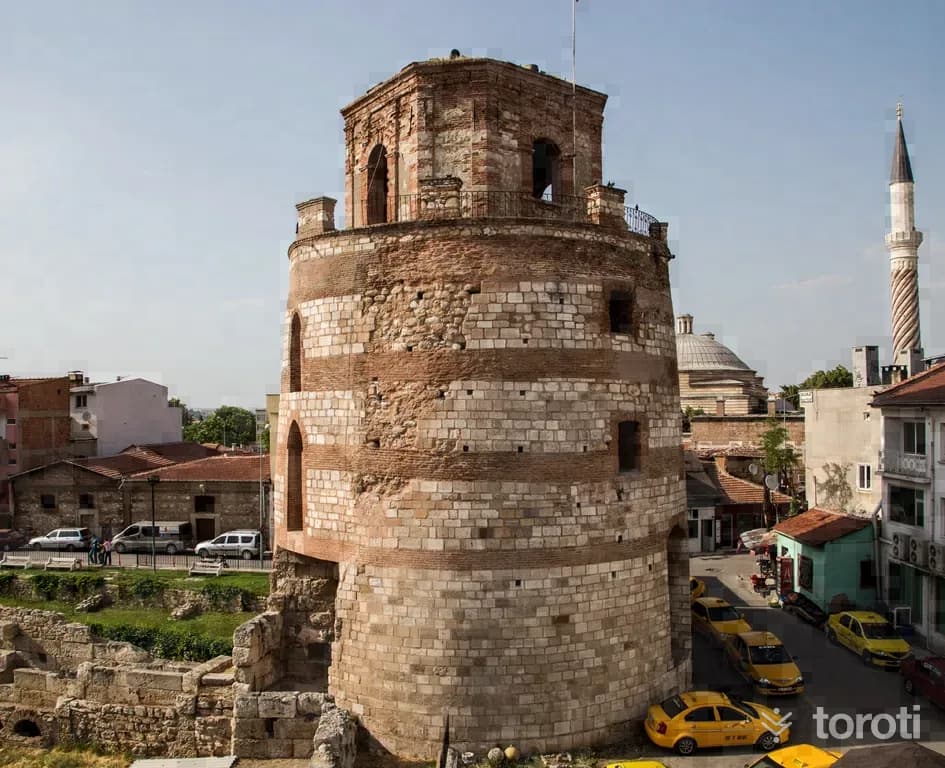
Edirne Kalesi Makedonya Saat Kulesi
Edirne Castle Macedonia Clock Tower is one of the towers at the four corners of the walls surrounding Hadrianopolis, founded by the Roman King Hadrianus. After the wooden storeys built on top of the tower and the clocks installed by Hacı İzzet Paşa, one of the governors of Edirne, this place came to be known as the Clock Tower (1866-1867). The clock here was also called the Millet Clock for a long time.
45 minutes
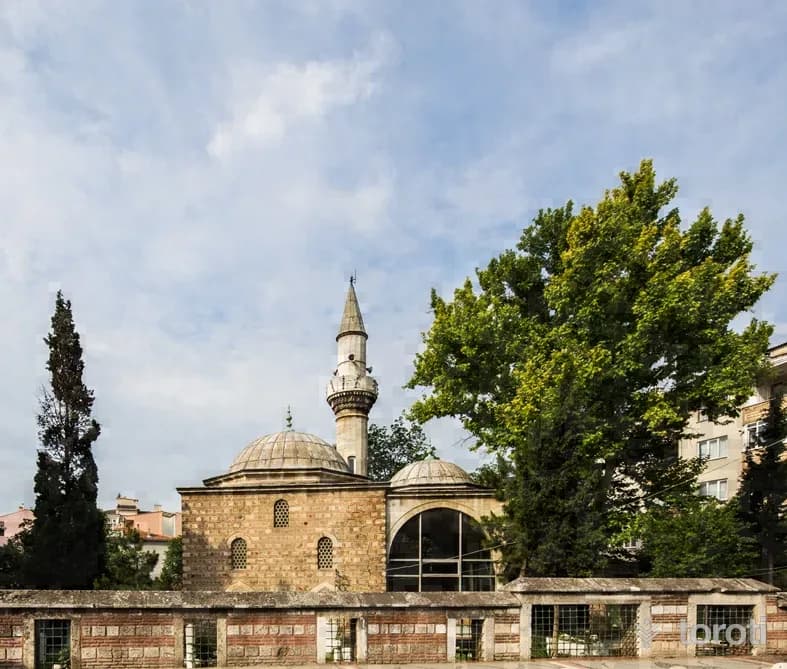
Kadi Bedrettin Camii
He was at one time a judge in Aleppo and Edirne and was also the father of Kadı Bedrettin Şeyhülislam Şemsettin Ahmet Efendi. Kadı Bedreddin, who was the father of Şeyh Çelebi and Şeyhülislam Şemseddin Ahmet Efendi, is also referred to by the names Bedrettin Mahmud, Mahmud bin Abdullah, and Mevtana Bedreddin Mahmud bin Abdullah. This person served as a müderris for a while and was then appointed respectively to the judgeships of Aleppo and Edirne. He died in 1530 during his tenure as judge of Edirne.
45 minutes
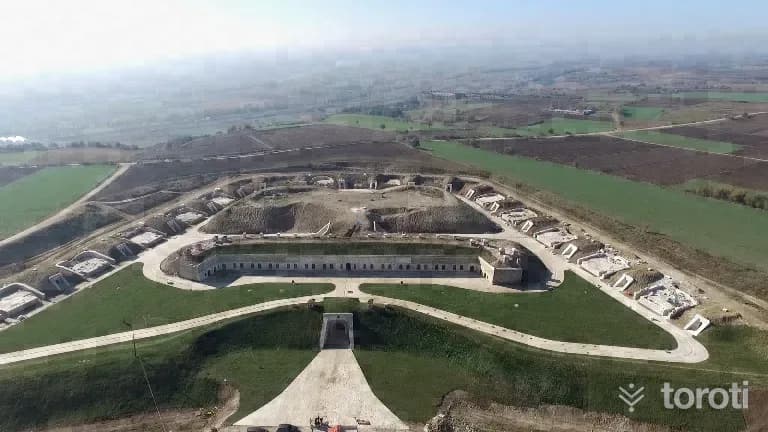
Hidirlik Tabyası
The first fortification (all kinds of structures built on land for defense purposes) constructions in Edirne were begun under the supervision of Divan-ı Hümayun translator Hoca İshak Efendi in the face of the Russian occupation in 1829. One of the most important of these structures is Hıdırlık Tabyası, which was also used in the First Balkan War. Photo: Edirne Museum Directorate Hıdırlık Tabyası is the largest bastion in Edirne, with a perimeter reaching approximately 1800 meters.
45 minutes
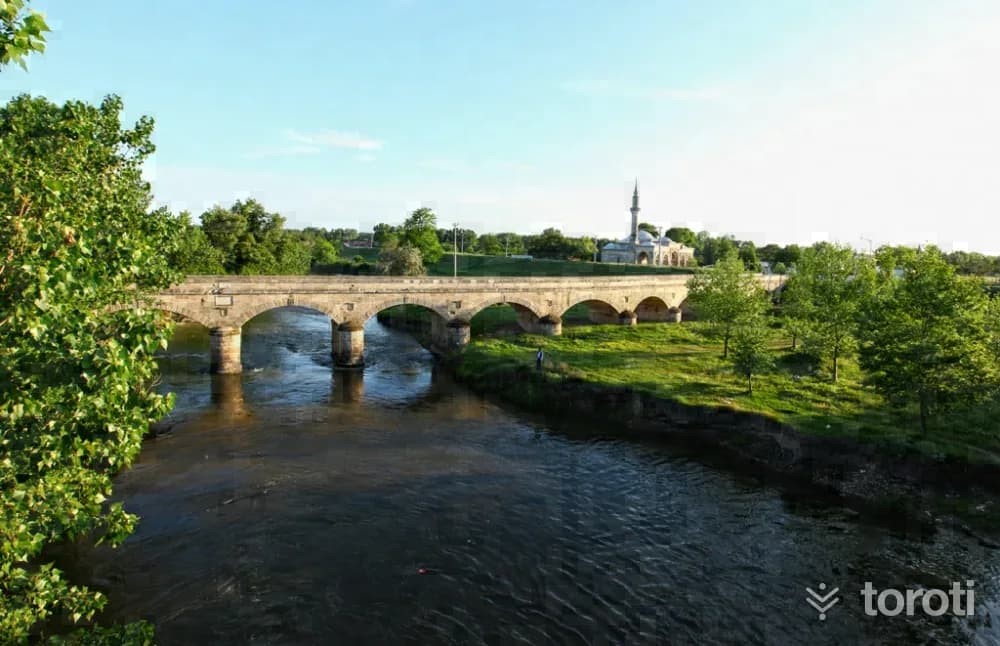
Gazi Mihal Köprüsü / Hamidiye Köprüsü
It was built over the Tunca River on the main road to Bulgaria, to the west of the city. It was commissioned by Mikhael Palaiologos in the Byzantine Period. In 1402, during the Ottoman Period, Gazi Mihal Bey had it repaired as if rebuilding it. There is the pointed-arch Tarih Köşkü (Kitaba Köşkü), commissioned by Kemankeş Kara Mustafa Paşa in 1640. The drainage system built to discharge the water seeping into the body of the bridge is interesting. In 1900, II.
45 minutes
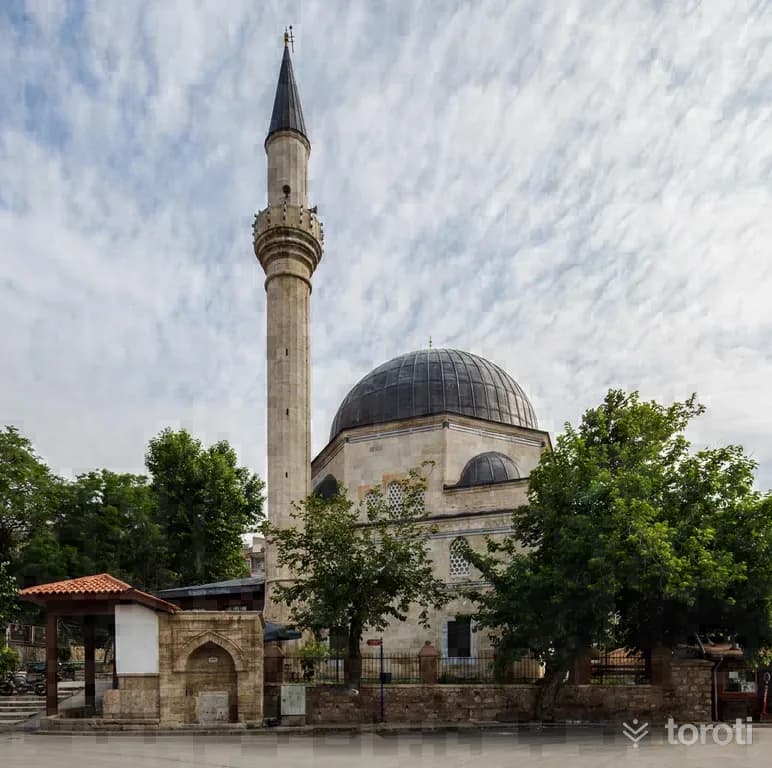
Ayşekadin Camii
Edirne's most famous district, called Ayşe Kadın, still bears the name of its founder, Ayşe Hatun, the daughter of Çelebi Mehmet. It is on Düz Kaldırım Caddesi, on the old Istanbul road, in the Ayşe Kadın district. It was commissioned in 1468 by Ayşe Hatun, the daughter of Çelebi Sultan Mehmet.
45 minutes
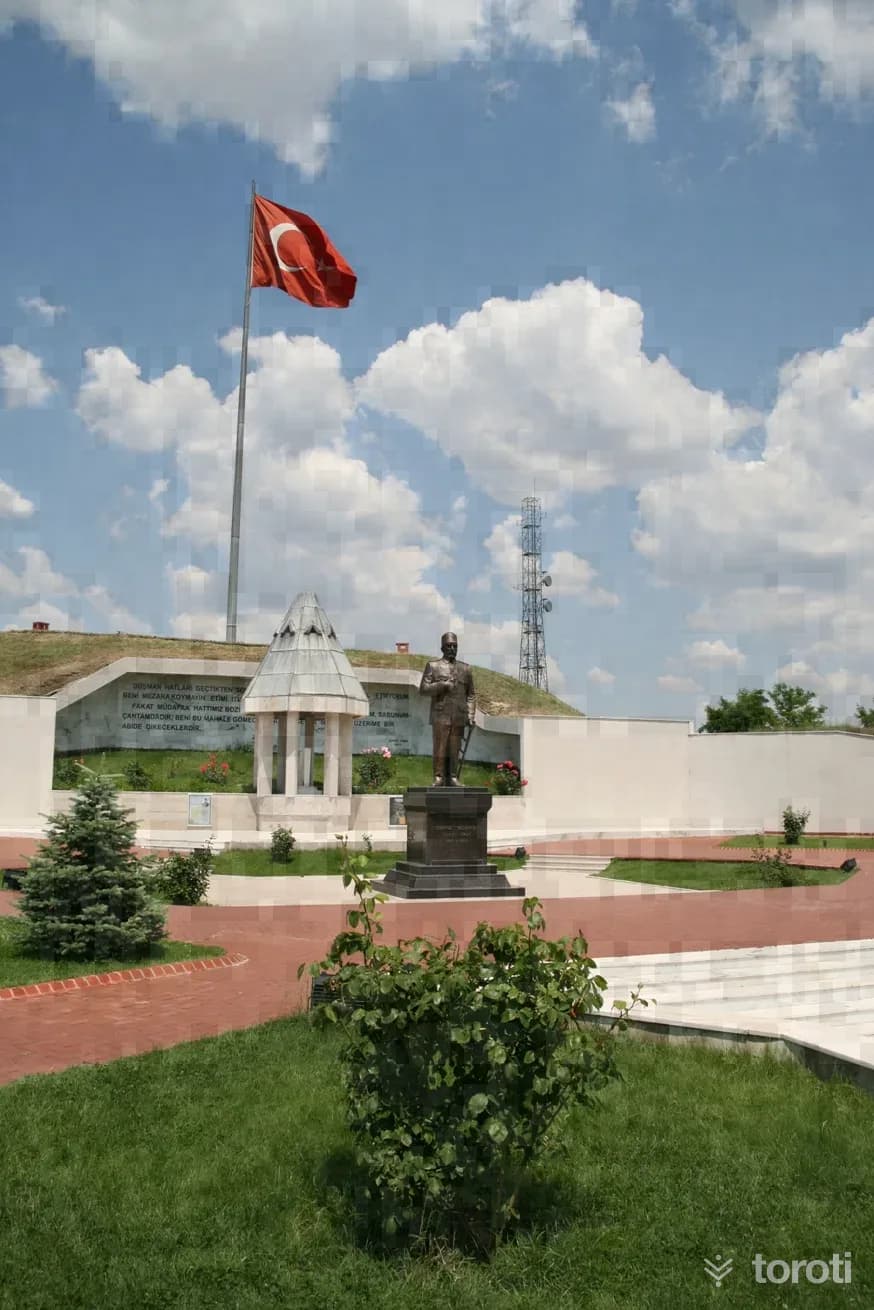
Şükrü Paşa Anıti Ve Balkan Savaşı Müzesi
The monument and museum are a complex built in memory of the Balkan War of 26 March 1913 and its martyrs. The grave of Şükrü Paşa, who defended Edirne under conditions of deprivation during the war, was brought to Kıyık Tabya, one of the defense positions of Edirne, and a monument was commissioned in memory of this. Together with the monument, a museum was established in the tabya here, describing the Balkan Wars and consisting of objects from that period in the possession of the people of Edirne.
45 minutes
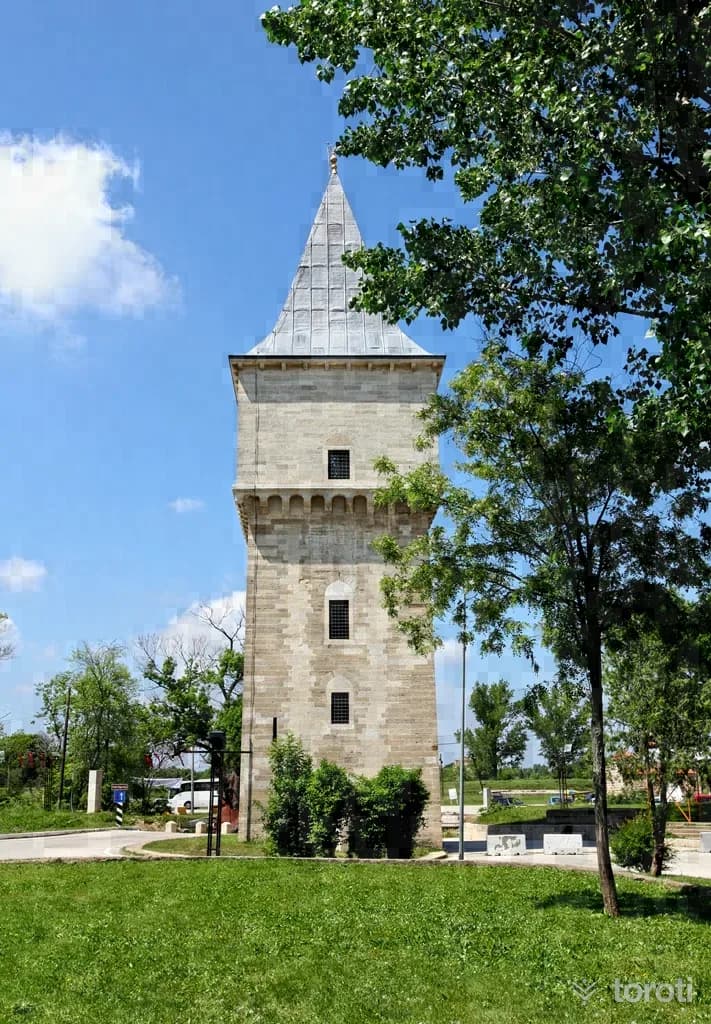
Adalet Kasri
Adalet Kasrı, the only surviving building of Edirne Palace, was commissioned by Kanuni Sultan Süleyman to Mimar Sinan in 1561. Including the ground level, it has four storeys, and on the upper floor there is a pool with a marble fountain. In its time, it was used as the Divan-ı Hümayun (Council of Ministers) and the Supreme Court. According to legend, Sultan Süleyman wrote the laws of the empire here.
45 minutes
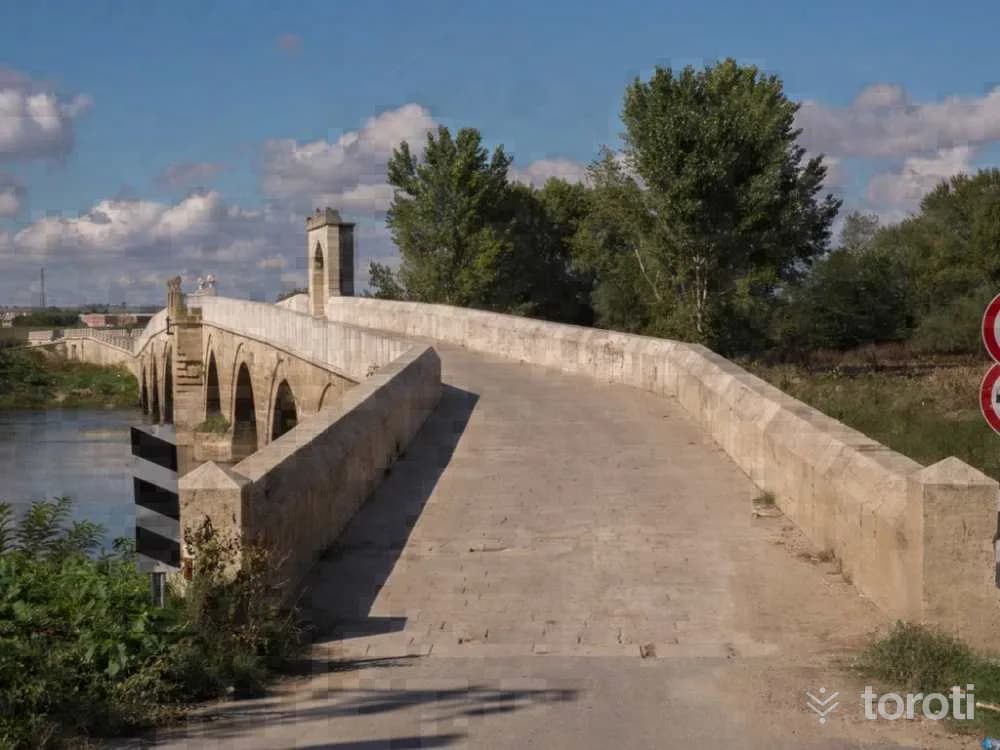
Saraçhane Köprüsü
It was built over the Tunca River near Sarayiçi in the northwest of the city. It was commissioned in 1451 by Şahabettin Paşa, one of the important statesmen of the period of ll. Murat. It is 120 m. long. It is 5 m. wide. The stone bridge, with 11 piers and 12 arches, has the arches on both sides buried under the ground. The bridge, whose central arch collapsed in 1702, was extended by 50 m. when it was repaired by Sultan ll.Mustafa.
20 minutes
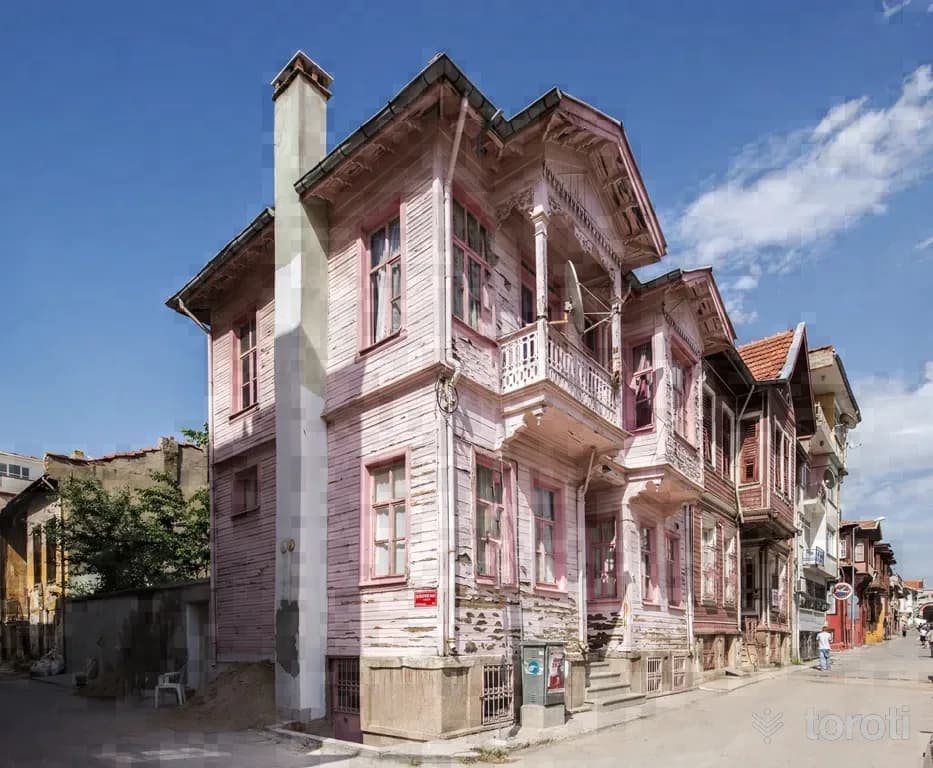
Edirne Evleri
Edirne is a very important center of civil architecture. Mansions, residences, and various specially decorated wooden houses, as well as many works decorated in the special ornamental style called Edirnekari, have survived to the present day. Kaleiçi is an area that has lived on from the Middle Ages to the present day with its narrow streets and old houses among historical remains.
45 minutes
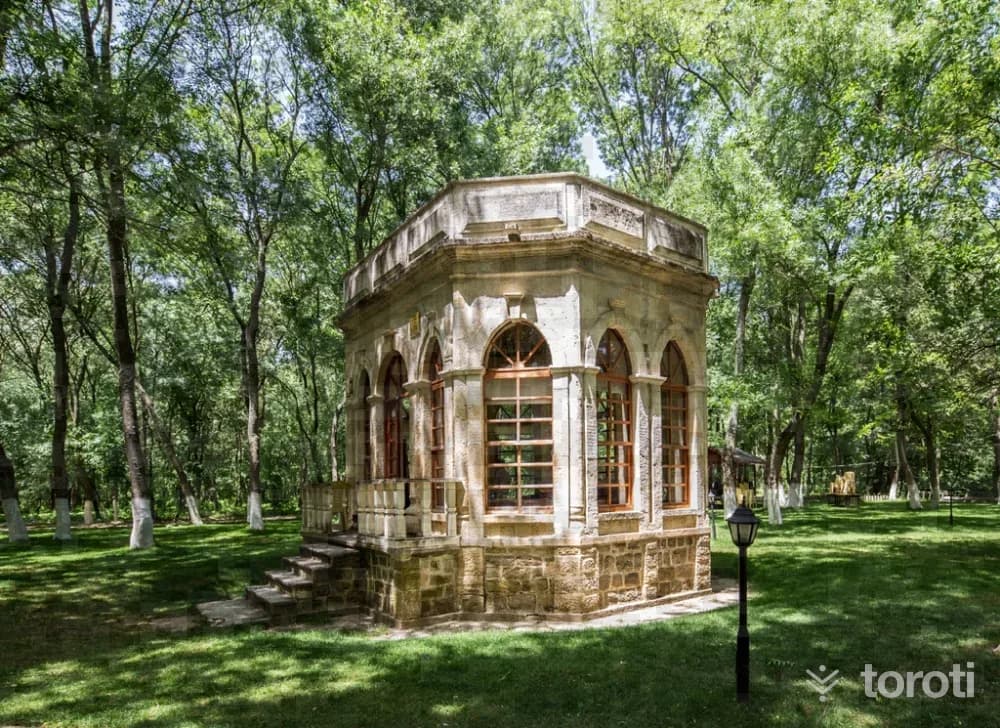
Iv. Mehmet Av Köşkü
It is located in Tavuk Ormanı, in the historic Sarayiçi area situated between the two branches of the Tunca River. It is one of the additions made to Edirne Palace in various periods and was commissioned by IV.Mehmet (Avcı Mehmet) in 1671. Today, part of it is still standing. It was restored in 2002 and is used for tourism purposes.
45 minutes
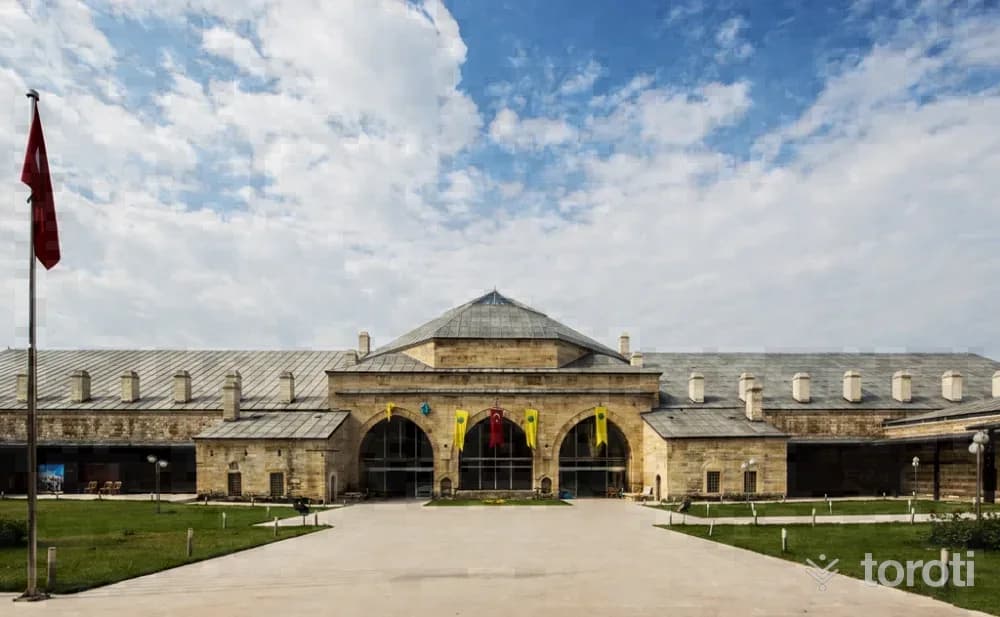
Ekmekçizade Kervansarayı
Ekmekçizâde Ahmet Paşa Caravanserai is also known as Ayşe Kadın Hanı. It is located in Ayşekadın District on İstanbul Yolu Avenue in Yancıkçı Şahin Neighborhood. It was commissioned by Ekmekçizâde Ahmet Paşa in 1609 (H.1018) to Sedefkar Mehmed Ağa and Edirne architect Hacı Şaban Ağa and presented as a gift to Sultan Ahmed.
45 minutes
Edirne Arkeoloji Ve Etnografya Müzesi
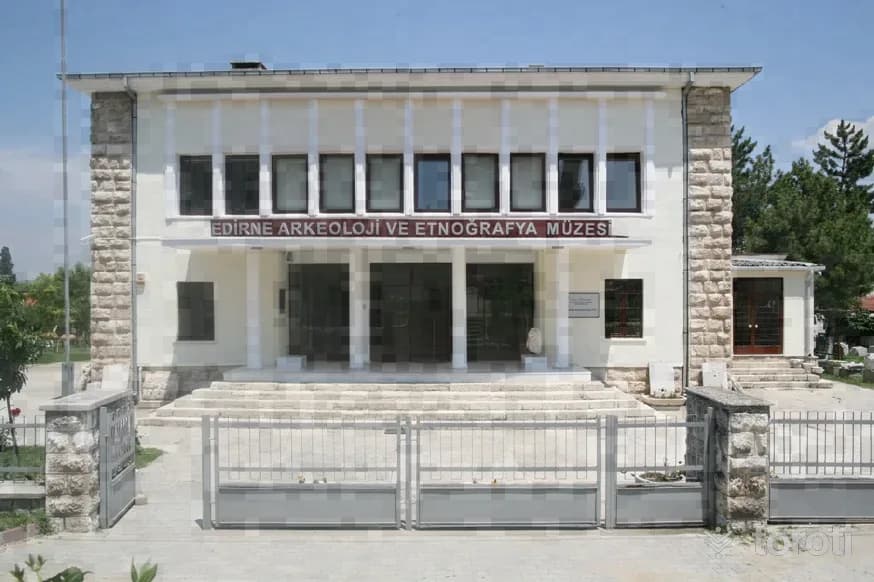
The museum was opened on 13 June 1971 as the Ethnography and Archaeology Museum. Most of the works exhibited in the Archaeology and Ethnography Museum date from the Prehistoric Period. In addition, there are also works from the ancient Greek, Byzantine and Roman periods. Alongside the valuable coin collection, statues and statue fragments, sets. earthenware and glass vessels are among the works of interest in the museum.
45 minutes
Sokullu Hamamı
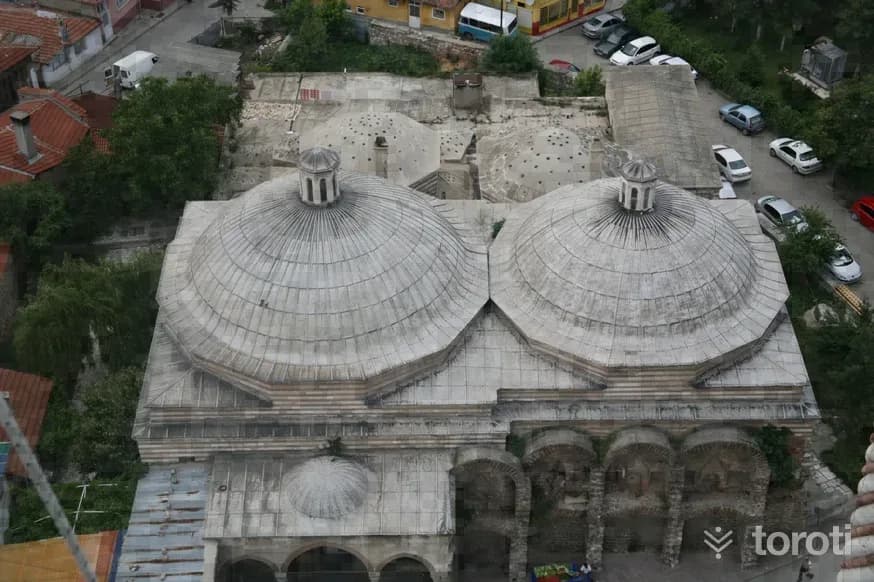
Üç Şerefeli Cami karşısındadır. Sokullu Mehmet Paşa Mimar Sinan’a yaptırmıştır. XVI. yüzyıl Türk Sanatı’nın en önemli örneklerinden olup. çifte hamam planındadır. Kadınlar ve erkekler bölümlerinin girişleri ayrı yöndedir. Özellikle soyunmalık yüzlerindeki kesme taş ve tuğla işçiliği ilginçtir.
45 minutes
Türk-İslam Eserleri Müzesi
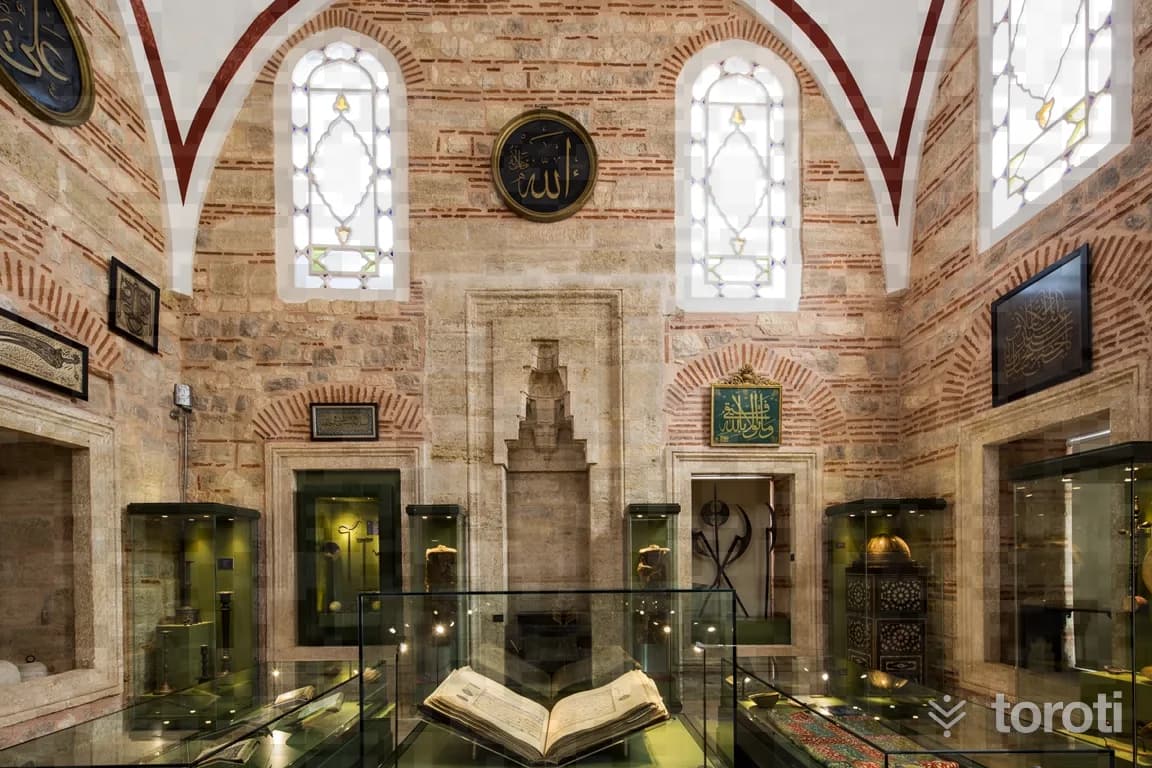
The works collected in the Medrese section of Selimiye in 1925 were later opened to the public within the scope of the Turkish Islamic Works Museum. The museum was reorganized in 1971. The works are exhibited in a chronological sequence. In the hall at the entrance, there are inscriptions obtained from works of the Ottoman Period, handwritten Qurans, Allah and glassware. The inscriptions were collected from mosques, baths, madrasas and fountains.
45 minutes
Ekmekçizade Ahmet Paşa Tunca Köprüsü
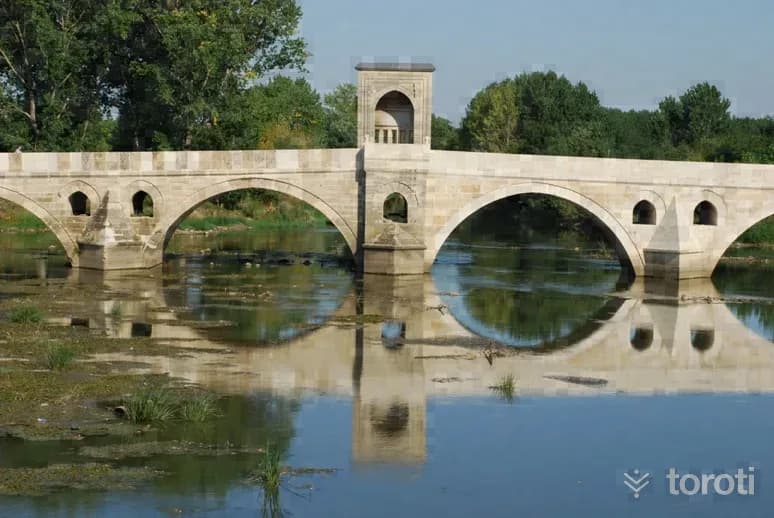
Ekmekçizade Ahmet Paşa Bridge, or by its other name Tunca Bridge, was commissioned by Ekmekçizade Ahmet Paşa over the Tunca River between 1608-1615. Its architect is Sedefkar Mehmet Ağa. It is a 10-arched bridge on 11 piers. Half of it and the inscribed pavilion in the middle were destroyed by floods, and it was restored in 2008 in accordance with the original.
45 minutes
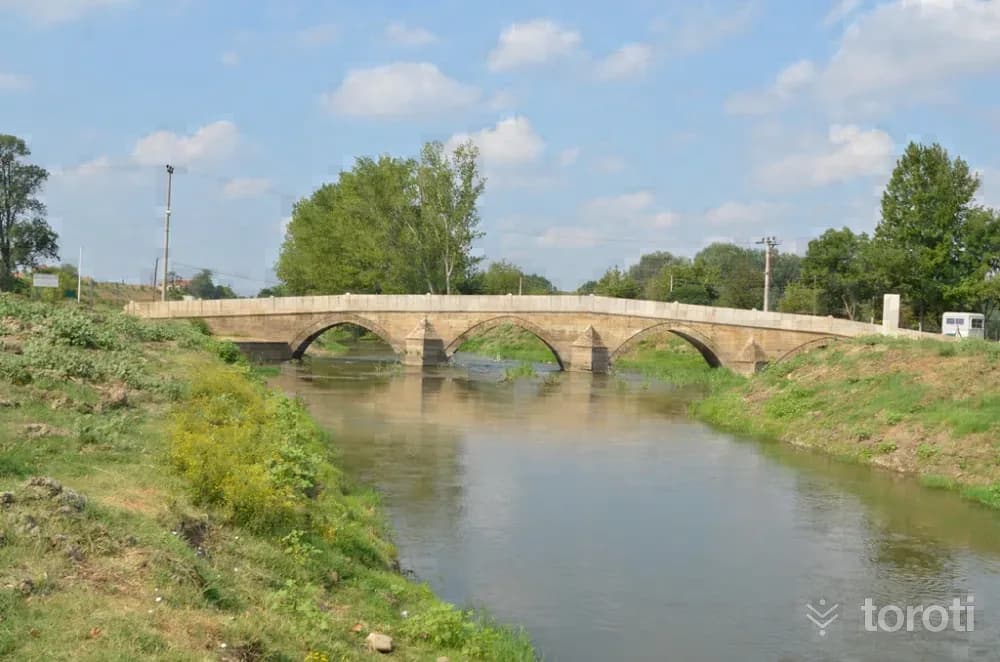
Saray Köprüsü / Kanunı Köprüsü
It was built over the Tunca River in Sarayiçi. It is a bridge used to pass from Edirne into the Palace. It is thought to have been commissioned by Kanuni Sultan Süleyman to Mimar Sinan in 1560 together with the Terazi and Adalet Pavilions. It is 80 meters long, made of cut stone, and has four arches.
45 minutes
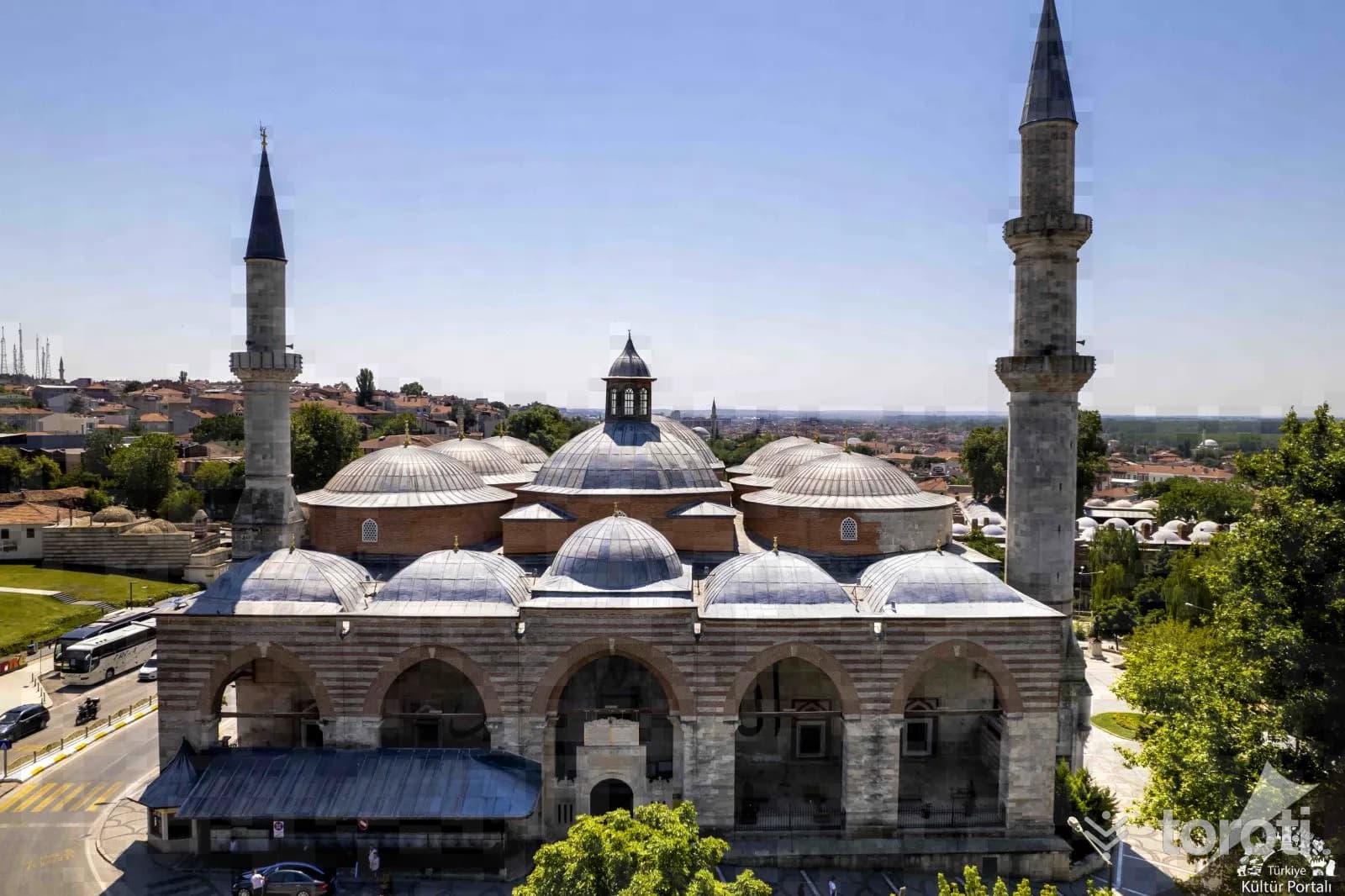
Eski (Ulu) Cami
It is the oldest monumental structure in Edirne to have survived from the Ottomans to the present day. Its construction began in 1403 during the time of Emir Süleyman and was completed in 1414 during the time of Çelebi Sultan Mehmet. Its architect is Konyalı Hacı Alaeddin, and his foreman is Ömer İbni İbrahim. It belongs to the type of multi-domed "Ulu camiler'.
20 minutes
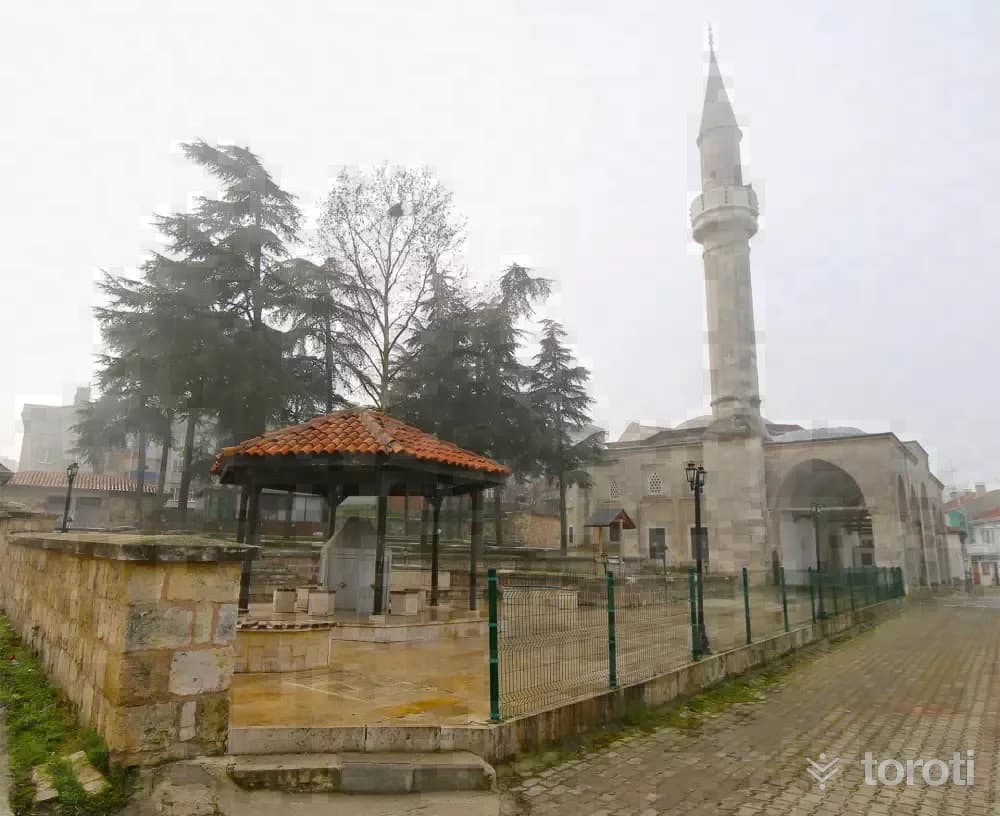
Beylerbeyi Cami
Beylerbeyi Mosque, commissioned by Rumeli Beylerbeyi Sinaneddin Yusuf Paşa during the reign of Murat II, is a side-spaced (zaviye), polygonal-plan and single-domed structure. It is on the right side of the street going from the Government House to Sarayiçi. It was commissioned in 1429 by Rumeli Beylerbeyi Sinaneddin Yusuf Paşa during the reign of Murat II.
20 minutes
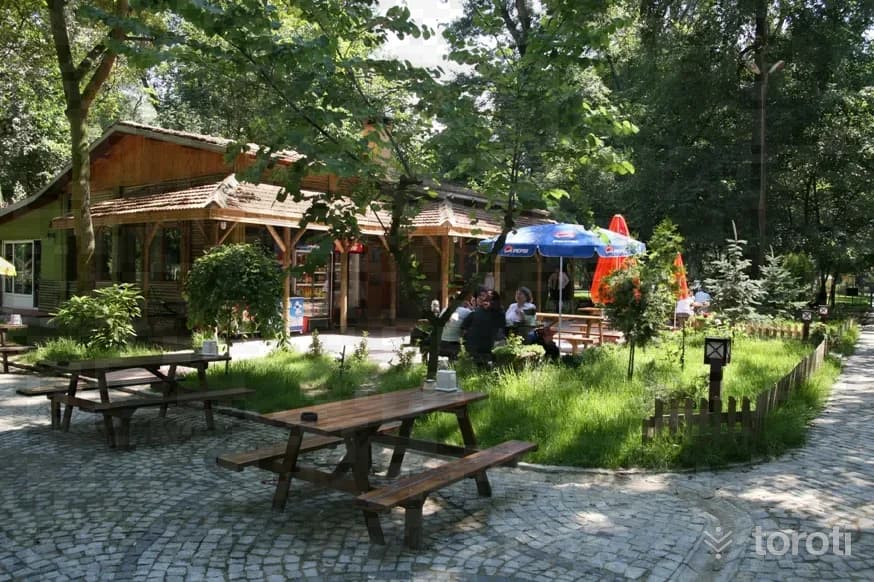
Söğütlük Kent Ormanı
It is a picnic area located in the southern part of the city center, on the Edirne-Karaağaç road, 2 kilometers from the city. In this area on the banks of the Meriç, covered with tall trees, there are a casino, a restaurant, children's playgrounds, tea gardens, and places offering various entertainment and sports facilities.
45 minutes
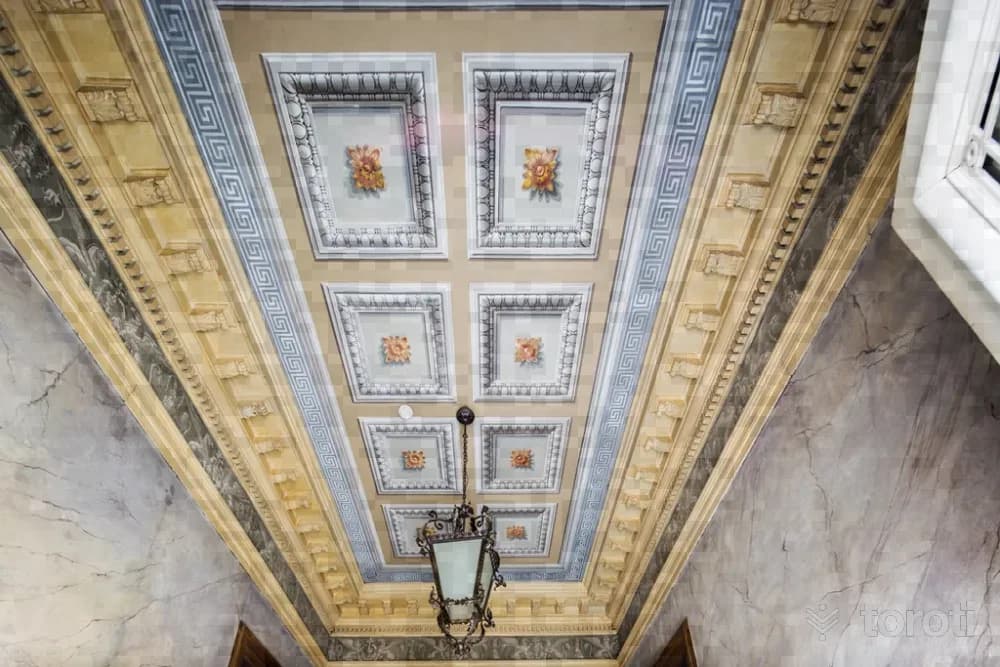
İlhan Koman Konağı
It is the house where İlhan Koman, one of the most valuable names in our sculpture art, was born. The mansion in the neo-classical style was built in 1908 by Greek architects and painters.
45 minutes
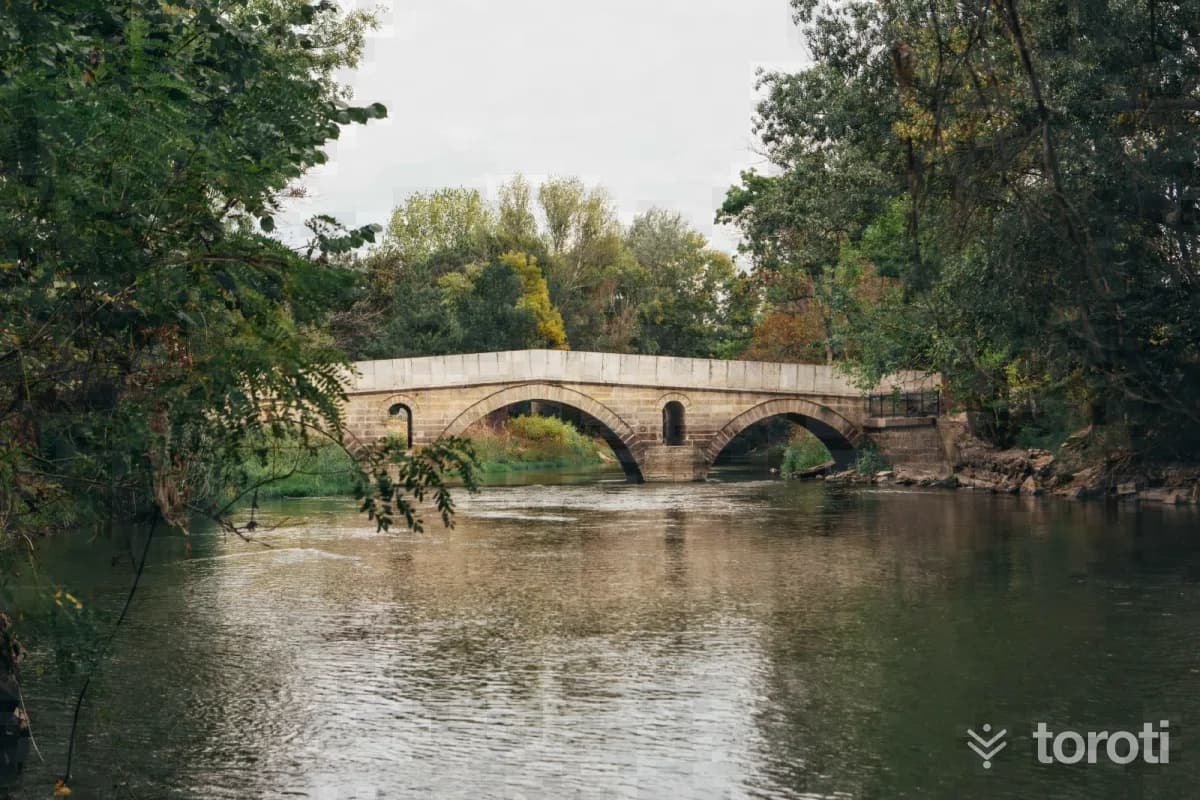
Fatih Köprüsü
It was built over the Tunca River in Sarayiçi between Demirkapı and Adalet Kasrı. Its construction date is unknown. It is thought to have been built in 1452 during the reign of Fatih. The bridge has three arches, with a large one in the middle and smaller ones on the sides, and is 34 m. long with spillway arches.
20 minutes
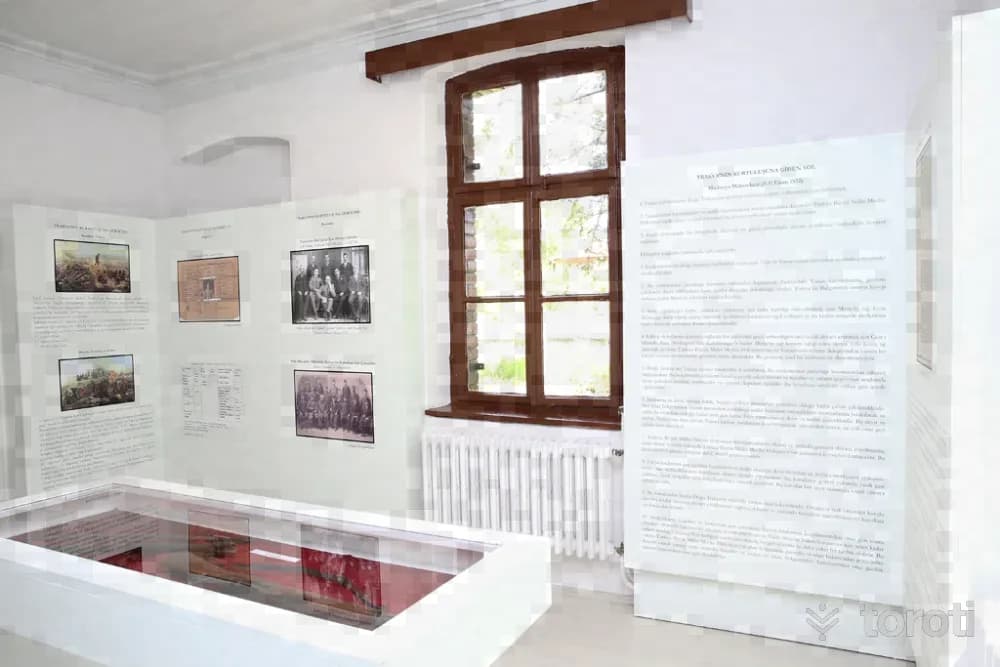
Milli Mücadele Ve Lozan Müzesi
The “Milli Mücadele ve Lozan Müzesi” was opened on 19 April 2016 in order to present to the public the national struggle carried out in the Thrace Region throughout the War of Independence and the Lausanne Peace Treaty.
45 minutes
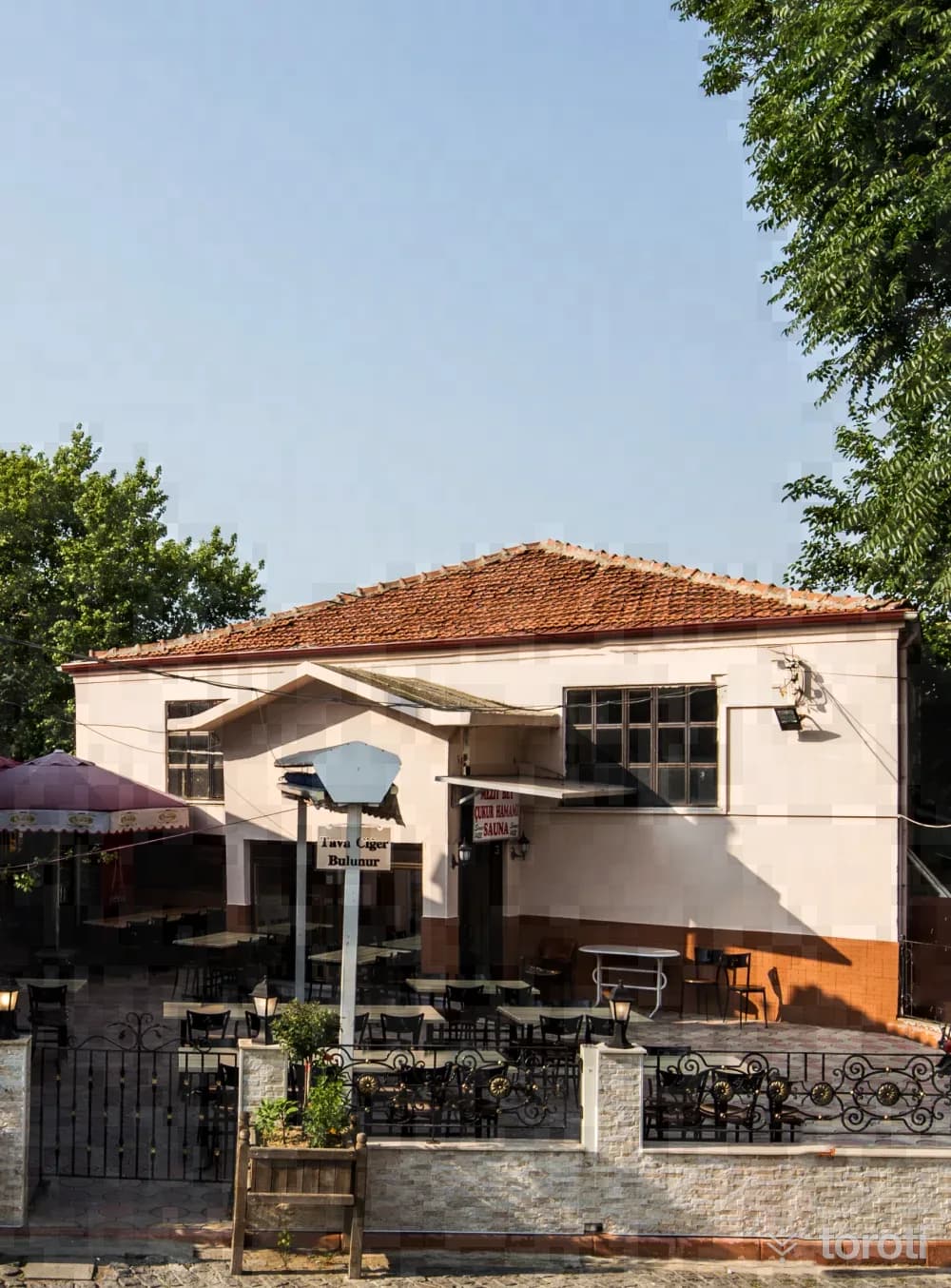
Mezitbey Hamamı
It is to the west of Selimiye Camisi and to the east of Eski Cami. It was commissioned by Mezit Bey, who was martyred in Wallachia in 1442. It is the plainest of the Edirne baths. The walls are of cut stone and brick. It is covered with a dome with tromps.
45 minutes
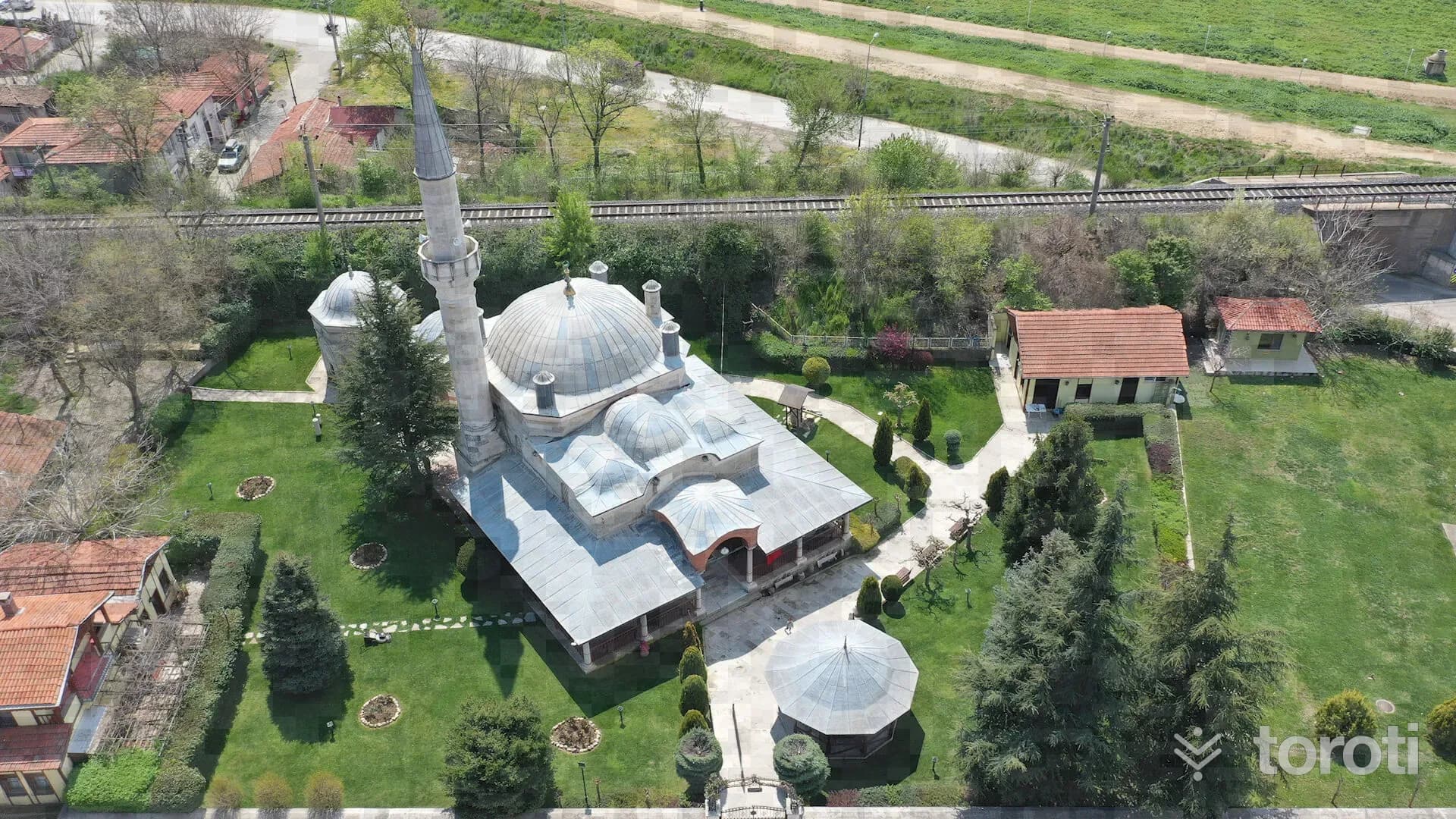
Darül Hadis Cami
It was built in 1435 by Murat II on the bank of the Tunca River. In the tombs next to the mosque are the graves of Murat II's two sons and the children of Mustafa III and Ahmet III.
20 minutes
Muradiye Camii (Mevlevihane)
In the Küçükpazar quarter. It was commissioned by Murat II on a hill dominating Sarayiçi. There is no date in its inscription. Based on its endowment deed and sources, it is dated to 1426. Its architect is unknown. It is one of the finest examples of side-space (zaviye) mosques. The main space, the rear two-domed space and the last congregation area, and there is also a fountain in its courtyard. Despite the plainness of the mosque's exterior appearance, in terms of its interior decoration, 15th c.
20 minutes
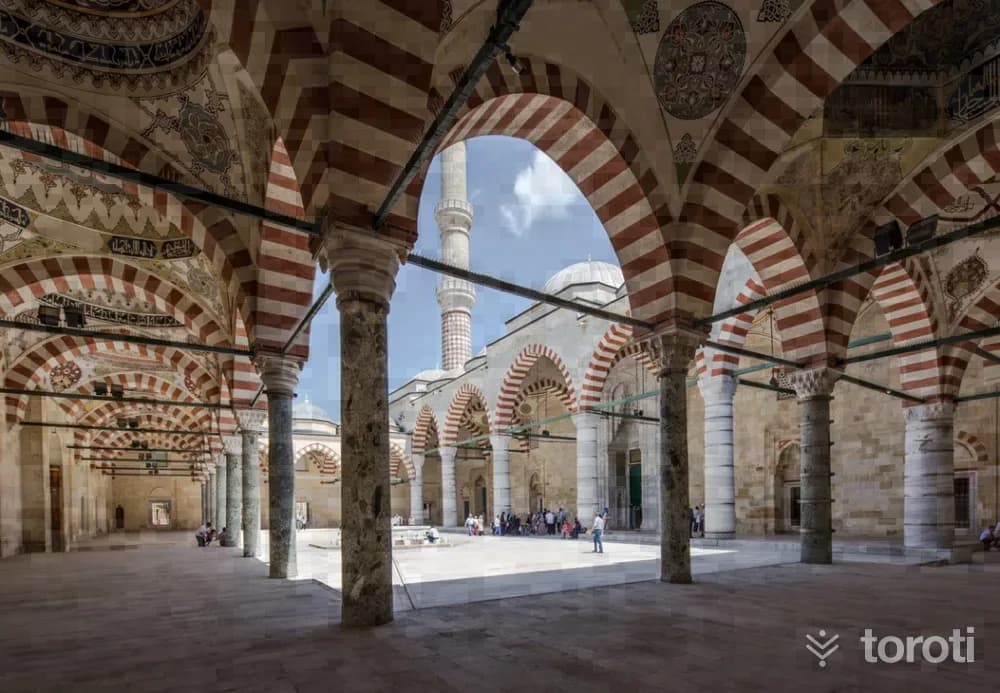
ÜÇ Şerefeli Cami
Between 1433-1447. The Mosque built by Murat II stands between the early and classical period style of Ottoman Art. A plan applied here for the first time is encountered. The large central dome with a diameter of 24 m. rests on six supports, two piers and four wall piers. Beside it are square sections covered with two smaller domes each. The structure is, as an innovation, a transverse rectangular building. Thus, it was intended to achieve a space developing transversely.
45 minutes
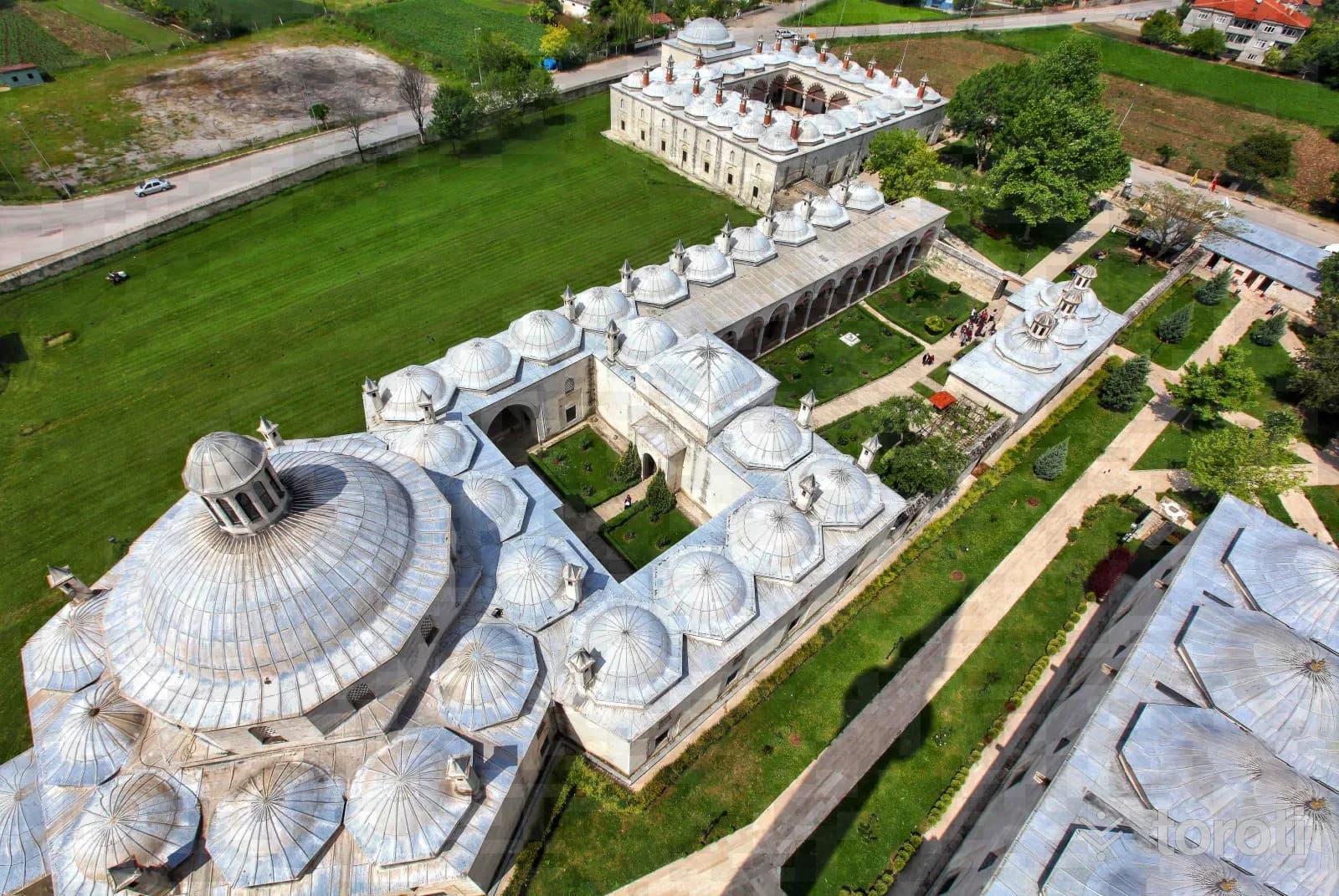
II.Bayezid Külliyesi Sağlık Müzesi
The II. Bayezid Complex Health Museum is one of the most significant structures in Edirne and holds great importance in the history of medicine.
45 minutes
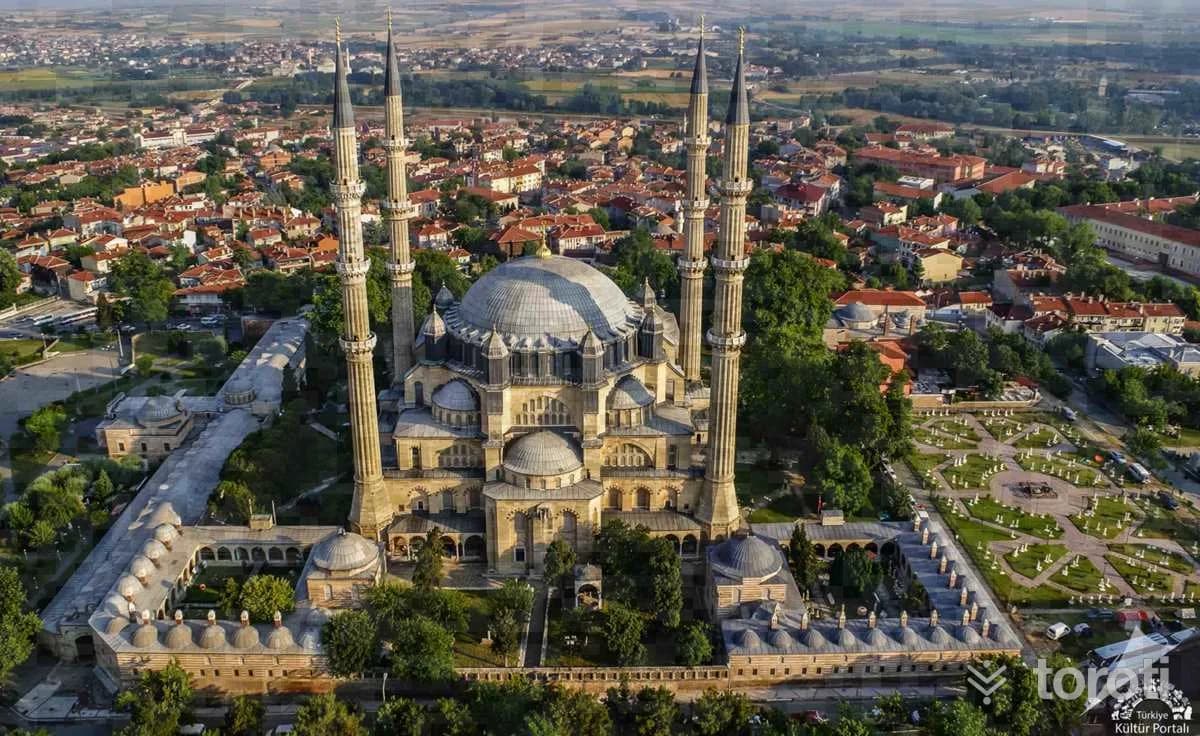
Selimiye Cami
Selimiye Mosque, considered Mimar Sinan's masterpiece, is one of the most significant structures in Ottoman architecture.
45 minutes
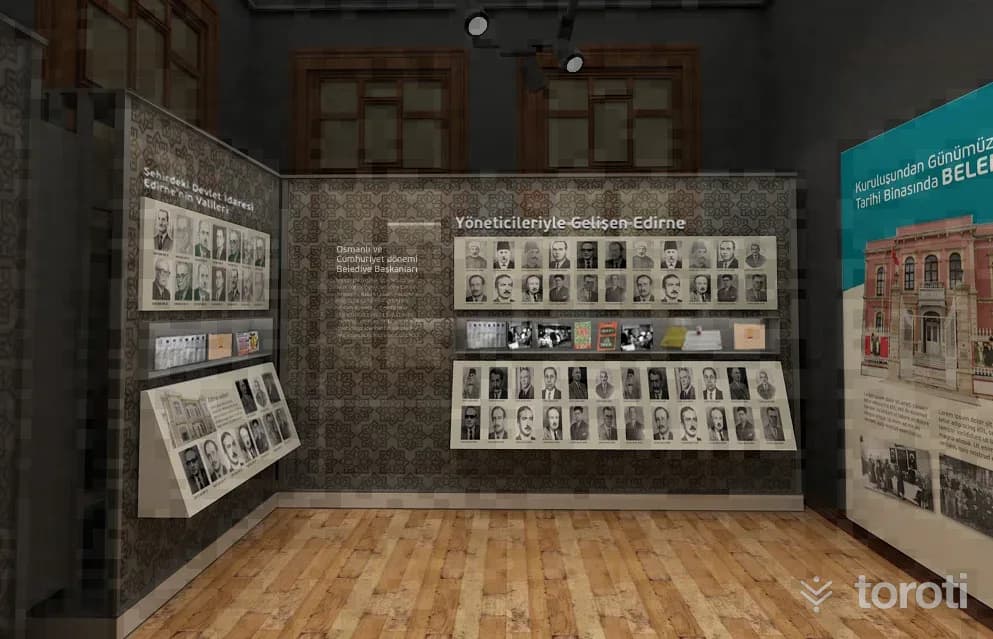
Edirne Kent Müzesi
In the venue that conveys the city’s economic, sociological and cultural aspects with a modern museology approach, every piece of information about Edirne’s past and present, from Selimiye to Saray-ı Cedide-i Amire, from Mimar Sinan to Fatih, from the sultans’ hunting sport to Kırkpınar, from occupation to liberation, from the Neolithic Period to the Thracians, from sunflower to paddy, from Clarinetist Deli Selim to Kakava, from Kapıkule to Meriç, is presented with three-dimensional silicone sculptures and digital screens.
45 minutes
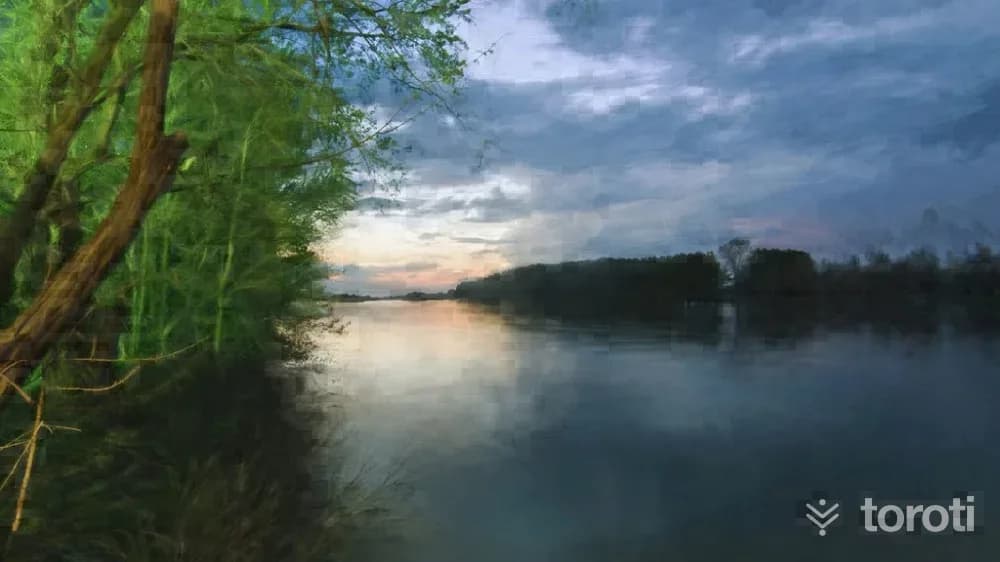
Meriç Ve Tunca Nehirleri
The Meriç and Tunca Rivers are the two most important rivers of Edirne, which is also known as the “City of Waters.” Recreation areas and leisure facilities are located around these rivers. The Meriç River rises in Bulgaria and enters our country within the borders of Edirne, and forms part of our border with Greece. The recreation areas in Karaağaç, reached by crossing the Meriç Bridge over the river, are integrated with the river itself.
45 minutes
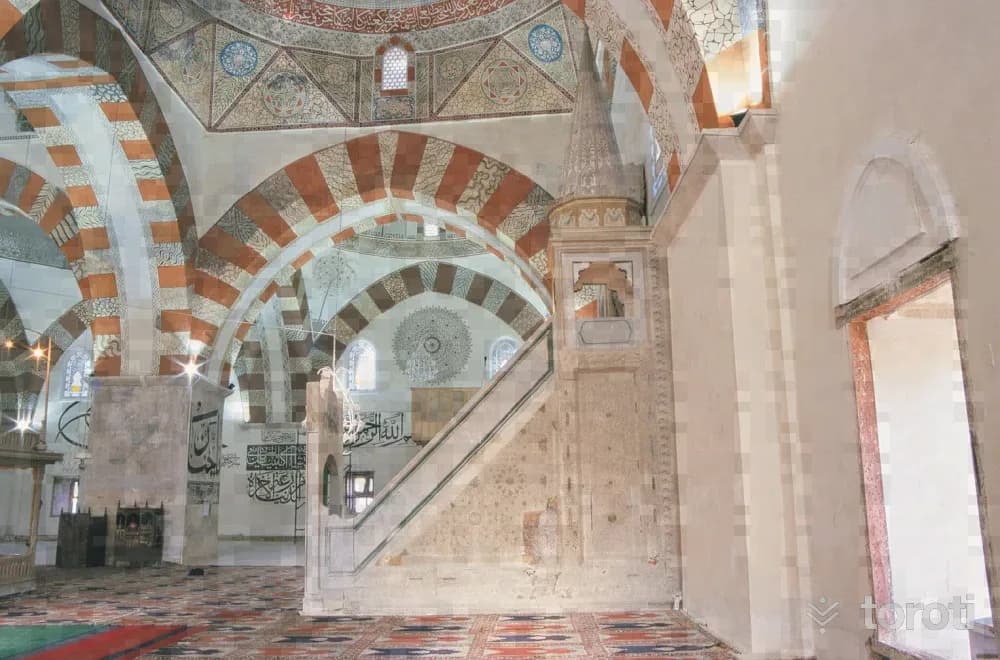
Eski Cami
It is the oldest monumental structure in Edirne that has survived from the Ottomans to the present day. Its construction was begun in 1403 during the time of Emir Süleyman and was completed in 1414 during the time of Çelebi Sultan Mehmet. Its architect is Konyalı Hacı Alaeddin, and its foreman is Ömer İbni İbrahim. It belongs to the type of multi-domed "Ulu camiler". Its marble door and the examples of decorative calligraphy in the interior are striking.
45 minutes
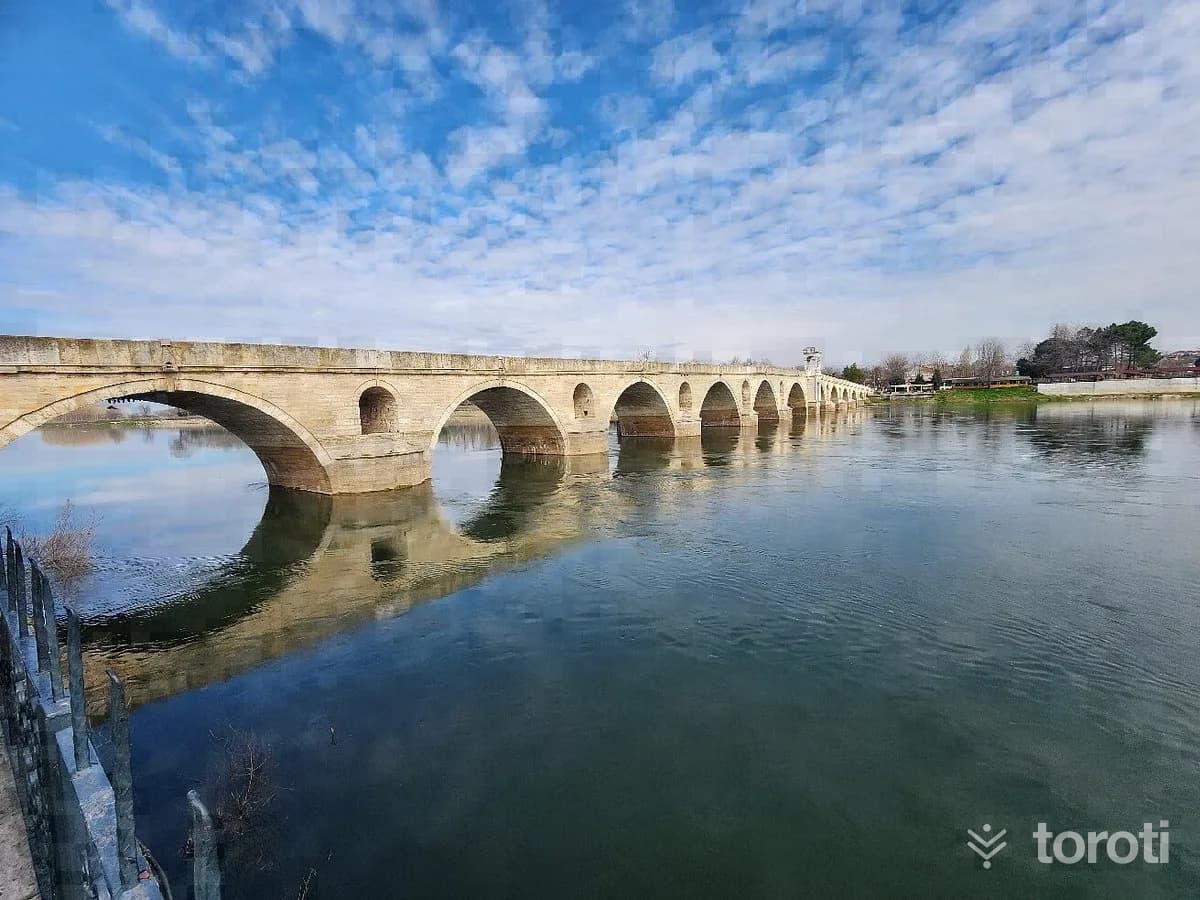
Meriç (Mecidiye) Köprüsü
It was built over the Meriç River on the Edirne-Karaağaç road. Its construction was started in 1842 during the reign of Abdülmecit and completed in 1847. 263 m. long. 7 m. wide. On 13 piers. It is a stone bridge with 12 pointed arches and is sloped towards the sides. There are also discharge openings between the piers.
20 minutes