Places to visit
Things to do in Amasya merkez
54 destinations, each with a description, how long it takes and where it sits on the map.
In short
toroti’s catalogue holds 54 described destinations within Amasya merkez, Amasya. The themes that come up most: History, Museum, Culture, Local culture, Faith heritage, Nature.
Çağlayan Köprüsü
The construction date of the bridge and the person who commissioned it are not known for certain. However, the general opinion is that the bridge was commissioned by İltekin Gazi, one of the Danişmendli emirs, in 1075.
20 minutes
Amasya Arkeoloji Müzesi
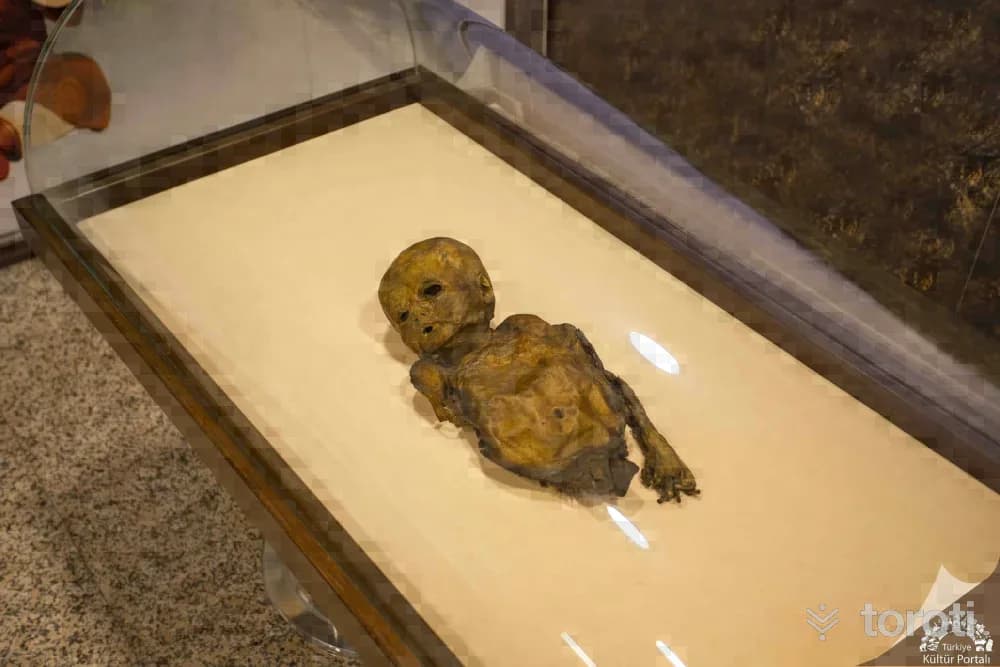
The history of Amasya Archaeology Museum, located in the central district of Amasya, dates back to the museum depot established in 1925. The museum depot was formed by bringing together a small number of archaeological artifacts and mummies from the Islamic period in two rooms of the madrasa building of II. Beyazıt Külliyesi. The artifacts in the depot were moved to Gökmedrese Camii in 1962. After being administered by an honorary office until 1958, the depot became a museum directorate in June 1958.
45 minutes
Komana Antik Kenti
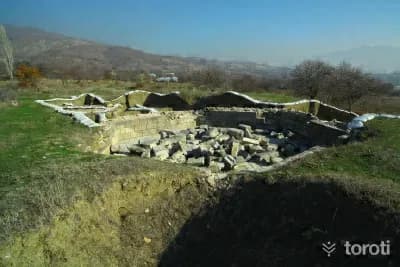
Where Is the Ancient City of Komana? In the inland parts of the Black Sea Region, within the present-day borders of Tokat, there were two temple states operating during the Hellenistic Period. The larger of these, Komana, was a Cappadocian-type sanctuary built in dedication to the Mother Goddess Ma.
45 minutes
İkinci Bayezid Külliyesi
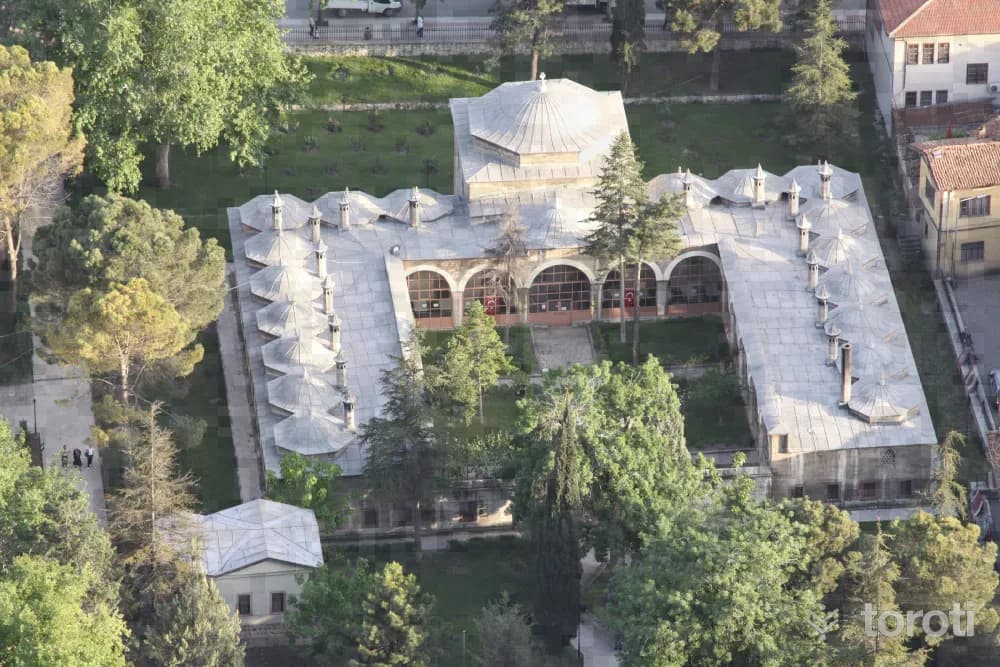
İkinci Bayezid Külliyesi was commissioned by Amasya Sanjak Bey Şehzade Ahmed on the instructions of Ottoman Sultan II. Bâyezid between 1485-1486. As stated in the endowment deed dated 1496, the components of the külliye consist of a mosque, madrasa, imaret, school and bridge. The bridge mentioned as one of the components of the külliye is located over the Kızılırmak in Osmancık District of Çorum.
45 minutes
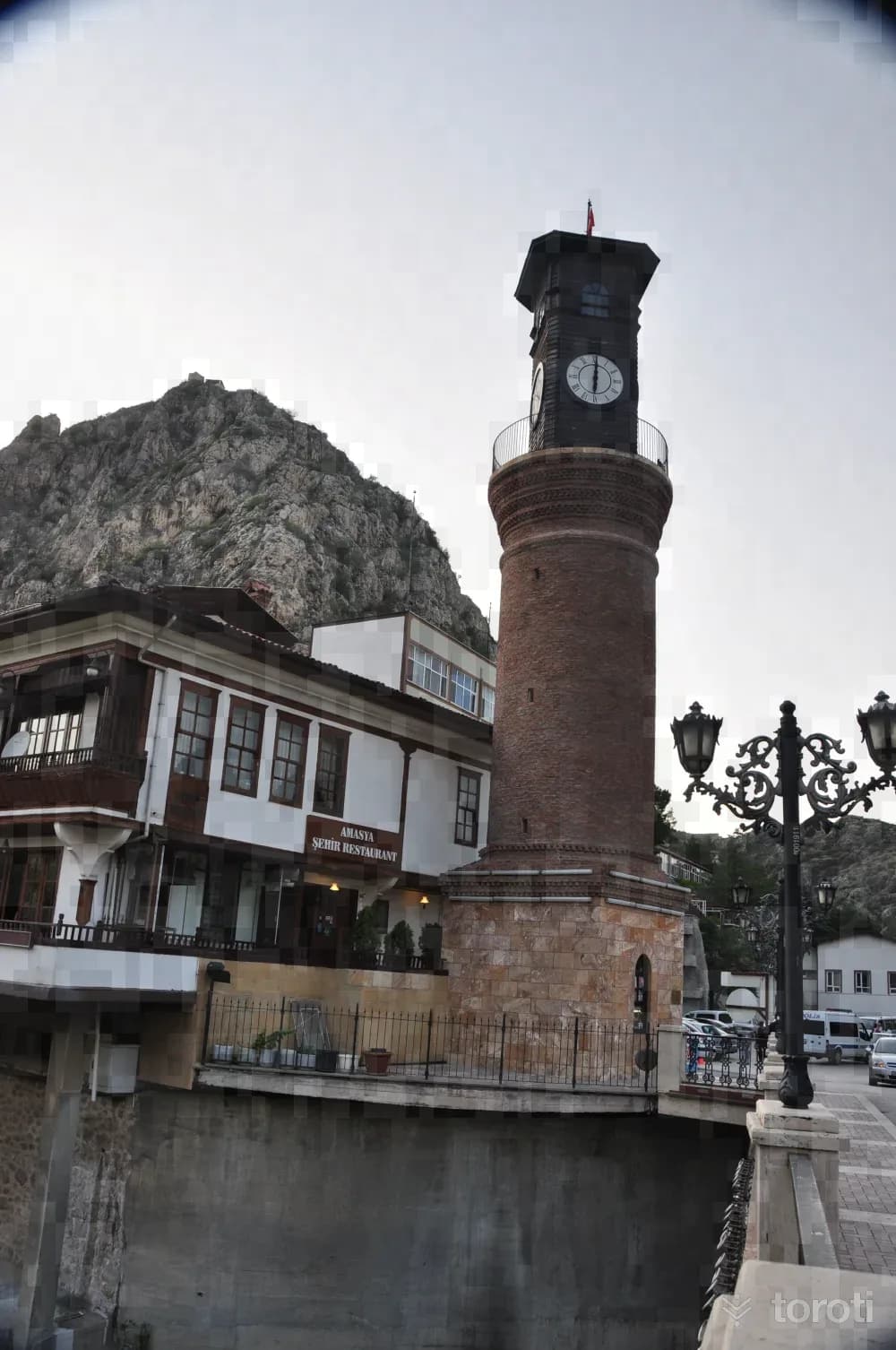
Amasya Saat Kulesi
Clock towers occupy a different place within Anatolian Turkish Architecture in terms of their functions and architecture. Their main function is to show the time, and they have also served various functions such as fire and watch towers. In addition, they caused official institutions to adopt a working order based on the solar clock as in the West instead of the ezani clock. Amasya Clock Tower is located in Amasya City Center, on the west side of Hükümet (Helkıs) Bridge.
45 minutes
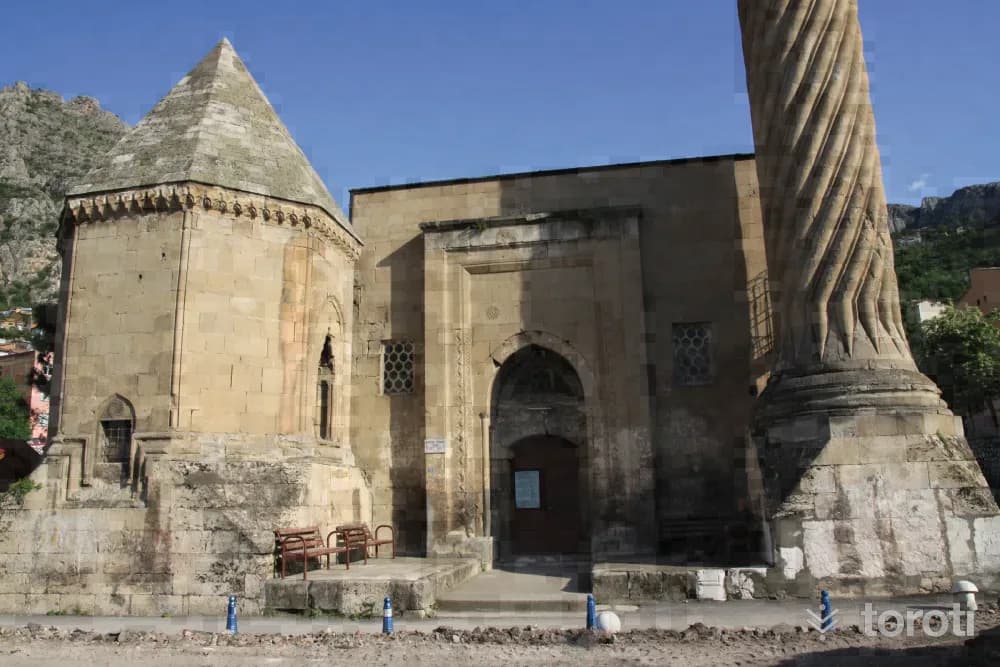
Burmali Minare Cami Ve Cumudar Türbesi
Burmalı Minare Mosque, or by its other names Mahkeme Mosque, is located behind Bakırcılar Bazaar in the province of Amasya. It is understood from the inscription in the form of an arch curve above the mosque’s door that the mosque was commissioned by two brothers. It is accepted that one of these brothers, Said Ferruh, was Necmeddin Ferruh Bey, one of the viziers of the Seljuk Sultan II. Gıyaseddin Keyhüsrev. His brother is Haznedar Yusuf. According to the inscription, the construction date is 1242.
45 minutes
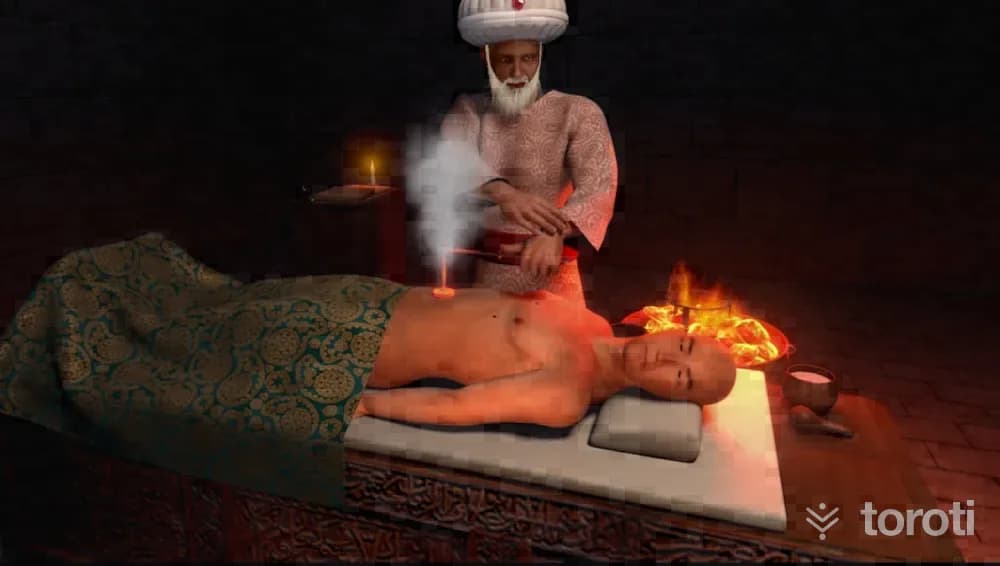
Sabuncuoğlu Tip Ve Cerrahi Tarihi Müzesi
Who is Sabuncuoğlu Şerefeddin? Sabuncuoğlu Şerefeddin, a Turkish physician and surgeon who produced important works in the field of medicine during the Ottoman period, is the author of the first Turkish surgical work. Today, he belonged to a famous physician family whose name lives on in a neighborhood in Amasya called Sabuncuoğlu (Hacı İlyas), and he is the grandson of Sabuncuoğlu Mevlânâ el-Hâc İlyas Çelebi Bey, the chief physician of Çelebi Sultan Mehmed.
45 minutes
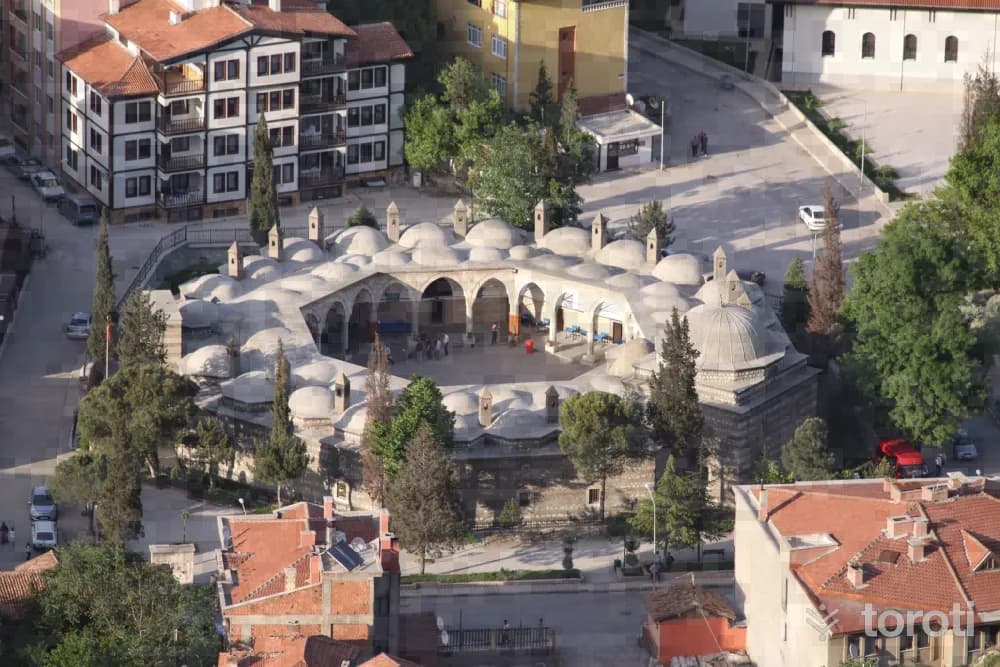
Kapi Ağası Medresesi
Kapi Ağası Medresesi, or by its other name Büyük Ağa Medresesi, was commissioned in 1488 by Sultan II. Bayezid's Kapı Ağası Hüseyin Ağa. Its plan differs from the classical Ottoman madrasa form. In particular, the octagonal plan scheme seen in Seljuk tomb monuments was applied in this madrasa for the first time. The madrasa is entered through the large arched gate on its north-west side.
45 minutes
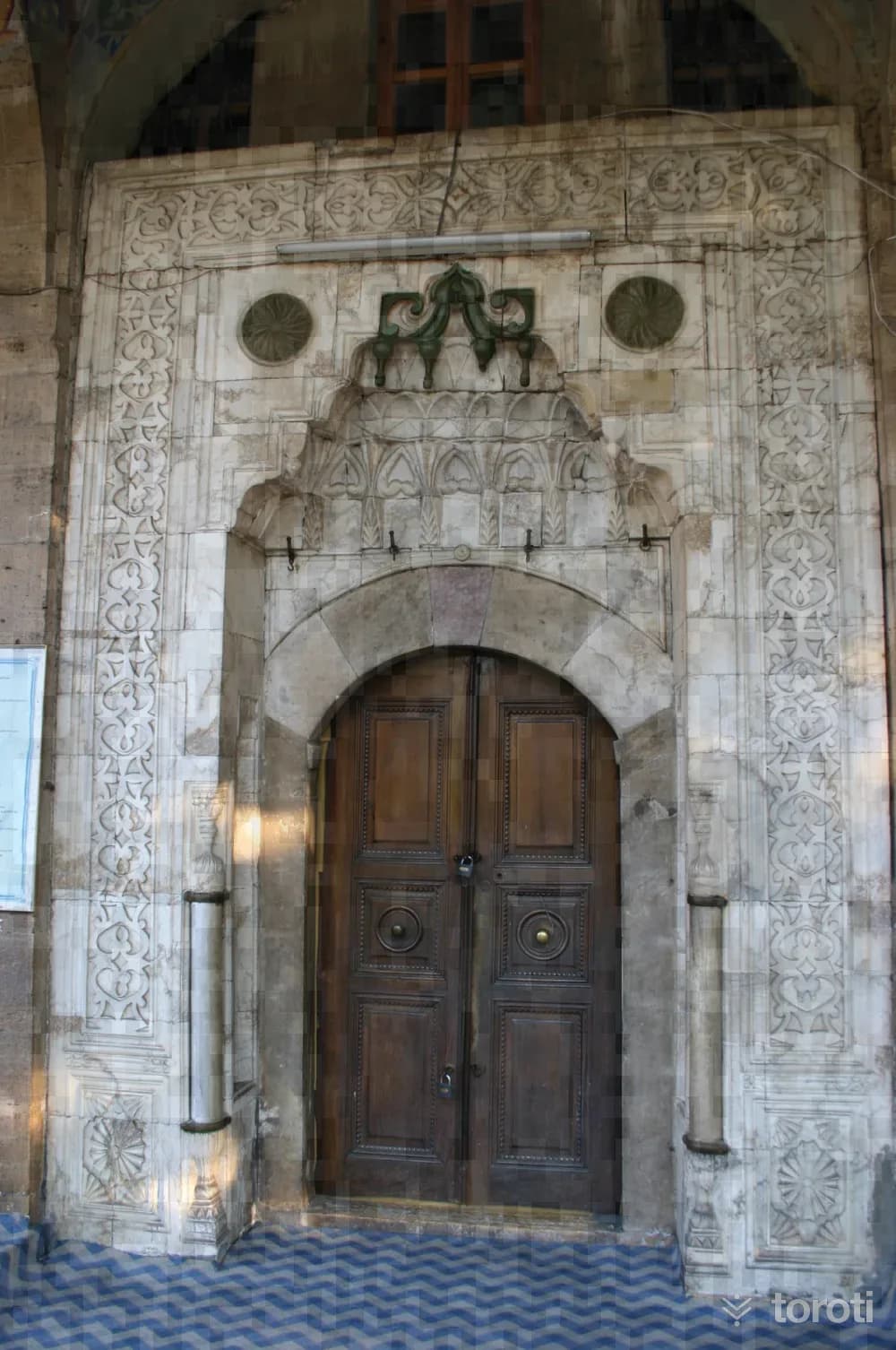
Şirvanli Camii
Şirvanlı Camii was built between 1873-1895 by Sheikh Hacı Mahmut Efendi, who was also from Karabağ, with aid sent from the Karabağ and Şirvan cities of Azerbaijan and aid collected from those who came from these places and settled in Amasya.
45 minutes
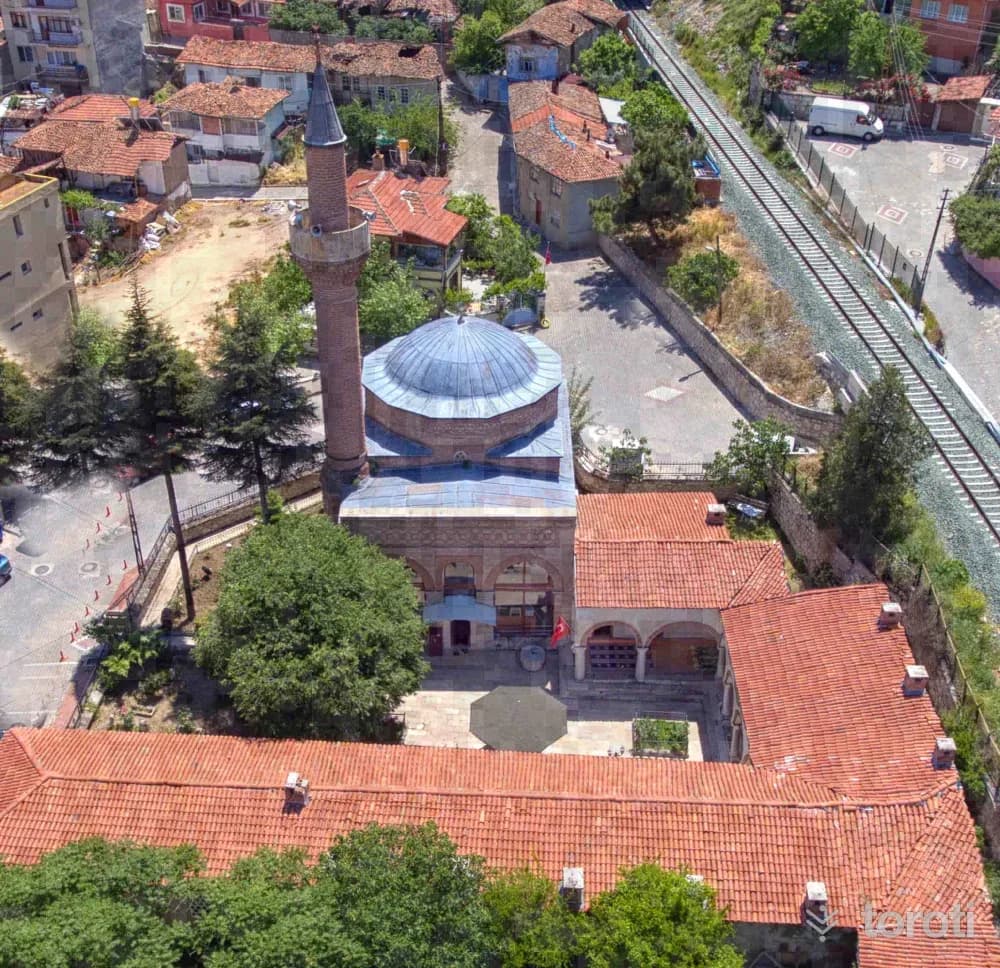
Ayas Ağa Camii
Ayas Ağa Camii, commissioned in 1495 by Ayas Ağa, the Kapı Ağası of Bayezid II, is a külliye consisting of a mosque, madrasa, sıbyan mektebi and hazire. Because it is located in Şamlar Mahallesi, the mosque is also called Şamlar Cami. The square-planned, single-domed mosque has walls built of rubble stone. On its north side there is a three-part last congregation area. The middle section, which is narrower than the sides and covered with a mirrored vault, is the entrance part of the mosque.
45 minutes
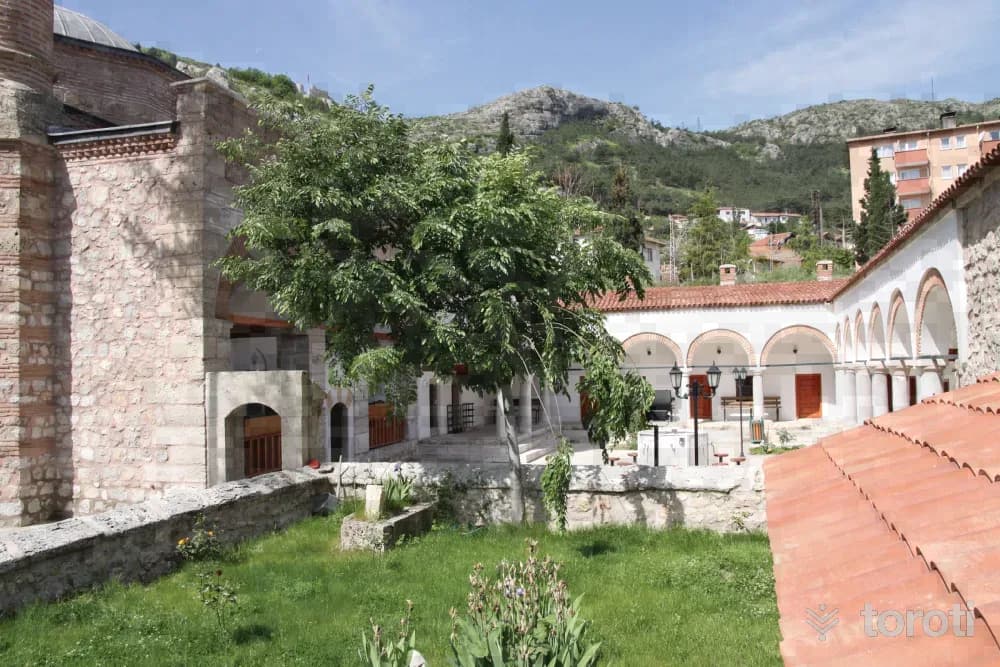
Küçük Ağa Külliyesi / Şamlar-ayas Ağa Külliyesi
It is a külliye consisting of a mosque, madrasa, sibyan school and hazire, commissioned in 1495 by Ayas Ağa, Kapı Ağası of Bayezid II. Because it is located in Şamlar Mahallesi, the mosque is also called Şamlar Cami. It is also known as Ayas Ağa Cami after its patron. The walls of the square-planned, single-domed mosque were built of rubble stone. On its north side there is a three-part last congregation area. The middle section, which is narrower than the sides and covered with a mirror vault, is the entrance part of the mosque.
45 minutes
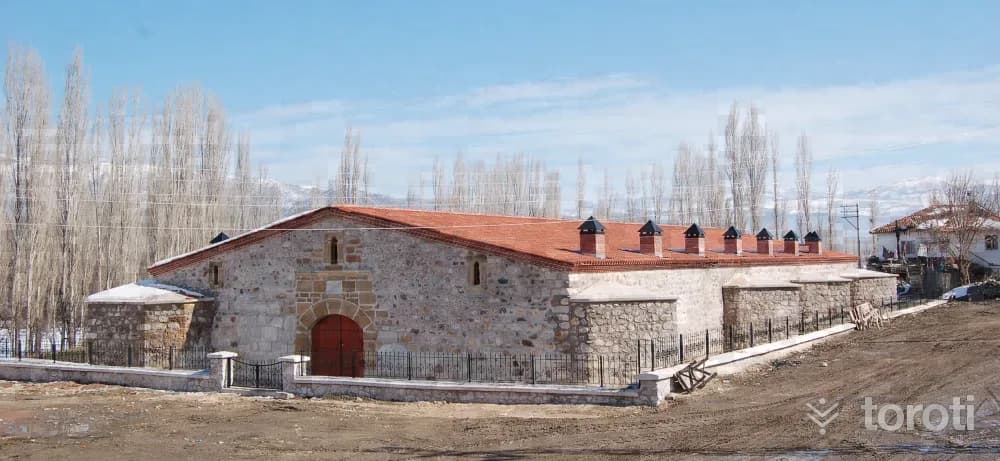
Ezinepazar Hanı
Ezine Pazar Hanı is in Ezine Pazar Town, 35 kilometers from Amasya, on the Amasya-Tokat highway. It was commissioned by Melike Mahperi Hatun, the wife of the Seljuk sultans Alaaddin Keykubat. Since its original inscription has been lost, the exact year it was built is not known, but considering the construction dates of the other six hans accepted to have been commissioned by Mahperi Hatun, it can be said that this han was built between 1238-1246. The entrance door of the han is double-leaf wooden.
45 minutes
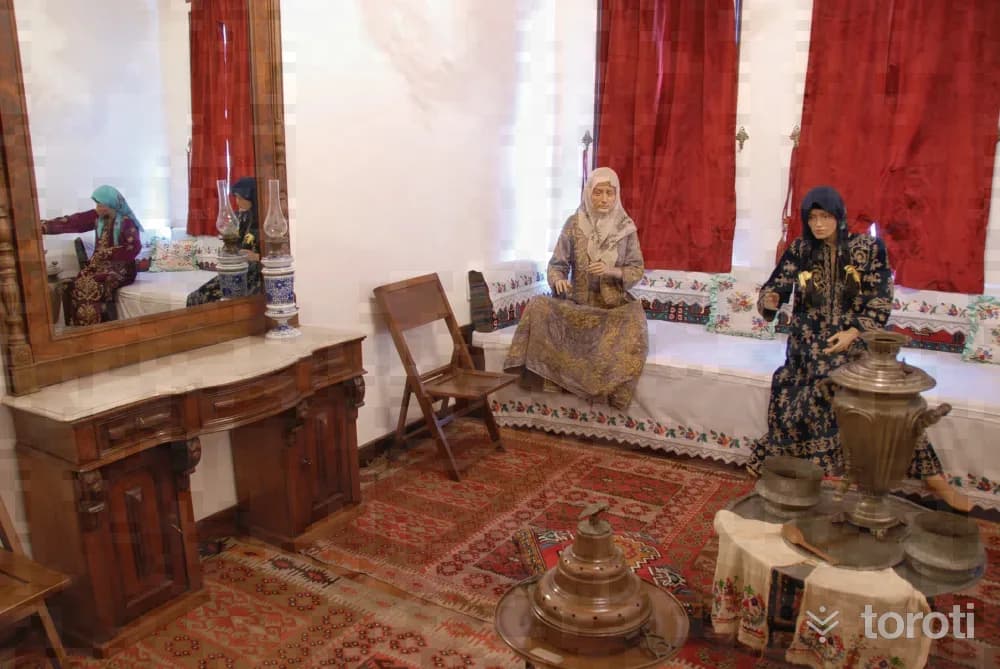
Hazeranlar Konağı Etnografya Müzesi
Hazeranlar Mansion was built in 1865 by Amasya Treasurer Hasan Talat Efendi. The mansion takes its name from Hezeran Hanım, who lived here for a long time. Hazeranlar Mansion is one of the finest structures reflecting the characteristics of regional civil architectural works of the Ottoman Period with its four-iwan, central-hall plan. It was built on ancient period fortification walls, with a basement and two storeys, in timber frame construction with adobe infill.
45 minutes
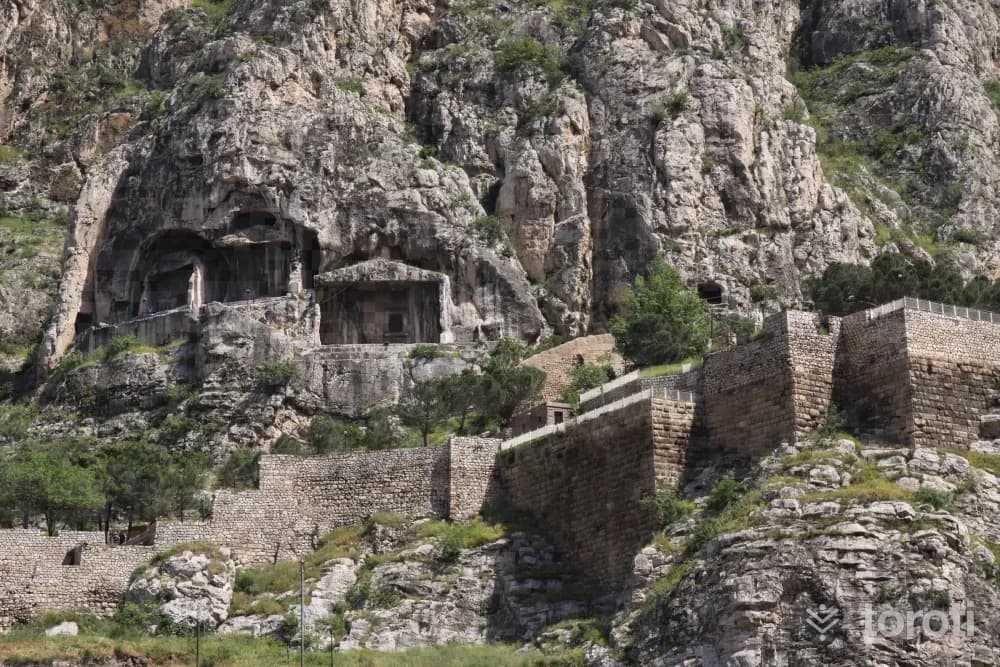
Amasya İÇ Kale
Amasya Inner Castle is the name given to the area consisting of the region between the wall along the Yeşilırmak River and Kızlar Sarayı, where today's Hatuniye Neighborhood is located. Today, it is bounded by the clock tower in front of the Governor's Office building and the station bridge and the city walls. Today, as in the Ottoman Period, it is entered through three gates.
45 minutes
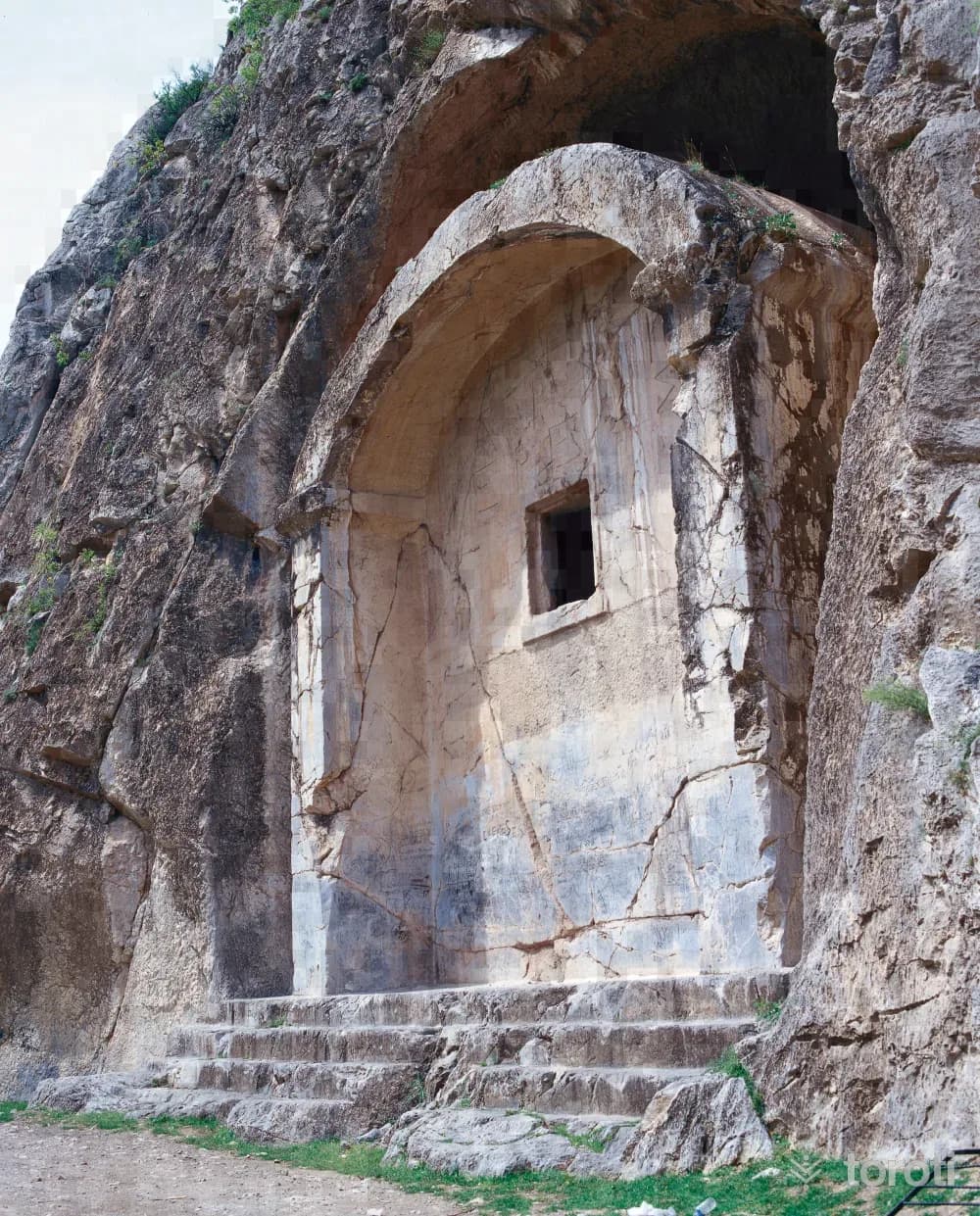
Aynali Mağara
Aynalı Mağara is 3,3 kilometers from the city center on the road to Ziyaret Town. It is the best carved and completed of the rock tombs. The tomb, reached by climbing four steps from the ground, was carved into a flat rock. Its width is 9,8 meters and its height is 13 meters. When viewed from the exterior facade, it can be seen that it was made with masterful stone workmanship. The outer facade surface of the cave was burnished and polished.
45 minutes
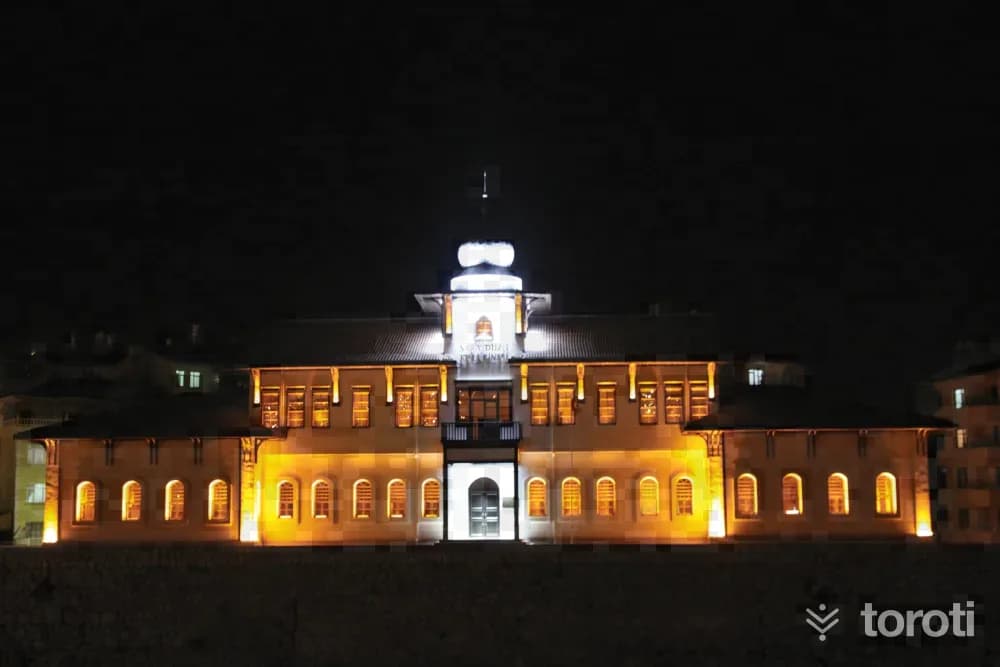
Saraydüzü Kişla Binası Milli Mücadele Müzesi Ve Kongre Merkezi
Saraydüzü Kışla Binası, which Mustafa Kemal used as a base when he came to Amasya in June 1919 and where the Amasya Circular was drafted, has been rebuilt on the banks of the Yeşilırmak in keeping with its original form, in consideration of this historical importance. Saraydüzü Kışla Binası and Milli Mücadele Müzesi is used not only as a museum where works from the Republican Period and some documents are exhibited, but also as a cultural center where various events are organized.
45 minutes
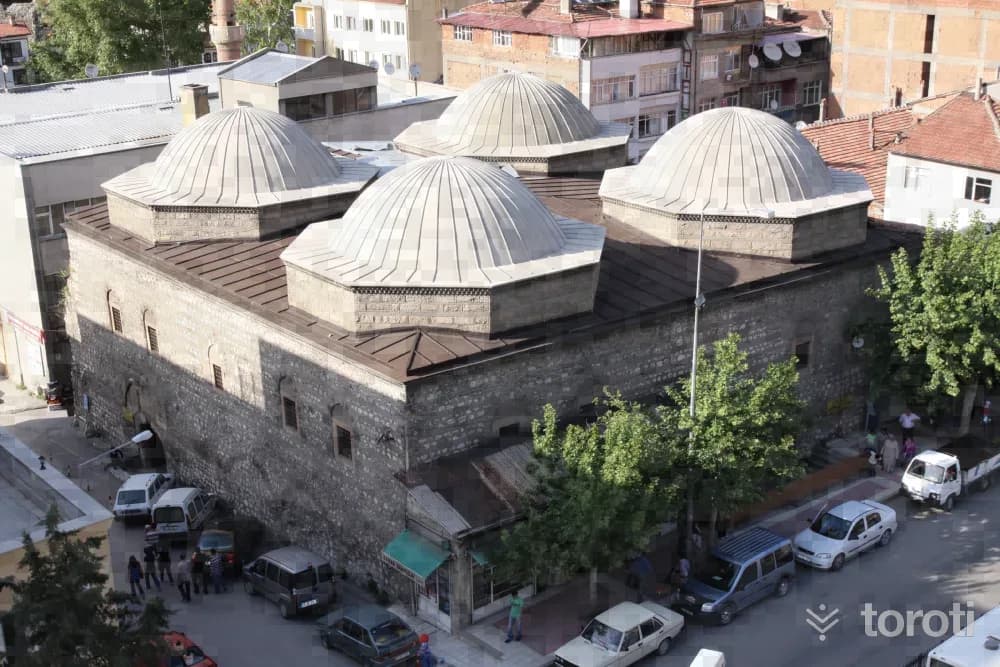
Amasya Bedesteni
The bedesten, commissioned in 1483 by Hüseyin Ağa, one of the gate aghas of Bayezid II, has survived to the present day after undergoing significant changes compared to its original state. The bedesten, which Hüseyin Ağa, who had many charitable foundations in Amasya and its surroundings, had built in order to generate income for his endowments, suffered great damage in the earthquake that occurred in 1668.
45 minutes
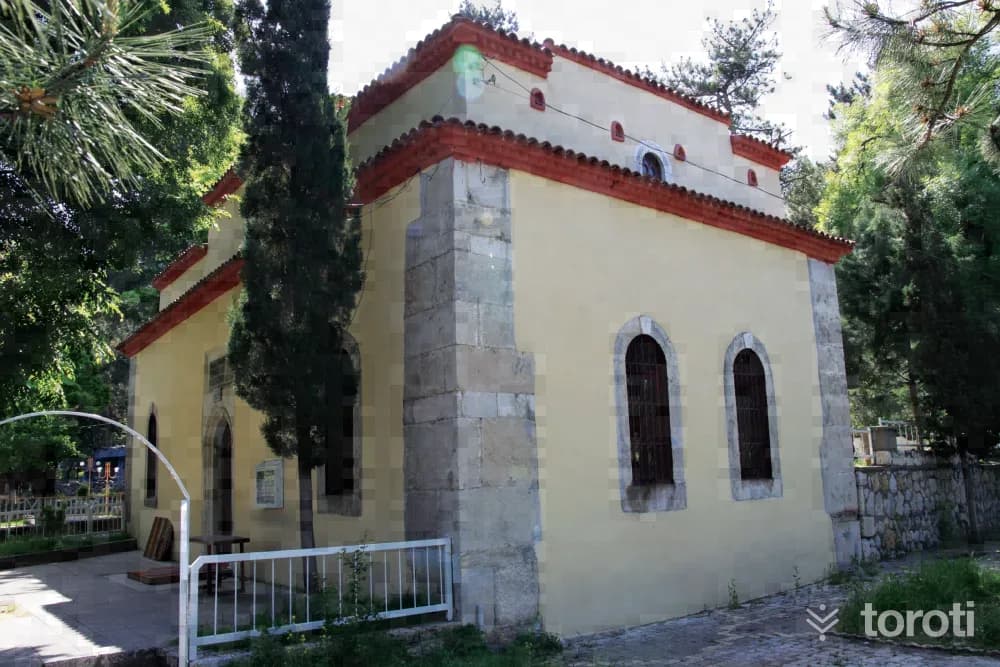
Pir Sücaeddin İlyas Türbesi
The tomb, located in Pirler Park in the central district of Amasya, is also known as Yukarı Pirler Tomb. It was built in 1486 by Gümüşlüzade Ahmet Bey for Sheikh Sücaeddin Pir İlyas of the Gümüşlüzade family. Besides Pir İlyas, the tomb contains the graves of his son-in-law Pir Celaleddin Abdurrahman, his grandson Pir Hayreddin Hızır Çelebi, and their families.
45 minutes
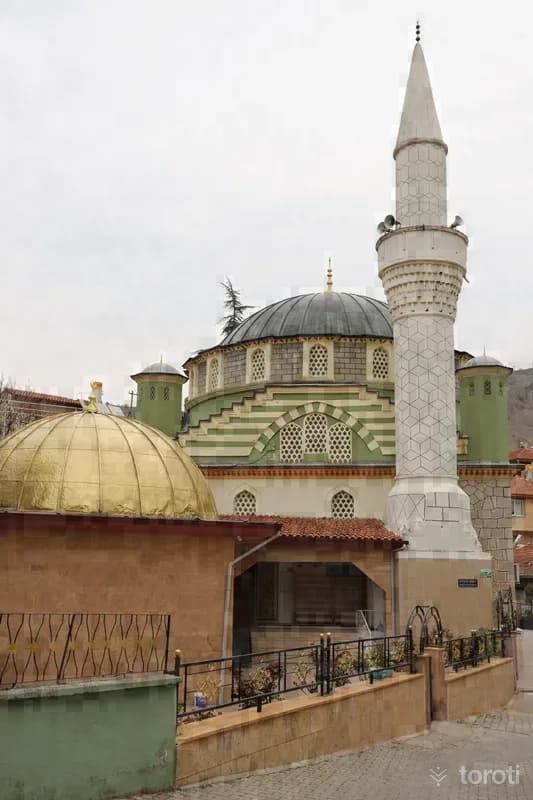
Gülbaba Türbesi
There are various accounts regarding his life and historical identity. According to the information Evliya Çelebi relates from his father, Gülbaba, a Bektashi dervish, was born in the Merzifon district of Amasya, took part in many wars during the reigns of Fâtih Sultan Mehmed, II. Bayezid, Yavuz Sultan Selim and Kanûnî Sultan Süleyman, and was martyred in 1541 during the Budin campaign. Various opinions have been put forward as to where the name Gülbaba came from.
45 minutes
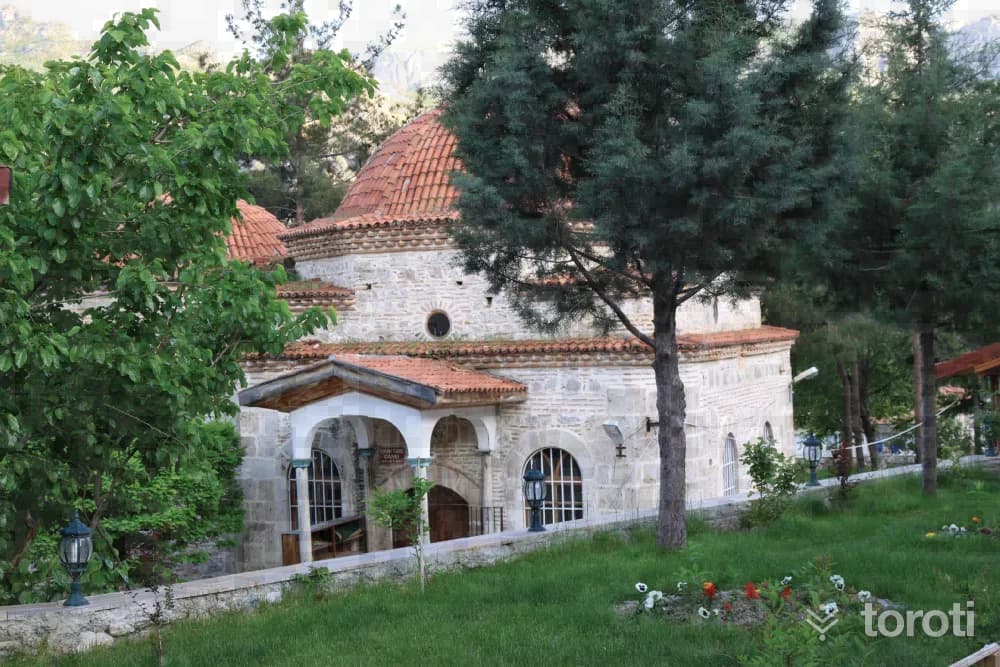
Şirvanli İsmail Türbesi
It is the tomb commissioned in 1870 by Şirvanizade Mehmet Rüştü Paşa, one of the grand viziers of the Ottoman Period, for his father İsmail Siraceddin. The tomb also contains the grave of Rüştü Paşa’s brother, İstanbul Kadısı Seyyid Ahmet Hulusi Siraceddin. Built of brick and stone, the tomb consists of two square spaces covered with domes. The section on the west is larger than the other. Birdhouses can be seen on the octagonal drum of the dome of the tomb, whose corners are built with cut stone.
45 minutes
Çilehane Camii
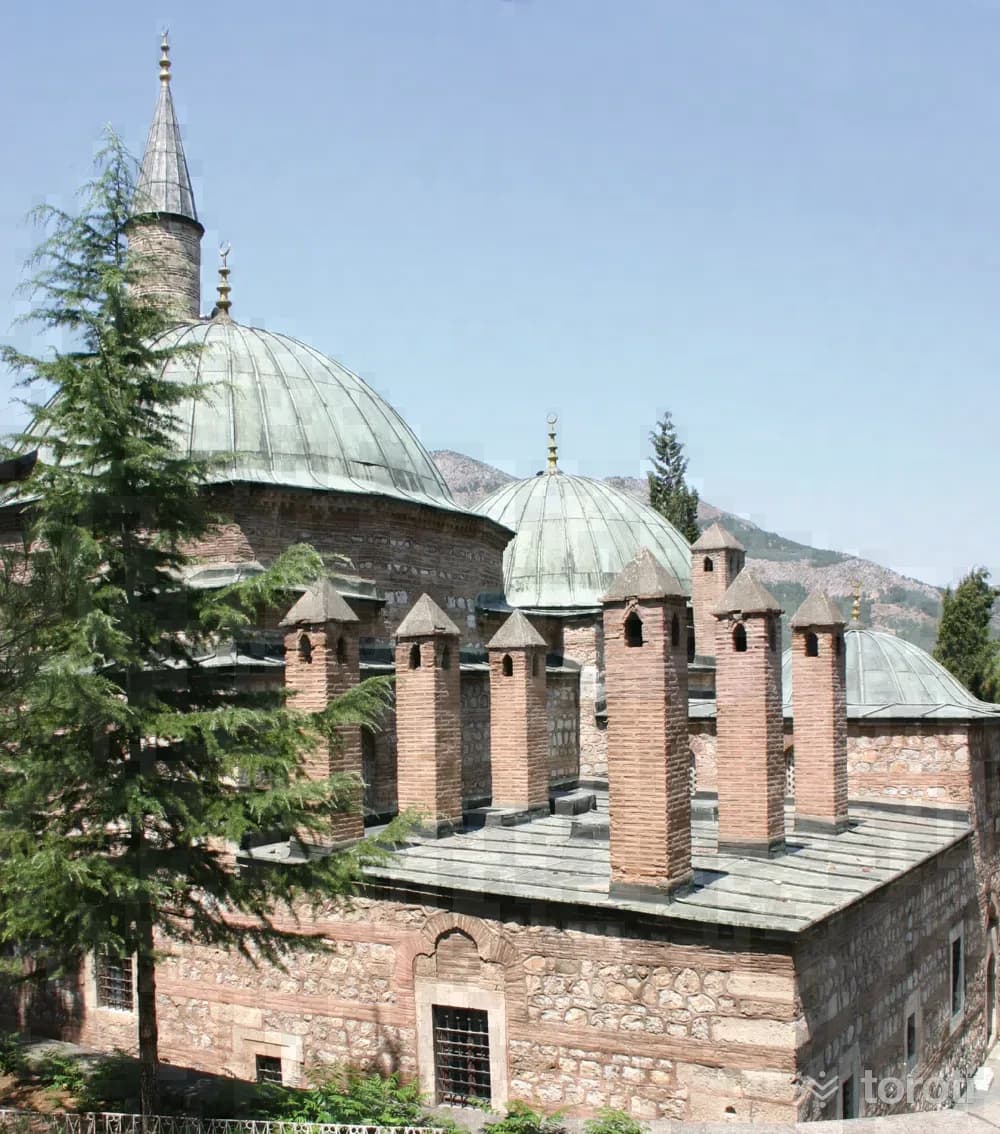
Çilehane Camii was commissioned in 1413 by Yakup Paşa, one of the commanders of Çelebi Mehmet. The building, which is used as a mosque today, is essentially a Halveti Tekke. It consists of a tekke, a mescid and çilehane cells. On the west side of the building’s west entrance, there is a structure thought to have probably been a tomb. The exterior walls of the building were built of rubble stone with the spaces filled with red mortar. This stone masonry is reinforced horizontally by double rows of brick courses.
45 minutes
Fethiye Camii
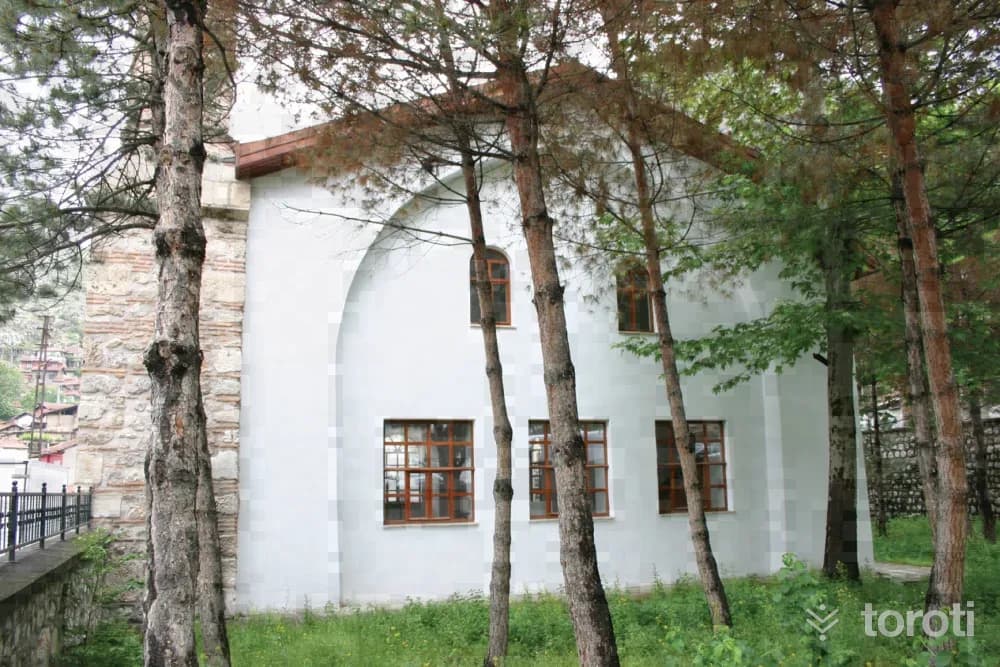
Fethiye Camii was converted into a mosque from an old Byzantine church. The church is thought to have been commissioned in the 7th century by Helena, daughter of the Byzantine Emperor Phocas. Fetih Gazi, who served as the governor of Amasya during the Danişmendliler Period, had this large church converted into a mosque and named it Fethiye Camii. A minaret was added in 1883 by İncezade Hacı Mehmet to the mosque, which originally had no minaret.
45 minutes
İstasyon Köprüsü
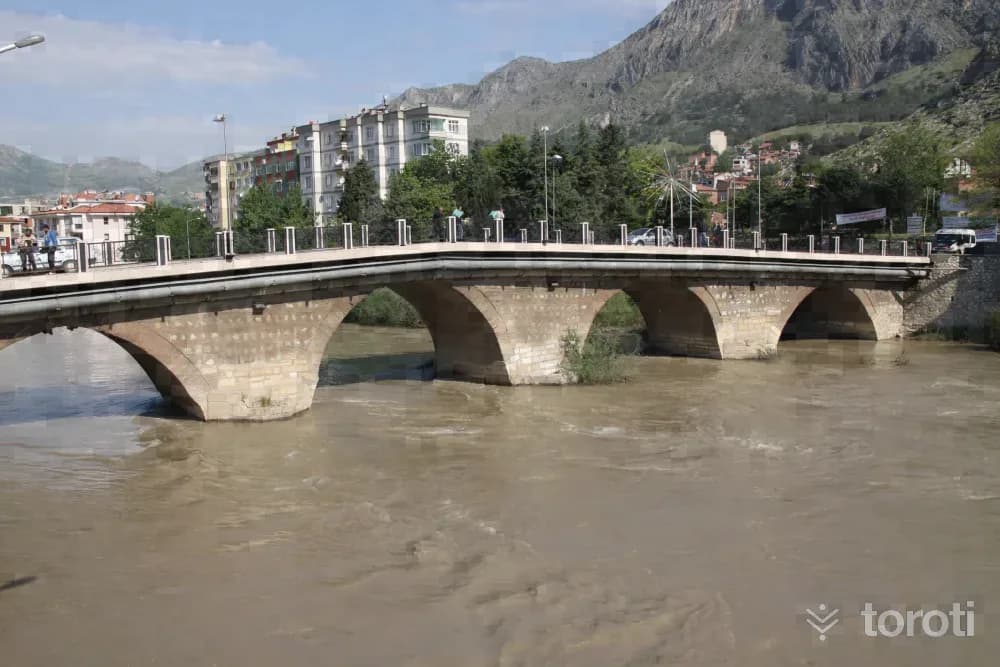
İstasyon Bridge, located at the end of Ziya Paşa Boulevard, connects İstasyon Neighborhood and Hacı İlyas Neighborhood. A bridge was first built here in 1145 by Seljuk Sultan I. Mesud, but this bridge was destroyed as it could not withstand the earthquake and floods that occurred. After many repairs, the present bridge, which has survived to the present day, was built in the 1370s on the remains of the first one and with the same structural character. The patron of the bridge is Şadgeldi Paşa, the Amasya Emir of the period.
45 minutes
İğneci Baba Türbesi
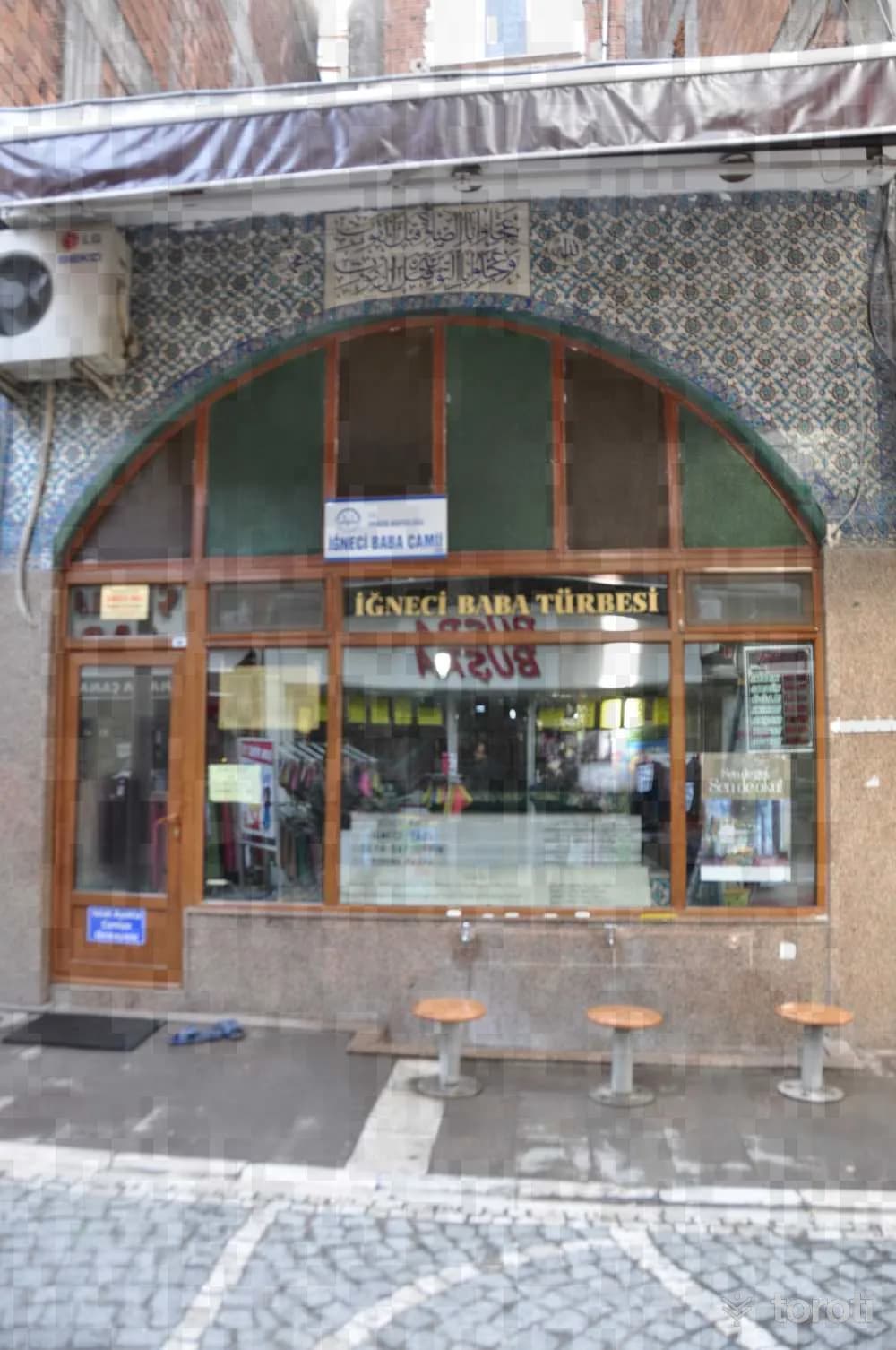
Serçoban, who was the brother of İğneci Baba, settled in Karasenir Village, connected to the center of Amasya. He made his living by shepherding and was known for his demeanor and actions, and for the simplicity of his worship. One day, he came to visit his elder brother İğneci Baba in Amasya, who made his living by shoemaking. He also brought as a gift the milk he had milked from his sheep, wrapped in a handkerchief. His aim was to show that the milk he had put in his own handkerchief did not leak from the handkerchief.
20 minutes
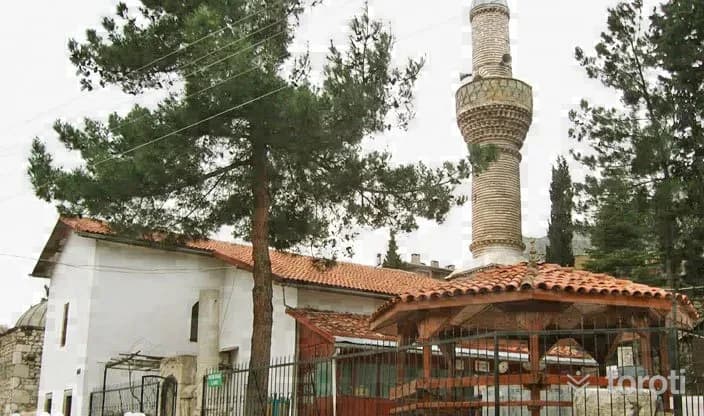
Hızır Paşa Camii
Hızır Paşa Mosque was commissioned in 1466 by Hayrüddin Hızır Paşa, the brother of Yörgüç Paşa, the tutor of Murad II. While the mosque was once part of a külliye consisting of a bath, madrasa and fountain, today only the mosque and bath remain standing. It is one of the zaviyeli (inverted T-plan) mosques seen in early Ottoman architecture, examples of which can also be seen in Amasya in the Bayezid Paşa and Yörgüç Paşa mosques.
45 minutes
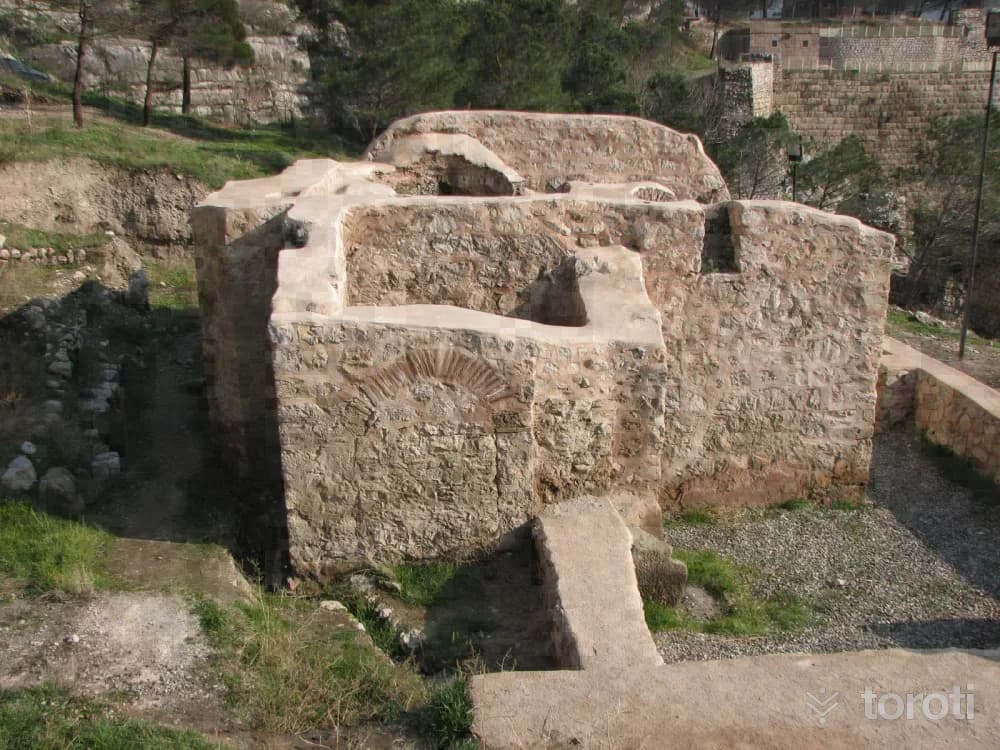
Kızlar Sarayı
Kızlar Sarayı is located within an area in Amasya where the Rock Tombs and the Royal Tombs are found. The palace also includes the Hellenistic Age, Roman, Byzantine Periods and the medieval fortification walls. In archaeological excavations carried out in the area in recent years; ruins of Roman, Eastern Roman, Seljuk and Ottoman structures have also been uncovered. In 1146, Seljuk Sultan I. Mesud had a mosque, madrasa, bath and palace built in this area.
45 minutes
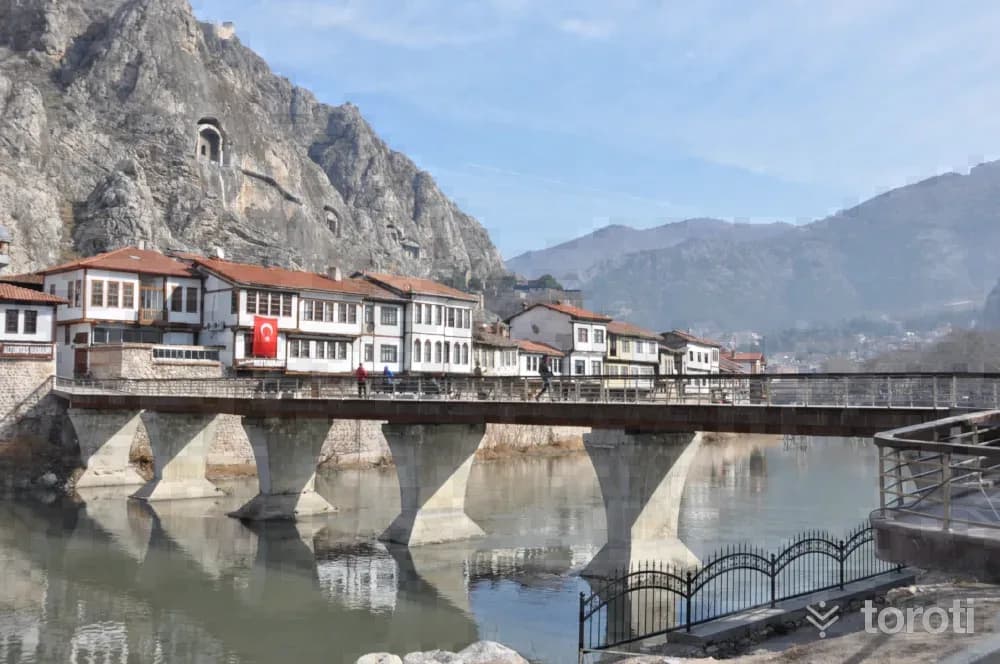
Magdinus Ve Helkis Köprüleri
The bridge, which the public calls Maydonoz or Madenüs, is in front of Sultan Bayezid Camisi. Its original form was wooden, and after struggling many times with floodwaters and being damaged, the bridge was destroyed in the flood in 1968. The bridge, with concrete piers and an iron body, was restored again in 2011. It serves only pedestrians. The bridge, which is today called ‘Hükümet Köprüsü’ and has the clock tower at its northern end, was also a wooden bridge built in the Roman Period.
45 minutes
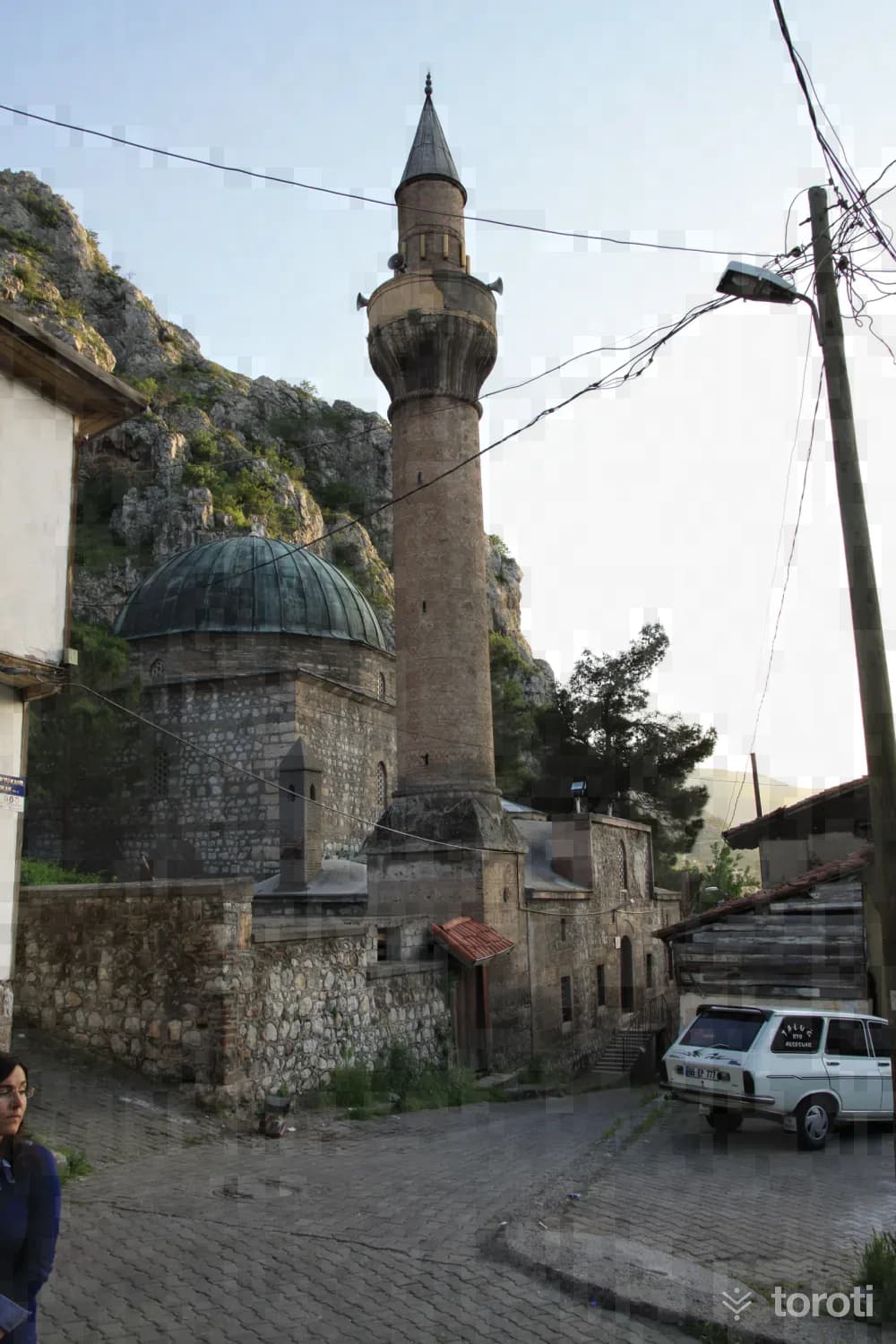
Sofular Camii
Sofular Camii, or by its other name Abdullah Paşa Camii, commissioned by Beylerbeyi Abdullah Paşa in 1502, is one of the single-domed, single-minaret and zaviye mosques. In the body walls of the structure, where rubble stone was used, neatly cut stone was used at the corners, and its front facade was built with rubble stone and brick. At the northeast corner of Abdullah Paşa Camii stands its cylindrical minaret with a square base. The single-balcony minaret was built of brick.
45 minutes
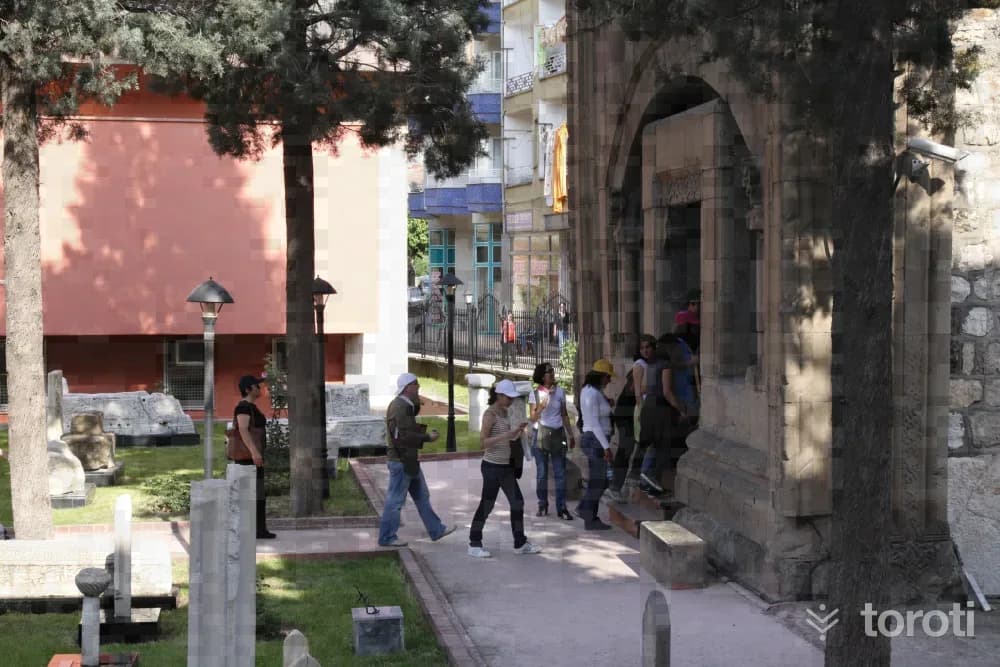
Sultan Mesut Türbesi
The tomb, located in the garden of Amasya Museum and previously used as the Mummies Museum, is one of the rectangular-plan, iwan-type tombs of the Seljuk period. The structure, known to have been built in the 12th century, is essentially one of the iwan-type tombs. Its north-facing front facade was built of cut stone, while rubble stone was used in the construction of the other parts. The tomb is covered with a barrel vault.
45 minutes
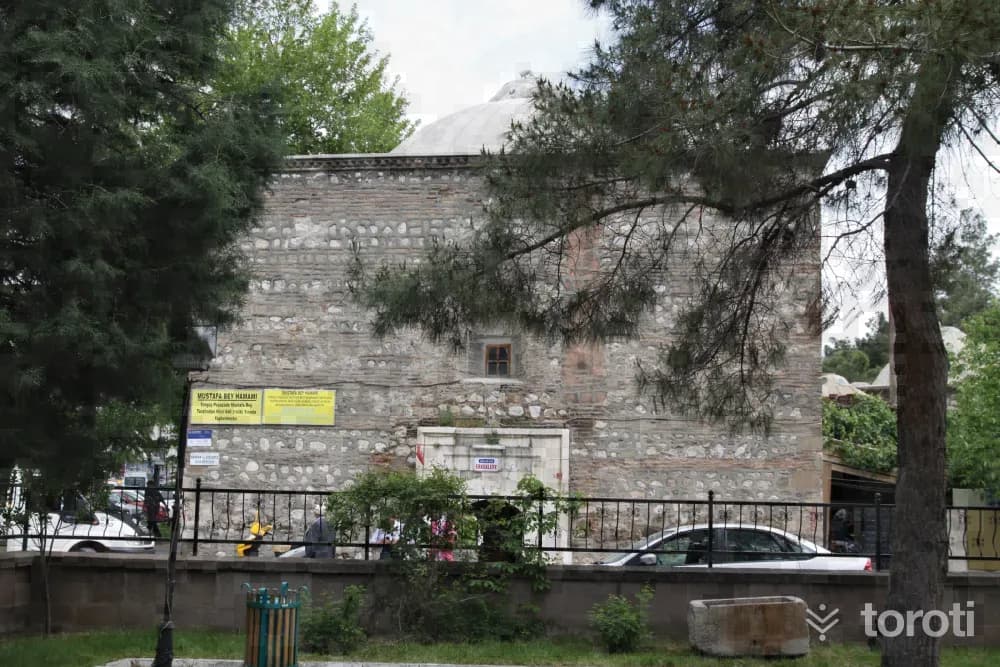
Mustafa Bey Hamamı
Mustafa Bey Hamamı was commissioned in 1436 by Mustafa Bey, the son of Yörgüç Paşa, who was the tutor of Murad II. In accordance with Ottoman bath architecture, it consists of hot, warm and cold sections. The changing room has a square plan and large niches can be seen in its walls. The cold section, whose niches are topped with muqarnas, is covered with a dome. The hot section is essentially a domed space surrounded on four sides by four large niches.
45 minutes
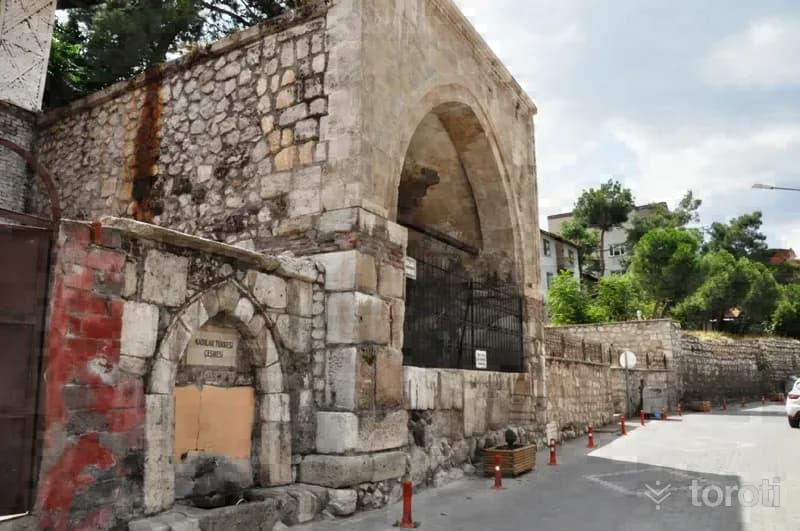
Kadilar Türbesi
It is not known by whom the tomb, thought to have been built in the second half of the 14th century, was constructed. It is one of the two tombs located directly opposite Hilafet Gazi Türbesi. The tomb was called Kadılar Türbesi because it was built in the name of Amasya’s former kadis. Cut stone and brick materials were used in the construction of the structure, which is one of the eyvan-type tombs. It has a rather wide arched entrance facing north. The rectangular-planned tomb is covered with a pointed barrel vault.
45 minutes
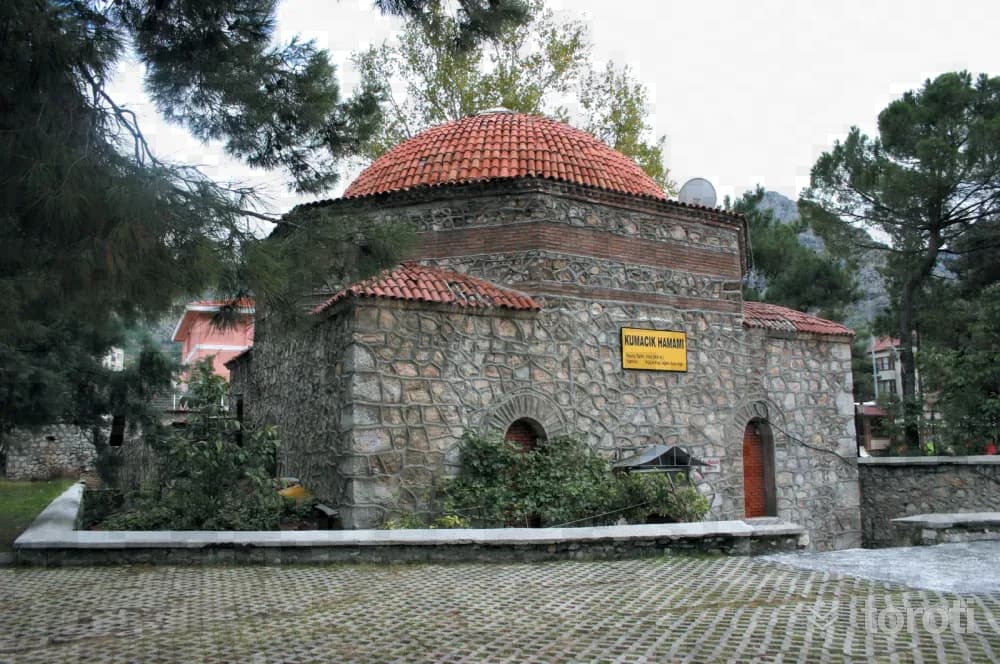
Kumacık Hamamı
The bath, located in Bayezidpaşa Mahallesi, in line with Künç Köprü, was commissioned in 1495 by Kapıağası Ayas Ağa. Built using rubble stone, the bath consists of cold, warm and hot sections in accordance with traditional Ottoman bath architecture. The changing section has a square plan and is covered with a large dome transitioned with Turkish triangles. The hot section is also covered with a dome.
45 minutes
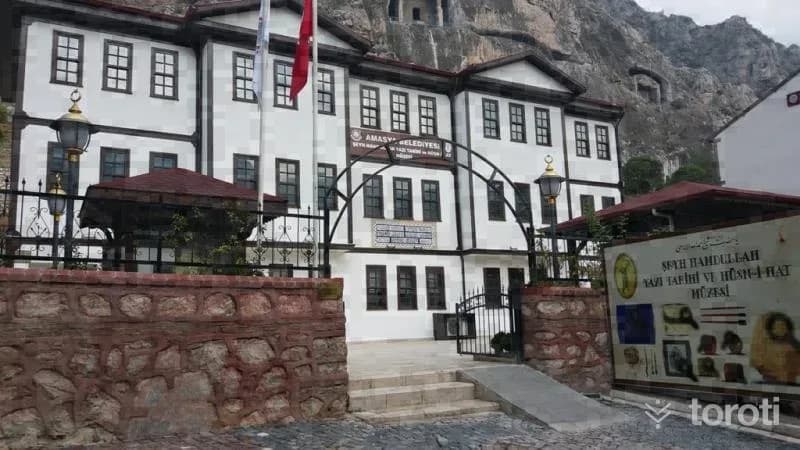
Şeyh Hamdullah Yazi Tarihi Ve Hüsni Hat Müzesi
Examples of the art of calligraphy are exhibited in the museum named after Amasyalı Şeyh Hamdullah, who is regarded as one of the foremost figures shaping the art of hüsn-ü hat within Turkish-Islamic arts and is known as “Reis-ül Hattat” (chief of calligraphers). In the museum, the development process of the scripts of Sumer, Egypt, the Hittites and other civilizations, and the production stages of arts such as bookbinding, marbling and illumination are introduced.
45 minutes
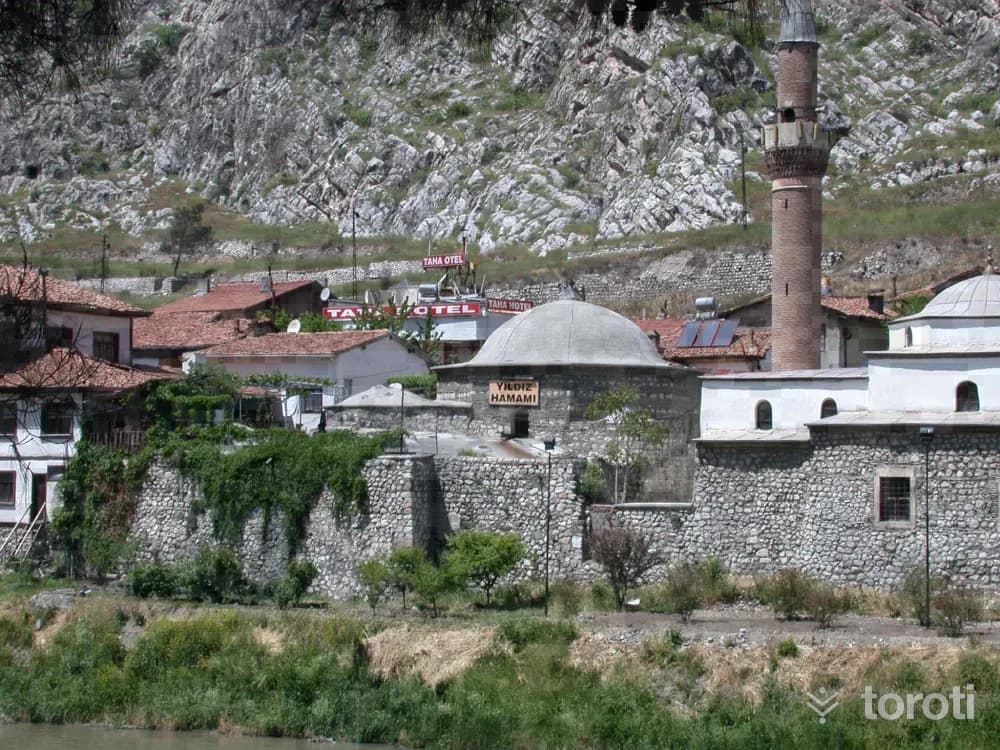
Yıldız Hamamı
Yıldız Hamamı is a part of the Hatuniye Külliyesi, whose construction was completed in 1510. The square-planned bath, also known as Çukur Hamam or Hatuniye Hamamı, is covered with a dome with a lantern. It consists of a domed changing room, a cooling section to the south of the changing room, toilets located to its east, and the hot section and külhan sections located to its west.
45 minutes
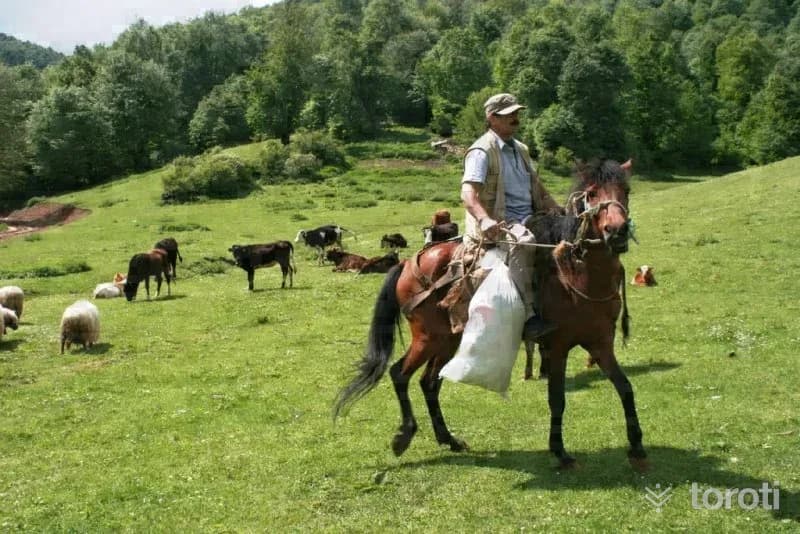
Otomobil Ve Motor Sporları - Akdağ Yaylası
Akdağ Plateau is on the Akdağ hills. On the plateau, which has an average elevation of 1,850 meters above sea level, there are pine, hornbeam and oak trees. In the Karakise area of the plateau, there are suitable tent areas and picnic areas. There are also suitable areas for Off Road and Motocross enthusiasts. During the summer months, plateau festivals are organized on Akdağ Plateau by associations.
45 minutes
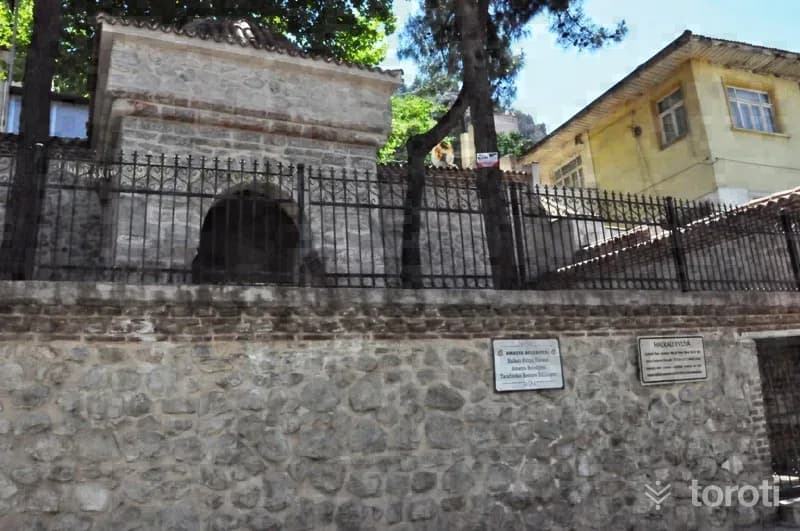
Halkali Evliya Türbesi
In Halkalı Evliya Türbesi, which was built in baldachin style with a dome resting on four supports and sides open except for the southern facade, is the grave of Şahruz Hatun, daughter of Reis-ül Asker Burak Bey, one of the grandsons of Şadgeldi Paşa. Because of the two black stones formerly located to the north of the sarcophagus inside the tomb and the rings on the edges of these stones, the tomb is called Halkalı Evliya Türbesi.
45 minutes
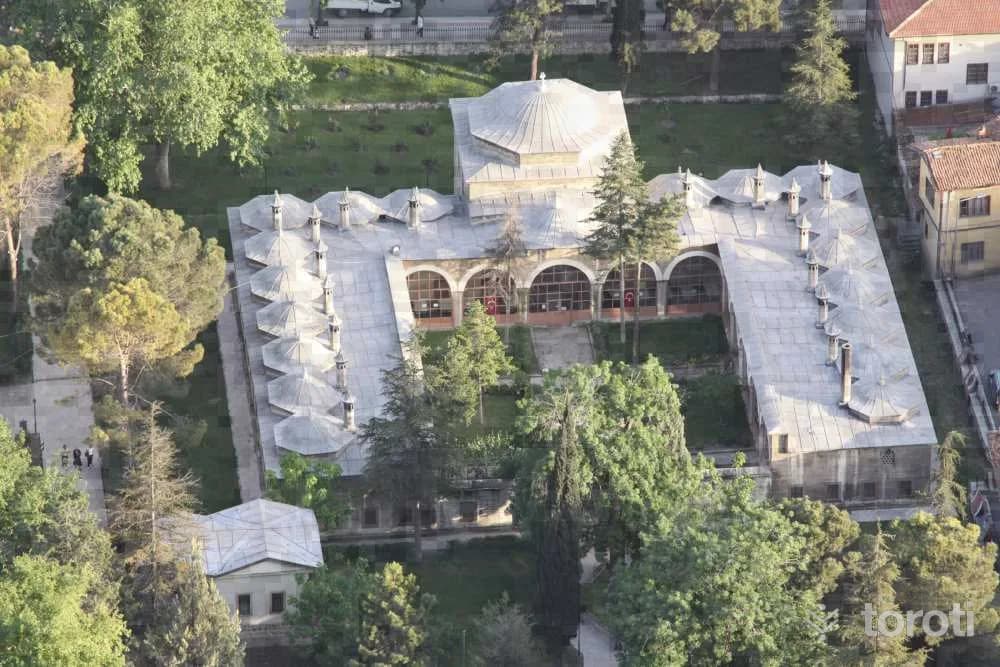
2. Bayezid Külliyesi
It was commissioned between 1481-1486 by Amasya Governor Şehzade Ahmet in the name of his father Sultan II. Bayezid. The architect of the structure, which was built as a külliye consisting of a mosque, madrasa, imaret and fountain, is Şemseddin Ahmet. The tomb belonging to Şehzade Osman, the son of Şehzade Ahmet who died at a young age, located at the southeast corner of the mosque, was added to the structure later.
30 minutes
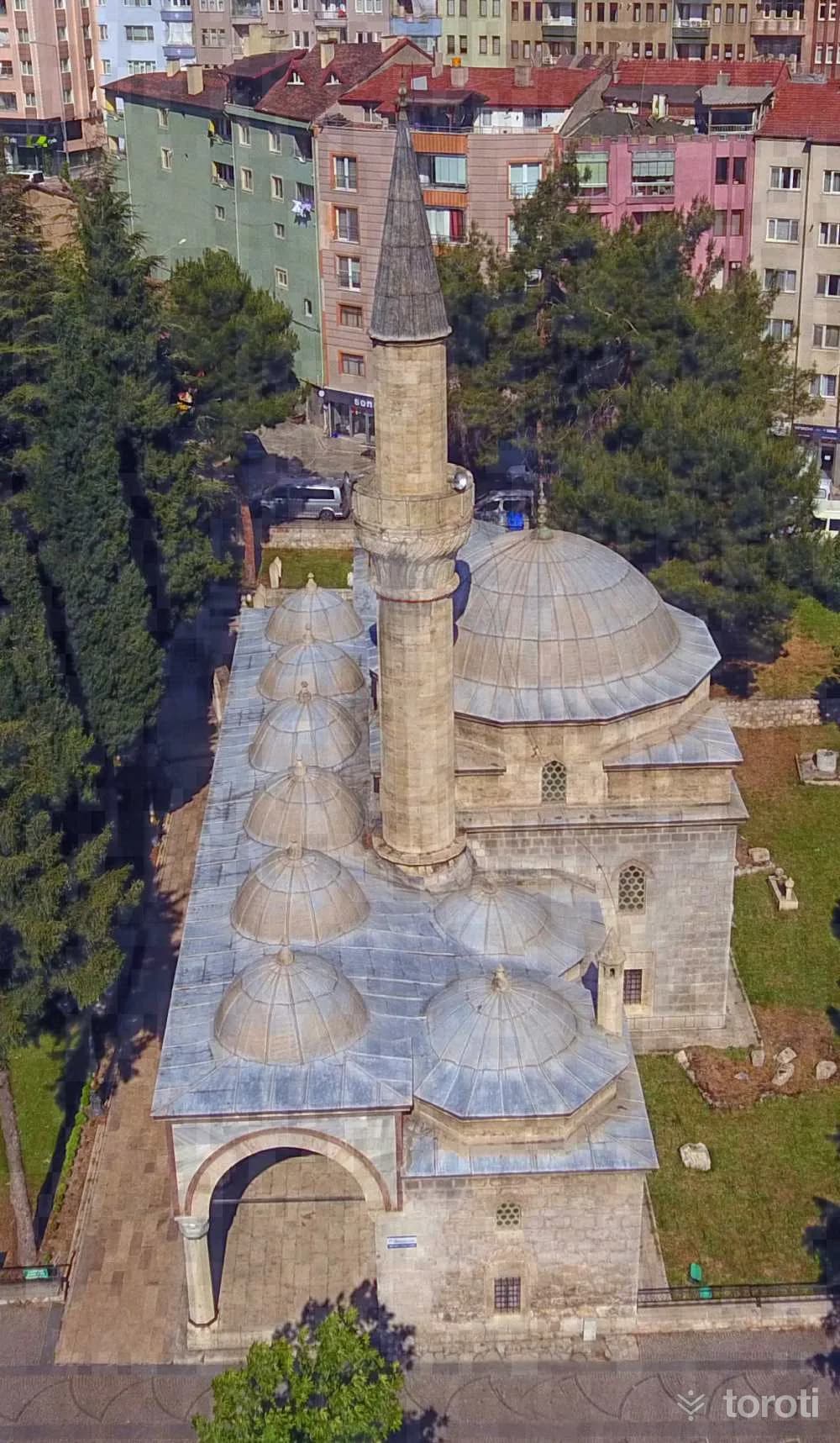
Mehmet Paşa Camii
It was commissioned in 1486 by Mehmet Paşa, the tutor of Şehzade Ahmet, the son of Bayezid II. The mosque’s door, one of the finest examples of wood carving, is exhibited in Amasya Museum. Similarly, the mosque’s marble minbar, decorated with curling branch and leaf motifs, is one of the rare examples of Turkish marble workmanship.
20 minutes
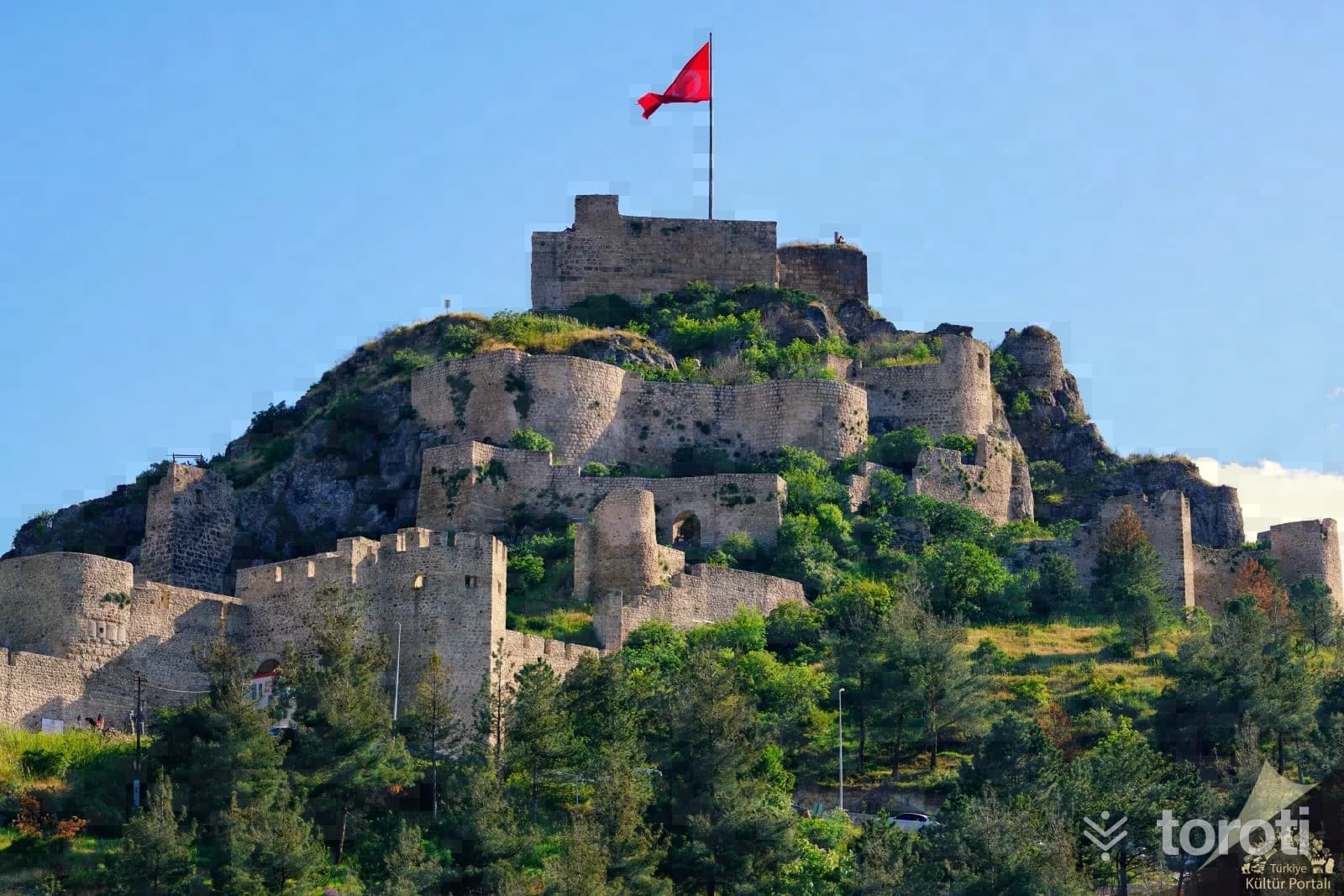
Harşena (Amasya) Kalesi
It is located on Harşena Mountain, which covers the north of the city center. Amasya Castle, also known as Harşena Castle, changed hands many times during historical struggles and was damaged in most of them. The Castle, which was subjected to many attacks during the periods of rule of the Persians, Romans, Pontus and Byzantines, was rebuilt each time.
45 minutes
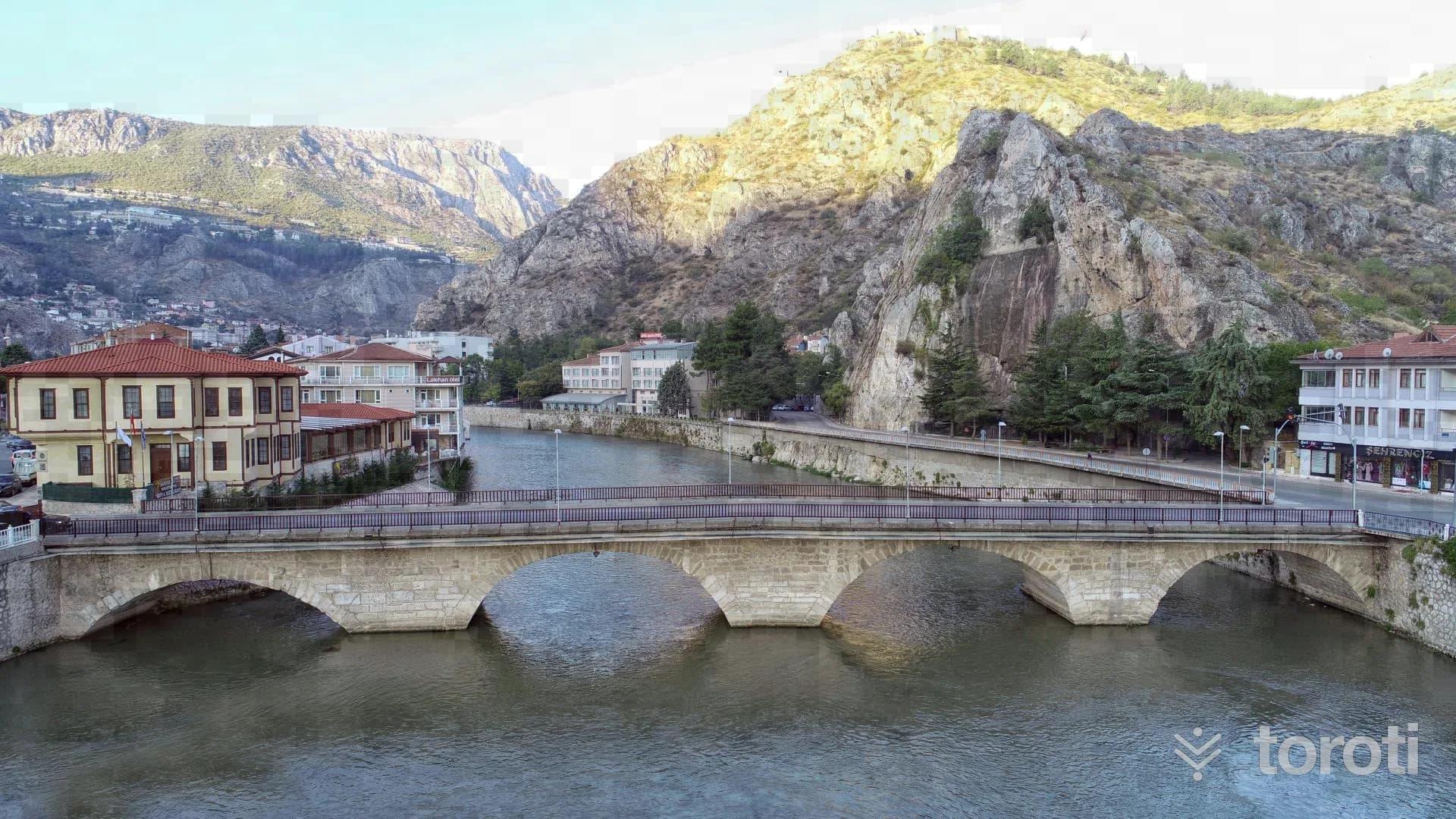
Künç Köprü
It was commissioned in the 12th century by Hundi (Hondi) Hatun, who according to some sources was the daughter of Sultan II. Mesud and according to others his mother. The distinctive feature of the bridge, built using cut stone and brick, is the width of the arches of almost the same size connecting its three large piers.
20 minutes
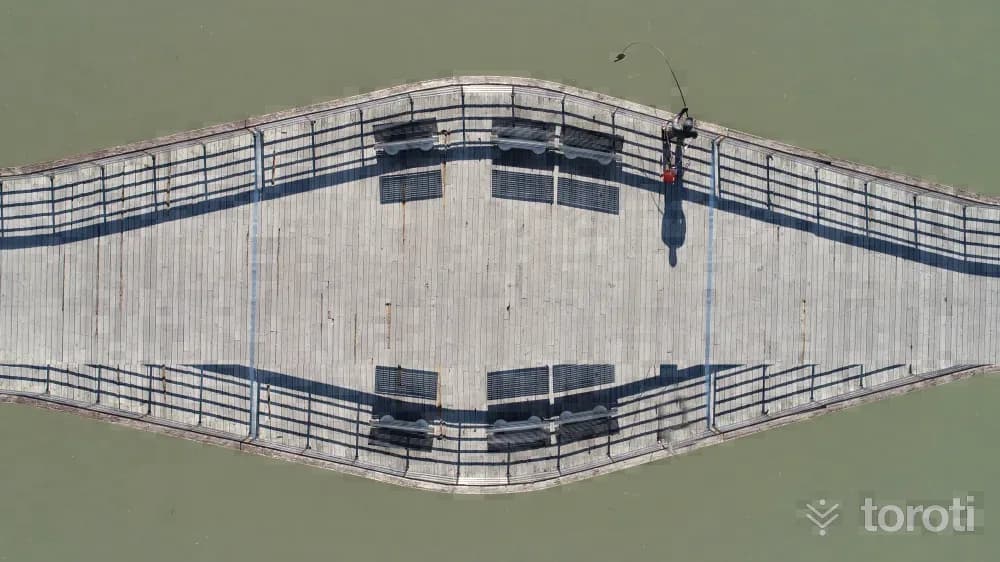
Sportif Olta Balikçiliği - Yeşilirmak
In Yeşilırmak, where sport fishing is practiced, it is possible to catch catfish, carp, and freshwater chub. Fish can easily be caught from the bridges located in the city center.
45 minutes
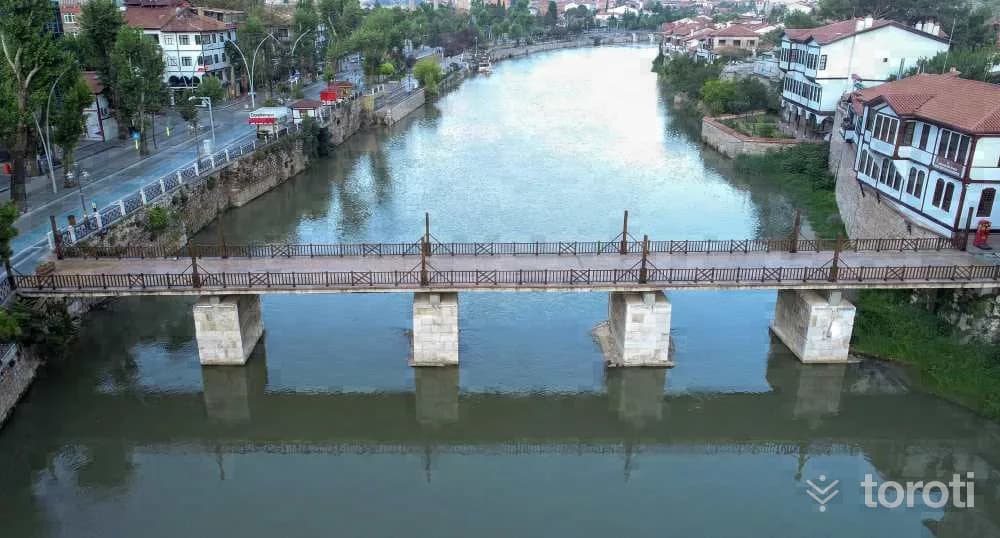
Alçak Köprü
It is the only bridge in the city center that has survived from the Roman period to the present day. It is built entirely of cut stone. Over time, due to the rise in the river level and the filling of the riverbed, it lost its height; for this reason, it began to be known among the public as "Alçak Köprü".
20 minutes
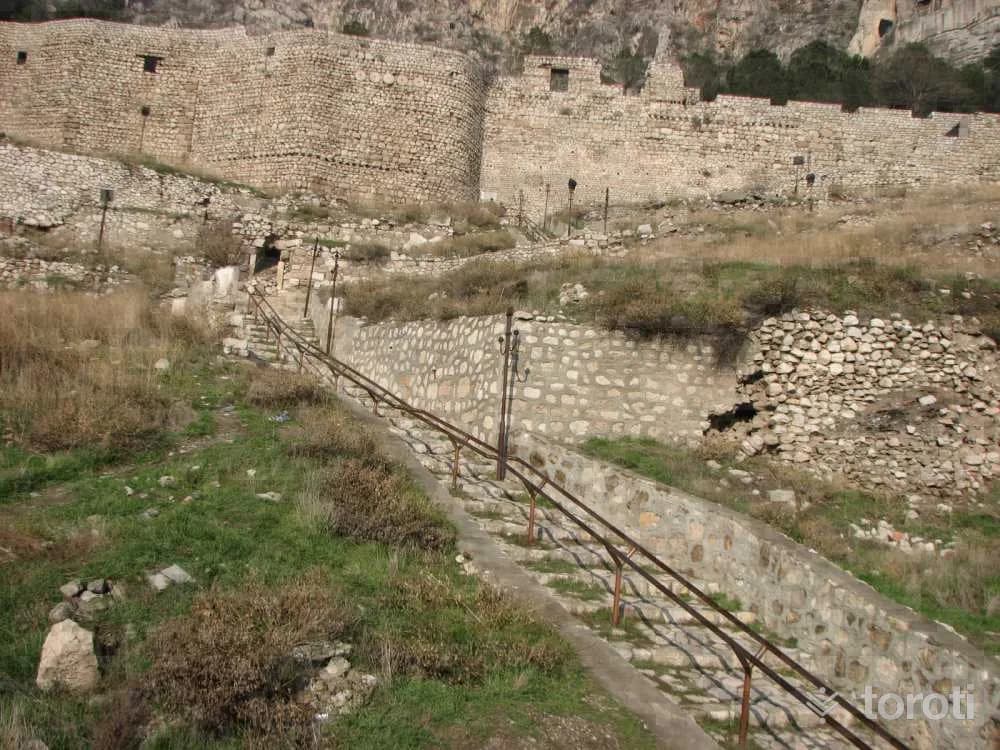
İç Kale
İçkale, reached from the area between the wall on the bank of the Yeşilırmak River and Kızlar Sarayı, is the name given to the area where today's Hatuniye Mahallesi is located.
30 minutes
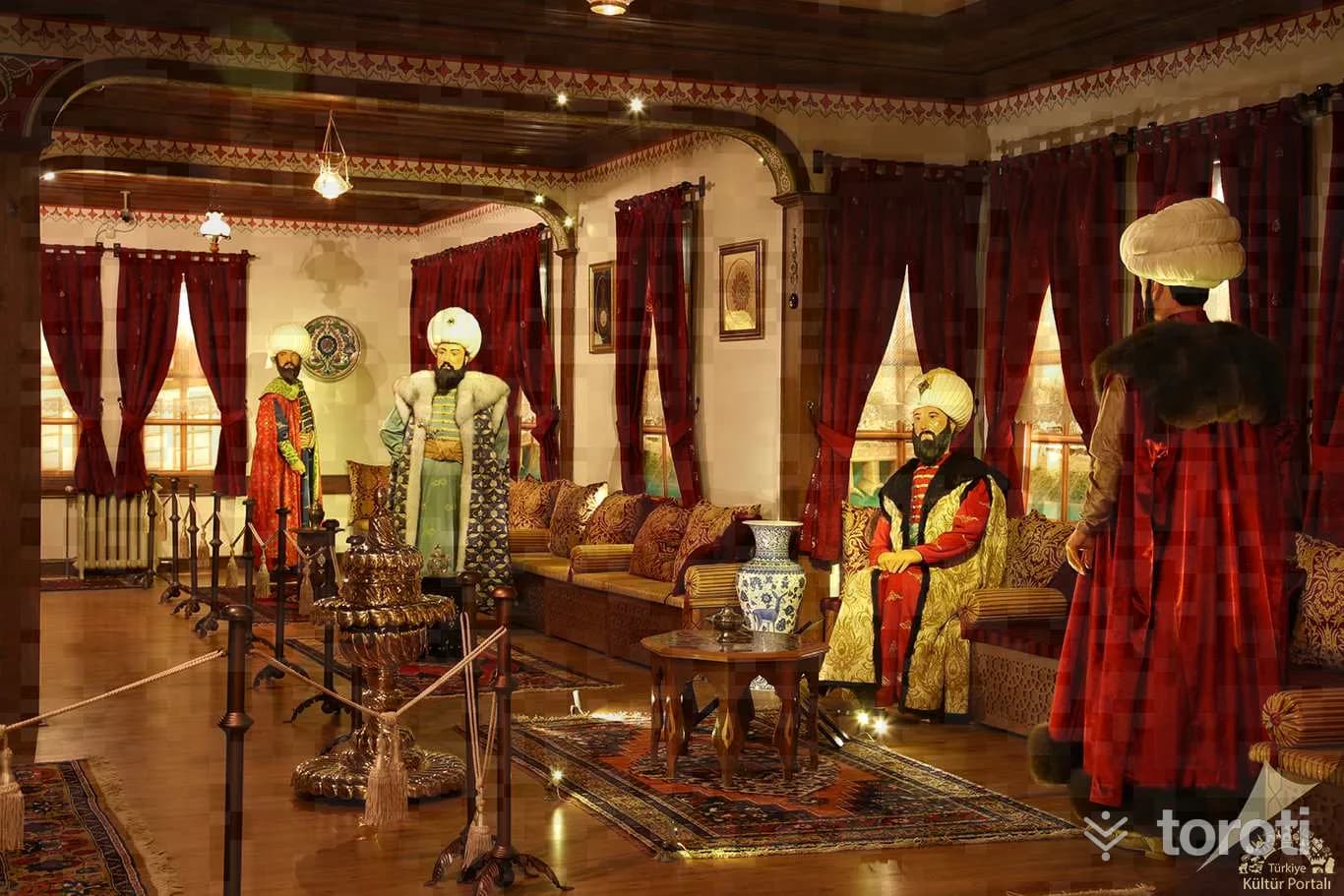
Şehzadeler Müzesi
With the statues commissioned based on faithful portraits of the Ottoman sultans whose princely governorships took place in Amasya, and with the clothes reflecting their own periods, the museum is one of the important places visited by tourists coming to Amasya.
30 minutes
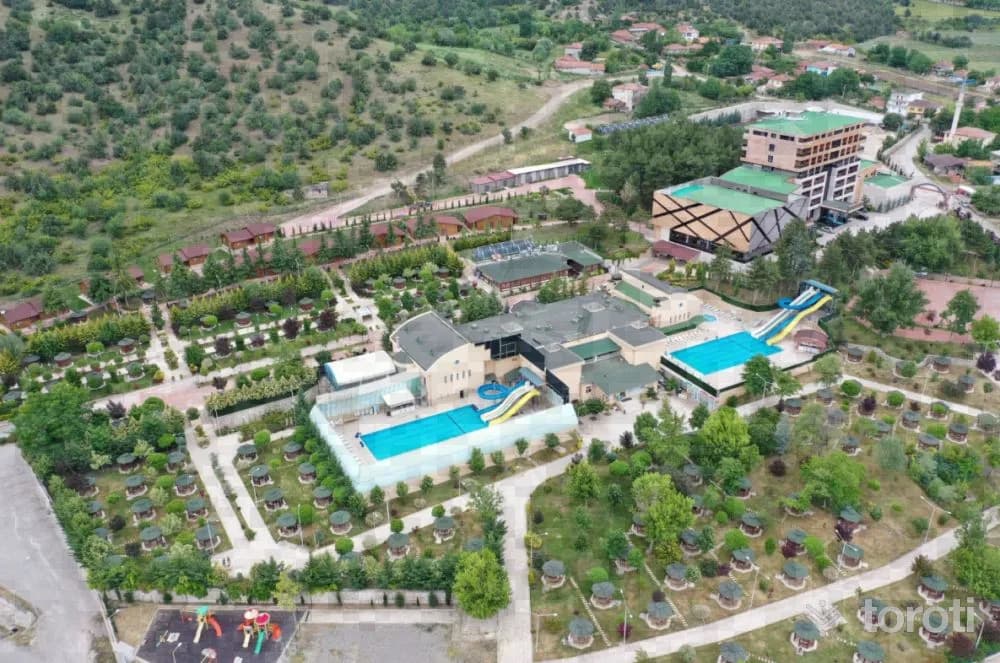
Gözlek Kaplıcaları
Amasya Gözlek Hot Springs is a thermal center that stands out with its healing thermal water at a temperature of 38,5°C, its benefits for rheumatism and skin disorders, and its location close to the city center.
60 minutes
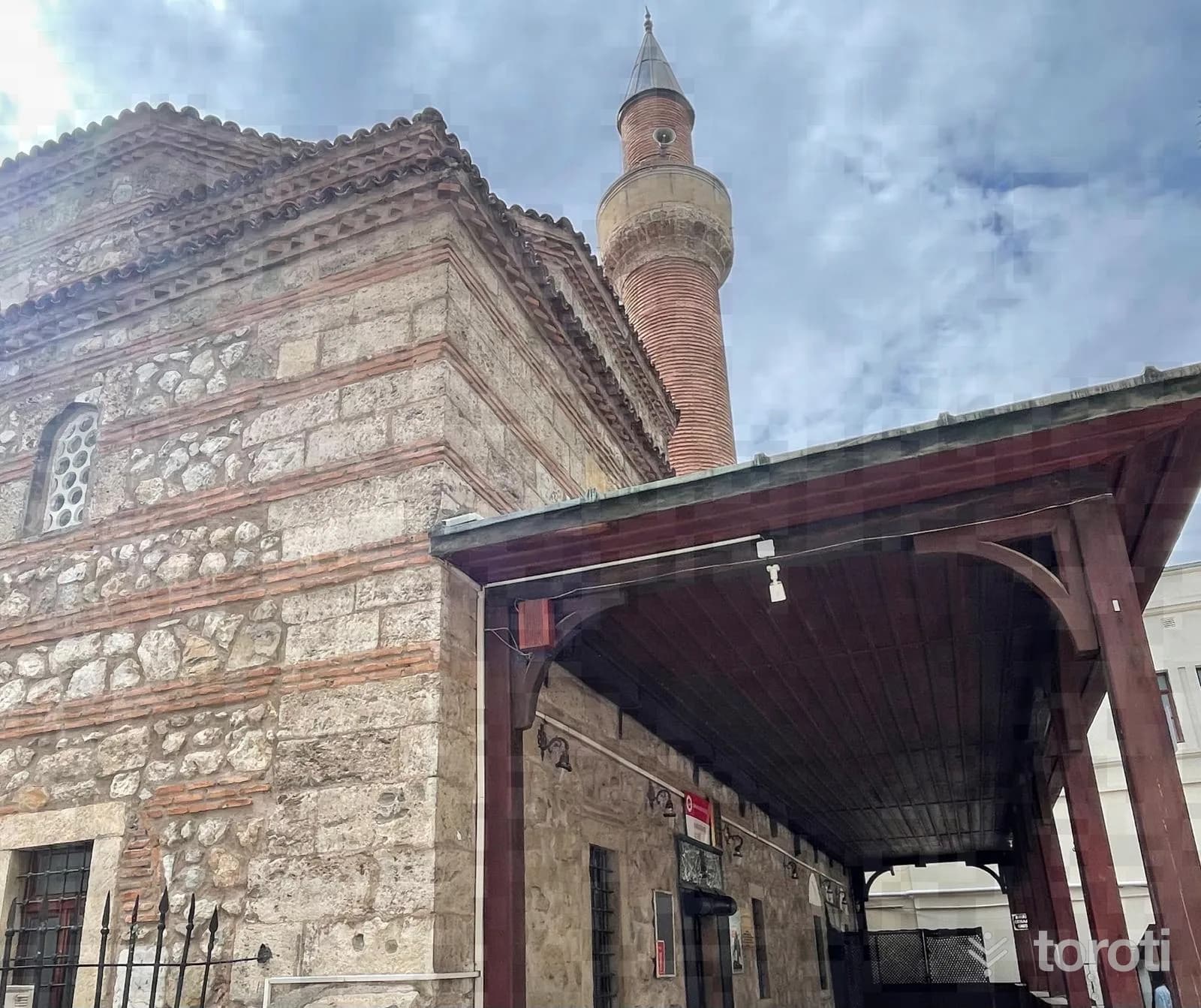
Saraçhane Camii
The mosque was commissioned in 1372 by Amasya Emir Şadgeldi Paşa.
20 minutes
Kurtboğan Türbesi
The grave in the tomb, built as a single-domed structure in the 15th century, belongs to Hamza Şami bin Mehmet, the father of Akşemseddin, the teacher of Fatih Sultan Mehmet. The name Kurtboğan is based on an event that took place after his death. According to the legend, on the night this person died and was buried, a wolf came and wanted to take the body out of its grave and tear it apart, but an arm extending from the grave strangled the wolf and killed it.
20 minutes
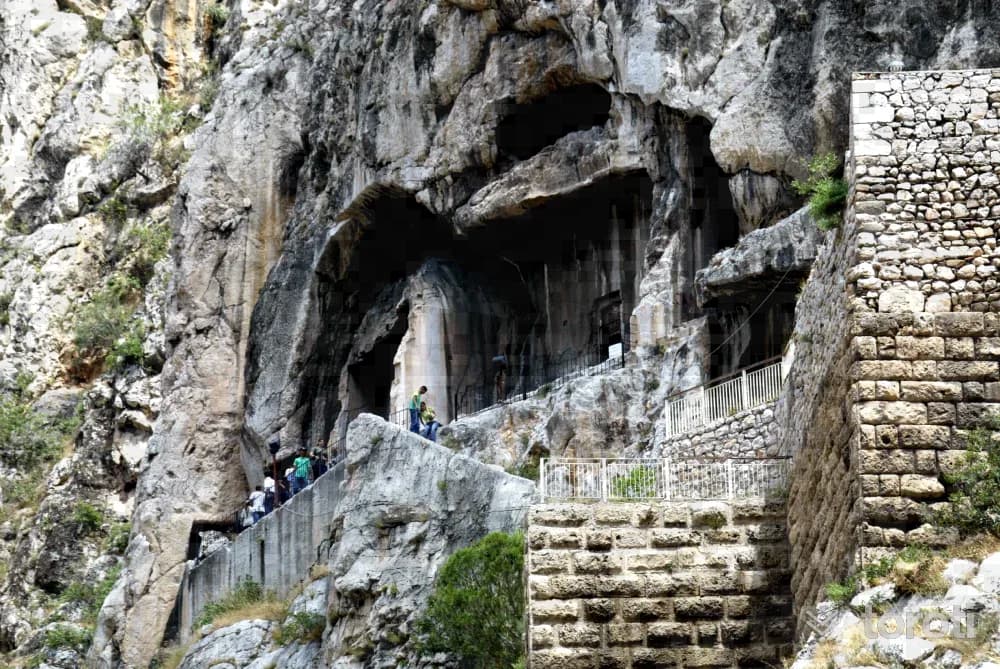
Kral Kaya Mezarları
The King Rock Tombs are one of the historical remnants of Amasya, belonging to the Pontic Kings of the Hellenistic Period. The tombs are notable for their structures carved into the rocks.
120 minutes
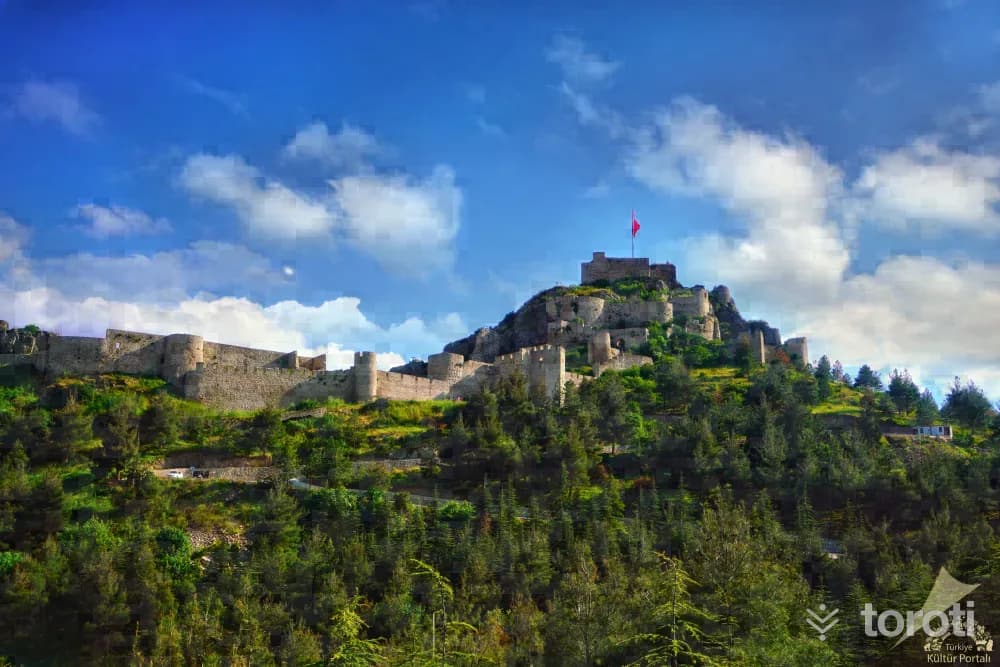
Amasya Kalesi
Amasya Castle is on Harşena Mountain, which covers the north of Amasya city center. It is also known as Harşena Castle. The rock on which Amasya Castle was built is 700 meters above sea level and 300 meters above Yeşilırmak. According to some historians, the castle was built by the Pontus King Mithridates. According to others, because it was built by Commander Karsan or Harsana, the castle took the name Harşana/Harşena.
45 minutes
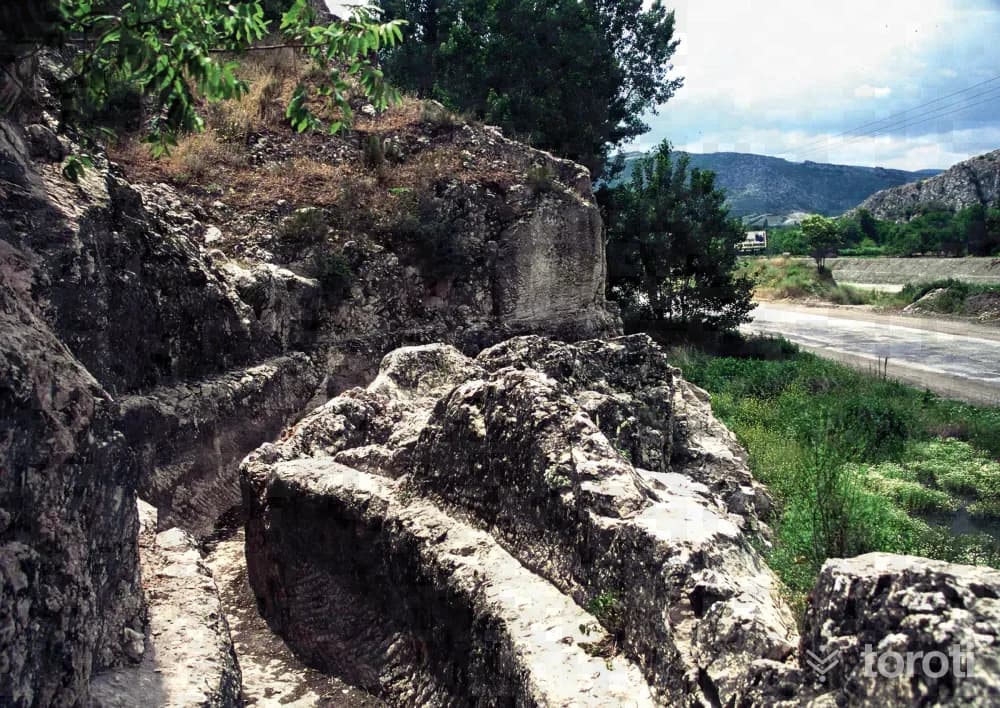
Ferhat Su Kanali
This canal, belonging to the Late Hellenistic - Early Roman period, was built to meet the water needs of the ancient city of Amasya by carving the rocks, opening tunnels, building walls in places, and in accordance with the slope of the land, according to a leveling system. This canal, also called Ferhat Su Kanalı, is 6 km long. In the Ferhatarası area, the approximately 2 km long section of the canal that runs parallel to the highway can easily be seen from outside.
45 minutes
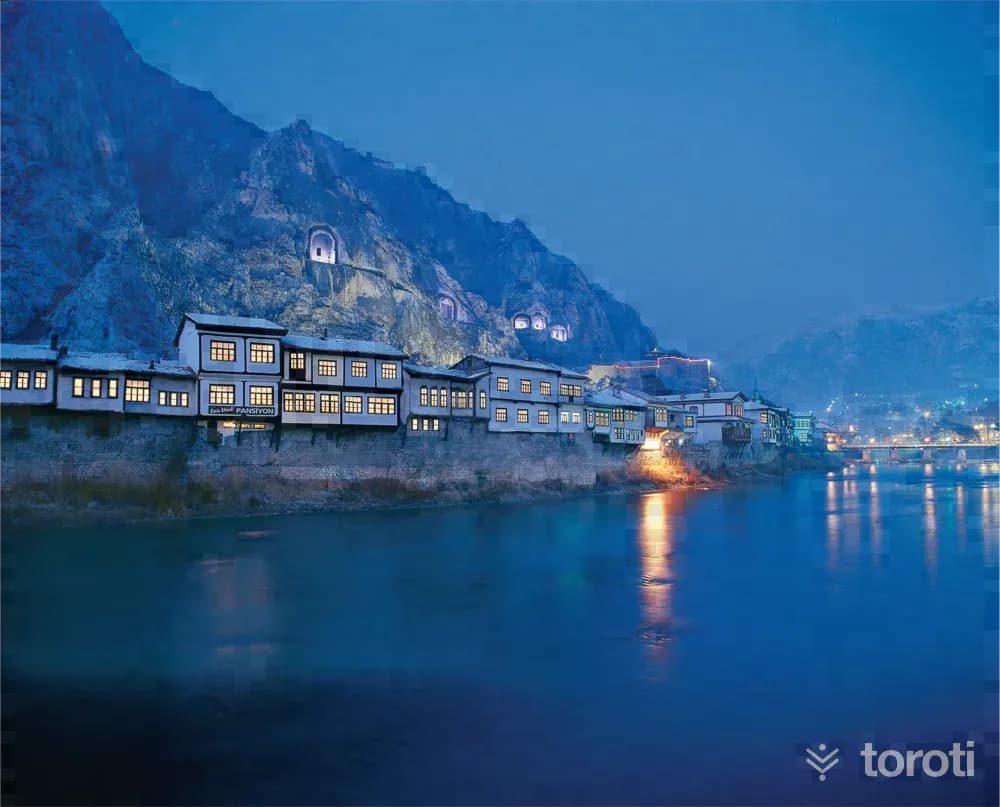
Yalıboyu Evleri
Amasya Yalıboyu Houses were built on the historic city walls along the Yeşilırmak, with a timber frame and adobe infill. These houses, arranged with hipped or gabled roofs covered with corrugated tiles and embodying all the characteristics of the traditional Ottoman house, are in harmony with Amasya’s historical identity. The houses were arranged in an adjoining order, as single-storey or two-storey structures above a basement.
45 minutes
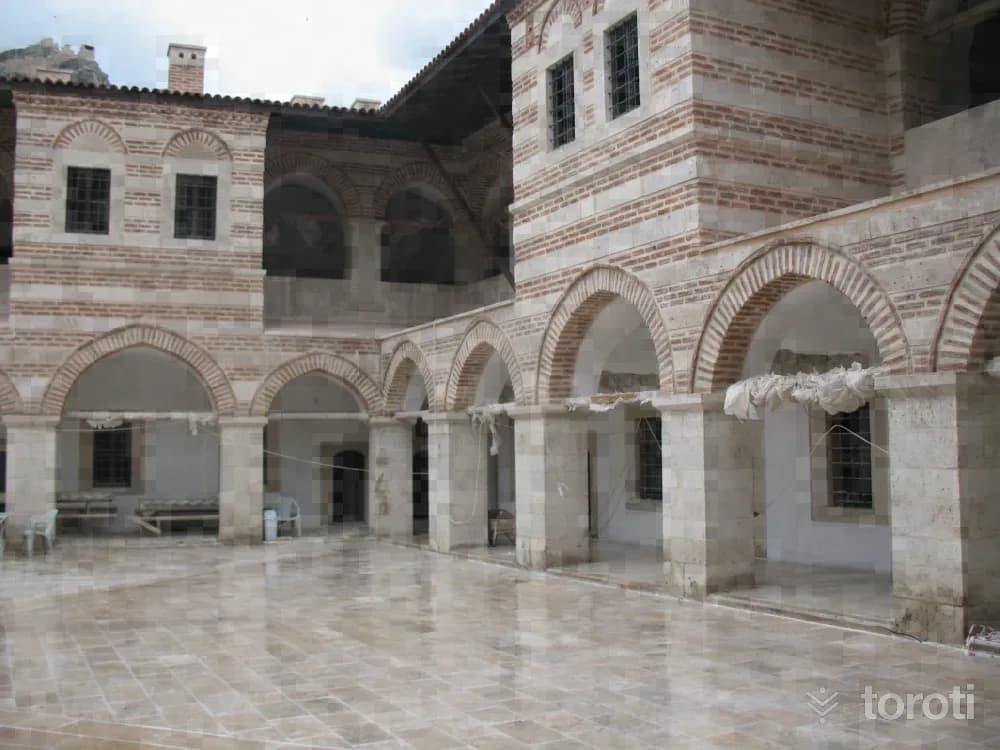
Amasya Taşhan
Amasya Taşhan was built in 1699 by Mutasarrıf Rahtuvan Hacı Mehmet Paşa and commissioned to Architect Mehmet Kalfa. Above the main entrance gate, which forms a projection outward, the inn’s inscription is located within a long, narrow rectangle. A rosette motif can be seen in the middle of the inscription and on the keystone of the door arch. Shops are lined up on both sides of the door. When entering through the door, there is a large courtyard surrounded by different spaces.
45 minutes
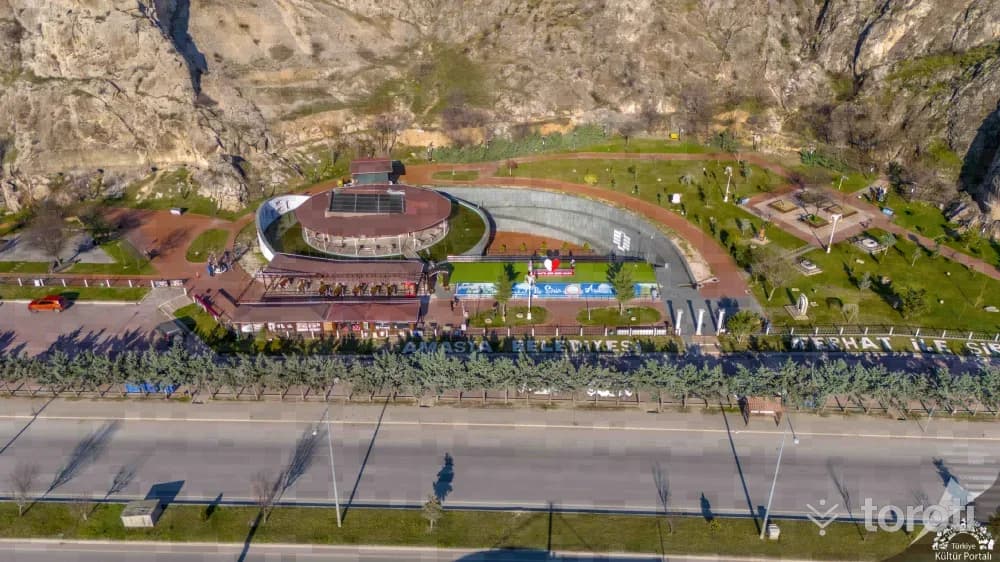
Ferhat İle Şirin Aşiklar Müzesi
The museum, commissioned by Amasya Municipality in 2013, is located in the area described in the legend of Ferhat and Şirin as the canal through which Ferhat, for his love of Şirin, brought water by piercing mountains for kilometers, and known as the "Ferhat Water Canal".
45 minutes
Minyatür Amasya Müzesi
The Model Museum is located in the İmarethane building, which forms a part of the II. Bayezid Külliyesi. In this hall of approximately 300 square meters, Amasya’s state from almost a hundred years ago has been reconstructed by reducing it to a scale of 1/150.
45 minutes