Places to visit
Things to do in Sivas merkez
32 destinations, each with a description, how long it takes and where it sits on the map.
In short
toroti’s catalogue holds 32 described destinations within Sivas merkez, Sivas. The themes that come up most: History, Faith heritage, Local culture, Museum, Culture.
Eğri Köprü
It was built by the Seljuks in the 12th century on the Kızılırmak, which slopes from east to west, to the south of Sivas. The bridge, which is slightly higher than the land in the direction of the entrance to Sivas, continues for meters with a very slight rise. When it reaches its highest point, it turns left at an angle of approximately 130 degrees. It levels off with the land at a steeper incline than the previous rise.
20 minutes
Kurşunlu Hamam
As understood from its inscription, it was built as a double bath in 1576 by Belhram Paşa. It reflects the characteristics of classical baths of the Ottoman period in Sivas. It has a rectangular plan measuring 32.50 x40.50 m externally, the walls were built entirely of cut stone, and the domes were constructed of brick. The bath, which is still in well-maintained condition, is open for service with its men's and women's sections.
20 minutes
Sivas Ulu Cami
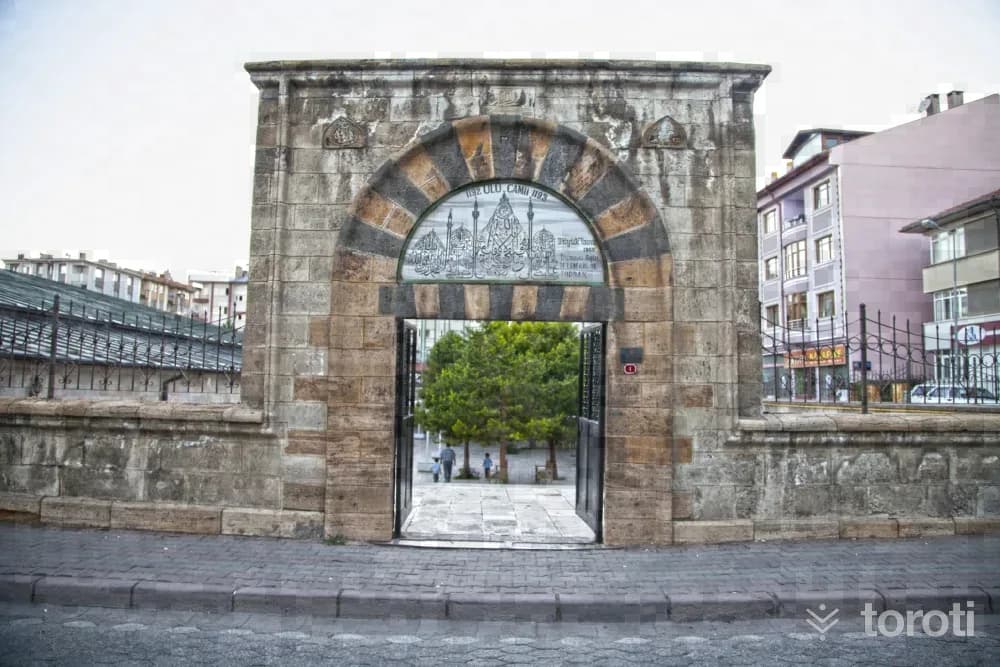
It is one of the oldest mosques in Anatolia. In the architectural history of Anatolia, it is an important structure in the development of the idea of the mosque interior. It is one of the rare examples belonging to the class of flat-roofed, rectangular-plan, kufe-type mosques, with entrances to its courtyard from three sides. It was built in a period when the idea of the dome had not yet developed. According to some scholars, it is also accepted as a work of the Danişmendi period. The Danişmendlis settled in Sivas, Kayseri and Malatya between 1085–1178.
45 minutes
Eski Göğüs Hastanesi / Çevre Kültür Sanat Evi
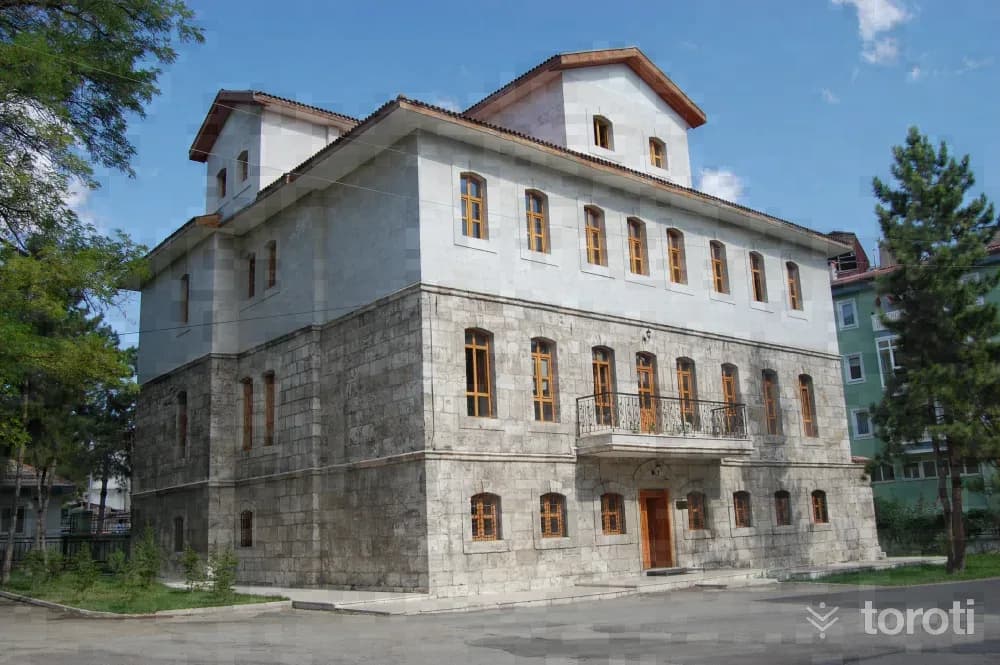
Çevre Kültür Sanat Evi aslında bir sağlık kurumudur. 1. Dünya Savaşı'ndan önce yapı Fransız Hastanesi olarak kullanılmıştır. 1920 yılında Memleket Hastanesi, 1925 yılında Öksüzler Yurdu'nun yatakhane binasıdır. Daha sonra Numune Hastanesi olarak görevini sürdürmüştür. Bugün Numune Hastanesi yapılınca Verem Hastanesi'ne dönüştürülmüştür. 1976 yılına kadar Göğüs Hastanesi olarak kullanılan yapı, bu tarihten sonra sağlık müdürlüğü olarak kullanılmıştır.
45 minutes
Yari Açik Cezaevi
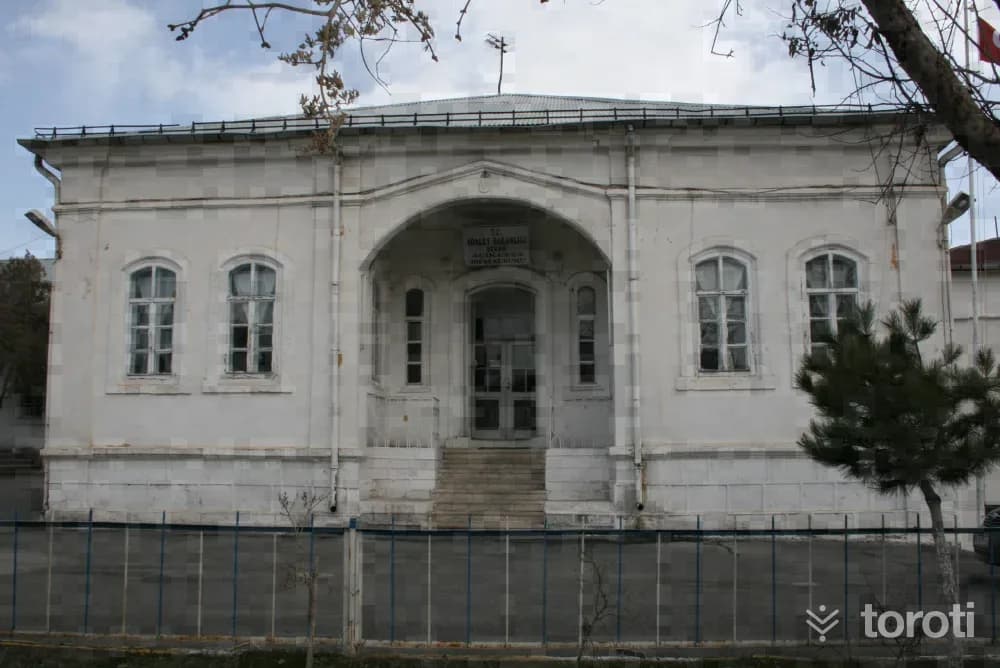
The place of the original inscription, located above the central entrance with stepped wooden columns on both sides of the “U”-planned Yarı Açık Cezaevi, can be seen. According to the five-line inscription written on marble, the building was constructed in 1902 by Sivas Governor Reşit Akif Paşa as the Sanayi Mektebi (Sanat Okulu). Yarı Açık Cezaevi was used as the Carpet Workshop of the Sanat Okulu and, in later years, was separated from the other buildings of the school because of the road passing in front of the structure.
45 minutes
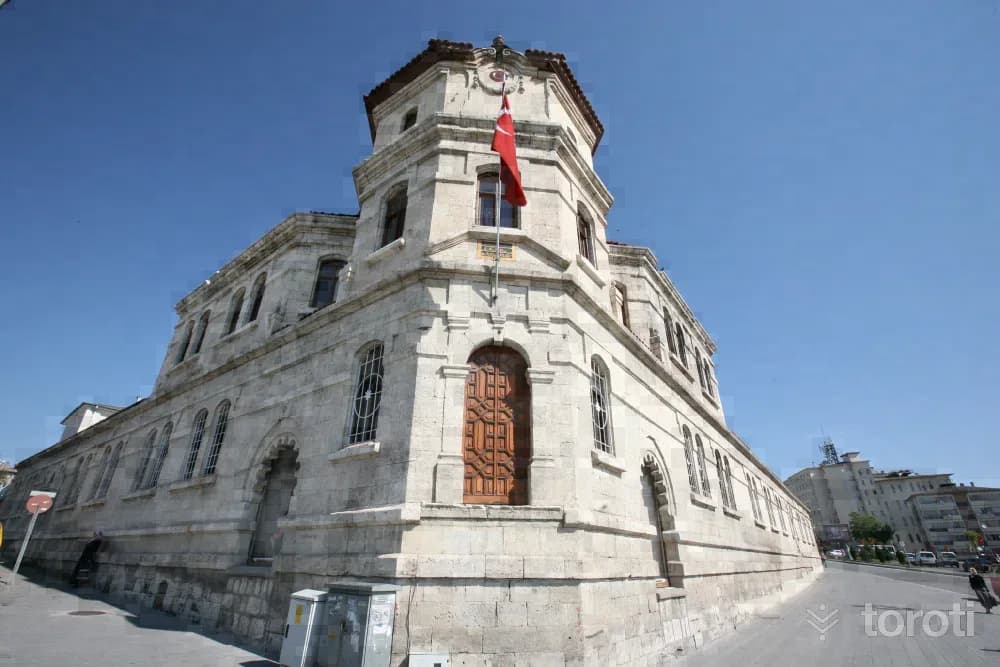
Jandarma Binası
It was commissioned in 1908 during the time of Governor Reşit Akif Paşa as the Gendarmerie Office. The plan of the Jandarma Binası, extending to the west and north, is in an “L” shape. The corner where the two wings join forms the center of gravity of the structure. At this corner, the building was arranged as three storeys. There is a single space on the third floor. On the second floor, two spaces were added on either side of this. On the ground floor, the wings extend as single-storey and multi-roomed.
45 minutes
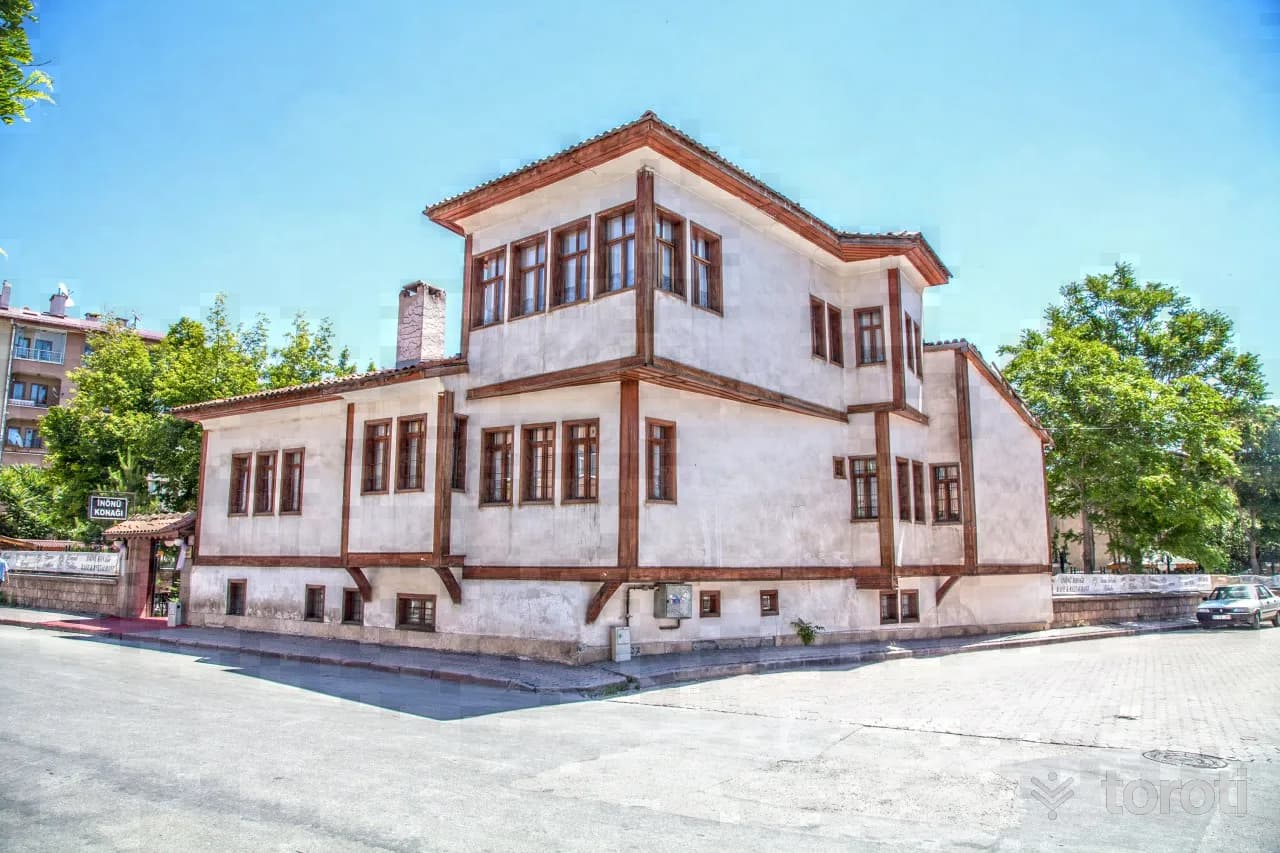
İsmet İnönü Konağı
This mansion, where İsmet İnönü spent his childhood between 1891-1897 and completed his primary education, is now known as İnönü Konağı. In 945, the mansion was purchased from its owners by Sivas Municipality and opened to visitors under the name “İnönü Museum”; it was later transferred to the Special Provincial Administration.
45 minutes
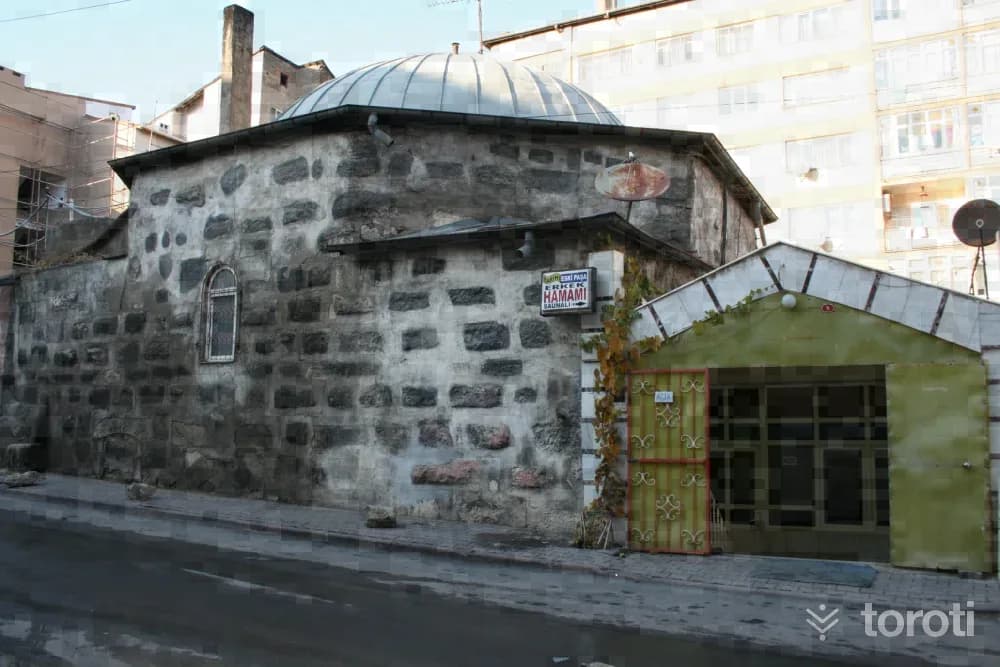
Eski Paşa Hamamı
Although this bath, located in Uluanak Mahallesi in the city center of Sivas, does not have an inscription, it is understood from its architectural style that it was built in the XVIIth century. Built in the style of classical Ottoman bath architecture, the bath consists of cold, warm and hot sections. The cold and hot sections are square in plan and built of cut stone, and are covered with a central dome each.
45 minutes
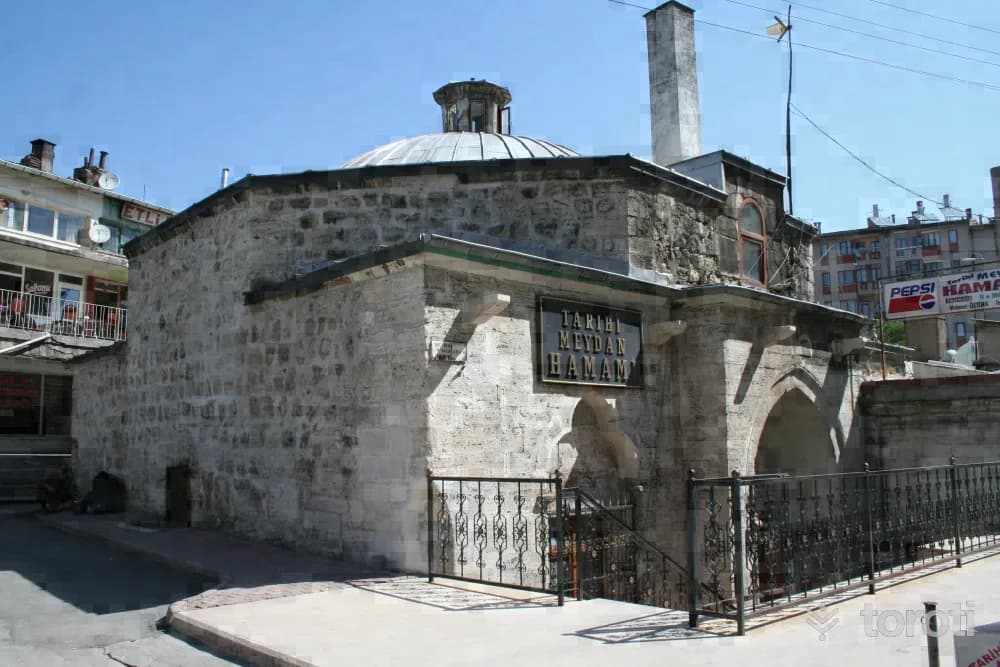
Meydan Hamamı
Located in the city center of Sivas, opposite Meydan Camisi, this bath was commissioned in 1564. It is a fine example of classical Ottoman bath architecture and consists of the frigidarium, tepidarium and caldarium. Built of cut stone, the bath has a layout close to a rectangle and is covered with a dome. The hot section has four iwans, basins were placed inside the iwans, and an octagonal central platform was set in the middle.
45 minutes
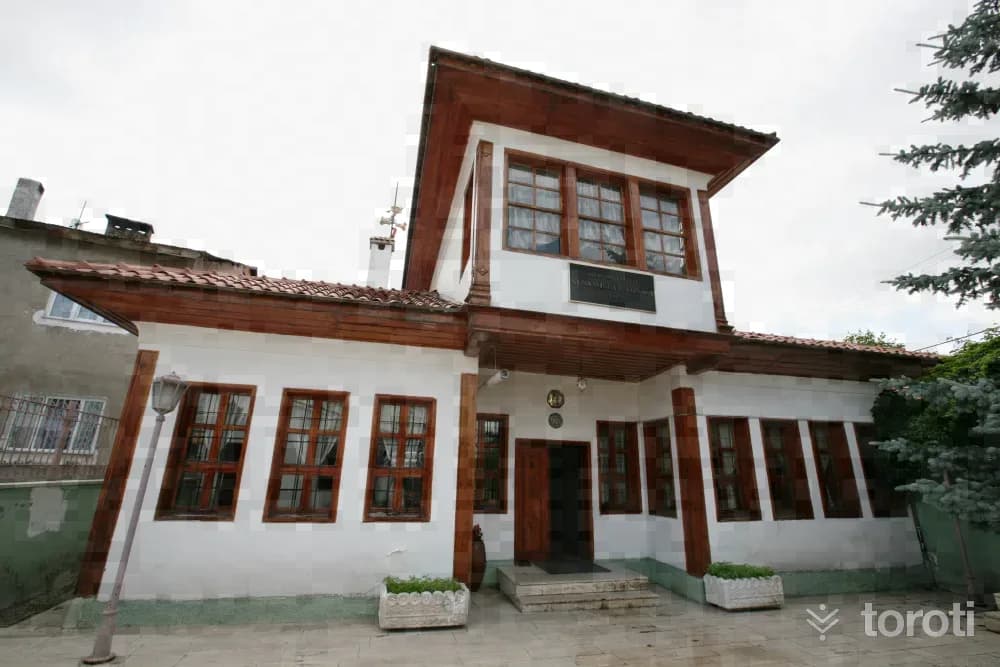
Susamişlar Konağı
The pavilion section above the entrance of the mansion and the fountain in front of the mansion were built in 1815 by Benderli Ali Ağa. It can be said that the other parts of the mansion were built around this date. It is known that during the Ottoman Period, especially in the 17th and 18th centuries, the outbuildings of the mansion were more extensive.
45 minutes
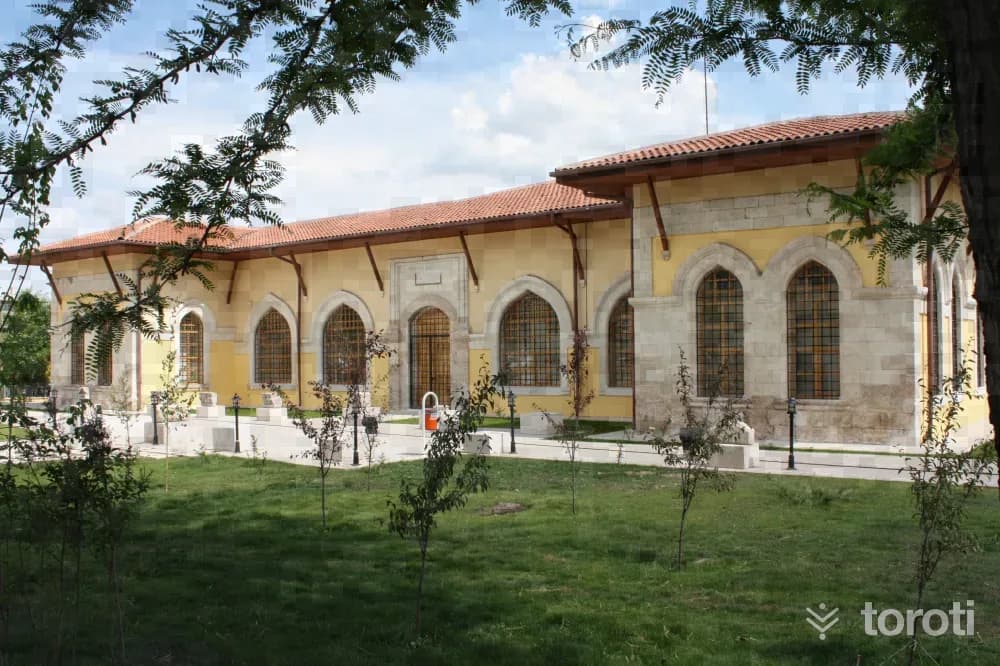
Sivas Arkeoloji Müzesi
The building, which was built in 1914 by Governor Ahmed Muammer Bey as the Mekteb-i Sanayi Workshop, was opened to visitors by the Ministry of Culture and Tourism as Sivas Archaeology Museum on 29.04.2009.
45 minutes
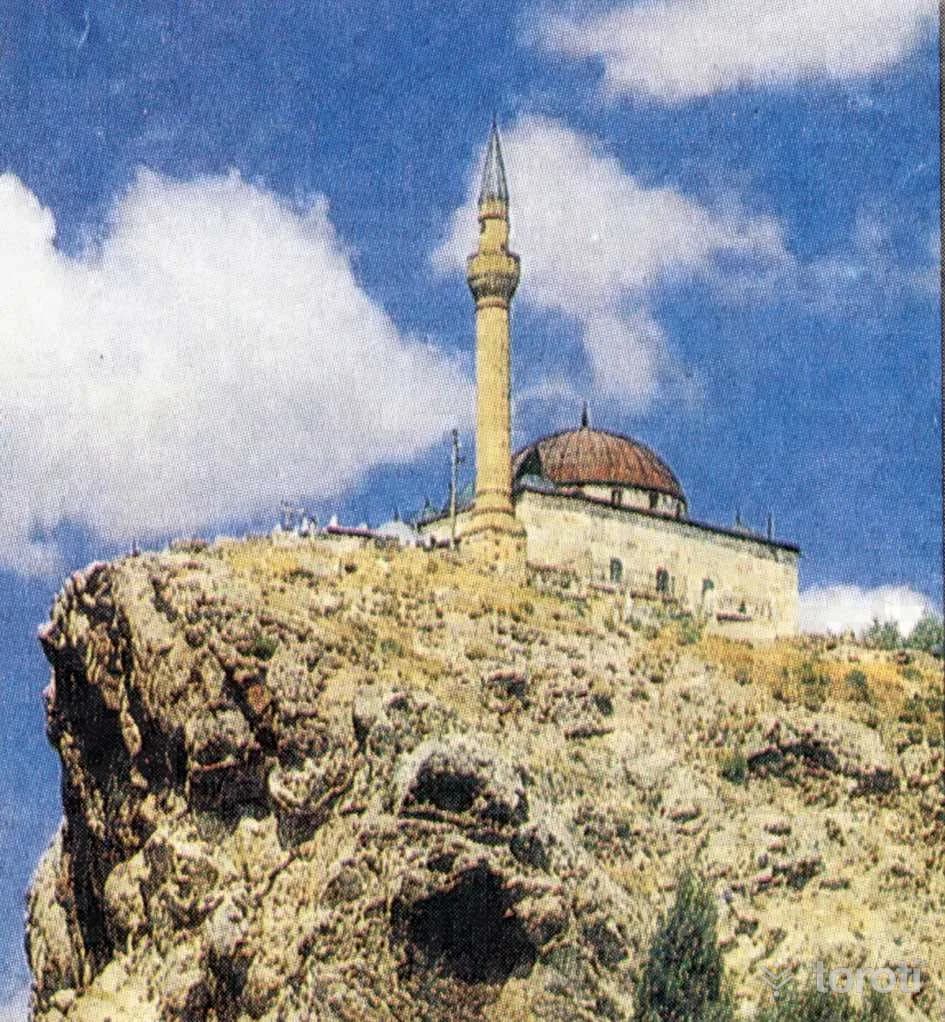
Abdulvehhab Gazi Türbesi
The Abdulvahabi Gazi Tomb and the cemetery known by the same name are located in the eastern part of the city center. The area around the tomb, which is said to belong to Abdulvahabi Gazi, one of the standard-bearers of Prophet Muhammad, is one of Sivas’s known old cemeteries. The areas around the historic cemetery are still used as a cemetery, and some places within the old cemetery are also used from time to time as a cemetery. The construction date of the tomb is not known for certain. II.
20 minutes
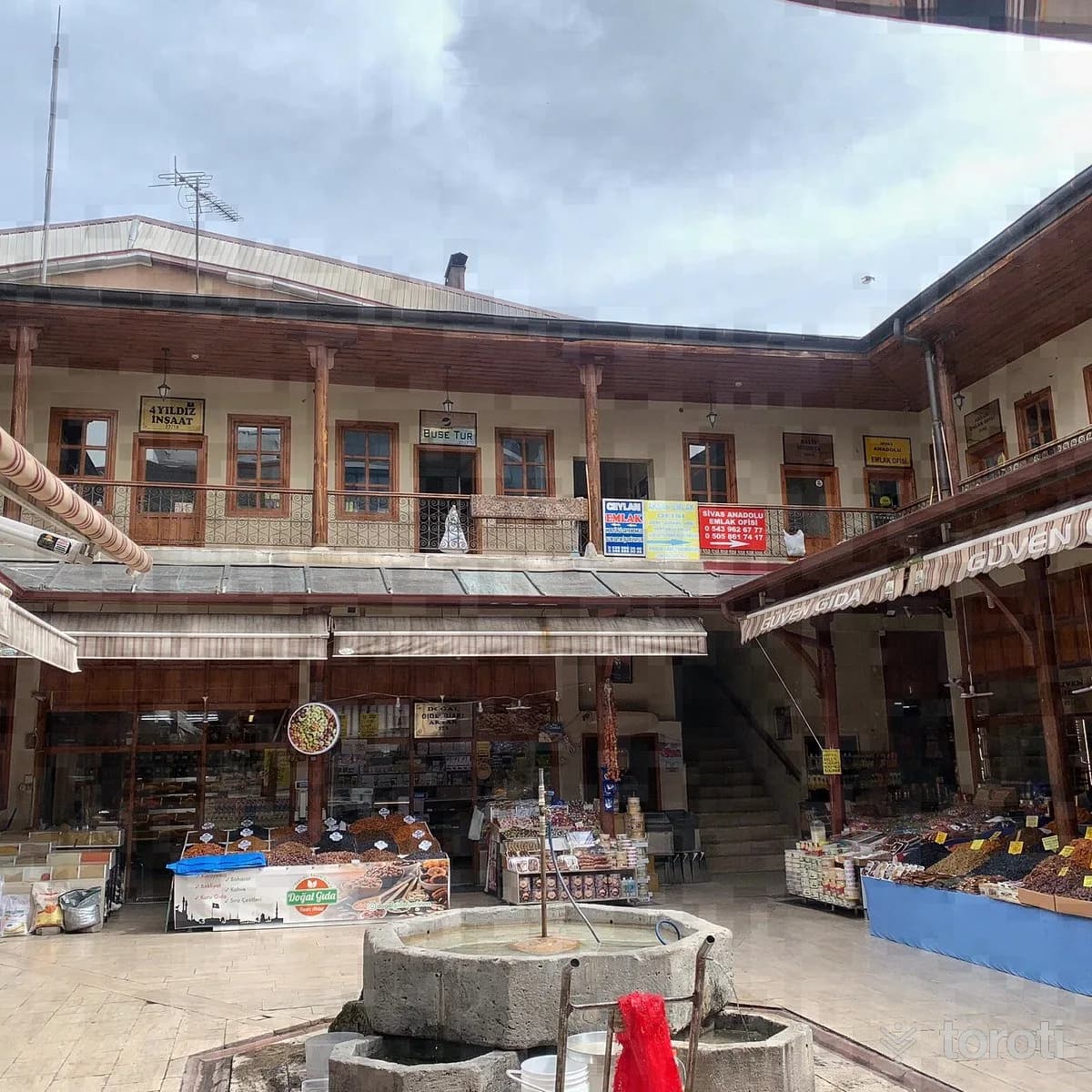
Subaşı Hanı (Şıracılar Çarşısı)
It is understood from the records in the Sivas Şeriye Sicil Defteri that it belongs to the foundation of Sinan Paşa, the governor of Sivas, who died in 1525. It has no inscription. It is a two-storey, wooden Ottoman-period inn with an open central courtyard and a rectangular plan scheme measuring 25 x40.50 m. Subaşı Hanı was formed from wooden sections with later additions built onto a structure with old, thick cut-stone walls. It would be more accurate to examine Subaşı Hanı in two sections.
45 minutes
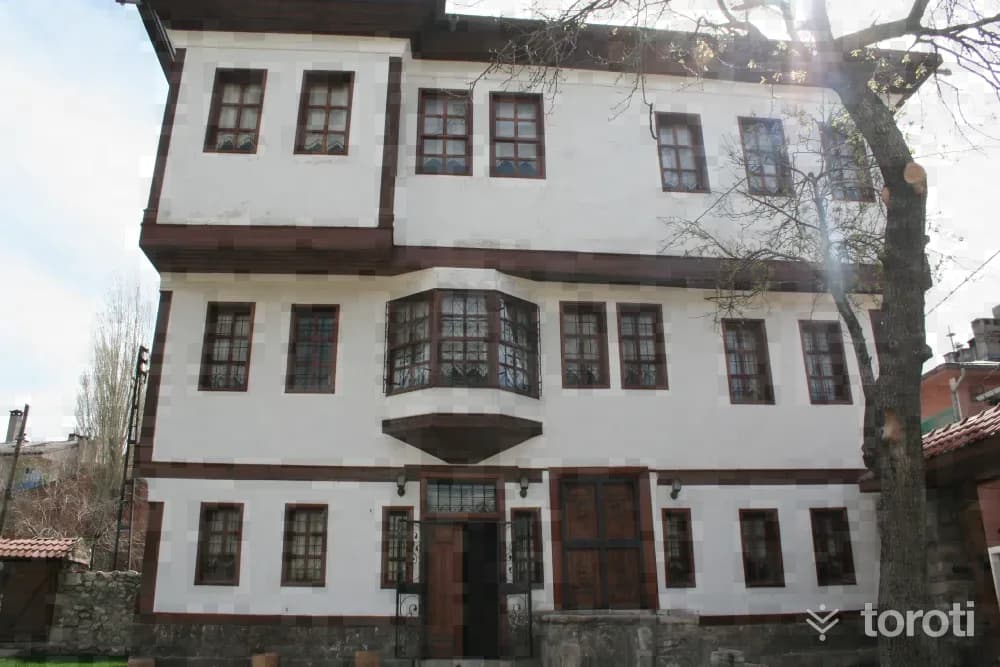
Akaylar Konağı
Akaylar Mansion, dating to the 19th century and located in Kaleardı Neighborhood, is an authentic Sivas mansion situated right next to Gök Medrese, one of the important works of the Seljuk Period. The building was designed within a large garden, together with units such as a bakehouse, stable, fountain and toilet that have not survived to the present day, in a way that would allow a large family to live comfortably.
45 minutes
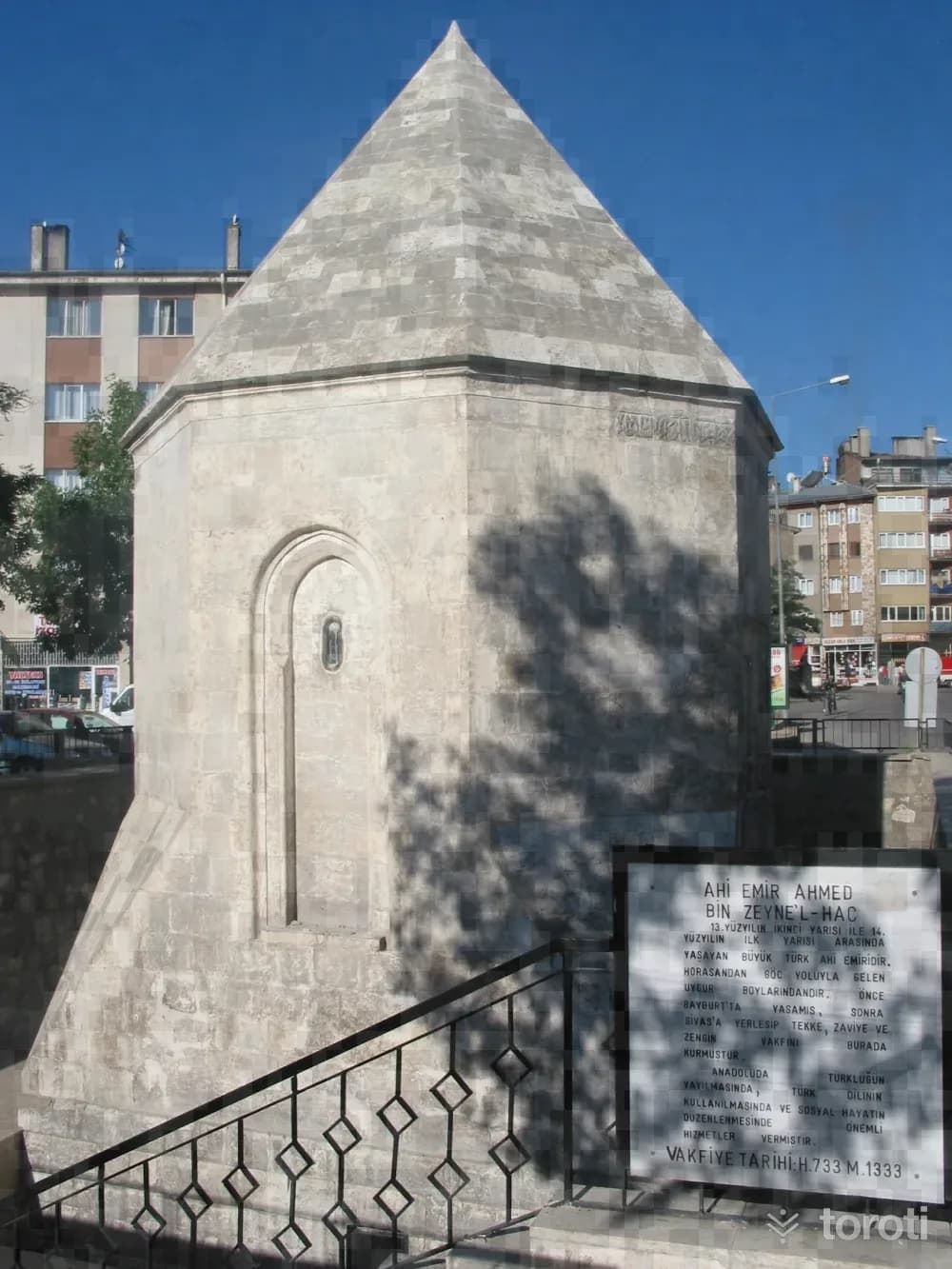
Ahi Emir Ahmed Kümbeti
Ahi Emir Ahmed Kümbeti, built in 1332-33, has a square plan and an octagonal body with chamfered corners. The entrance door is narrow and low. There is a mihrab bearing Seljuk characteristics. Its inscription is under the eaves. During the restoration work carried out by the General Directorate of Foundations in 1960, the square base and the main burial chamber were uncovered. The entrance to the burial chamber is on the north.
45 minutes
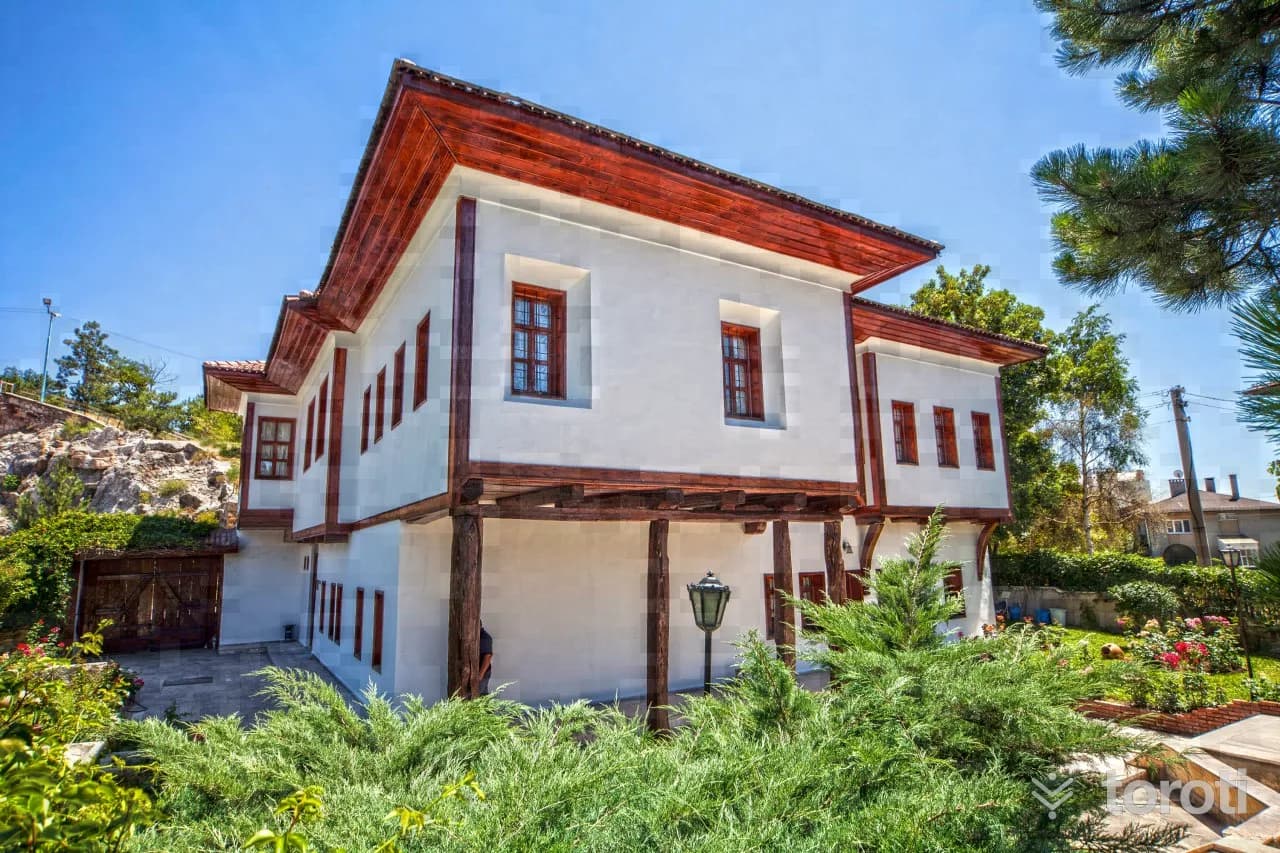
Abdi Ağa Konağı
This mansion, built in 1827 by Abdul-vahabi efendi Abdiağa, was donated to the Sivas Municipality by his grandchildren, retired teacher Hatice Mutlu and retired judge Abdi Başara, to be restored as Sivas Konağı and used as a cultural house. The historic mansion consists of 12 rooms and has 2 floors.
30 minutes
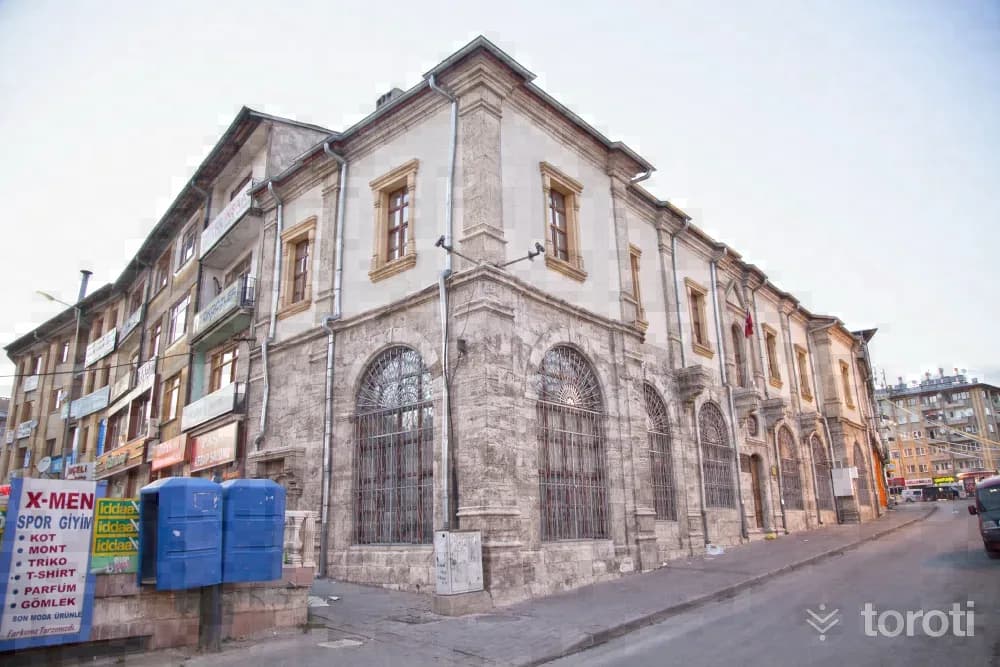
Ziya Bey Yazma Eserler Kütüphanesi
Ziya Bey Manuscript Library was built in 1908. Until the death of its founder, 7th Term Member of Parliament Yusuf Ziya Başara, all expenses were covered by him. The building was transferred to the General Directorate of Libraries and Publications of the Ministry of Culture and Tourism in 1978. The building, which was restored in 1981, 2005 and 2012, is still used as a manuscript library.
45 minutes
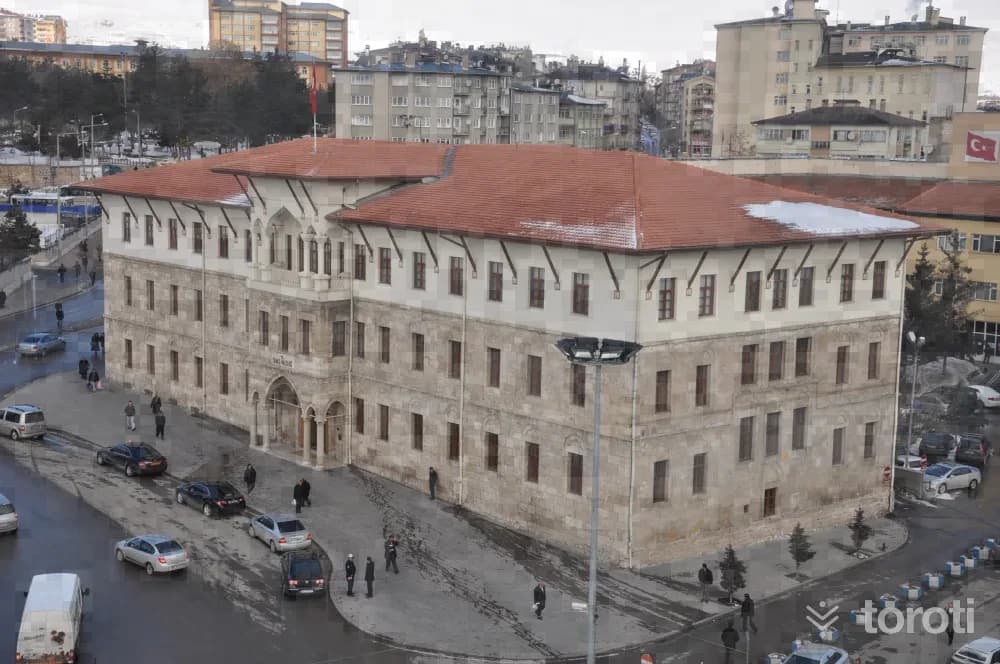
Sivas Hükümet Konağı
The Government Mansion was commissioned in 1884 by Halil Rıfat Paşa, the then Governor of the city. The first two floors of the building were built of cut stone, while the third floor was constructed in wood in 1913. As a result of a fire it suffered, the third floor burned down completely, and only the walls of the first and second floors remained. At the end of 2005, it regained its former appearance and function.
45 minutes
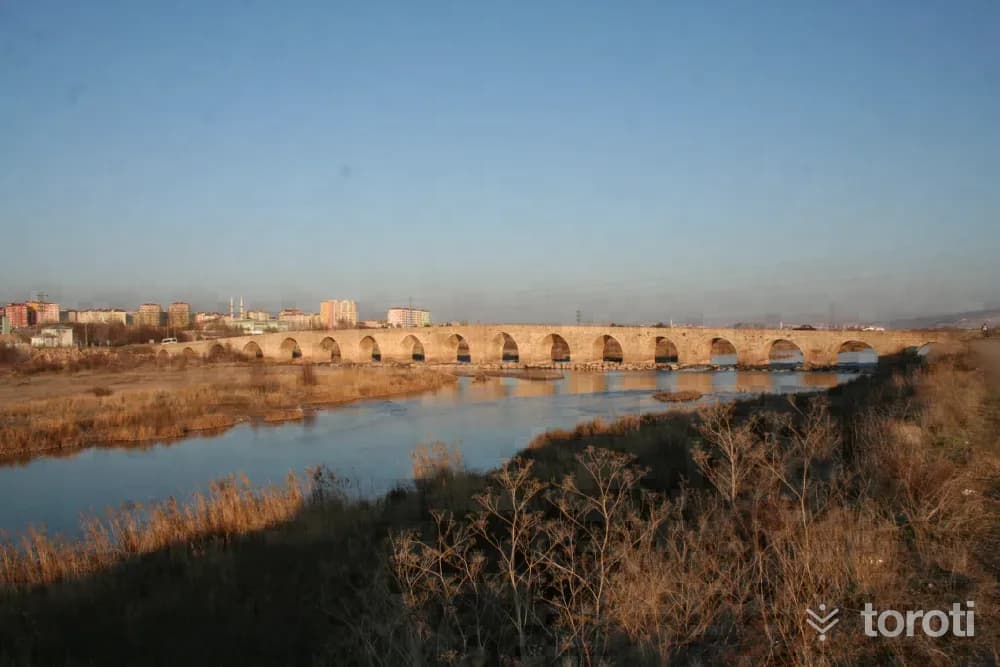
Kesik Köprü
The bridge over the Kızılırmak, located on the old Sivas-Kayseri road, consists of two parts, and the first bridge is made up of 17 spans with round and pointed arches. The second part is approximately 10 metres away and consists of two spans with round arches. The second part is used because it is a continuation of the first bridge, although no water flows beneath it.
45 minutes
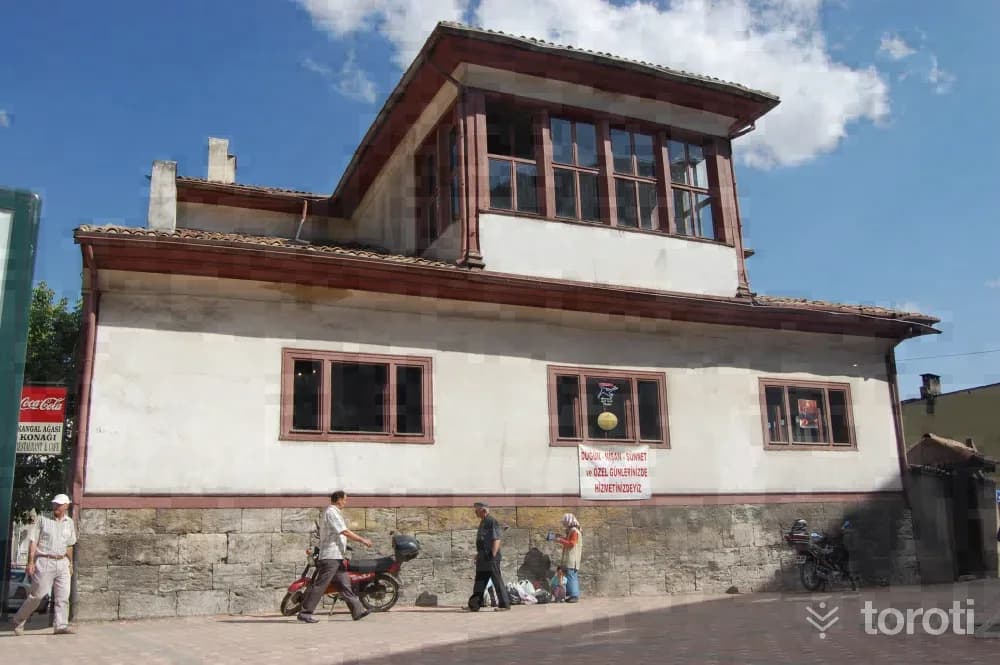
Kangal Ağası Konağı
The building known as Kangal Ağası Konağı was built in 1877 by Kangal Ağası Abdurrahman Paşa in order to host his guests coming from Egypt, Arabia and various countries. The mansion, restored by its owners in 2002, still serves as a restaurant with a tourism operation certificate.
45 minutes
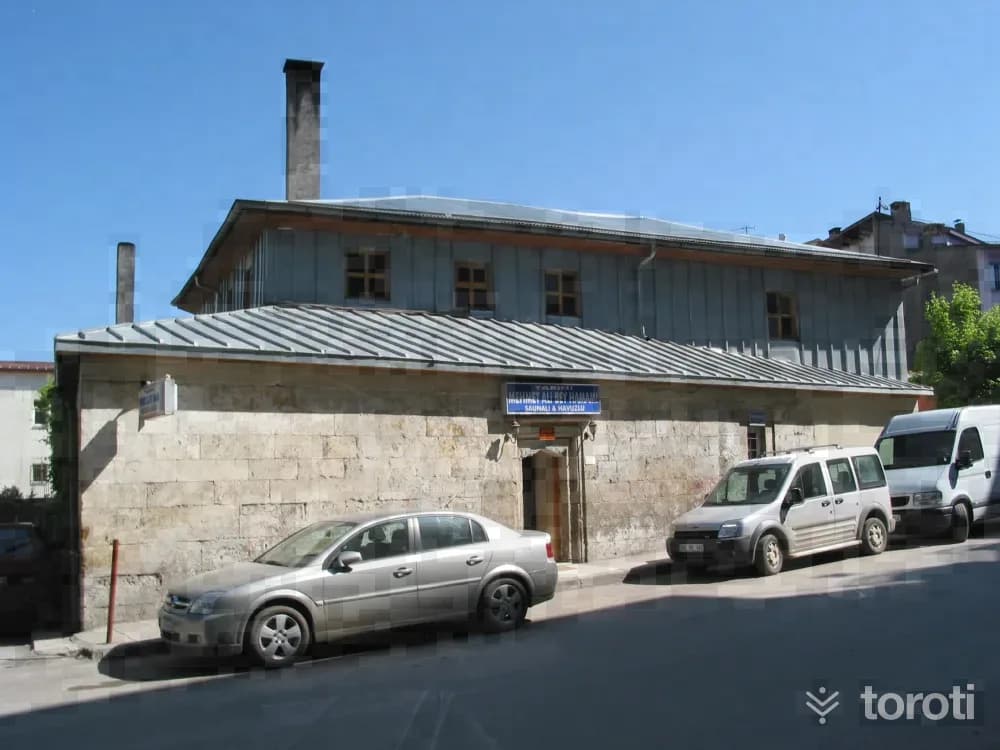
Tarihi Mehmet Ali Hamamı
Since this bath in Sivas Akdeğirmen Mahallesi has no inscription, its construction date cannot be determined with certainty. It is thought, based on its architectural style, to have been built in the XVII.-XVIII. century. It is still in service as a bath, and the swimming pool added later also attracts great interest.
45 minutes
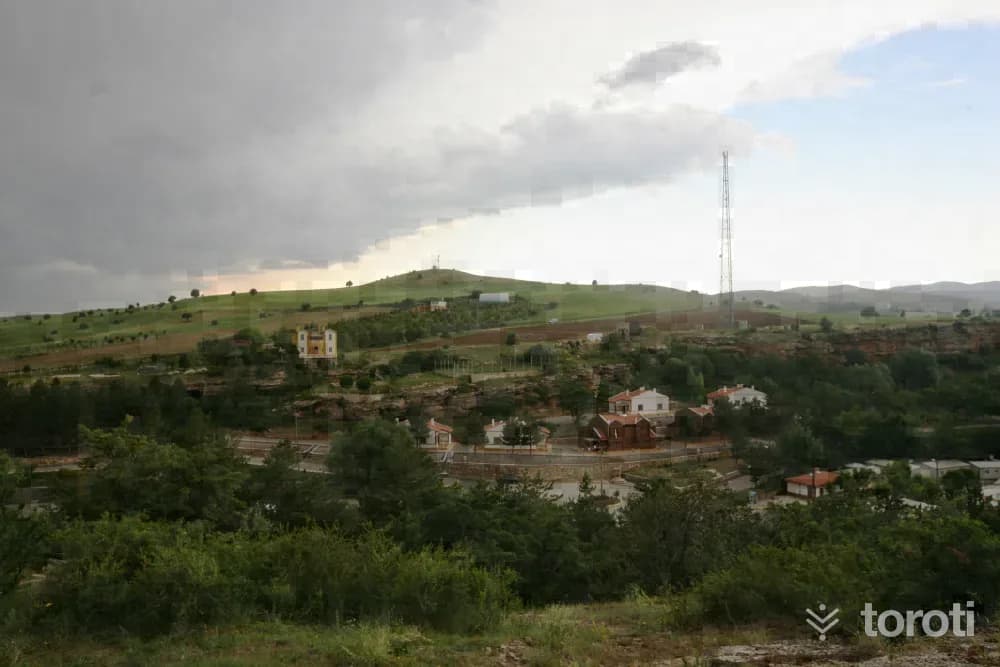
Soğuk Çermik Eski Havuz
Located 20 kilometers from the city center, the spring has a water temperature of 28 °C and offers accommodation in prefabricated houses. The thermal spring water is good for stomach, intestinal and gallbladder diseases, especially nervous system disorders.
45 minutes
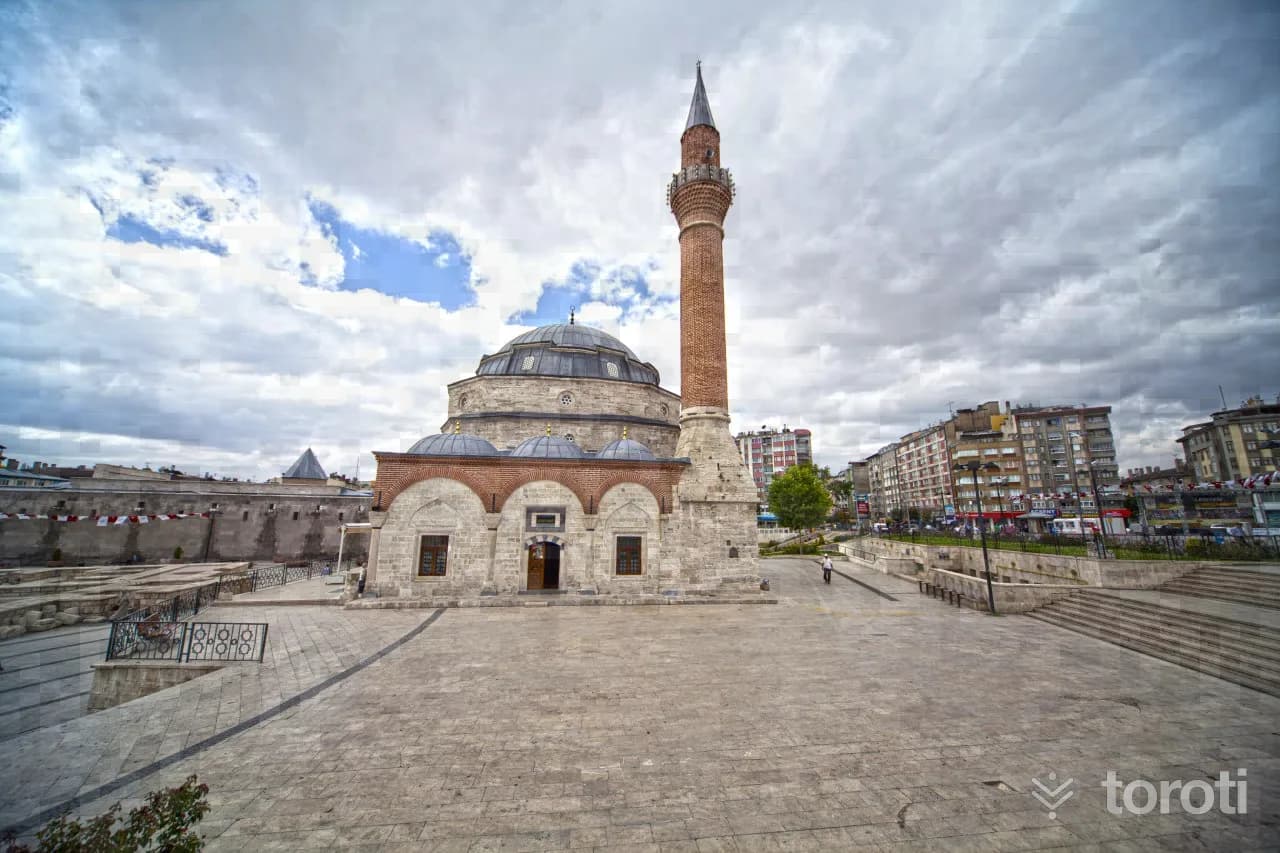
Kale Cami
The mosque, commissioned in 1580 by Murad Paşa, one of the viziers of Sultan Murad III and the Governor-General of Sivas, measures 18.75 x16.70 m. and has a rectangular plan close to a square. It is built entirely of cut stone. A brick minaret stands to the right of the entrance. The lower part of the minaret balcony is decorated with muqarnas. The stairs immediately to the left of the main space entrance lead up to the women’s section.
20 minutes
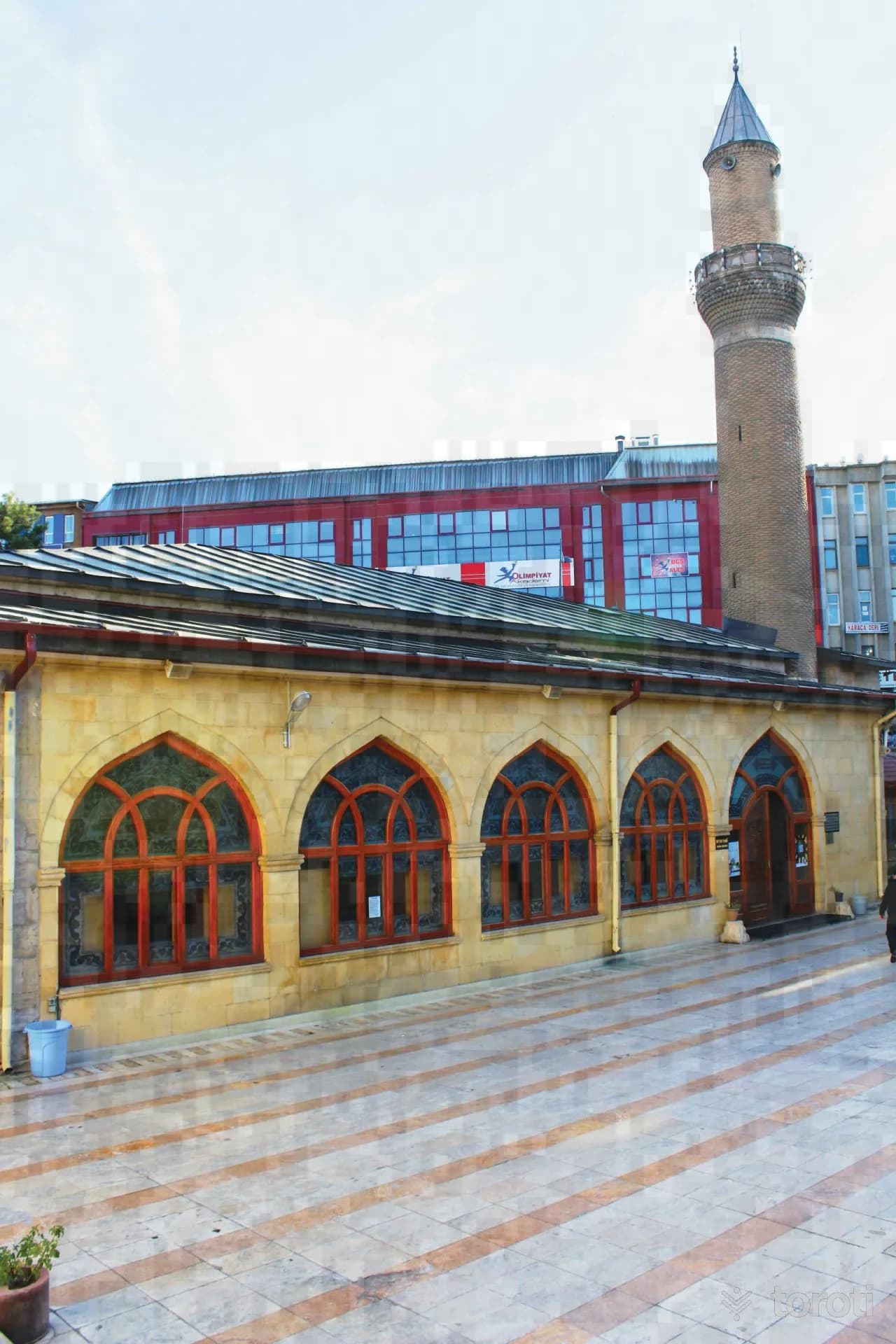
Meydan Cami
It was commissioned by Koca Hasan Paşa in 1564. The last congregation area in front of it was added here in the 19th century. It was restored by the General Directorate of Foundations in 1968. It is also known among the public by the name Çukur Cami. It has a minaret with a round brick body on a square base and a single balcony. In the courtyard of the mosque is the tomb of Zileli Şeyh Şemseddin Sivasi.
20 minutes
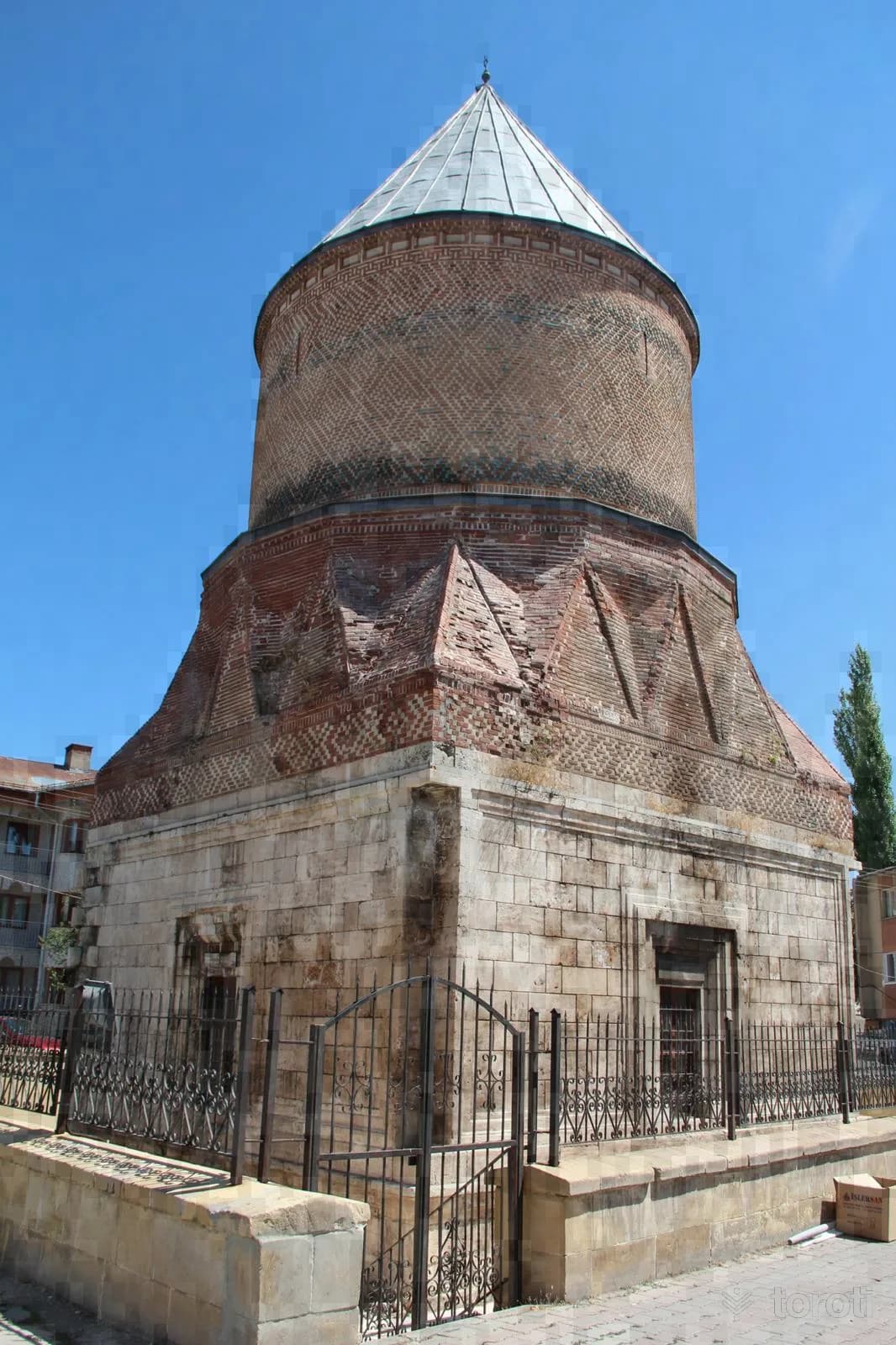
Güdük Minare (Şeyh Hasan Bey Türbesi)
Because it resembles a squat minaret, it is popularly known as Güdük Minare. Among the principalities established after the disintegration of the Seljuk State, the Eratna Beyliği was founded with Sivas as its center. This work belongs to that period.
20 minutes
Ahi Emir Ahmet Bin Zeynel Türbesi
Based on the endowments of Ahi Emir Ahmed, the construction of the tomb can be dated to the first half of the 14th century. Its inscription, written in thuluth script under the eaves, has worn away to the point of being unreadable. In the inscription of the tomb of “Ahi Emir Ahmed,” one of the great figures of the Ahi organization in Sivas, and in the record in the endowment deed, his name is given as Ahî Emir Ahmed bin Zen-el-Hac.
20 minutes
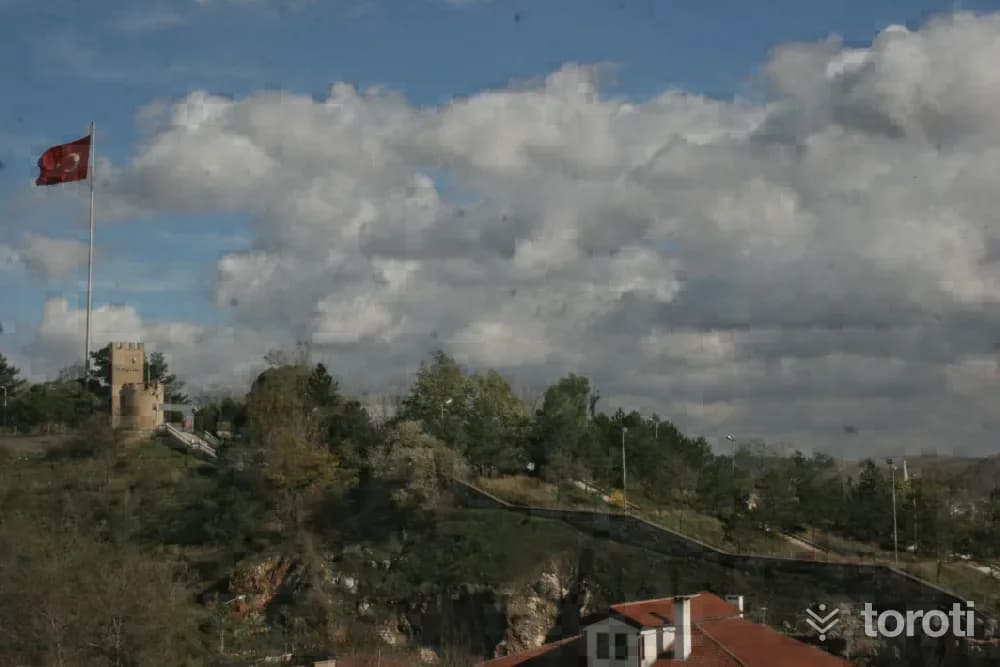
Sivas Kalesi
Sivas kent merkezinin gelişiminde önemli bir yer tutan kalenin (Topraktepe), Arkeolog Prof. Dr. Tahsin Özgüç tarafından 1946 yılında yapılan kazılar neticesinde MÖ II. bin başlarından itibaren iskân edildiği tespit edilmiştir. Selçuklu Sultanı Alaattin Keykubat, yaklaşan Moğol tehlikesine karşı Sivas surlarını tamir ettirmiştir.
45 minutes
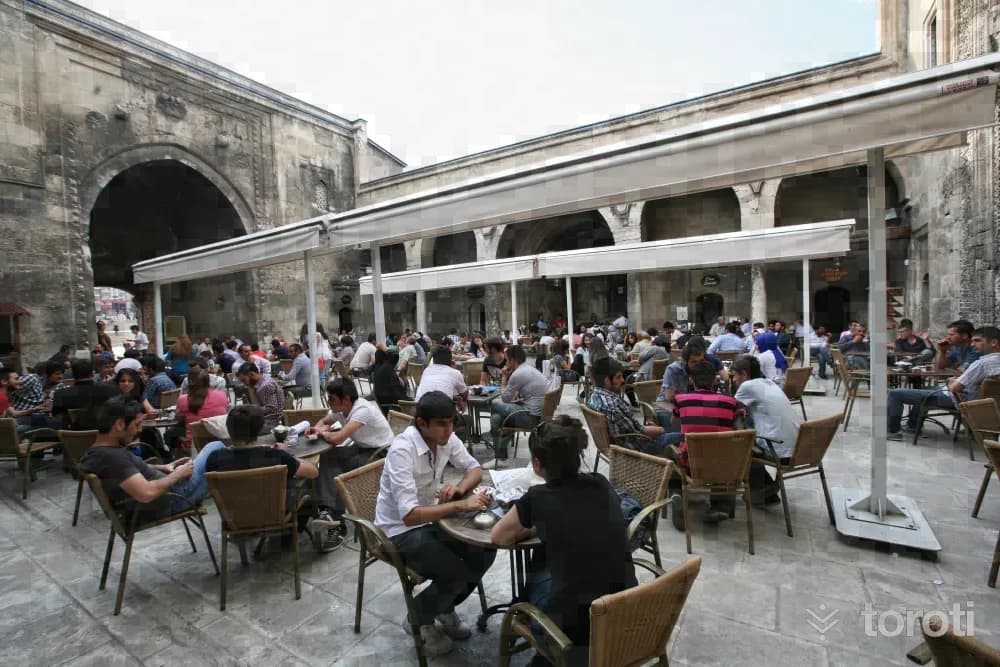
Buruciye Medresesi
Buruciye Medresesi is among the most famous structures of Sivas and Anatolia, with its magnificent monumental portal that has remained intact. The madrasa, built in 1271 during the reign of Seljuk Sultan III. Gıyaseddin Keyhüsrev, was commissioned by Muzaffer Burucerdî, who came from Burucerd near Hamedan (Iran), for the purpose of teaching physics, chemistry, and astronomy. The structure, whose architect is unknown, has the most perfectly symmetrical madrasa plan in Anatolia. The open-courtyard madrasa was built of cut stone.
45 minutes
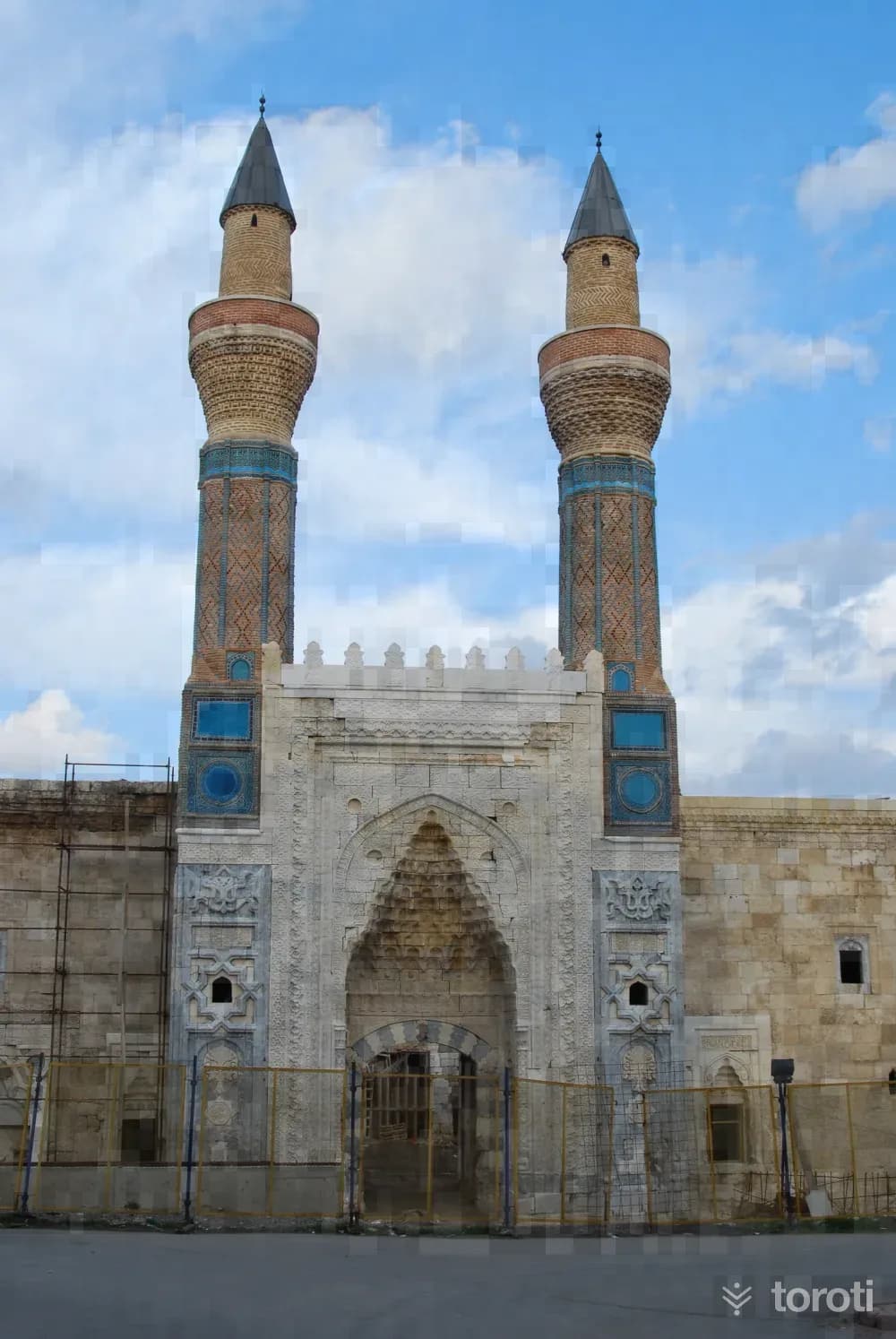
Gök Medrese
Gök Medrese is one of the most important structures where Turkish architecture and the art of ornamentation can be seen together. It is understood from the inscriptions in various parts of the building that it was commissioned by Vizier Sahip Ata Fahreddin Ali in 1271, during the reign of III. Gıyaseddin Keyhüsrev, son of IV. Kılıçaraslan. The marble stone portal of Gök Medrese has an appearance rich enough to sustain an interplay of light and shadow. The structure has the characteristics of an open courtyard, four iwans, and a two-storey plan.
45 minutes
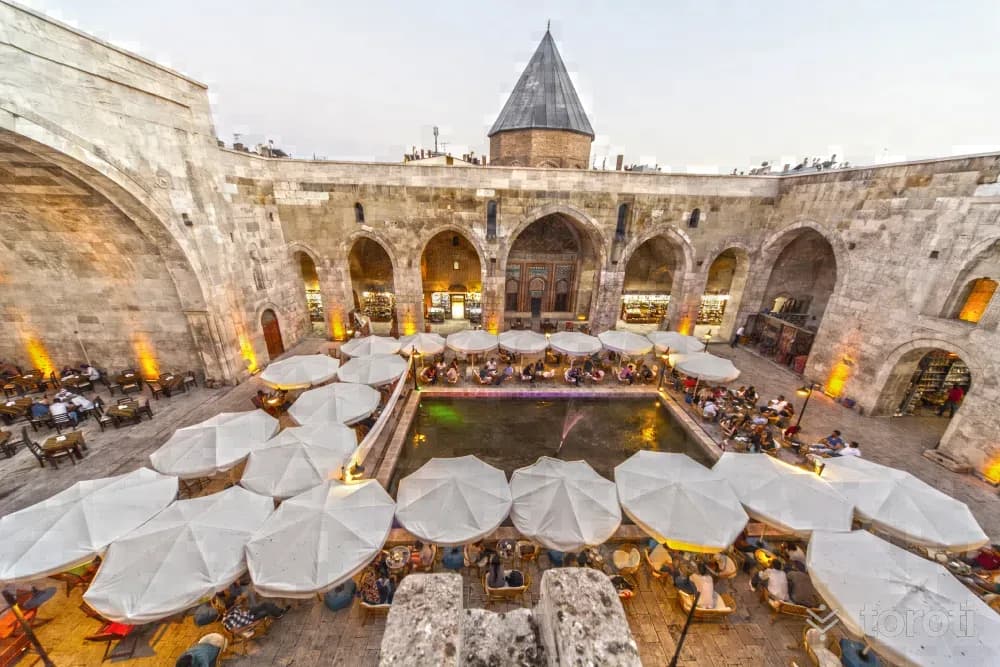
Şifaiye Medresesi (sivas Darüşşifası)
Şifaiye Medresesi is one of the most important madrasahs from the Seljuk Period where patients were treated and, at the same time, medical education was also provided. The part that has survived to the present day is Anatolia's largest hospital. It was commissioned by I. İzzeddin Keykavus in 1217/18. Through the magnificent crown gate, one enters the four-iwan courtyard with arcades. On the crown gate are symbols of the sun and moon, while in the main iwan there are reliefs in the form of female and male heads. In 1220, I.
45 minutes
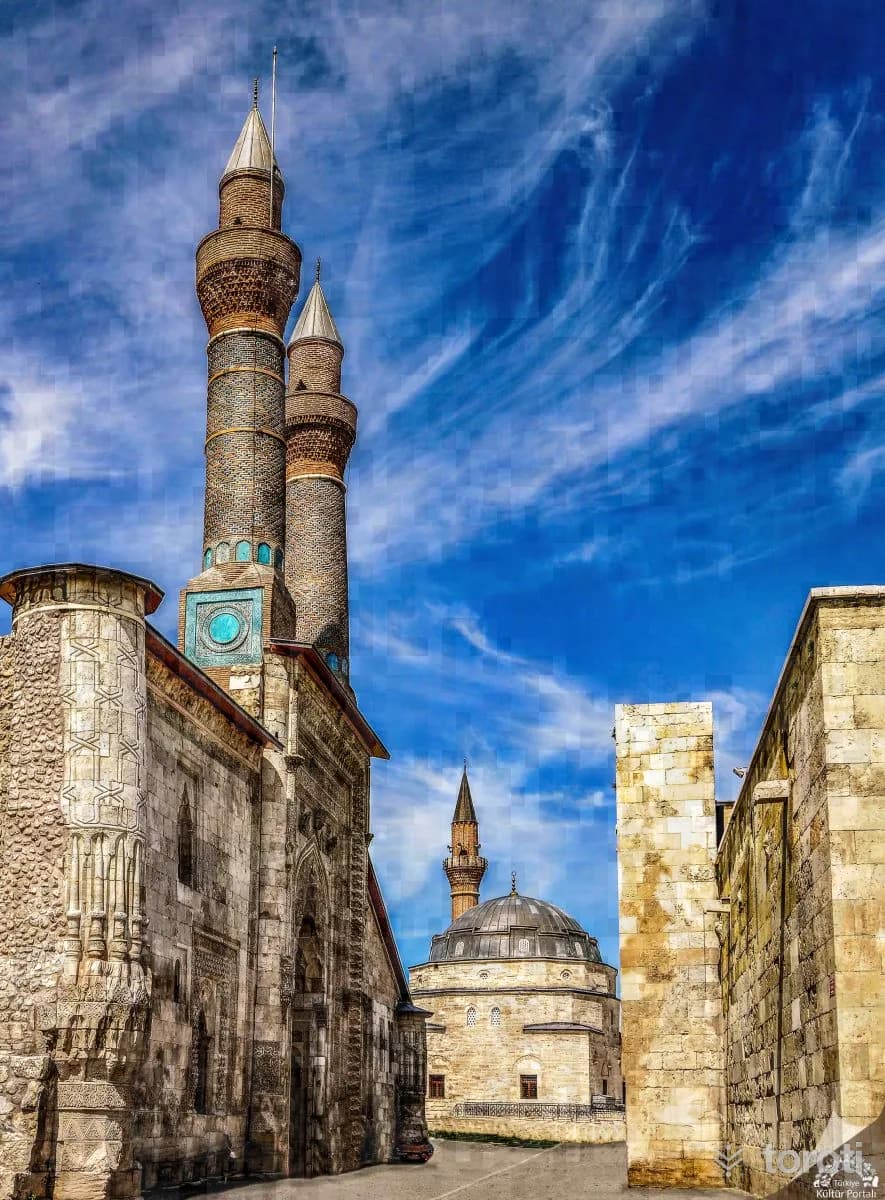
Çifte Minareli Medrese
According to the inscription on its monumental portal, it was commissioned in 1271 by the Ilkhanid Vizier Şemseddin Cüveyni. The madrasa draws attention with its decorated monumental portal and its two minarets with brick-tile masonry. The structure of the madrasa has collapsed, and only its main facade on the eastern side, where the minarets are located, has remained standing. It is located directly opposite Şifaiye Medresesi.
30 minutes
Atatürk Kongre Ve Etnografya Müzesi
The museum building holds a very important and exceptional place in the history of our Republic, as it was used as the “National Struggle Headquarters” by Mustafa Kemal Atatürk and the Representative Committee between 2 September–18 December 1919. It was built in 1892 by the Governor of Sivas, Mazlum Paşazade Memduh Mehmet Bey, as the Mülkü idadi (High School) building.
45 minutes