
Places to visit
Things to do in Bitlis merkez
15 destinations, each with a description, how long it takes and where it sits on the map.
In short
toroti’s catalogue holds 15 described destinations within Bitlis merkez, Bitlis. The themes that come up most: Faith heritage, Local culture, History, Museum, Culture, Architecture.
Şeyh Hasan Camii
According to its inscription, the mosque, located on a slope in the Yükseliş neighborhood in the north-west of the city, was renovated in 1725 by someone named Haydar Ağa. Built of regularly cut blocks with Bitlis’s typical reddish-brown stone, it forms a rectangular mass extending in the east-west direction. It is two-storeyed, and the upper floor is used as a mosque.
20 minutes
Memi Dede Mescidi
The inscription of the masjid, located on the slope at the entrance from the southern side of the city, relates to the tomb section inside it. The inscription states that it was commissioned in H.980 (M.1572) by a person named Ahmet Yunus. It is estimated that the masjid was also built on the same or a nearby date. Half of the ‘L’-planned structure was arranged as a masjid and the other half as a tomb.
45 minutes
Hacı Begiye Mescidi
This structure, also referred to by names such as Hacı Begiye, Gazi Begiye or Behiye, is located in the city center. Formerly, it was a small külliye consisting of structures such as a mescit and a medrese. Today, all that remains is a simple mescit and three inscriptions. According to the inscriptions, both the mescit and the medrese were commissioned in H. 848 (M.1444) by Emir Hacı Mehmed, son of Emir Hacı İbrahim.
45 minutes
Ayn El Barit (Soğuk Pınar) Camii
The mosque, located on a slope on the eastern side of the city, was commissioned by Molla Gazi Abdurrahman in 1664/65 according to its inscription, and according to another inscription it was repaired in 1721. In the center of the mosque, which has a fairly regular square plan, four pointed arches springing from a cruciform pier and spanning between the wall pilasters divide the space into four domed units.
20 minutes
Gazi Bey Mescidi
It is a külliye together with its madrasa and is located in the Gazibey neighborhood, right next to Kazım Paşa Primary School. According to its inscription, it was commissioned in 1836 by a person named Şerif. This building, which for a time was used as the Public and Children's Libraries and the Nutrition Office of the Directorate of National Education, was rearranged in recent years and began to be used as a mosque.
20 minutes
Sultaniye Camii
Located in the south of the city and near Alemdar bridge, the structure occupies the upper floor of the two-storey building, beneath which are the tomb and zaviye of Şeyh Garip. According to the inscription on the door, the mosque dates to 1828, and inside the mosque, on the mihrab, there is another inscription bearing the date 1784.
20 minutes
Hatuniye Camii
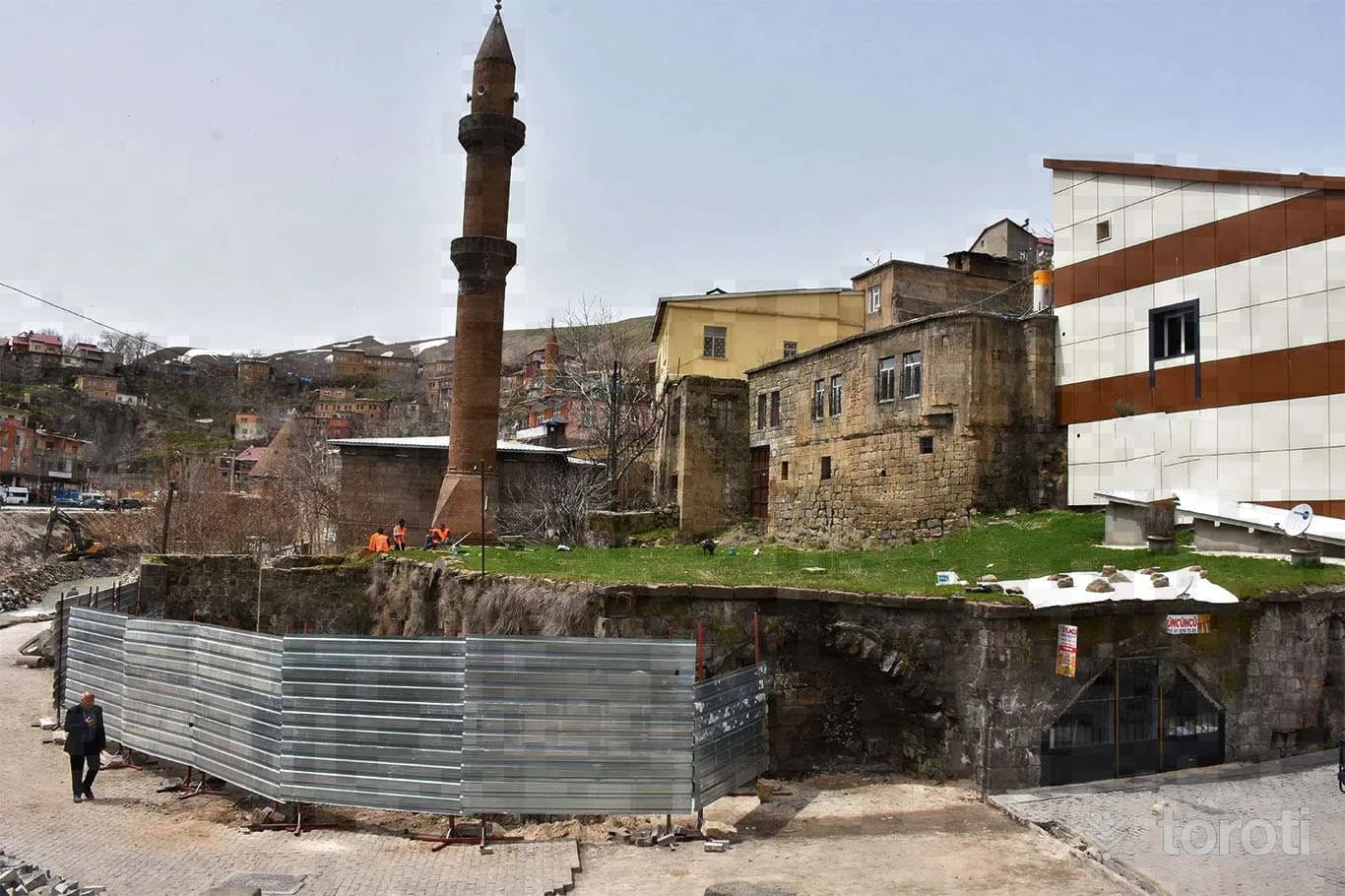
The structure, located in the neighborhood bearing its own name, is rumored to have been built in the 2nd century by Huma Hatun, daughter of Evhadullah Sultan of the Abbasids. As a result of the repairs it underwent many times, the dome and arches were demolished and turned into an earthen roof.
20 minutes
Bitlis Kalesi
It was built by Badlis, one of Alexander the Great’s commanders, from whom the city takes its name. (312 BC). It stands on a steep rock mass at the point where two streams, branches of the Bitlis water, meet. It is a fortified position extending from east to west.
45 minutes
Şerefiye Camii
It is a külliye established to the south of the city center, at the point where the Kışla and Hosor streams meet, and consists of mosque, madrasa, imaret and tomb sections. According to its inscription, it was commissioned by IV. Şeref Han in H.935 (M.1529). Since the facade of the mosque, which has a rectangular plan in the east-west direction, that can be seen from the city is its eastern side, it was intended to give this face a monumental value and it was prepared with special care and decoration.
45 minutes
Şeh Hasan Camii
According to its inscription, the mosque, located on a slope in the Yükseliş neighborhood in the north-west of the city, was renovated in H.1138 (A.D.1725) by someone named Haydar Ağa. Built of Bitlis’s typical reddish-brown stone from regularly cut blocks, it forms a rectangular mass extending in the east-west direction. It is two-storeyed, and the upper floor is used as a mosque.
45 minutes
Gökmeydan Camii
The mosque, located in the quarter bearing the same name, bears the date 1801 on its inscription; while the minaret inscription gives the date 1924. The mosque, which forms a rectangular block in the south-north direction and stands within a garden, has been treated with greater importance on the qibla side, as it faces the street. Its minaret rises in the form of a separate tower near the south-west corner, and on the north-west side there is an additional structure belonging to the mosque.
45 minutes
Kureyşi Camii
Located in the Kureyşi quarter, which bears its own name, in Zeydan Mahallesi on the western side of the city, the mosque, according to its inscription, was repaired in H.1225 (M.1810) and took its present form. There are clear traces indicating that the mosque was once adorned with rich decorations long ago. However, as a result of repairs, these decorations have disappeared. The central section is divided into four by the column in the middle and the arches connecting the column to the walls, and the top of each section is covered with a barrel vault.
45 minutes
Gazi Bey Mescidi
It is a külliye together with its madrasa, and is right next to Kazım Paşa Primary School in the Gazibey neighborhood. According to its inscription, it was commissioned in 1836 by a person named Şerif. This building, which for a time was used as the Public and Children's Libraries and the Nutrition Office of the Directorate of National Education, was rearranged in recent years and began to be used as a mosque.
45 minutes
Bitlis Etnografya Müzesi
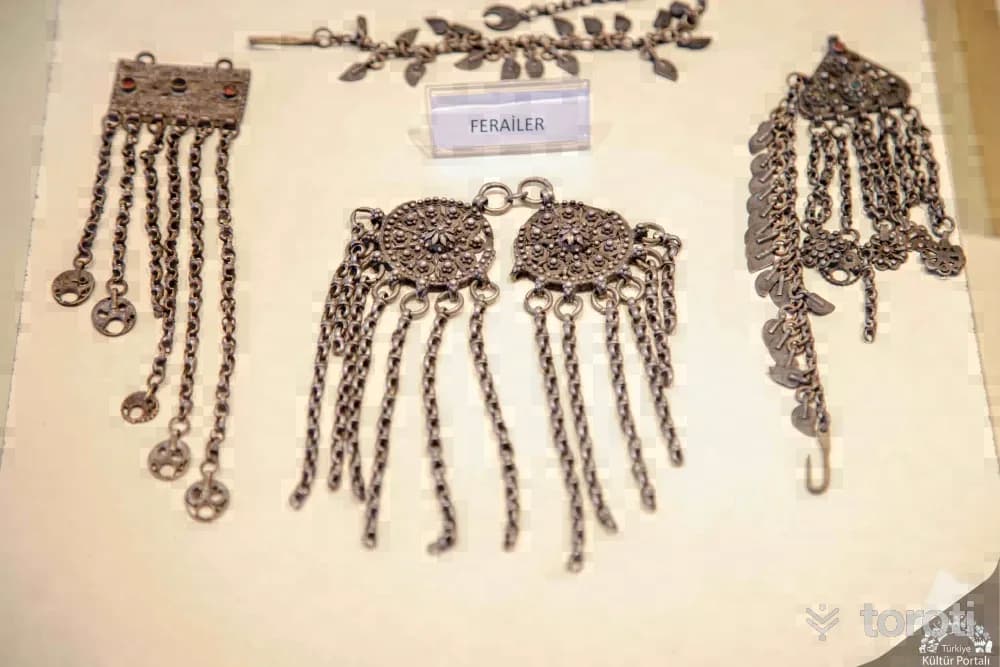
The building, which was used as the Governor’s Mansion in past years, was allocated to our Ministry in 2005 and opened to visitors as the Bitlis Ethnography Museum. It serves as a unit affiliated with the Ahlat Museum Directorate. The museum building, registered as an immovable cultural property that must be protected, was built with Ahlat stone in accordance with the local texture of the region and has a natural appearance. The historic building consists of a semi-basement, ground floor + 1 floor.
45 minutes
Bitlis Kalesi
Bitlis Castle was built by Badlis, one of Alexander the Great's commanders, in 312 BC. Standing at 56 meters tall, the castle preserves its historical essence while welcoming visitors.
45 minutes