
Destination
Konya Etnografya Müzesi
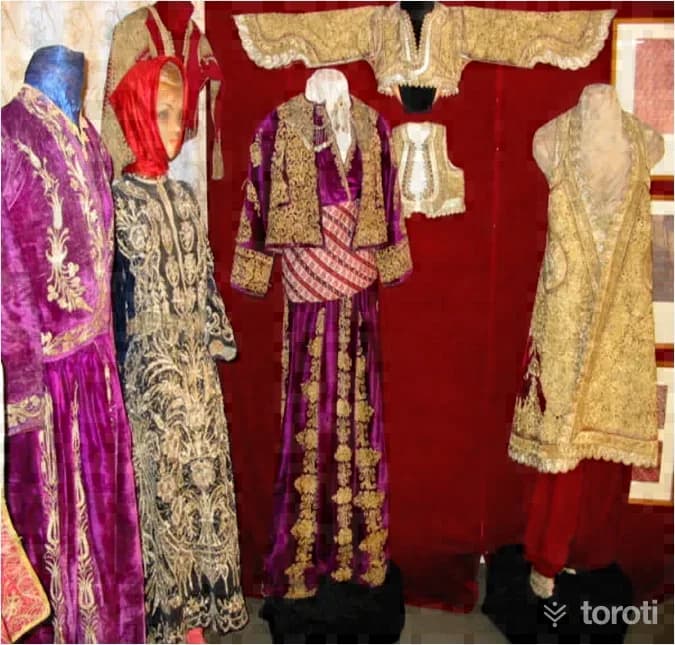
From women’s clothing, bindallı, dresses, şalvar-işlik-cepken, vests and caftans made with sim sırma, cord couching and various hoop embroidery techniques on fabrics such as velvet, satin and atlas; from women’s ornaments, belt buckles, suspenders, bracelets and earrings, headpieces made of silver and bafun material; knitted and fabric purses for money, watches and seals, wool socks and gloves, Turkish work, sim sırma, hesap işi, çin among hoop embroidery techniques on fabrics such as velvet, linen, atlas and satin.
Konya Etnografya Müzesi and 6 places around it
Free · no sign-up needed
Highlights
- Museum
- Culture
Good for
- Museum visits
Suggested visit:45 minutes
Among women’s clothing are bindallı, dresses, şalvar-işlik-cepken, vests and caftans made on fabrics such as velvet, satin and atlas with sim sırma, cord couching and various hoop embroidery techniques; among women’s ornaments are belt buckles, suspenders, bracelets and earrings, tepeliks made of silver and bafun; knitted and fabric purses for money, watches and seals, wool socks and gloves, and bohças, peşkirs, uçkurs, pillow and bedding sets worked on velvet, linen, atlas and satin fabrics with hoop embroidery techniques such as Turkish work, sim sırma, hesap işi, çin iğnesi, tel kırma and sarma.
Examples of metal keys and locks of various sizes from the Seljuk and Ottoman periods, kitchenware including cauldrons, pots, bowls, trays, lengers, ewers and healing bowls made of copper and brass with the hammering technique, glass and porcelain vessels; candlesticks and incense burners of silver and brass; mills, coffee pans, mortars, coffee boxes, and coffee sets consisting of cups and cup holders made of wood and metal are exhibited. A rich collection of tesbihs made of materials such as koka, amber, agate, oltu stone, mother-of-pearl and ivory, together with mouthpieces, pipes, tobacco cases and tobacco pouches used in smoking tobacco, are displayed. Examples of Ottoman-period calligraphy, the Qur’an and other manuscripts; burnishers, inkwells, paper scissors, penknives and maktas, writing drawers, mother-of-pearl inlaid rahles, consoles and mirrors used in calligraphy are present.
Among Ottoman-period firearms, flintlock and percussion pistols and rifles, powder flasks, and among non-firearms, examples of swords, daggers, hançers, bows, arrows and quivers are included. In the carpet section on the lower floor of the exhibition hall, especially rare carpet fragments from the Seljuk Period are displayed together with examples woven in various carpet centers of Anatolia, primarily the Konya region, from the Ottoman and Republican periods. Among these, the characteristic Seljuk carpets found in Beyşehir Eşrefoğlu Câmii, one of Anatolia’s oldest wooden-columned mosques, and the carpets found in Konya Alâeddin Câmii, Selimiye Câmii and Konya Mevlâna Dergâhı are among the most important examples. Carpets from the Konya region such as Karapınar, Sille, Ladik, Küçükmuhsine, Kavak, Karaman and Derbent, as well as examples from important carpet centers such as Uşak, Kula, Gördes, Mucur and Bergama, are exhibited.
Places to Visit in Konya Address: Sahibiata Mah. Sahibiata Cad. 42040 Meram / KONYA
At a glance
- Type
- ethnographic museum, museum
- Built / founded
- 1975
Last updated: 22 October 2026
Location and surroundings
Konya Etnografya Müzesi sits within Meram, Konya. The toroti catalogue holds 57 described stops across Konya, 11 of them in Meram.
The nearest stop is Arkeoloji Müzesi, 220 m to the northeast. Another 6 catalogued points lie within a 30 km radius.
The Antalya – Konya route passes 3.1 km away, so this works as a stop along the drive.
See Konya Etnografya Müzesi and its surroundings in one plan
- Order your stops on the map and spread them across days
- See driving and visiting time at a glance
- Get places around it suggested automatically
- Free — no sign-up needed to start
Other places nearby
Routes that pass close by
Frequently asked
- What is Konya Etnografya Müzesi?
- From women’s clothing, bindallı, dresses, şalvar-işlik-cepken, vests and caftans made with sim sırma, cord couching and various hoop embroidery techniques on fabrics such as velvet, satin and atlas; from women’s ornaments, belt buckles, suspenders, bracelets and earrings, headpieces made of silver and bafun material; knitted and fabric purses for money, watches and seals, wool socks and gloves, Turkish work, sim sırma, hesap işi, çin among hoop embroidery techniques on fabrics such as velvet, linen, atlas and satin.
- Where is Konya Etnografya Müzesi?
- Konya Etnografya Müzesi is in Meram, Konya.
- How long does it take to visit Konya Etnografya Müzesi?
- The suggested visit time for Konya Etnografya Müzesi is about 45 minutes.
- What else is there to see near Konya Etnografya Müzesi?
- toroti’s catalogue holds other destinations within 30 km of Konya Etnografya Müzesi; the closest are Arkeoloji Müzesi, Konya Arkeoloji Müzesi, Sahip Ata Vakif Müzesi.
- Is Konya Etnografya Müzesi on the way anywhere, and which route?
- Konya Etnografya Müzesi lies 3.1 km from the Antalya – Konya route, close enough to add to that drive with a short detour.