Destination
Yıldirim Camii Ve Külliyesi
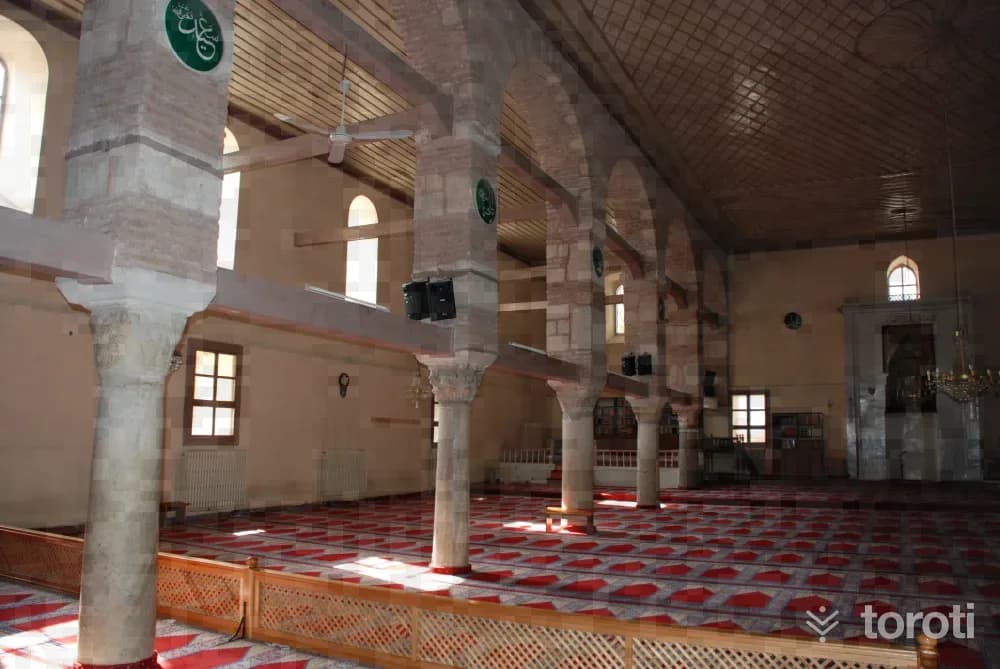
The mosque, located in Yıldırım Mahallesi, is Balıkesir’s oldest Ottoman structure. There is no construction inscription. However, it is understood from various sources and its endowment deed that it was commissioned by Yıldırım Beyazıt in 1388. Within a rather large courtyard, it forms a külliye together with a madrasa and imaret. It underwent repairs in 1818 and after the 1897 earthquake. The interior of the mosque has a rectangular plan and is divided into three naves by two rows of five columns each.
Yıldirim Camii Ve Külliyesi and 6 places around it
Free · no sign-up needed
Highlights
- Faith heritage
Good for
- Heritage walks
Suggested visit:45 minutes
The mosque located in Yıldırım Mahallesi is Balıkesir’s oldest Ottoman work. There is no construction inscription. However, it is understood from various sources and its endowment deed that it was commissioned by Yıldırım Beyazıt in 1388. Within a rather large courtyard, it forms a külliye together with a madrasa and imaret. It was repaired in 1818 and after the 1897 earthquake.
The interior of the mosque has a rectangular plan and is divided into three naves by two rows of five columns each. The capitals of these spolia columns, placed without bases, are also made of spolia material. Six are in Byzantine style, three in Ottoman style, and one is in the form of an old base. Spolia architectural pieces taken from ruins in the surrounding area were used in the mosque. Its walls are of cut stone with wide joints. There is only a single row of brick on the west wall. Although traces of the original structure can be seen here and there on the exterior surfaces, in its general appearance it bears the characteristics of a late period.
Its roof is covered with tiles. Although the qibla side of the structure is plain like the other sides, there are rectangular windows on both sides of the mihrab and round-arched windows below them. The west façade is more lively. Of the windows in two rows, those in the lower row are original, while the round-arched ones in the upper row were made during the repair in the early 19th century. The mosque has one door each on the north, east and west walls. The wooden and glazed last congregation area on the north was added later. Above the thick four-cornered piers with stalactite capitals on both sides of the rectangular-jambed main entrance door is a low pointed arch of cut stone. Within the arch, on the pediment above the door jambs, there is a place for an inscription in the form of a frame, and it is empty. The west wall of the mosque and the entrance there were made more ornate than the north entrance. The top of the entrance is covered with a tile-covered porch resting on four wooden posts. The wooden ceiling of this section is quite ornate, and in the middle there is an Empire-style ceiling centerpiece. The ceiling was renewed after the 1897 earthquake. The massive frame section of the mihrab, rectangular in form and projecting outward from the walls, is also new. The muqarnas of the five-sided mihrab niche narrows upward with stalactites. The minbar is wooden. Its minaret is located at the northwest corner. It is of cut stone and is new. Rising on a square base, the minaret has a cylindrical shaft and is fluted. There are two rows of moldings at the section where the shaft and the base join. There is also a molding of the same form under the balcony.
The fountain in the mosque courtyard is new. At each corner of the octagonal marble basin there are round engaged columns. It is covered with a glazed structure resting on five posts. The imaret (Misafirhane-Zaviye) at the northeast corner of the mosque was built together with the mosque at the end of the 14th century. It has survived to the present day in its original state. It is the simplest example of the zaviye mosque type, frequently seen in the Early Ottoman Period. Its walls, built of rubble stone, are completed with sawtooth eaves. There is a marble inscription above the main entrance door with a segmental arch, located within a large niche. A rich molding surrounds the door. The window openings, with neatly edged brick arches, are covered. Inside, on both sides of the central space, there are zaviye rooms at a lower level. The central space is covered with wood, and the side spaces are covered with vaults. The building is covered externally with a tiled roof. The madrasa in the mosque courtyard is a 12-cell structure and was rebuilt after the 1897 earthquake. Only its outer walls are original.
Source: Balıkesir Provincial Directorate of Culture and Tourism
Places to Visit in Balıkesir Address: Yıldırım Mahallesi Gazi Bulvarı Karesi/Balıkesir
Last updated: 24 October 2026
Location and surroundings
Yıldirim Camii Ve Külliyesi sits within Karesi, Balıkesir. The toroti catalogue holds 68 described stops across Balıkesir, 10 of them in Karesi.
The nearest stop is Alaca Mescit Camii, 240 m to the south. Another 6 catalogued points lie within a 30 km radius.
The Izmir – Balikesir route passes 1.5 km away, so this works as a stop along the drive.
See Yıldirim Camii Ve Külliyesi and its surroundings in one plan
- Order your stops on the map and spread them across days
- See driving and visiting time at a glance
- Get places around it suggested automatically
- Free — no sign-up needed to start
Other places nearby
Routes that pass close by
Frequently asked
- What is Yıldirim Camii Ve Külliyesi?
- The mosque, located in Yıldırım Mahallesi, is Balıkesir’s oldest Ottoman structure. There is no construction inscription. However, it is understood from various sources and its endowment deed that it was commissioned by Yıldırım Beyazıt in 1388. Within a rather large courtyard, it forms a külliye together with a madrasa and imaret. It underwent repairs in 1818 and after the 1897 earthquake. The interior of the mosque has a rectangular plan and is divided into three naves by two rows of five columns each.
- Where is Yıldirim Camii Ve Külliyesi?
- Yıldirim Camii Ve Külliyesi is in Karesi, Balıkesir.
- How long does it take to visit Yıldirim Camii Ve Külliyesi?
- The suggested visit time for Yıldirim Camii Ve Külliyesi is about 45 minutes.
- What else is there to see near Yıldirim Camii Ve Külliyesi?
- toroti’s catalogue holds other destinations within 30 km of Yıldirim Camii Ve Külliyesi; the closest are Alaca Mescit Camii, Zağnos Paşa Camisi Ve Külliyesi, Zağnos Paşa Camii.
- Is Yıldirim Camii Ve Külliyesi on the way anywhere, and which route?
- Yıldirim Camii Ve Külliyesi lies 1.5 km from the Izmir – Balikesir route, close enough to add to that drive with a short detour.