Destination
Kasteller
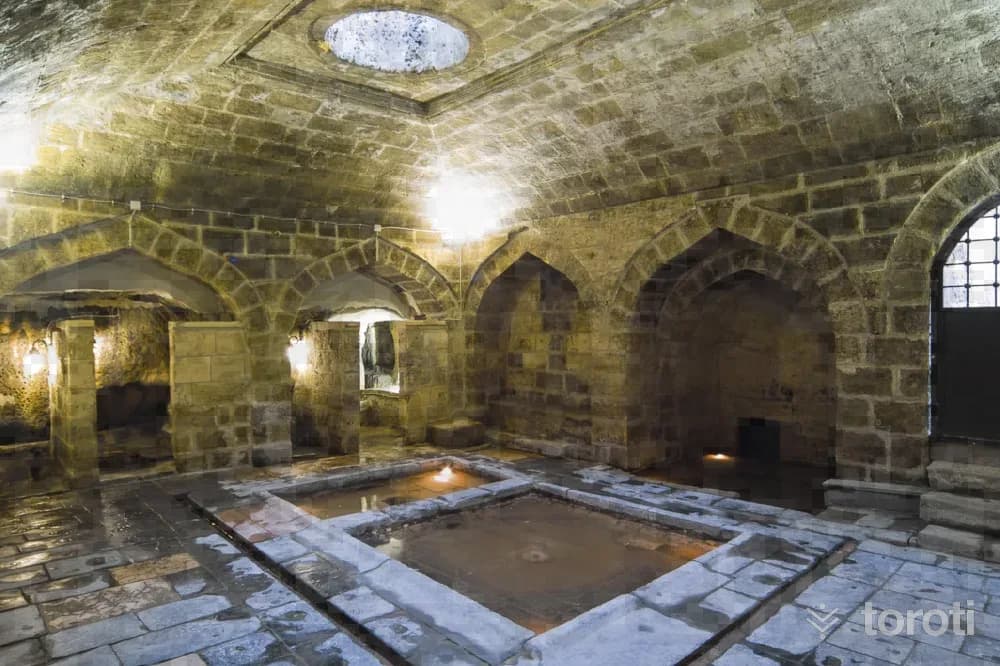
Gaziantep Kastels, which have no equal in the world and are unique examples of water architecture, were built as structures with many functions. These structures, found only in Gaziantep in Turkish Architecture, have not attracted much attention because they are partially or completely underground. For this reason, they have not taken their place in the terminology of art history.
Kasteller and 6 places around it
Free · no sign-up needed
Highlights
- Local culture
Suggested visit:45 minutes
The Gaziantep Kastels, which are unique examples of water architecture and have no equal in the world, were built as structures with many functions. These structures, found only in Gaziantep in Turkish Architecture, have not attracted much attention because they are partially or completely underground. For this reason, they have not taken a place in art history terminology. The word “kastel” is thought to have entered our language from Arabic and means a place where water is divided into sections underground.
Although it has a water source like Alleben Deresi passing through Gaziantep city center, it has historically been a city poor in terms of underground water resources. In order to prevent the water they found from being lost through evaporation or in another way, people collected the water at a certain center (Suburcu) through channels called Livas, which they opened underground, and distributed it to the city from this center. Houses were built on the livas in order to meet water needs, and wells were opened from these houses to the livas. These wells were used both to meet water needs and to prevent provisions that would spoil in the summer heat from spoiling by lowering them into the wells. Despite their plain and unpretentious structures, the kastels maintained their importance from the first day until the date when houses gained modern urban drinking water and fountains were built. Of these kastels, which are ancestral heritage and unique examples of water architecture, 5-6 have disappeared for various reasons. Those that have survived to the present day are;
Şeyh Fethullah Kasteli İhsan Bey Mescidi and Kasteli Pişirici Mescidi and Kasteli İmam-ı Gazali Kasteli Ahmet Çelebi Kasteli Kozluca Kasteli.
Places to Visit in Gaziantep Address: City center
Last updated: 21 October 2026
Location and surroundings
Kasteller sits within Şahinbey, Gaziantep. The toroti catalogue holds 64 described stops across Gaziantep, 45 of them in Şahinbey.
The nearest stop is Kozluca Camii, 140 m to the north. Another 6 catalogued points lie within a 30 km radius.
The Gaziantep – Sanliurfa route passes 1.6 km away, so this works as a stop along the drive.
See Kasteller and its surroundings in one plan
- Order your stops on the map and spread them across days
- See driving and visiting time at a glance
- Get places around it suggested automatically
- Free — no sign-up needed to start
Other places nearby
Routes that pass close by
Frequently asked
- What is Kasteller?
- Gaziantep Kastels, which have no equal in the world and are unique examples of water architecture, were built as structures with many functions. These structures, found only in Gaziantep in Turkish Architecture, have not attracted much attention because they are partially or completely underground. For this reason, they have not taken their place in the terminology of art history.
- Where is Kasteller?
- Kasteller is in Şahinbey, Gaziantep.
- How long does it take to visit Kasteller?
- The suggested visit time for Kasteller is about 45 minutes.
- What else is there to see near Kasteller?
- toroti’s catalogue holds other destinations within 30 km of Kasteller; the closest are Kozluca Camii, Şeyh Fethullah Türbesi, Tekke Camii.
- Is Kasteller on the way anywhere, and which route?
- Kasteller lies 1.6 km from the Gaziantep – Sanliurfa route, close enough to add to that drive with a short detour.