Destination
Toprakkale
This settlement, located on the Van Plain in the northeast of Van, is today called Toprakkale. It was given the name Rusahinili because it was founded by the Urartian King Rusa II (685-645 B.C.). Toprakkale, the second capital of the Urartian Kingdom, is on the rocks of Zımzım Dağı in the northeast of the Van Plain. Since it was founded by Rusa, the castle was given the name Rusahinili (the city founded by Rusa).
Toprakkale and 6 places around it
Free · no sign-up needed
Highlights
- History
Good for
- Cultural routes
Suggested visit:45 minutes
This settlement, located on the Van Plain in the northeast of Van, is today called Toprakkale. Since it was founded by the Urartian King Rusa II (685-645 B.C.), it was given the name Rusahinili. Toprakkale, the second capital of the Urartian Kingdom, is on the rocks of Zımzım Dağı in the northeast of the Van Plain. Since it was founded by the Urartian King Rusa II, the fortress was given the name Rusahinili (the city founded by Rusa).
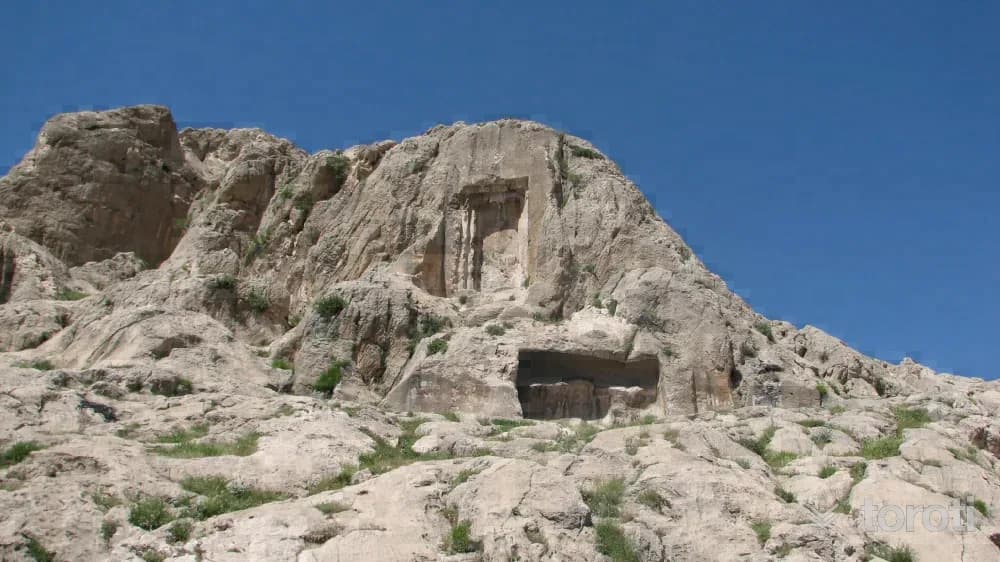
A second and more important work of the Urartian king İşpuini is the inscription located in Van, inside a rock niche on the lake-facing slopes of Zimzim Dağı where Toprakkale was also built, and called the Meherkapı Inscription. This monument is also called “Kör Kapı”, “Hazine Kapısı” or “Yalancı Kapı” among the people. The inscription is 4 meters high and 2.70 meters wide. The inscription inside the niche was repeated twice. In the inscription, the names of 79 gods and goddesses sanctified in the Urartian pantheon and the types and numbers of animals to be sacrificed for these gods and goddesses are given.
TOPRAKKALE EXCAVATIONS
The English archaeologist A. H. Layard, together with his assistant H. Rassam, conducted examinations at Van Kalesi, Toprakkale and Meherkapı in 1849. Layard, who was also a diplomat, was the British ambassador in Istanbul in 1877-1880. Sedrak Devgants, an antiquarian from Van, brought H. Layard pieces belonging to a Urartian throne in 1877. Materials of this kind were found around the Haldi temple of Toprakkale. The looting excavations in this area continued in 1880 with the excavations carried out by H. Rassam on behalf of the British Museum, and other pieces belonging to the same throne were also uncovered. Again in the same area, in 1898-1899, C. F. Lehmann and W. Belck continued excavations aimed at the plundering of historical artifacts in and around the temple on behalf of the Berlin Museum. This area was later continued to be plundered by treasure hunters. In 1912, I. A. Orbelli carried out research and excavations at Toprakkale on behalf of the Russian Archaeological Society. In 1916, again from the same society, N. J. Marr conducted excavations at Toprakkale.
The artifacts found in all these excavations are today scattered among the Royal Museum (British Museum) in London, the Louvre Museum in Paris, the Hermitage Museum in St. Petersburg, and various museums in Germany and the U.S.A.
Source: Urartu Tarihi ve Kültürü Mirjo SALVİNİ Arkeoloji ve Sanat Yayınları 2006 / Urartu Doğu Değişim Kemalettin Köroğlu - Erkan Konyar Yapı Kredi Yayınları
Places to Visit in Van Address: It is located on a rocky hill connected to the Zimzim Dağları range in the northeast of Van city center. The fortress, set on a rock 400 meters long, 60-70 meters wide and 200 meters high in the north-south direction, is in a position dominating Van.
Last updated: 19 October 2026
Location and surroundings
Toprakkale sits within Tuşba, Van. The toroti catalogue holds 56 described stops across Van, 6 of them in Tuşba.
The nearest stop is Ayanis Kalesi, 1.5 km to the south. Another 6 catalogued points lie within a 30 km radius.
The Van – Erzurum route passes 1.8 km away, so this works as a stop along the drive.
See Toprakkale and its surroundings in one plan
- Order your stops on the map and spread them across days
- See driving and visiting time at a glance
- Get places around it suggested automatically
- Free — no sign-up needed to start
Other places nearby
Routes that pass close by
Frequently asked
- What is Toprakkale?
- This settlement, located on the Van Plain in the northeast of Van, is today called Toprakkale. It was given the name Rusahinili because it was founded by the Urartian King Rusa II (685-645 B.C.). Toprakkale, the second capital of the Urartian Kingdom, is on the rocks of Zımzım Dağı in the northeast of the Van Plain. Since it was founded by Rusa, the castle was given the name Rusahinili (the city founded by Rusa).
- Where is Toprakkale?
- Toprakkale is in Tuşba, Van.
- How long does it take to visit Toprakkale?
- The suggested visit time for Toprakkale is about 45 minutes.
- What else is there to see near Toprakkale?
- toroti’s catalogue holds other destinations within 30 km of Toprakkale; the closest are Ayanis Kalesi, Hamurkesen Camii, Abbas Ağa Camii.
- Is Toprakkale on the way anywhere, and which route?
- Toprakkale lies 1.8 km from the Van – Erzurum route, close enough to add to that drive with a short detour.