
Places to visit
Things to do in Kızıltepe
10 destinations, each with a description, how long it takes and where it sits on the map.
In short
toroti’s catalogue holds 10 described destinations within Kızıltepe, Mardin. The themes that come up most: Nature, Local culture, Faith heritage, History.
Gurs Vadisi
The valley is located within the borders of Kızıltepe district and is 20 kilometers from Mardin. The valley is famous for its waterfalls. In addition, flour mills used to operate with the water flowing from the valley. Today, it is used as orchards.
45 minutes
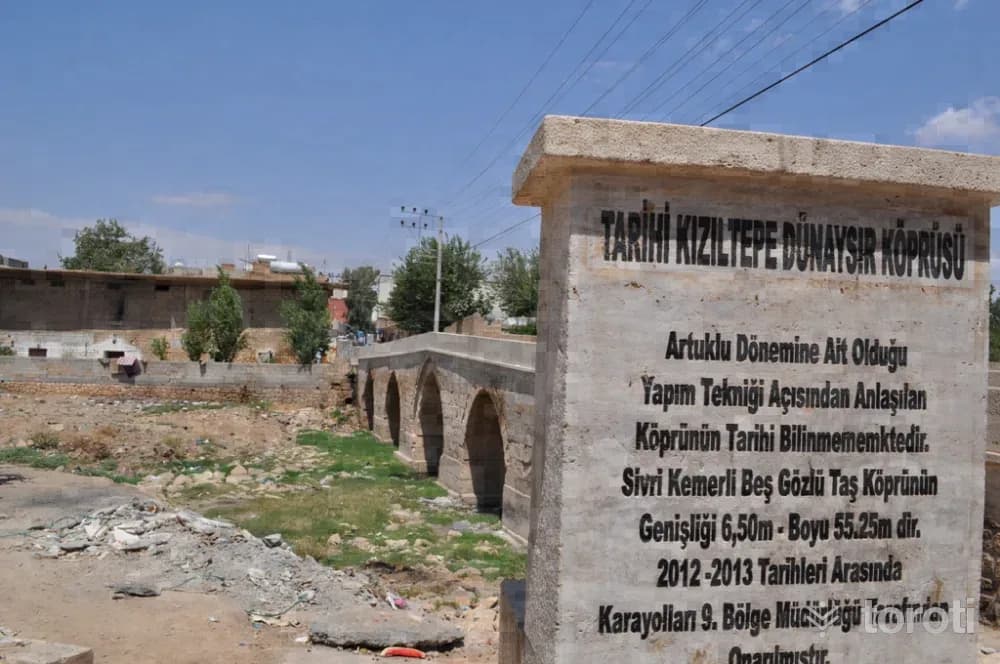
Dunaysir Köprüsü
Dunaysır Bridge The bridge is on the Kızıltepe–Derik road, over Zergan Stream in Koçhisar Neighborhood. There is no inscription on the bridge. There is an inscription dated 601/1204 on Kızıltepe Ulu Camii, approximately 100 meters south of the bridge.
45 minutes
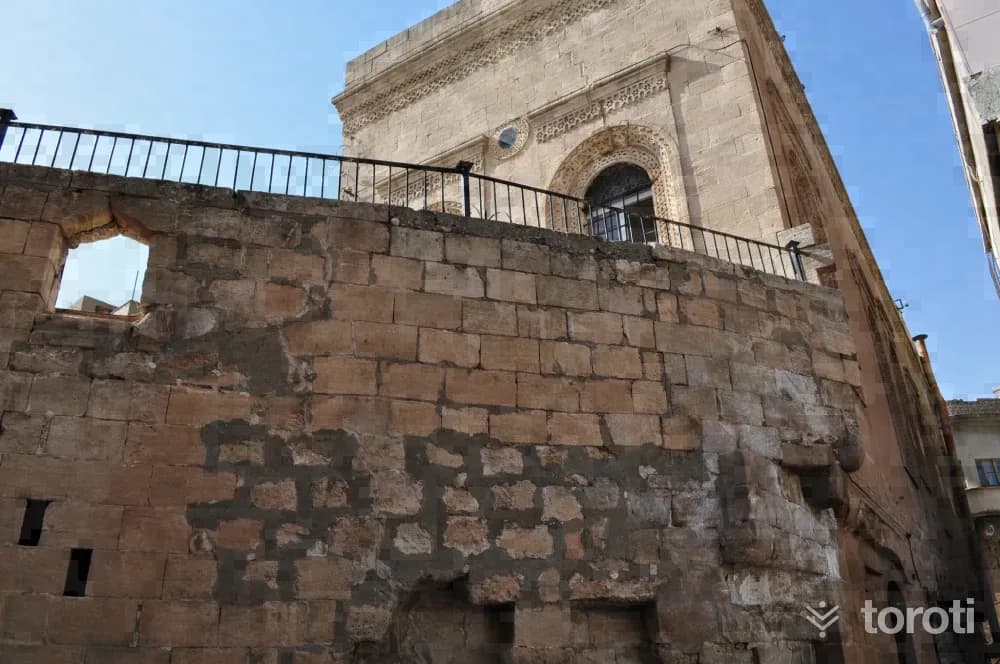
Gazipaşa İlkokulu
Construction of the building, which is used as Gazipaşa Primary School in the center of Mardin, was started in 1892 by a chief architect named Lole, and it was opened for use as a house in 1907 during the Second Constitutional Period by a wealthy person named Cebbur from the Syriac Orthodox Community. The building was used as a house for many years. The building consists of 4 floors. 1st Floor: It was built for use as a cellar and stable. It is currently used as a house. 2.
45 minutes
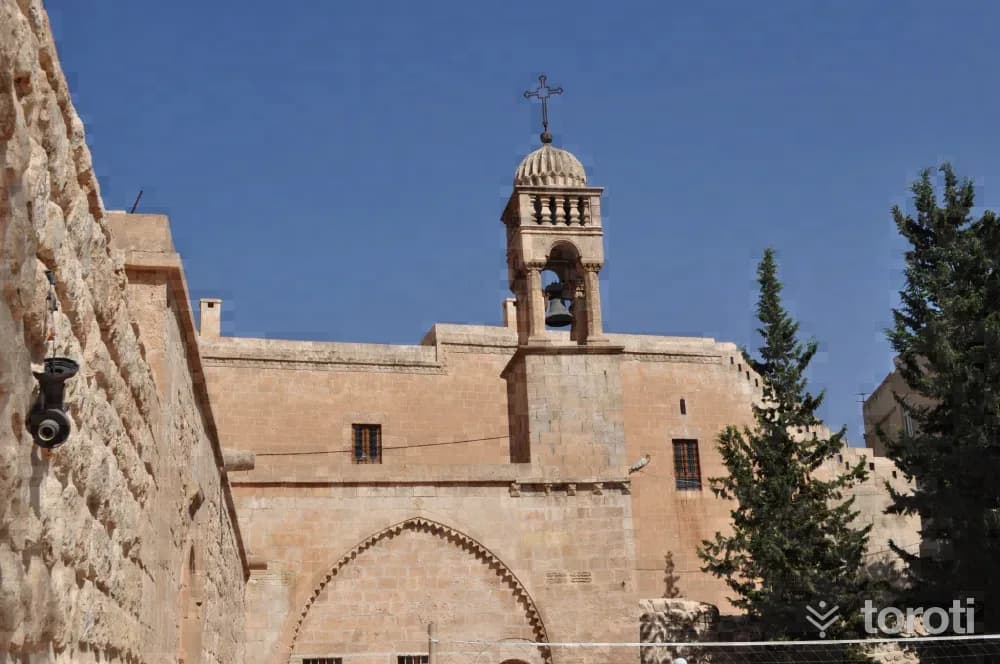
Mor Behnam (kirklar) Kilisesi
The church, built in the name of Mor Behnam and his sister Saro and now known as Kırklar Church, takes both of its names from early Christian legends and is a structure dating to the middle of the 6th century. The ceiling section, carried by arches set on 12 massive columns in the east-west direction, is built of smoothly cut stone. After Mardin became the Syriac Orthodox Patriarchal Center in 1293, the spiritual and administrative affairs of the people began to be administered from this church.
45 minutes
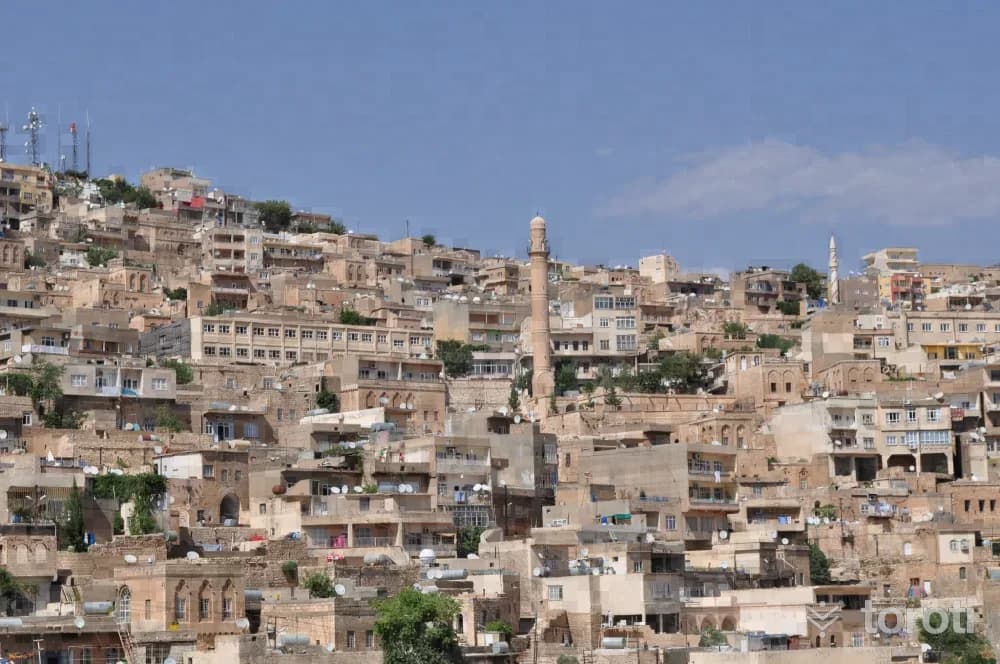
Şeyh Çabuk Camii
Although the construction date of Şeyh Çabuk Camii is not known, it is highly likely that it acquired its present identity in the 15th century. It underwent restoration twice in the 19th century. Spread over a rather large area with garden walls that could be called a courtyard, the mosque has a transverse plan, which is a kind of general characteristic of Mardin mosques and masjids. The main space consists of a nave covered with two transverse barrel vaults.
45 minutes
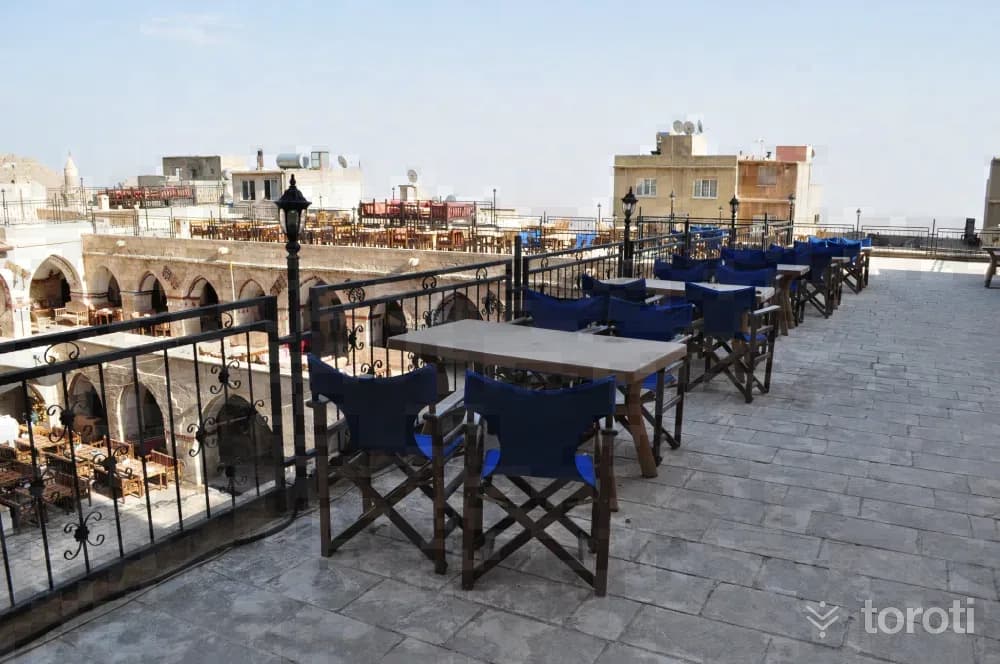
Surur Hanı
Surur Han, which is thought to have been built in the 17th-18th centuries, consists of two-storey arcaded spaces around a rectangular courtyard. On the street side, there are five shops on each side of the entrance. Over time, many changes were made to its plan. Restaurant and cafe services are provided inside the building, whose restoration has been completed.
45 minutes
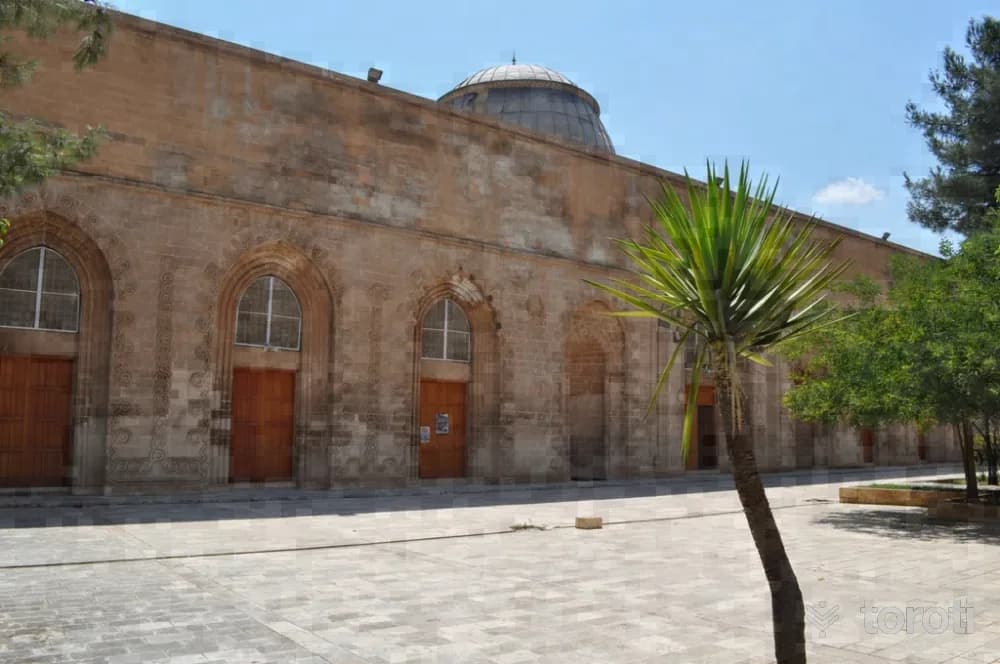
Dunaysir / Koçhisar Ulucami
Its construction was begun by the Artuklu Sultan Yavlak Aslan (1184-1200) and completed by his brother Artuk Aslan (1200-1239). Three naves parallel to the qibla wall are intersected in front of the mihrab by a squinch dome with a diameter of 9.75 extending across two naves. The interior of the mosque, its mihrab and walls, are decorated with elegant carved inscriptions.
45 minutes
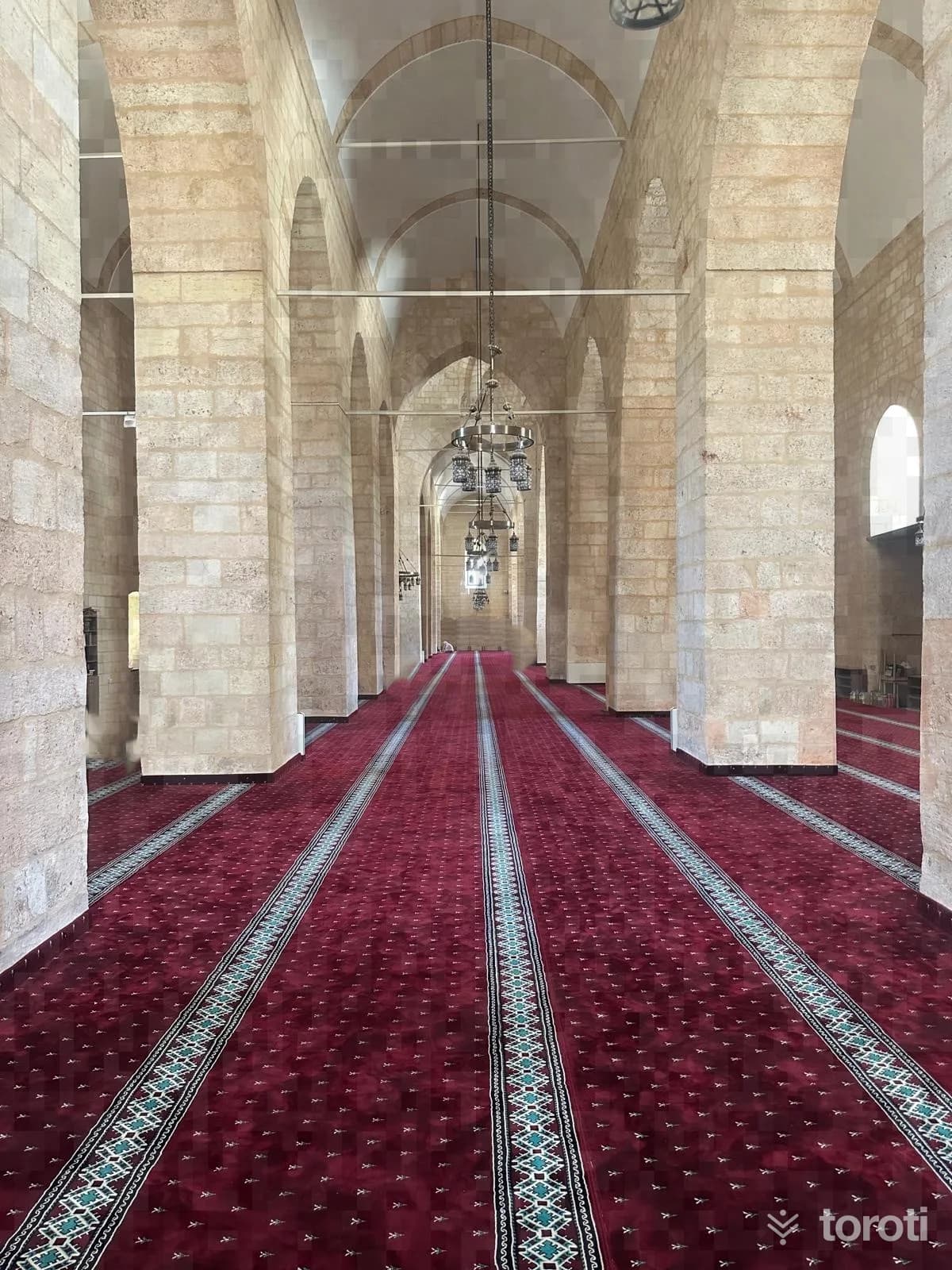
Dunaysır (Koçhisar) Ulu Cami
Its construction was begun by the Artuklu Sultan Yavlak Aslan (1184-1200) and completed by his brother Artuk Aslan (1200-1239). It has three naves parallel to the qibla wall and is intersected in front of the mihrab by a squinch dome with a diameter of 9.75 extending across two naves. The interior of the mosque, its mihrab and walls, are decorated with elegant carved inscriptions.
20 minutes
Firdevs Köşkü
Built of smoothly cut stone, the mansion is remarkable for Mardin Architecture with its iwans opening to the west, two-storey spaces in between, its cihannüma above, and its setting within a garden with trees; at the same time, with the large pool in front of the great iwan, it is a magnificent structure in Mardin residential architecture. The original form of the building is attributed to the Artuklu sultans.
45 minutes
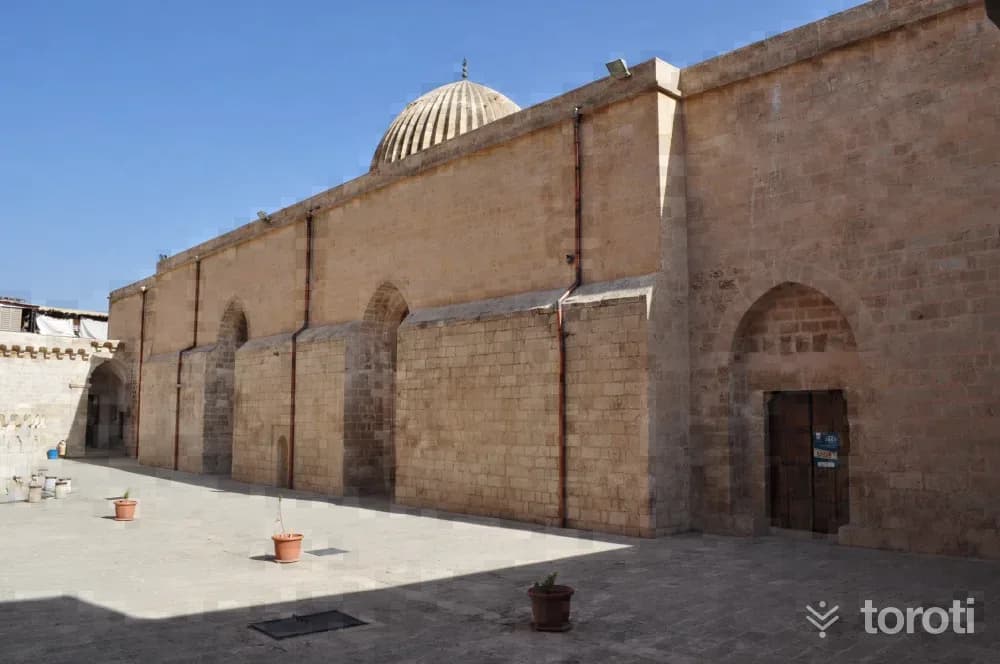
Mardin Ulu Cami
Mardin Ulu Cami, one of the architectural examples of the Artuklu Period and the symbol of Mardin with its fluted dome and minaret, was built with two minarets according to records. The inscription on the square base of the mosque’s only surviving minaret today gives the construction date as 1176, but the present minaret was built in 1888/1889 in a new and eclectic style. Some Syriac writers say that it was converted from a church.
45 minutes